Common Causes of Low Recovery in SPE
Low recovery in solid phase extraction (SPE) is one of the most frustrating challenges analytical chemists face. When your target analytes fail to appear in expected concentrations, it’s essential to systematically identify where the problem lies. According to forensic science literature, recovery problems in SPE can be categorized into several key areas: flow problems, contamination issues, and fundamental extraction failures.
The first step in troubleshooting is to ask “Where did it go?” There are limited possibilities: the analyte was unretained during sample application and lost with the matrix (breakthrough), it was unretained during wash steps and lost with washes, or it was retained but not properly eluted and remains bound to the sorbent. A systematic approach using mass balance analysis—collecting and analyzing every liquid fraction that exits the column—can help pinpoint the exact location of analyte loss.
Before assuming extraction problems, ensure your analytical instrumentation can adequately detect neat standards of your analyte at the required concentrations. Working backward from detection to extraction is often the most efficient troubleshooting strategy.
pH Mismatch Issues
pH control is arguably the most critical parameter in SPE optimization, particularly when dealing with ionizable compounds. The ionization state of target analytes directly affects their retention and elution characteristics. For reversed-phase systems, un-ionized compounds favor retention, while ionized forms may show reduced binding affinity.
Research demonstrates that “the pH of the sample and that of the sorbent should be equivalent for optimal binding.” When extracting acidic compounds like ibuprofen (pKa 5.9), lowering the pH below the pKa increases the non-ionic molecular form, thereby enhancing recovery on hydrophobic bonded phases. At the pKa, the drug is 50% ionized and 50% non-ionized, making pH adjustment crucial for maximizing recovery.
For ion-exchange mechanisms, maintaining proper pH is even more critical. Both the analyte and sorbent must remain charged for effective ionic retention, typically requiring the pH to remain at least 2 units away from the relevant pKa values. Failure to maintain appropriate pH conditions can result in dramatic recovery losses, sometimes dropping from 90% to near-zero recovery.
Breakthrough Problems
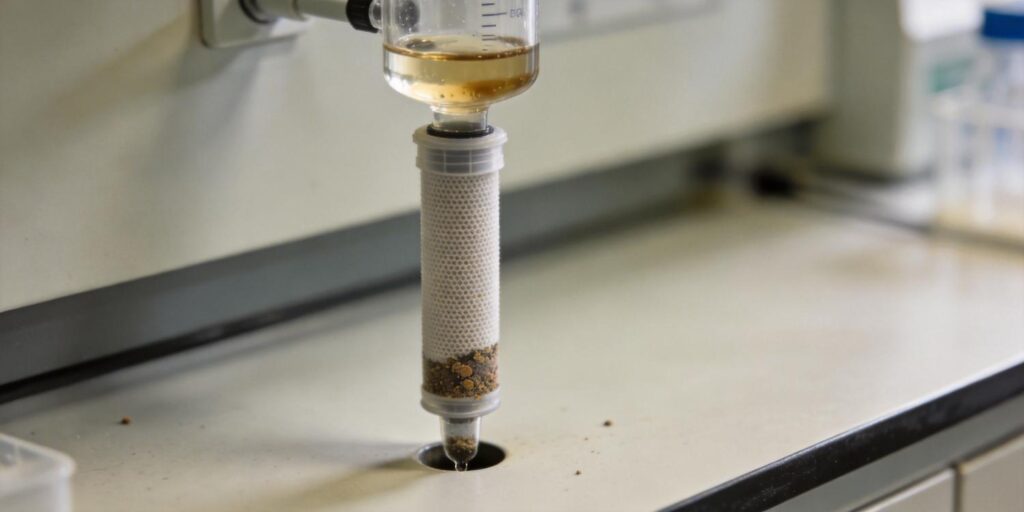
Breakthrough—the ineffective retention of target analytes on the solid phase sorbent—is a primary cause of low recovery. During sample application, the most common cause of breakthrough is flow rates that exceed the sorbent affinity for binding target compounds, resulting from inadequate mass transfer of the analyte to sorbent binding sites.
Other considerations for breakthrough include:
- Improper conditioning of the sorbent
- Inappropriate loading solvent (incorrect ionic strength or organic content)
- Insufficient diffusion and mass transfer due to excessive flow rates
- Volume overload where weakly retained analytes migrate with the matrix
- Mass overload where sorbent capacity is insufficient
- Incorrect sorbent selection for the target analyte
To monitor for breakthrough, consider using a second cartridge in series with the primary extraction cartridge. If any analyte appears in the eluent of the second cartridge after sample loading and separate elution of each cartridge, then the sorbent capacity of the first cartridge has clearly been exceeded.
Sorbent Overload
Sorbent capacity limitations represent another common source of low recovery. The capacity of an SPE column packing depends on multiple factors including organic loading, bed size, chain length effects, and competitive matrix interactions. When the sample matrix contains compounds that interact with the sorbent similarly to your target analyte, competitive interactions can reduce effective capacity.
Solutions to sorbent overload problems fall into four categories:
- Increase bed size to increase total capacity and overcome competitive interactions
- Change sorbent nature—if using a monomeric C18, switch to a higher-loaded polymeric version
- Change extraction mechanism, such as moving from reversed-phase to ion exchange or normal phase
- Use coupled columns to filter out unwanted material before the primary extraction
Remember that SPE should function as “stop-and-go” chromatography where the sample is totally retained and totally released. Poor choices of matrix solvents, such as methanol extracts, may actually elute part of your sample during loading, giving the false impression of lowered capacity.
Solutions and Optimization Strategies
Systematic Troubleshooting Approach
When faced with low recovery, adopt a systematic approach beginning with mass balance analysis. Collect and analyze every fraction—sample waste, washes, and eluates—to determine where analyte loss occurs. This approach helps distinguish between breakthrough during loading/washing versus incomplete elution.
Flow Rate Optimization
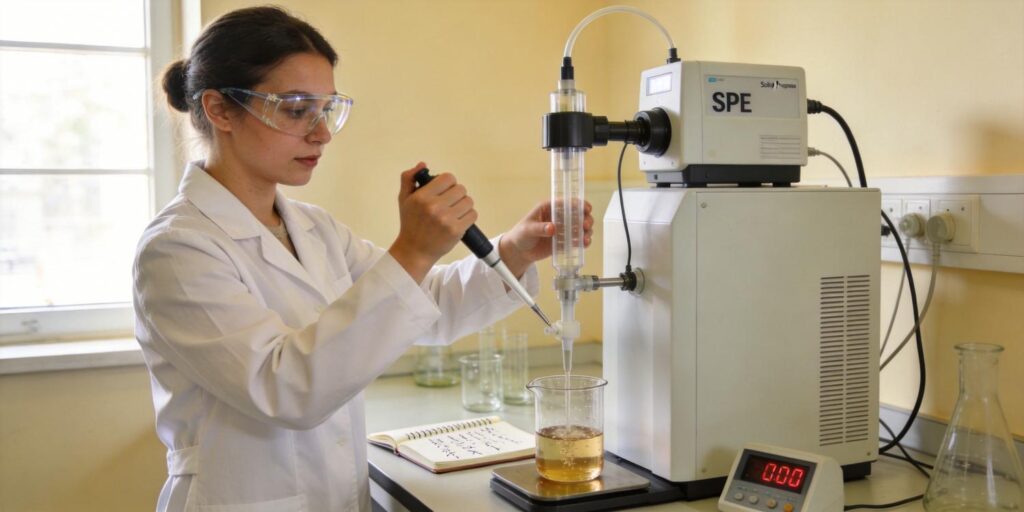
Flow regulation is critical throughout all SPE steps. Excessive flow rates can cause breakthrough, while insufficient flow may lead to poor mass transfer. For optimal performance, maintain flow rates that allow adequate contact time between sample and sorbent. As a general guideline, “slower flow gives better results” for many applications, though the ideal rate depends on specific analyte-sorbent interactions.
Conditioning and Solvent Selection
Proper conditioning serves three purposes: solvating the SPE column and normalizing the column environment to the sample, chemically preparing the sorbent environment for optimal binding, and removing dust, fines, and residual polymer impurities. Use appropriate solvents for your specific sorbent type—typically methanol followed by water or buffer for reversed-phase applications.
Elution Optimization
Elution problems often stem from incorrect solvent selection. Consider both solvent strength and analyte solubility. For hydrophobic phases, stronger organic solvents typically provide better elution. For ion-exchange mechanisms, changing pH or using counter-ions with stronger affinity can disrupt ionic bonds. Allow the cartridge to soak with eluent for 0.5-1 minute to improve recovery, and consider using several smaller eluent aliquots rather than one large volume.
Matrix Considerations
Sample matrix significantly impacts SPE performance. Biological samples containing proteins, lipids, and other endogenous compounds can compete with target analytes for binding sites. For particularly dirty matrices, consider additional cleanup steps or coupled column approaches. Diluting samples in organic solvents with water (typically 20:1) can improve retention on reversed-phase sorbents.
Alternative Approaches for Difficult Analytes
For extremely hydrophilic analytes that are difficult to retain on reversed-phase silica sorbents, consider using ion-pairing agents in the dilution buffer. Research shows that adding 10 mM tetrabutyl ammonium hydroxide to buffers substantially increased recovery of hydrophilic compounds across a wide pH range. For multiresidue analyses containing compounds with widely varying hydrophobicity, you may need to compromise recovery of some components or consider sequential extraction approaches.
Quality Control and Validation
Maintain columns from original validation lots for troubleshooting comparison. SPE columns are generally stable, and having original columns on hand helps determine whether problems relate to new column lots or other sources. During method development, test at least two or three lot numbers to ensure reproducibility. Don’t overlook technical support from column manufacturers—they possess extensive expertise in sample preparation and can provide valuable method references and troubleshooting assistance.
Remember that in an optimized method, recovery represents a balance between sensitivity and selectivity. Chromatographic signal-to-noise ratio and resolution of interfering substances are often more important than absolute recovery percentage. If acceptable limits of detection are achieved with no interfering compounds at only 30% recovery, higher recovery may not be necessary and could even increase interferences and noise.
By systematically addressing these common issues—pH mismatches, breakthrough, sorbent overload, and flow problems—you can significantly improve SPE recovery and develop robust, reproducible methods for your analytical applications.