Product Selection Guide

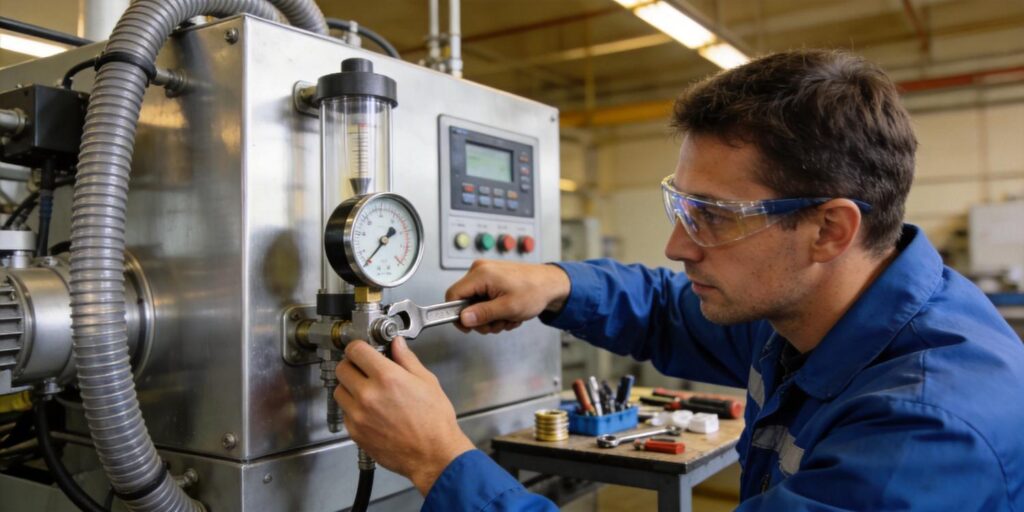
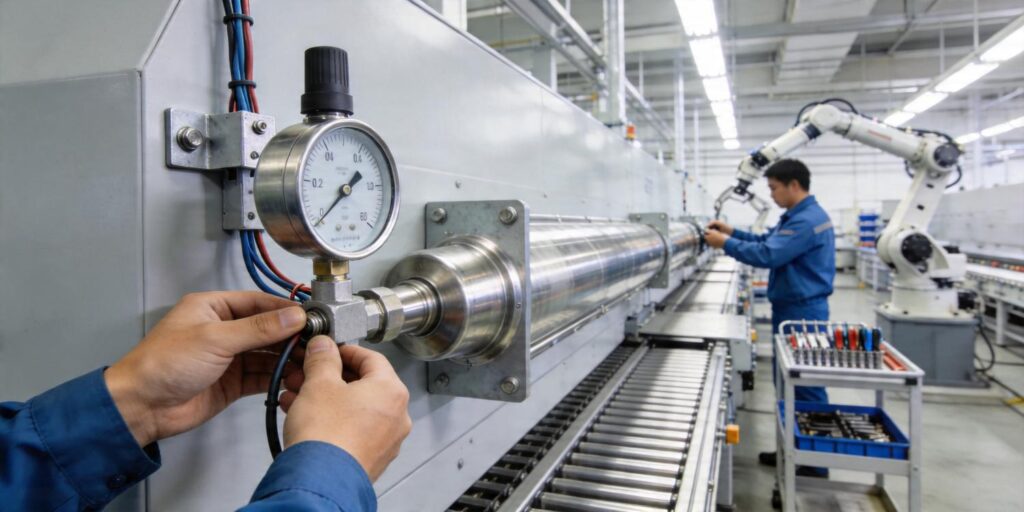
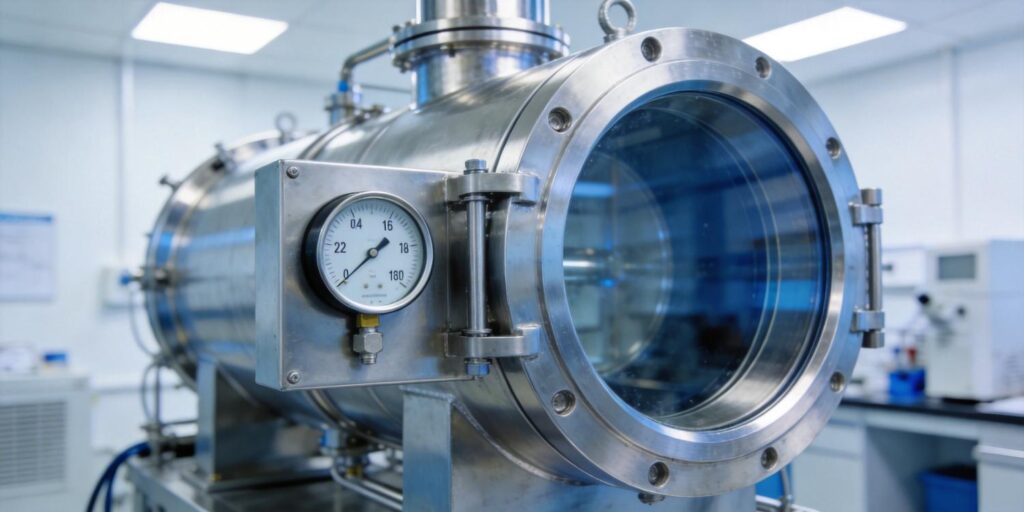
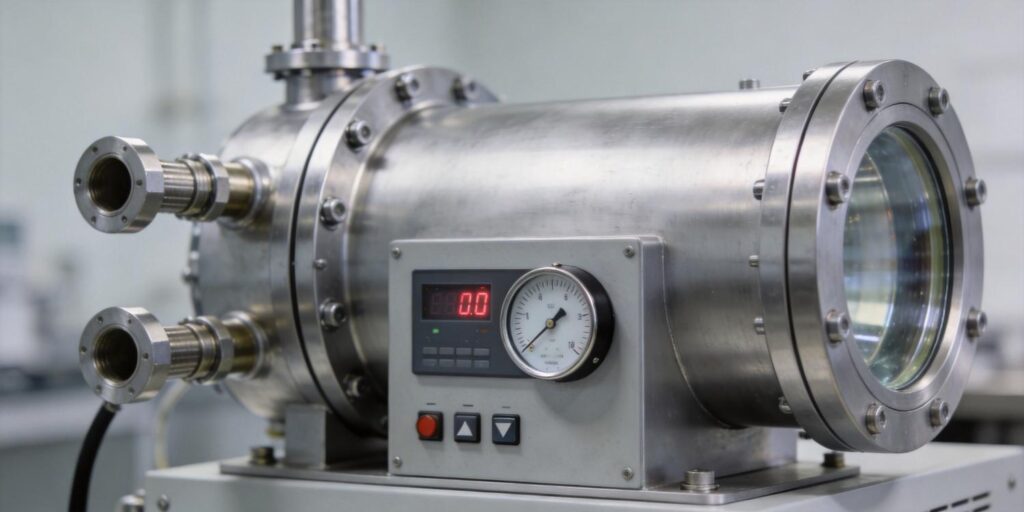
Vacuum gauge installation on coating machine assembly line

Vacuum Gauge Selection for Coating Machine OEMs

OEM Integration Requirements Coating machine OEMs face unique demands when selecting vacuum measurement components: instruments must fit into compact tool footprints, integrate seamlessly with existing automation platforms, and support rapid customization for different chamber sizes and process recipes. Downtime during tool qualification or field retrofits is costly, so gauges need plug-and-play compatibility, minimal custom engineering, […]
Vacuum Gauge Selection for Coating Machine OEMs Read More »

Vacuum gauge mounted on university thin film research chamber

Vacuum Gauge Selection for Thin Film Research Labs

Research Lab Flexibility Requirements Thin-film research laboratories operate in a dynamic environment where experiments change frequently—today’s magnetron sputtering run may be followed tomorrow by OLED evaporation or atomic-layer deposition testing. Vacuum gauges must therefore offer maximum flexibility: quick installation on a variety of chamber sizes, support for different process gases, and easy integration with lab-scale

Vacuum Gauge Selection for Thin Film Research Labs Read More »

Vacuum gauge mounted on university sputtering chamber

Vacuum Gauge Selection for Research Sputtering Systems

Research Sputtering Chamber Overview Research sputtering systems form the backbone of thin-film development in university labs, national research institutes, and corporate R&D centers. These compact vacuum chambers—typically 12–24 inches in diameter—enable precise deposition of metals, oxides, nitrides, and complex multilayer stacks for applications ranging from photovoltaics and sensors to quantum materials and biomedical coatings. A

Vacuum Gauge Selection for Research Sputtering Systems Read More »

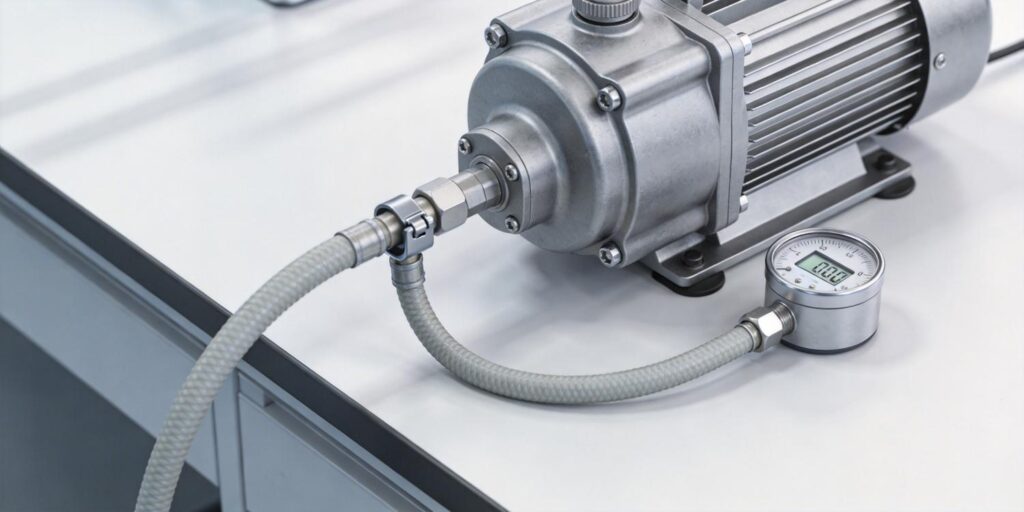
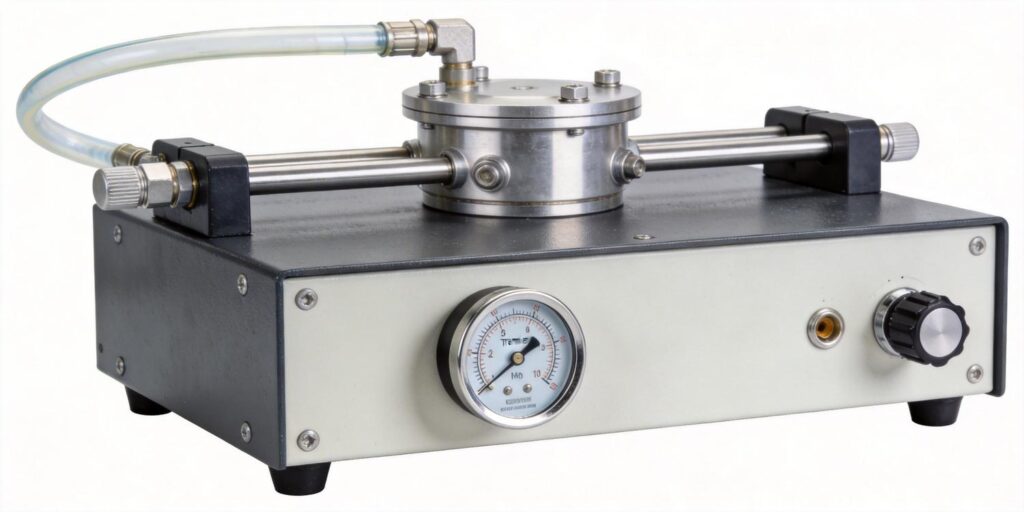
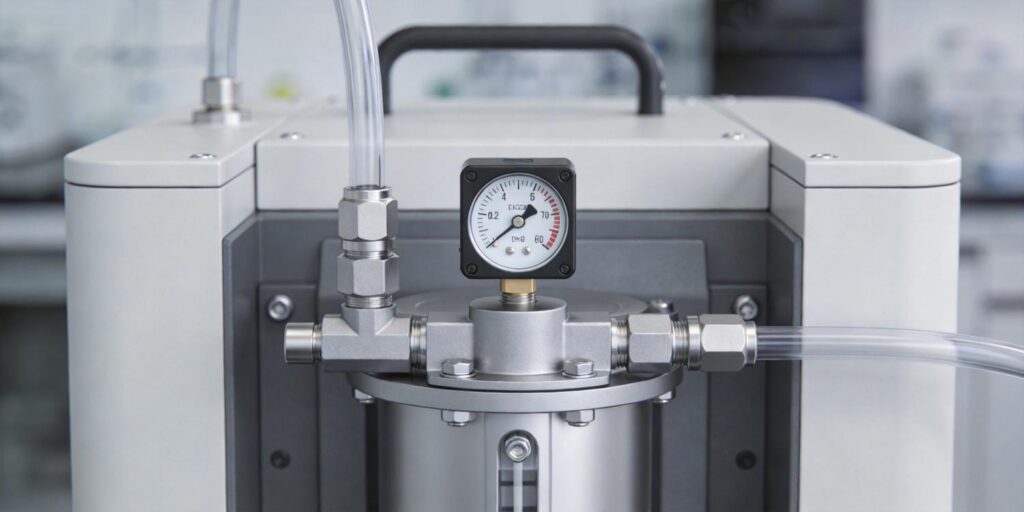
Compact vacuum gauge installed on laboratory vacuum pump

How to Select Vacuum Gauges for Laboratory Vacuum Pumps

Lab Pump Applications Overview Laboratory vacuum pumps power a wide range of scientific and research workflows, from simple rotary vane pumps used for filtration and degassing to sophisticated turbomolecular and cryopump systems supporting analytical instruments. In university labs, contract research organizations, and R&D facilities, these pumps enable critical processes such as sample preparation for mass

How to Select Vacuum Gauges for Laboratory Vacuum Pumps Read More »

Vacuum gauge retrofit installation on coating machine

Vacuum Gauge Selection for Coating Machine Retrofits

Common Retrofit Challenges in Coating Machine Vacuum Systems Coating machines—whether for PVD, CVD, or optical thin-film deposition—rely on precise high-vacuum measurement to maintain repeatable process conditions. When retrofitting aging vacuum gauges, engineers face recurring obstacles: mismatched mechanical interfaces that require custom adapters, incompatible analog or digital signals that force PLC reprogramming, and the risk of

Vacuum Gauge Selection for Coating Machine Retrofits Read More »

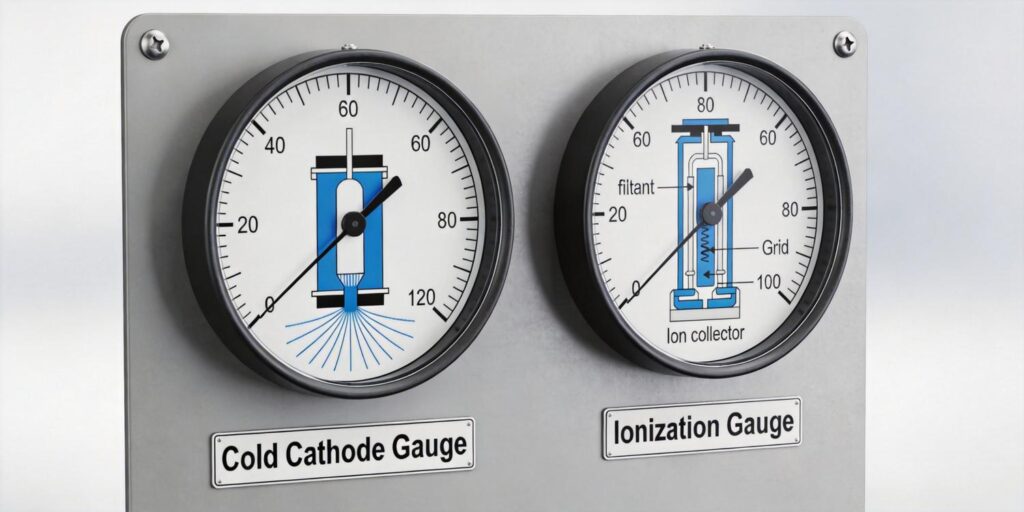
Cold cathode and ionization gauges installed on vacuum system

Cold Cathode Gauge vs Ionization Gauge: Key Differences

Measurement Principle Comparison Understanding the fundamental operating physics of vacuum gauges is essential for selecting the right instrument for high-vacuum applications. Cold cathode gauges, such as Poseidon Scientific’s VG-SM225, rely on the Penning discharge (or magnetron discharge) principle. A high voltage (typically −2000 V after startup at −2500 V) applied between a cylindrical anode and

Cold Cathode Gauge vs Ionization Gauge: Key Differences Read More »

Small vacuum gauge transmitter installed on compact system

Selecting Vacuum Gauges for Small Compact Systems

Space Constraint Challenges in Small Compact Vacuum Systems Modern vacuum applications increasingly favor miniaturization. Benchtop mass spectrometers, portable residual gas analyzers, small-scale PVD chambers, electron microscopes, and compact vacuum heat-treatment fixtures all operate in tight footprints where every cubic centimeter counts. Traditional vacuum gauges from legacy suppliers often measure several inches in diameter and require

Selecting Vacuum Gauges for Small Compact Systems Read More »

Compact vacuum gauge installed on laboratory R&D equipment

Selecting Vacuum Gauges for Laboratory R&D Equipment

Selecting Vacuum Gauges for Laboratory R&D Equipment In laboratory research and development environments, vacuum measurement is rarely a one-size-fits-all proposition. Scientists and engineers working with mass spectrometers, scanning electron microscopes, vacuum heat-treatment furnaces, and custom analytical instruments require gauges that deliver reliable performance across fluctuating pressures while fitting tight spatial constraints and integrating seamlessly with

Selecting Vacuum Gauges for Laboratory R&D Equipment Read More »

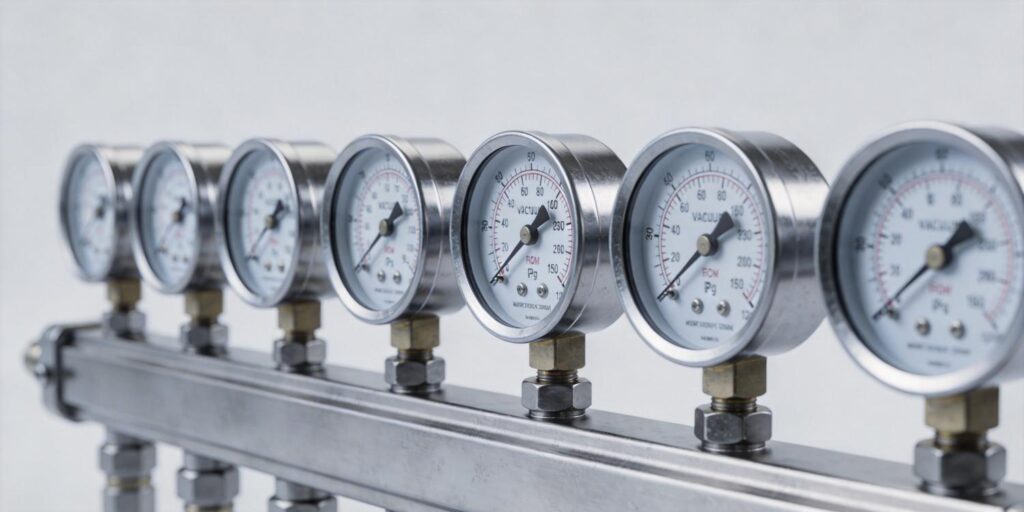
Multiple cold cathode vacuum gauges installed on manifold

Comparing Cold Cathode Gauge Brands: What to Look For

When selecting a cold cathode vacuum gauge for high-vacuum applications—whether in mass spectrometers, scanning electron microscopes, vacuum heat-treatment furnaces, or medical sterilization systems—engineers and procurement teams face a crowded market. Brands such as INFICON, MKS, and various domestic suppliers all promise reliable Penning-discharge performance, yet real-world differences in measurement range, ignition behavior, integration ease, and

Comparing Cold Cathode Gauge Brands: What to Look For Read More »

Shopping Cart
Poseidon Scientific
Privacy Overview

This website uses cookies so that we can provide you with the best user experience possible. Cookie information is stored in your browser and performs functions such as recognising you when you return to our website and helping our team to understand which sections of the website you find most interesting and useful.