Vacuum Technology Basics

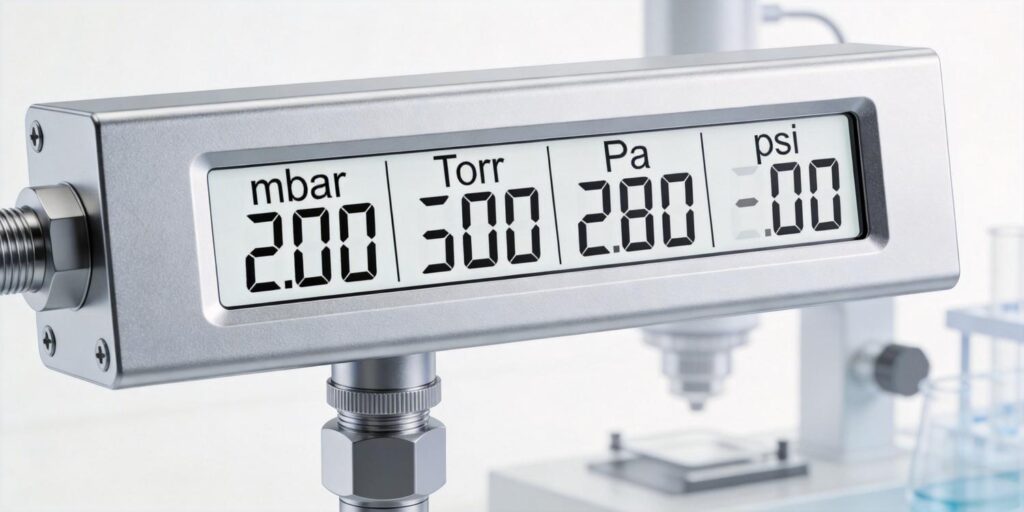
Digital vacuum gauge displaying absolute pressure value

Comparing Absolute vs Relative Vacuum Measurement Concepts

Define Absolute Pressure Reference Vacuum measurement begins with a fundamental distinction: absolute pressure is always referenced to a perfect vacuum—zero molecules, zero pressure. This zero point is universal and unchanging, independent of location, weather, or altitude. In contrast, relative (or gauge) pressure uses local atmospheric pressure as its zero reference. At sea level on a […]

Comparing Absolute vs Relative Vacuum Measurement Concepts Read More »

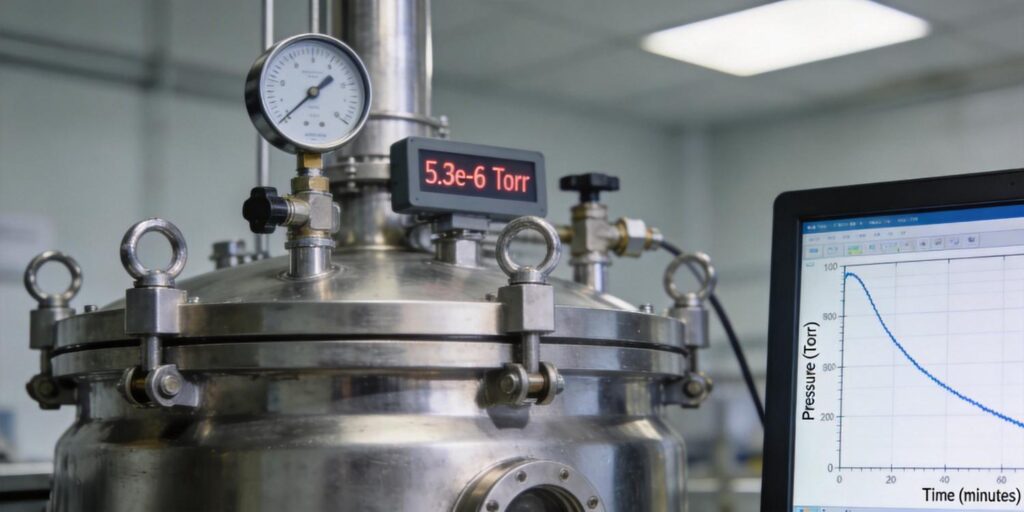
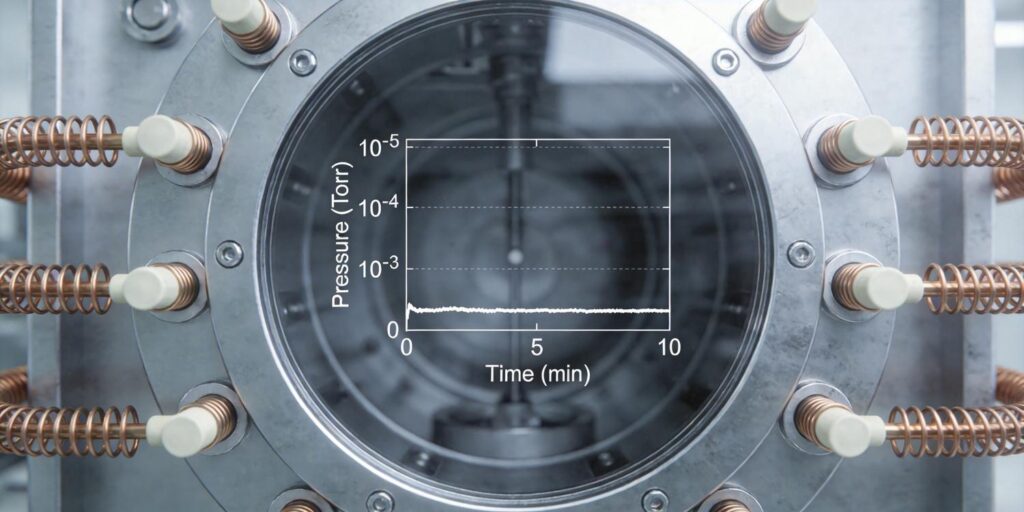
Interior of high vacuum stainless steel chamber

Understanding Molecular Flow Region in High Vacuum Measurement

Transition from Viscous to Molecular Flow In vacuum systems, gas behavior changes dramatically as pressure drops. At higher pressures (typically above ~1 Torr), gas flow is viscous or continuum: molecules collide far more frequently with each other than with chamber walls. Viscosity and pressure gradients govern transport, much like fluid flow in pipes at atmospheric

Understanding Molecular Flow Region in High Vacuum Measurement Read More »

Digital vacuum gauge display showing pressure units

Vacuum Technology Basics: Understanding Pressure Units

Pa, mbar, Torr: The Three Core Units of Vacuum Pressure Vacuum technology spans an enormous dynamic range—from atmospheric pressure down to ultra-high vacuum levels below 10−7 Torr. Because no single unit can conveniently express every value across this six-order-of-magnitude spectrum, three primary units have become industry standards: the pascal (Pa), millibar (mbar), and torr (Torr).

Vacuum Technology Basics: Understanding Pressure Units Read More »

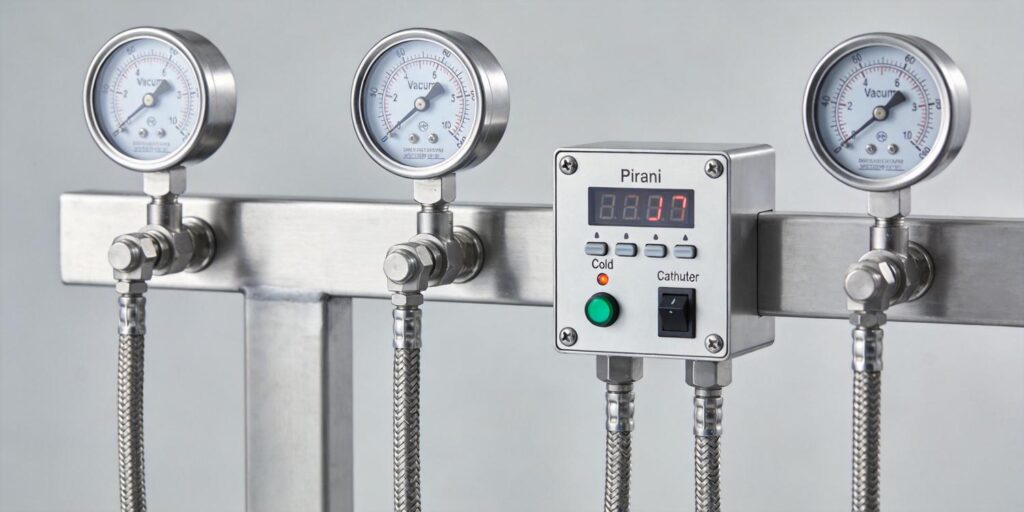
Pirani and cold cathode vacuum gauges mounted on vacuum system

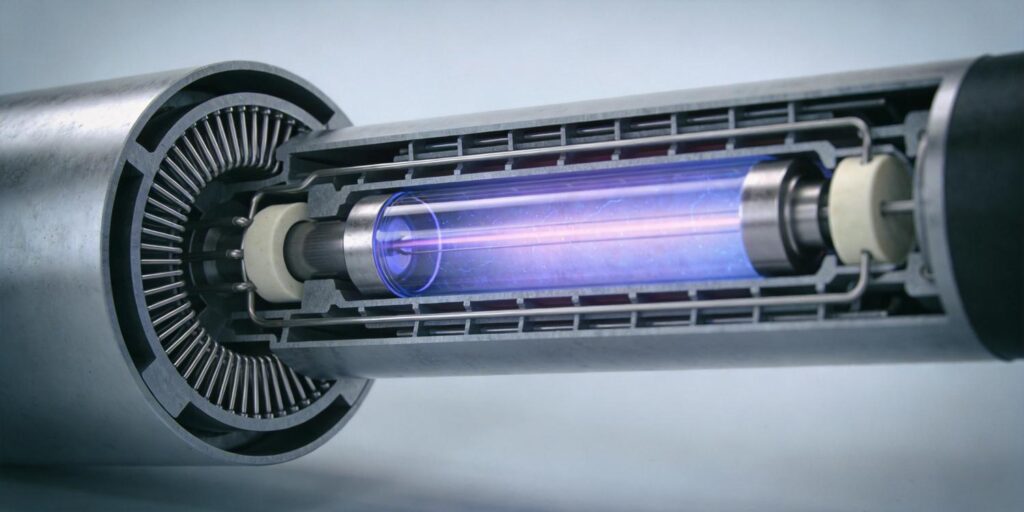
Thermal Conductivity vs Ionization Gauges Explained

Working Principles Thermal conductivity gauges and ionization gauges represent two fundamentally different approaches to vacuum measurement, each leveraging distinct physical phenomena to infer pressure. Understanding these mechanisms helps engineers select the right technology for reliable process control and system protection. Thermal Conductivity Gauges (Pirani Principle) A Pirani gauge measures pressure through the thermal conductivity of

Thermal Conductivity vs Ionization Gauges Explained Read More »

Vacuum gauge display showing different pressure units

Vacuum Measurement Units Explained: Torr, Pa, and mbar

Introduction Vacuum measurement units are more than labels—they directly affect how engineers interpret data, configure controllers, and specify process setpoints. In semiconductor fabrication, PVD coating, vacuum drying, and analytical instruments, a single misplaced decimal or misunderstood conversion can shift deposition rates, trigger false interlocks, or invalidate compliance records. The three most common units—Torr, Pa, and

Vacuum Measurement Units Explained: Torr, Pa, and mbar Read More »

Industrial vacuum gauge installed on stainless steel vacuum chamber in laboratory

Vacuum Gauge Explained: Principles, Types, and Industrial Applications

Introduction to Vacuum Measurement Vacuum measurement is the process of determining the pressure exerted by residual gas molecules inside a sealed system below standard atmospheric pressure (760 Torr). Accurate vacuum readings are essential for process repeatability, product quality, equipment longevity, and personnel safety across a wide range of industrial applications. Without reliable pressure data, contamination

Vacuum Gauge Explained: Principles, Types, and Industrial Applications Read More »

Shopping Cart
Poseidon Scientific
Privacy Overview

This website uses cookies so that we can provide you with the best user experience possible. Cookie information is stored in your browser and performs functions such as recognising you when you return to our website and helping our team to understand which sections of the website you find most interesting and useful.