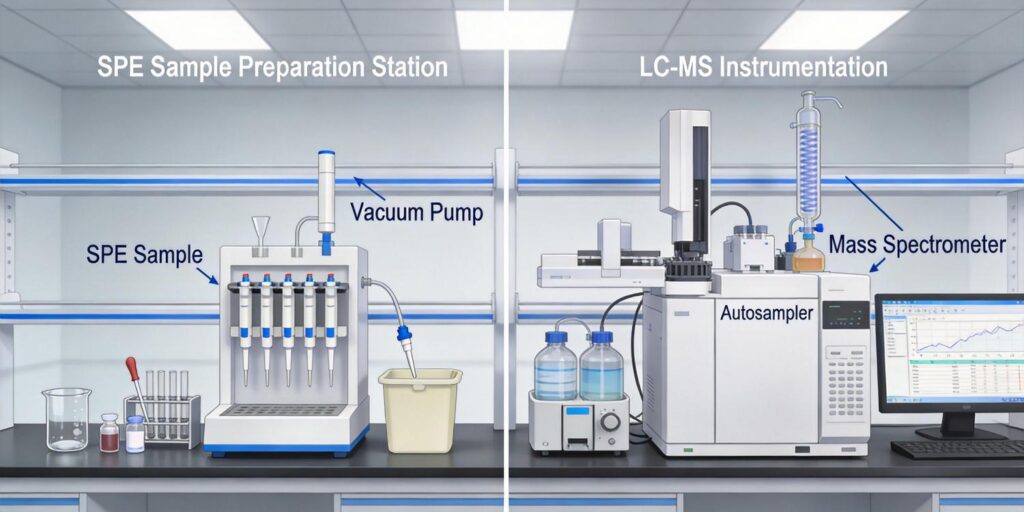
LC-MS Sample Preparation

SPE cleanup workflow used in LC-MS metabolomics analysis

SPE Cleanup for LC-MS Analysis of Metabolomics Samples

The Complexity of Metabolomics Samples Metabolomics samples represent one of the most challenging analytical matrices in modern science. Biological samples are notoriously dirty, containing thousands of chemical components ranging from small polar metabolites to large macromolecules like proteins and lipids. As noted in forensic and clinical applications, injecting these samples with minimal cleanup onto sensitive […]

SPE Cleanup for LC-MS Analysis of Metabolomics Samples Read More »

SPE sample cleanup process used to reduce LC-MS ion suppression

Reducing LC-MS Ion Suppression Using SPE Sample Cleanup

1. Causes of Ion Suppression in LC-MS Ion suppression represents one of the most significant challenges in liquid chromatography-mass spectrometry (LC-MS) analysis, particularly when dealing with complex biological or environmental matrices. This phenomenon occurs when co-eluting matrix components interfere with the ionization process of target analytes, leading to reduced signal intensity and compromised analytical performance.

Reducing LC-MS Ion Suppression Using SPE Sample Cleanup Read More »

SPE sample preparation setup for LC-MS drug screening in toxicology laboratory

Using SPE to Improve Sensitivity in LC-MS Drug Screening

Sensitivity Limitations in Direct Injection LC-MS Screening Direct injection liquid chromatography-mass spectrometry (LC-MS) screening for drugs in biological matrices like urine faces significant sensitivity challenges that can compromise analytical accuracy. The primary limitation stems from matrix effects – the suppression or enhancement of analyte ionization by co-eluting compounds. In urine toxicology screening, endogenous compounds such

Using SPE to Improve Sensitivity in LC-MS Drug Screening Read More »

SPE cartridge used for metabolite profiling sample preparation

SPE Sample Preparation for LC-MS Metabolite Profiling

Role of SPE in Metabolomics Workflows Solid Phase Extraction (SPE) serves as a critical sample preparation technique in LC-MS metabolite profiling, functioning as a bridge between complex biological samples and sensitive analytical instrumentation. In metabolomics workflows, SPE performs three essential functions: clean-up to remove matrix interferences, concentration to enhance detection sensitivity, and selective isolation of

SPE Sample Preparation for LC-MS Metabolite Profiling Read More »

SPE sample preparation integrated with LC-MS analytical workflow

LC-MS Method Integration with SPE Sample Preparation

In modern analytical laboratories, the integration of solid-phase extraction (SPE) with liquid chromatography-mass spectrometry (LC-MS) represents a critical advancement for achieving high-quality analytical results. This comprehensive guide explores the strategic integration of SPE sample preparation with LC-MS methodologies, addressing key considerations for analytical chemists, method developers, and laboratory managers. 1. The Foundational Role of SPE

LC-MS Method Integration with SPE Sample Preparation Read More »

laboratory SPE preparation workflow for metabolomics analysis

Sample Preparation Workflow for Metabolomics Studies Using SPE

Overview of Metabolomics Sample Preparation Requirements Metabolomics studies present unique challenges in sample preparation due to the vast chemical diversity of metabolites present in biological systems. These small molecules span an enormous range of physicochemical properties, from highly polar amino acids and organic acids to non-polar lipids and steroids. The primary goals of metabolomics sample

Sample Preparation Workflow for Metabolomics Studies Using SPE Read More »

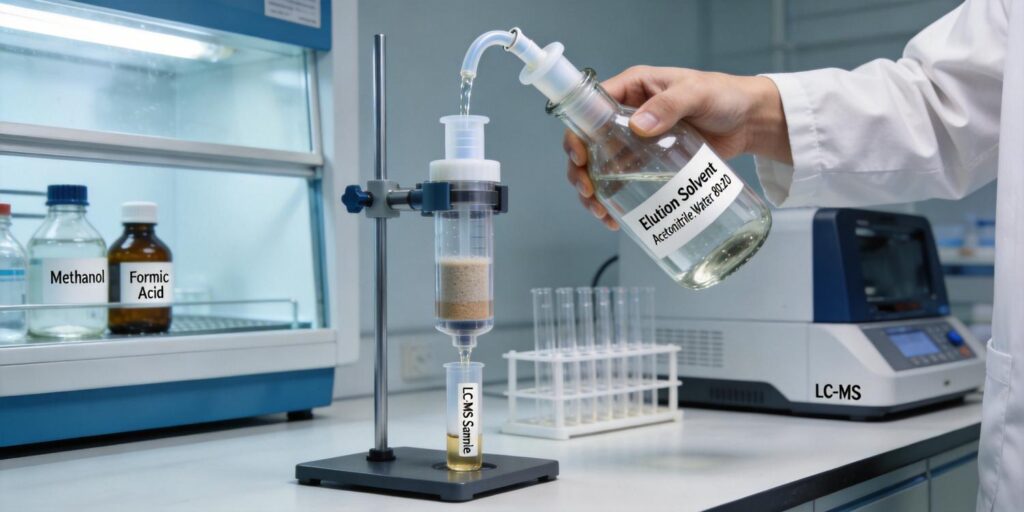
laboratory SPE elution step using solvents during LC-MS sample preparation

Optimizing SPE Elution Solvents for LC-MS Sample Preparation

1. Importance of Elution Solvent Selection in SPE The elution step represents the culmination of solid-phase extraction (SPE) methodology, where careful solvent selection determines the success of your LC-MS sample preparation. As noted in SPE literature, “Elution is most successfully accomplished with a solvent having the highest eluotropic strength toward the sorbent being used, thereby

Optimizing SPE Elution Solvents for LC-MS Sample Preparation Read More »

SPE cartridge workflow removing phospholipids from plasma samples during LC-MS sample preparation

How to Remove Matrix Phospholipids in LC-MS Sample Preparation Using SPE

Why Phospholipids Cause Ion Suppression in LC-MS Analysis Phospholipids represent one of the most significant sources of matrix effects in LC-MS analysis, particularly when dealing with biological samples like plasma and serum. These amphipathic molecules contain both hydrophobic fatty acid chains and hydrophilic phosphate head groups, making them particularly problematic for mass spectrometry workflows. The

How to Remove Matrix Phospholipids in LC-MS Sample Preparation Using SPE Read More »

SPE cleanup before LC MS analysis

LC-MS Matrix Effect Reduction Using SPE Cleanup

Sources of LC-MS Matrix Effects Liquid chromatography-mass spectrometry (LC-MS) has revolutionized analytical chemistry with its exceptional sensitivity and specificity, but it remains vulnerable to matrix effects that can compromise analytical accuracy. Matrix effects in LC-MS refer to the suppression or enhancement of analyte ionization caused by co-eluting components from the sample matrix. These effects are

LC-MS Matrix Effect Reduction Using SPE Cleanup Read More »

Shopping Cart
Poseidon Scientific
Privacy Overview

This website uses cookies so that we can provide you with the best user experience possible. Cookie information is stored in your browser and performs functions such as recognising you when you return to our website and helping our team to understand which sections of the website you find most interesting and useful.