Overview of Metabolomics Sample Preparation Requirements
Metabolomics studies present unique challenges in sample preparation due to the vast chemical diversity of metabolites present in biological systems. These small molecules span an enormous range of physicochemical properties, from highly polar amino acids and organic acids to non-polar lipids and steroids. The primary goals of metabolomics sample preparation are to isolate, concentrate, and clean up metabolites while maintaining their chemical integrity and minimizing artifacts.
According to established SPE principles, successful sample preparation for analytical techniques like LC-MS requires three fundamental objectives: providing the sample component of interest in solution, free from interfering matrix elements, and at a concentration appropriate for detection or measurement. In metabolomics, this translates to removing proteins, salts, phospholipids, and other matrix components that can interfere with LC-MS analysis while preserving the broad spectrum of metabolites present.
The complexity of biological samples demands sophisticated cleanup approaches. As noted in SPE literature, “Biological samples are notoriously dirty; injecting them with minimum cleanup onto very sensitive and expensive instruments makes very little sense.” This is particularly true for metabolomics where matrix effects can significantly impact ionization efficiency and detection sensitivity in mass spectrometry.
Key Requirements for Metabolomics Sample Preparation:
- Broad coverage of metabolites with diverse chemical properties
- Efficient removal of proteins and phospholipids
- Minimization of ion suppression effects in LC-MS
- Preservation of metabolite stability and integrity
- High reproducibility across multiple samples
- Compatibility with downstream analytical platforms
Challenges in Extracting Diverse Metabolites
The extraction of metabolites from biological matrices presents significant challenges due to their chemical diversity. Metabolites range from highly polar compounds like amino acids, sugars, and organic acids (logP < -2) to moderately polar compounds such as nucleotides and many drug metabolites (-2 < logP < 2), and finally to non-polar compounds including lipids, steroids, and fat-soluble vitamins (logP > 2). This wide polarity range makes it difficult to develop a single extraction method that efficiently recovers all metabolite classes.
Traditional liquid-liquid extraction (LLE) methods often struggle with this diversity. As SPE literature notes, “LLE is a general technique that extracts many compounds, whereas SPE gives the analyst the ability to extract a broad range of compounds with increased selectivity.” The formation of emulsions, unpredictable recoveries, and the use of large volumes of hazardous solvents further complicate LLE for metabolomics applications.
Matrix complexity adds another layer of difficulty. Biological samples contain numerous interfering components including proteins, salts, phospholipids, and other endogenous compounds that can suppress ionization in LC-MS analysis. These matrix effects can lead to false negatives or inaccurate quantification, particularly for low-abundance metabolites. The presence of these interferences necessitates careful cleanup strategies to ensure reliable analytical results.
Specific Challenges Include:
- Simultaneous extraction of hydrophilic and hydrophobic metabolites
- Minimizing metabolite degradation during sample processing
- Removing phospholipids that cause ion suppression in LC-MS
- Handling limited sample volumes while maintaining sensitivity
- Ensuring reproducibility across different sample types and batches
Role of SPE in Metabolite Cleanup and Enrichment
Solid Phase Extraction has emerged as a powerful tool for metabolomics sample preparation due to its ability to address many of the challenges mentioned above. SPE offers several advantages over traditional extraction methods, including improved throughput, decreased organic solvent usage, higher and more reproducible recoveries, cleaner extracts, and tunable selectivity through phase choices and solvent mixtures.
In metabolomics, SPE serves multiple critical functions:
1. Matrix Cleanup
SPE effectively removes proteins, phospholipids, salts, and other matrix components that interfere with LC-MS analysis. This cleanup is essential for reducing ion suppression effects and improving detection sensitivity. As noted in SPE applications, “The aim of clean-up during the sample preparation step” is to produce chromatograms with clearly identifiable signals from extracted components.
2. Metabolite Enrichment
SPE enables concentration of dilute samples and trace enrichment of compounds. This is particularly important for low-abundance metabolites that might otherwise fall below detection limits. The concentration factor potential of SPE makes it valuable for enhancing sensitivity in metabolomics studies.
3. Solvent Exchange and Compatibility
SPE allows conversion of samples into forms compatible with analytical instruments. Many analytical techniques require specific solvent environments, and SPE facilitates this conversion while maintaining metabolite integrity.
4. Sample Preservation
SPE sorbents can stabilize, sequester, and preserve analytes, allowing sample extraction to be performed “in the field” with analysis carried out days later in a different location.
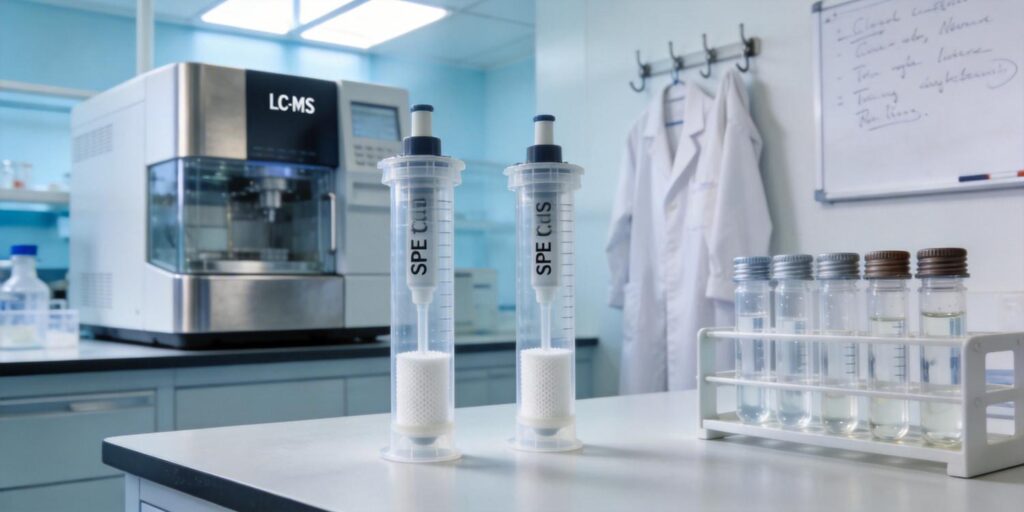
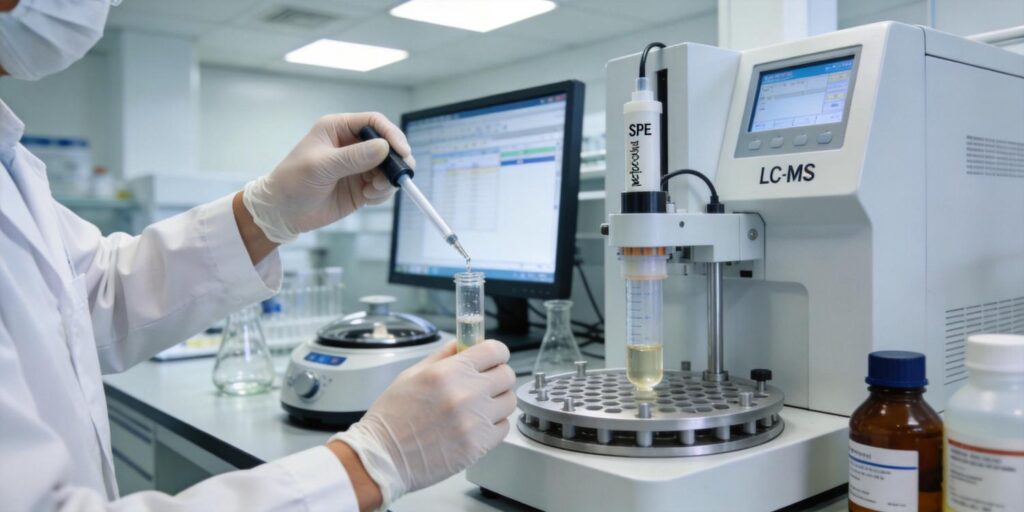
The fundamental steps for SPE in adsorption mode include prewash (to remove contaminants that could elute with analyte), preconditioning (to prepare the cartridge to accept sample), loading, washing (with solvent that won’t elute analyte), and elution (in the smallest volume possible).
Selecting Sorbent Chemistries for Metabolomics
The selection of appropriate sorbent chemistry is critical for successful metabolomics sample preparation. Different sorbents offer varying retention mechanisms and selectivity profiles, allowing researchers to tailor their extraction methods to specific metabolite classes or analytical goals.
Common SPE Sorbent Types for Metabolomics:
1. Hydrophilic-Lipophilic Balanced (HLB) Sorbents
HLB sorbents represent a breakthrough in SPE technology, offering balanced retention of both hydrophilic and lipophilic compounds. These water-wettable polymeric sorbents are stable across a wide pH range (0-14) and provide high capacity for a diverse range of metabolites. HLB sorbents eliminate the need for conditioning and equilibration steps required by traditional silica-based sorbents, simplifying protocols and reducing solvent consumption.
2. Mixed-Mode Sorbents
Mixed-mode sorbents combine reversed-phase and ion-exchange functionality for orthogonal sample preparation. These sorbents offer enhanced selectivity and specificity, making them ideal for targeted metabolomics applications. Common mixed-mode sorbents include:
- MCX (Mixed-mode Cation eXchange): For basic compounds with pKa 2-10
- MAX (Mixed-mode Anion eXchange): For acidic compounds with pKa 2-8
- WCX (Weak Cation eXchange): For strong bases and quaternary amines with pKa >10
- WAX (Weak Anion eXchange): For strong acids with pKa <1
3. Traditional Silica-Based Sorbents
While polymeric sorbents have gained popularity, traditional silica-based sorbents still play important roles in specific applications:
- C18 and C8: For non-polar metabolites through hydrophobic interactions
- Silica, Cyano, and Amino phases: For polar interactions and normal-phase applications
- Ion-exchange sorbents: For charged metabolites based on ionic interactions
Sorbent Selection Strategy:
The “2 × 4 Strategy” described in SPE literature suggests using only two protocols and four sorbents to analyze all types of compounds: acids, bases, and neutrals. This approach simplifies method development while maintaining comprehensive metabolite coverage.
Sample Loading and Washing Strategies
Proper sample loading and washing are critical for achieving optimal recovery and cleanliness in metabolomics SPE applications. These steps determine which compounds are retained on the sorbent and which are removed as interferences.
Sample Loading Considerations:
1. Sample Pretreatment: Biological samples often require pretreatment before SPE loading. Common approaches include:
- Protein precipitation using organic solvents or acids
- Dilution with buffer to improve flow characteristics
- pH adjustment to optimize retention of ionizable metabolites
- Filtration or centrifugation to remove particulates
2. Loading Conditions: The loading solvent composition significantly impacts metabolite retention. For reversed-phase SPE, samples are typically loaded in aqueous solutions with minimal organic content (usually <5% organic solvent). pH adjustment can be used to suppress ionization of acidic or basic metabolites, enhancing their retention on reversed-phase sorbents.
3. Flow Rate Control: Loading at controlled flow rates (typically 1-3 drops per second) ensures optimal interaction between metabolites and the sorbent surface. Excessive flow rates can lead to breakthrough and reduced recovery.
Washing Strategies:
Washing steps remove weakly retained matrix components while maintaining retention of target metabolites. The key principle is to use solvents strong enough to remove interferences but not strong enough to elute the analytes of interest.
1. Primary Wash: Typically uses 5-10% organic solvent in water or buffer to remove polar interferences while retaining metabolites on reversed-phase sorbents.
2. Secondary Wash: For mixed-mode sorbents, additional washing with acid or base solutions can disrupt ionic interactions with matrix components while maintaining analyte retention through combined mechanisms.
3. Drying Step: After washing, sorbent beds are often dried to remove residual water before elution. This is particularly important when using non-polar elution solvents that are immiscible with water.
Optimization Approach:
Method development should include systematic evaluation of wash solvents to identify the strongest wash that doesn’t elute target metabolites. This balance maximizes cleanup while maintaining high recovery.
LC-MS Compatibility Considerations
SPE methods for metabolomics must be carefully designed to ensure compatibility with downstream LC-MS analysis. Several factors influence this compatibility:
1. Elution Solvent Selection
The choice of elution solvent significantly impacts LC-MS performance. Ideal elution solvents should:
- Efficiently recover target metabolites
- Be compatible with LC mobile phases
- Minimize ion suppression in MS detection
- Allow for concentration if needed
Common elution solvents include methanol, acetonitrile, and mixtures with modifiers. For mixed-mode sorbents, elution typically requires solvents that disrupt both hydrophobic and ionic interactions simultaneously.
2. Matrix Effect Reduction
SPE plays a crucial role in reducing matrix effects that can suppress or enhance ionization in LC-MS. By removing phospholipids, proteins, and other endogenous compounds, SPE improves signal consistency and quantitative accuracy. Studies show that effective SPE cleanup can remove more than 95% of common matrix interferences.
3. Sensitivity Enhancement
SPE enables concentration of metabolites, improving detection limits for low-abundance compounds. The concentration factor depends on sample volume and elution volume, with typical enrichment factors ranging from 10x to 100x or more.
4. Instrument Protection
Clean SPE extracts protect LC-MS instrumentation by reducing column fouling and source contamination. This extends column life and reduces downtime for instrument maintenance.
5. Automation Compatibility
SPE methods should be designed for compatibility with automated platforms, particularly for high-throughput metabolomics studies. The 96-well plate format has become standard for automated SPE, enabling processing of large sample sets with minimal manual intervention.
Reproducibility and Quality Control in Metabolomics
Reproducibility is paramount in metabolomics studies, where small variations in sample preparation can lead to significant differences in analytical results. SPE offers several advantages for achieving consistent, high-quality data:
1. Method Standardization
Well-defined SPE protocols with controlled parameters (flow rates, solvent volumes, timing) ensure consistent performance across samples and batches. Automated SPE systems further enhance reproducibility by eliminating manual variability.
2. Quality Control Measures
Effective quality control in metabolomics SPE includes:
- Use of internal standards to monitor recovery
- Blank samples to assess background and carryover
- Quality control samples with known metabolite concentrations
- Monitoring of extraction efficiency for key metabolite classes
3. Sorbent Consistency
High-quality SPE products with consistent sorbent properties are essential for reproducible results. Manufacturers employ rigorous quality assurance programs to ensure batch-to-batch consistency in sorbent characteristics including surface area, pore size, and functional group density.
4. Recovery Optimization
SPE methods should be optimized to achieve high and consistent recovery for target metabolites. As noted in SPE literature, “SPE recoveries should exceed 90% absolute recovery. If you don’t get that kind of recovery you are not adjusting other parameters (such as solubility, pH, and solvent strength) correctly.”
5. Documentation and Traceability
Comprehensive documentation of SPE procedures, including lot numbers of consumables and detailed protocol parameters, enables traceability and facilitates troubleshooting when issues arise.
6. Validation Parameters
SPE method validation for metabolomics should assess:
- Recovery across the expected concentration range
- Precision (repeatability and reproducibility)
- Selectivity and specificity
- Carryover between samples
- Stability of metabolites during processing
By addressing these reproducibility considerations, researchers can ensure that SPE-based sample preparation contributes to reliable, high-quality metabolomics data that supports valid biological conclusions.
In conclusion, SPE represents a powerful and versatile approach for metabolomics sample preparation, offering solutions to many of the challenges inherent in analyzing complex biological samples. Through careful selection of sorbent chemistries, optimization of loading and washing conditions, and attention to LC-MS compatibility and reproducibility, researchers can develop robust SPE methods that enhance the quality and reliability of their metabolomics studies.