SPE

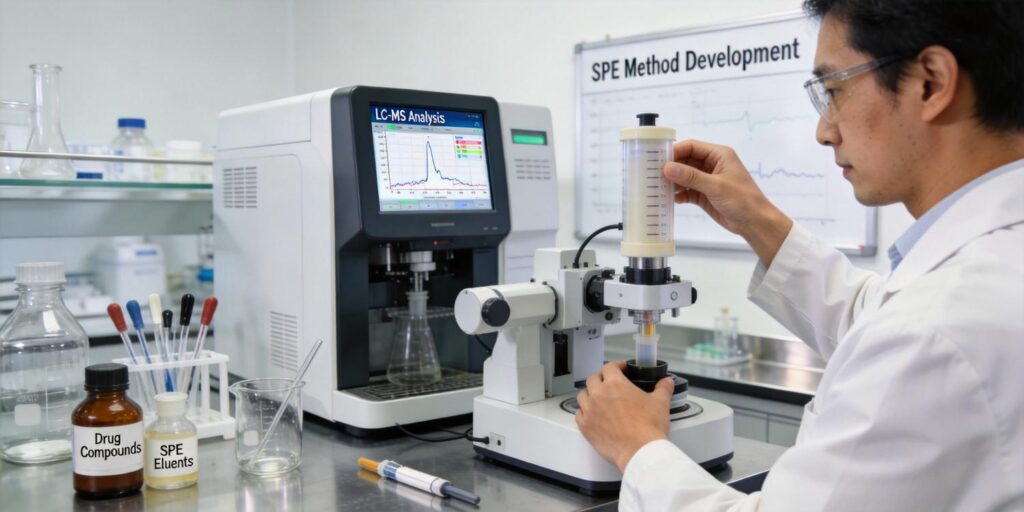
laboratory controlling SPE flow rate during extraction

How to Optimize SPE Flow Rate for Maximum Recovery

Influence of Flow Rate on Analyte Adsorption Flow rate is a critical parameter in solid phase extraction (SPE) that directly impacts the kinetics of analyte adsorption onto the sorbent surface. According to established SPE literature, the interaction between analytes and sorbent functional groups is time-dependent, requiring sufficient contact time for effective binding. When flow rates […]

How to Optimize SPE Flow Rate for Maximum Recovery Read More »

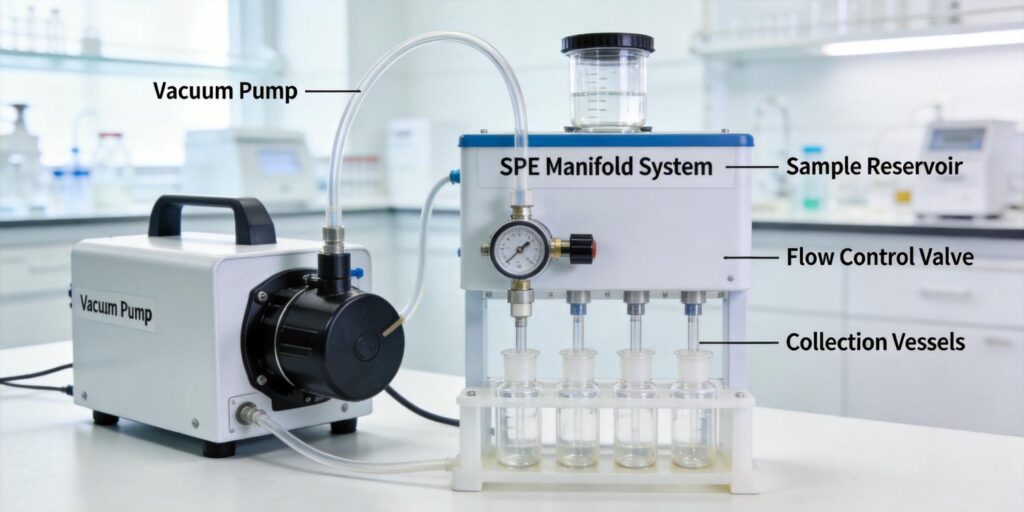
SPE cartridge in vacuum manifold during extraction

Preventing Sorbent Drying During SPE Workflows

Why Sorbent Drying Affects Analyte Retention Solid-phase extraction (SPE) relies on precise interactions between analytes and sorbent functional groups. When sorbent beds dry prematurely during workflow steps, the fundamental mechanisms of retention are compromised. As documented in SPE literature, hydrophobic bonding (van der Waals forces of 1-5 kcal/mol) requires solvated alkyl chains for effective interaction.

Preventing Sorbent Drying During SPE Workflows Read More »

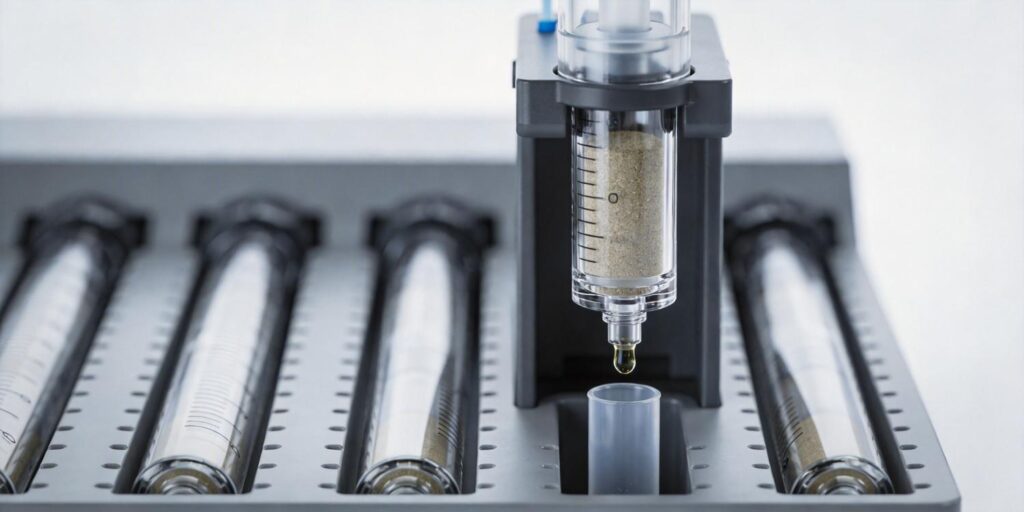
SPE cartridge extracting polar pharmaceutical compounds

Best SPE Sorbents for Extracting Polar Pharmaceuticals

Challenges in Retaining Polar Pharmaceuticals Extracting polar pharmaceuticals presents unique challenges that differ significantly from traditional non-polar compound isolation. The primary difficulty stems from the hydrophilic nature of these compounds, which typically contain multiple hydroxyl, amine, carboxyl, or other polar functional groups. These functional groups create strong interactions with aqueous matrices, making retention on conventional

Best SPE Sorbents for Extracting Polar Pharmaceuticals Read More »

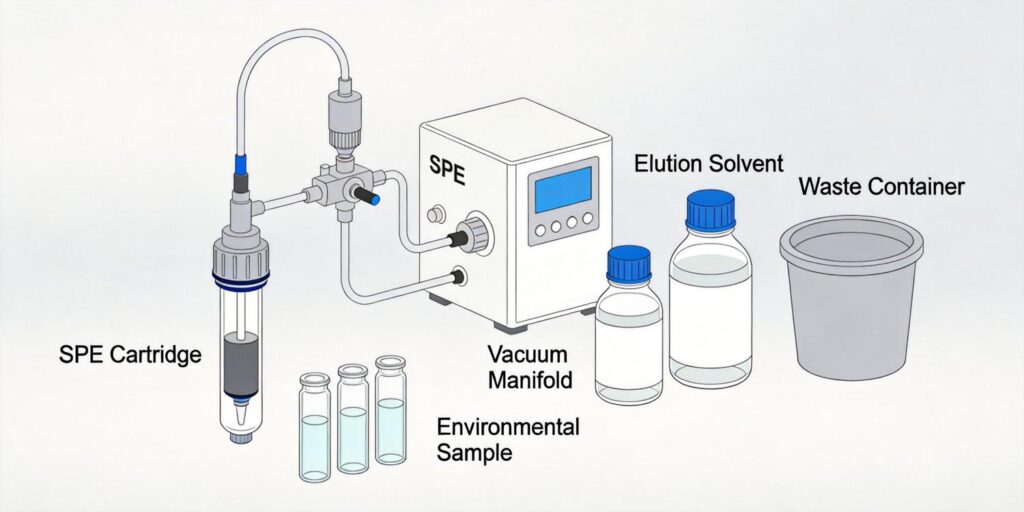
SPE cartridge extraction setup evaluating analyte breakthrough

SPE Cartridge Capacity: How to Avoid Breakthrough During Extraction

Definition of Sorbent Capacity in SPE Solid-phase extraction (SPE) sorbent capacity refers to the maximum amount of analyte that a given mass of sorbent can retain under specific conditions before breakthrough occurs. This fundamental parameter determines how much sample can be processed without losing target compounds. According to Simpson’s comprehensive text on SPE principles, the

SPE Cartridge Capacity: How to Avoid Breakthrough During Extraction Read More »

laboratory conditioning SPE cartridges before sample loading

Step-by-Step Guide to SPE Conditioning and Equilibration

Purpose of Conditioning in SPE Workflows Solid-phase extraction (SPE) conditioning serves as the critical foundation for successful analyte recovery and reproducible results. When SPE cartridges are shipped, they arrive in a dry state for stability and packaging purposes. The primary function of conditioning is to activate the sorbent’s functional groups by expanding them away from

Step-by-Step Guide to SPE Conditioning and Equilibration Read More »

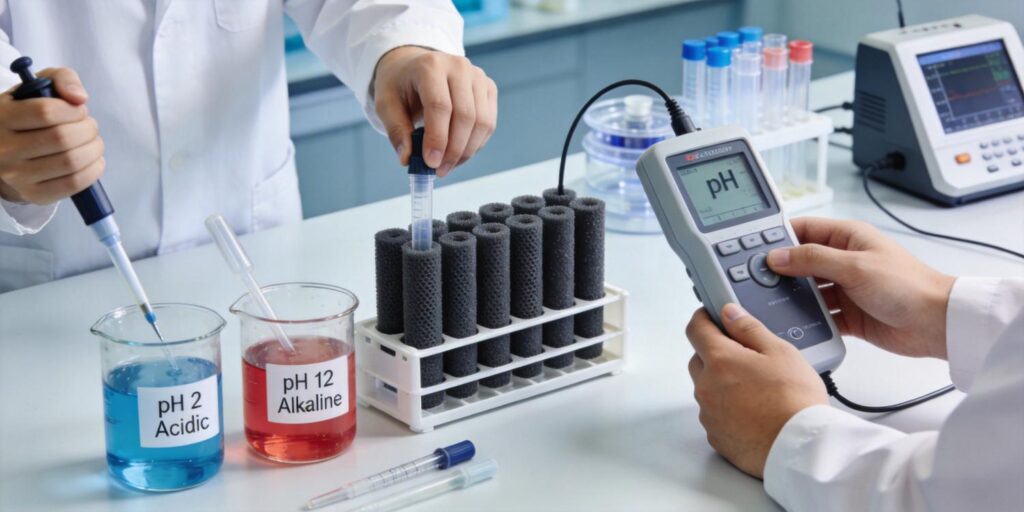
laboratory adjusting sample pH before ion exchange SPE extraction

How Sample pH Influences Retention in Ion Exchange SPE

Ionization of Analytes in Acidic and Basic Environments The foundation of ion exchange solid-phase extraction (SPE) lies in understanding how analytes ionize under different pH conditions. According to the Brønsted-Lowry theory, acids donate protons while bases accept them. The extent of ionization is quantified by the acid dissociation constant (Ka) and its negative logarithm, pKa.

How Sample pH Influences Retention in Ion Exchange SPE Read More »

polymeric SPE cartridge used in laboratory sample preparation

Why Polymer-Based SPE Cartridges Perform Better in Extreme pH Conditions

1. Limitations of Silica Sorbents Under Extreme pH Conditions Silica-based solid phase extraction (SPE) sorbents have been the workhorse of sample preparation for decades, accounting for approximately 90% of extraction columns manufactured. However, their performance is severely compromised when operating outside their optimal pH range of 2.0 to 9.0. Below pH 2.0, the Si-C bonds

Why Polymer-Based SPE Cartridges Perform Better in Extreme pH Conditions Read More »

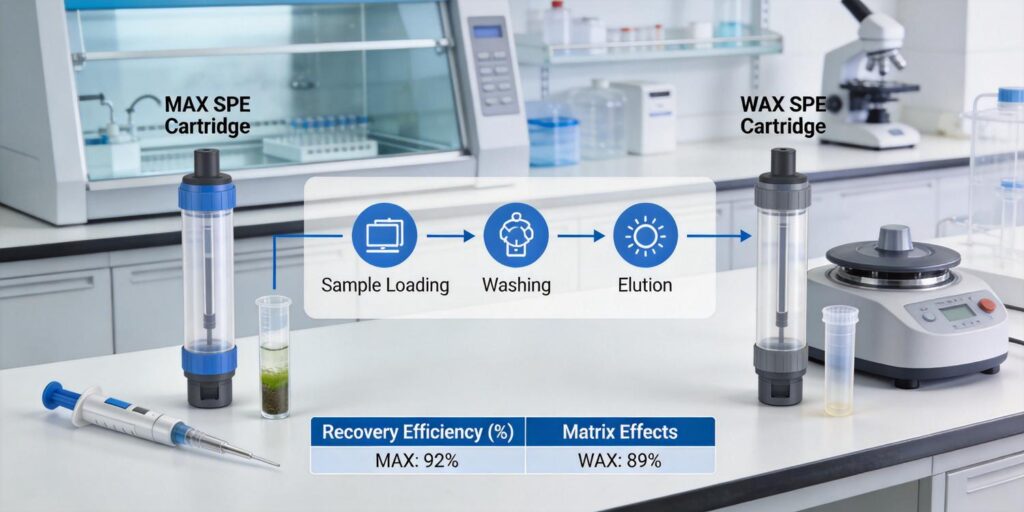
comparison of MAX and WAX SPE cartridges used for acidic compound extraction

When to Use MAX vs WAX SPE for Acidic Compound Extraction

Differences Between Strong and Weak Anion Exchange Sorbents In solid phase extraction (SPE), understanding the fundamental differences between strong and weak anion exchange sorbents is crucial for selecting the appropriate cartridge for acidic compound extraction. The key distinction lies in their ionization behavior across the pH spectrum. MAX (Mixed-mode Anion eXchange) is a strong anion

When to Use MAX vs WAX SPE for Acidic Compound Extraction Read More »

polymeric HLB SPE cartridge used in laboratory sample preparation workflow

Understanding the Chemistry of HLB SPE Sorbents in Sample Preparation

Structural Composition of Hydrophilic-Lipophilic Balanced (HLB) Polymeric Sorbents Hydrophilic-lipophilic balanced (HLB) polymeric sorbents represent a significant advancement in solid-phase extraction technology, first introduced commercially in 1996 with Waters’ Oasis HLB. Unlike traditional silica-based sorbents, HLB materials are constructed from a unique water-wettable copolymer that combines both hydrophilic and lipophilic properties in a balanced architecture. The

Understanding the Chemistry of HLB SPE Sorbents in Sample Preparation Read More »

laboratory troubleshooting matrix effects in SPE sample preparation

SPE Troubleshooting: Why Are Your Matrix Effects Still High?

Matrix effects in LC-MS analysis represent one of the most persistent challenges in analytical chemistry, particularly when solid-phase extraction (SPE) cleanup fails to deliver the expected signal enhancement. As Dr. Xu, product manager at Poseidon Scientific, I’ve observed countless cases where laboratories struggle with residual matrix suppression despite implementing SPE protocols. This comprehensive troubleshooting guide

SPE Troubleshooting: Why Are Your Matrix Effects Still High? Read More »

Shopping Cart
Poseidon Scientific
Privacy Overview

This website uses cookies so that we can provide you with the best user experience possible. Cookie information is stored in your browser and performs functions such as recognising you when you return to our website and helping our team to understand which sections of the website you find most interesting and useful.