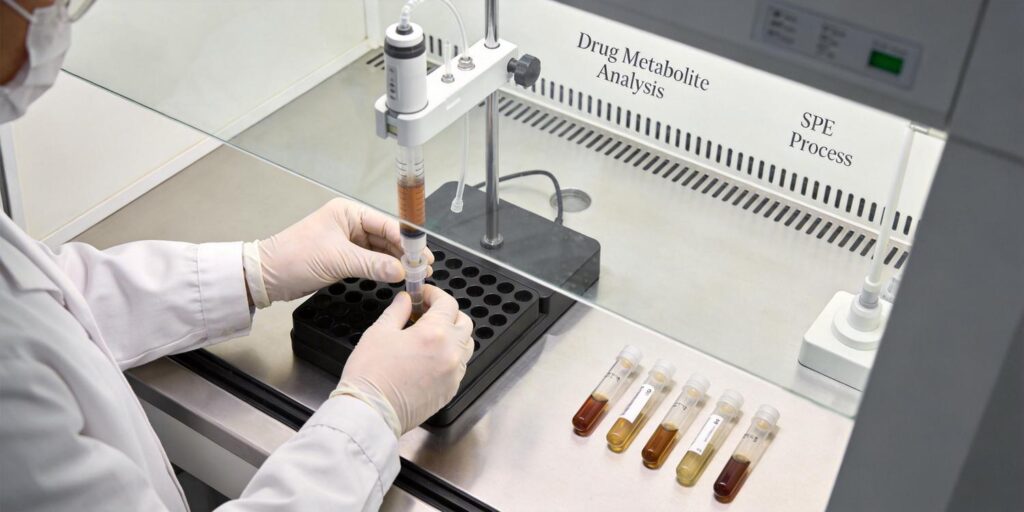
The Critical Role of Impurity Profiling in Pharmaceutical Quality Control
Pharmaceutical impurity profiling represents one of the most critical aspects of drug development and quality control. According to regulatory guidelines from ICH (International Council for Harmonisation), impurities in drug products must be identified, quantified, and controlled to ensure patient safety and product efficacy. The United States Pharmacopeia (USP) and British Pharmacopoeia (BP) establish stringent limits for various impurity classes, including process-related impurities, degradation products, and residual solvents.
Impurities can originate from multiple sources: starting materials, synthetic intermediates, by-products, degradation products, excipients, and packaging materials. Their presence, even at trace levels, can significantly impact drug stability, bioavailability, and therapeutic efficacy. More critically, certain impurities may exhibit toxicological effects that compromise patient safety. The pharmaceutical industry’s commitment to impurity profiling reflects both regulatory compliance and ethical responsibility toward patient welfare.
Analytical Challenges in Complex Drug Formulations
Modern pharmaceutical formulations present significant analytical challenges for impurity detection. Tablets, capsules, creams, and other dosage forms contain complex matrices of active pharmaceutical ingredients (APIs) combined with various excipients including binding agents, fillers, coating agents, dissolution regulators, and preservatives. These matrix components often interfere with impurity detection through spectral overlap, chromatographic co-elution, or matrix effects in mass spectrometry.
Research demonstrates that direct analysis of pharmaceutical formulations without proper sample preparation often yields inflated assay results due to matrix interference. For instance, formulations containing parabens (methyl- and propyl-p-hydroxybenzoate) or butylhydroxyanisole can significantly interfere with spectrophotometric assays, while aromatic excipients like phenylethyl alcohol may affect measurements at specific wavelengths. The high concentration of APIs relative to impurities (often at 0.1% or lower levels) further complicates detection, requiring effective sample clean-up and concentration techniques.
Strategic SPE Sorbent Selection for Impurity Extraction
Understanding SPE Mechanisms
Solid-phase extraction operates through three primary mechanisms: adsorption (reversed-phase and normal-phase), ion exchange, and mixed-mode interactions. The selection of appropriate sorbent chemistry depends on the physicochemical properties of both target impurities and the drug matrix. According to industry surveys, over two-thirds of pharmaceutical SPE applications utilize just four sorbents: C18, C8, CN, and silica (SI), with C18 being the most widely employed.
Sorbent Selection Guidelines
For hydrophobic, basic drugs like promethazine, C18 sorbents effectively isolate analytes from aqueous-methanol solutions. After washing with the same solvent system to remove excipients, the drug can be recovered with methanol. For basic, hydrophilic drugs such as chlorhexidine and benzydamine, strong cation exchange (SCX) materials prove more effective. At pH 4.5, protonated chlorhexidine retains on PRS sorbents while uncharged excipients pass through, with subsequent elution at pH 7.4 providing quantitative recovery.
Ion-exchange methodology also suits hydrophobic, acidic drugs like ketoprofen (pKa=5.9) and ibuprofen (pKa=5.2). In carboxylate form within basic solvent systems, these drugs retain on strong anion exchange (SAX) sorbents, allowing elimination of neutral components like parabens that could interfere with spectrophotometric determination.
Diol sorbents offer versatility for neutral or acidic drugs of varying polarity, such as hydrocortisone acetate, fentiazac, and piroxicam. By adjusting dichloromethane-n-hexane ratios to favor sorbent-analyte interactions over matrix-analyte interactions, drugs adsorb onto diol sorbents while most excipients eliminate.
The SPE Triangle: Balancing Recovery, Clean-up, and Matrix Compatibility
Successful SPE method development requires balancing three competing factors: analyte recovery/concentration, matrix clean-up effectiveness, and sample matrix compatibility. An ideal sorbent for maximum recovery may not provide optimal clean-up, while optimum clean-up might require a sorbent incompatible with the sample matrix. This triangular relationship guides method optimization, often requiring compromise between these competing objectives.
Comprehensive Purification Workflow for Tablet Extracts
Sample Preparation Fundamentals
Tablet analysis typically begins with powdering or grinding the dosage form, followed by suspension in appropriate extraction solvents. The choice of solvent system depends on drug solubility, impurity characteristics, and subsequent analytical requirements. For many formulations, initial extraction in HPLC mobile phase followed by filtration provides a suitable starting point.
SPE Protocol Optimization
The standard SPE workflow comprises five fundamental steps:
- Conditioning: Solvates the SPE column and normalizes the column environment to the sample matrix, removing microparticulates and interferents.
- Sample Application: Diffusion of sample through sorbent bed for binding of target compounds to sorbent functional groups.
- Washing: Removal of excess sample matrix and unretained compounds using solvents that won’t elute target analytes.
- Drying: Removal of aqueous or immiscible solvents to prepare sorbent for elution solvent.
- Elution: Selective release of compounds through disruption of functional binding mechanisms.
Practical Application Example
For vitamin B12 extraction from tablets, researchers demonstrated a simple SPE procedure as an alternative to older, less efficient methods. The analyte retained on a PH sorbent after passage through a “scrubber” SAX cartridge to which the analyte does not retain. Similarly, SCX sorbents effectively removed antimicrobial preservative interference in cosmetic formulations during formaldehyde analysis.
Advanced LC-MS Analysis of Impurity Profiles
Chromatographic Separation Strategies
Modern UPLC systems with sub-2μm particle columns provide superior resolution for complex impurity profiles. For paroxetine impurity analysis, ACQUITY CSH Fluoro-Phenyl columns (2.1 × 100 mm, 1.7 μm) with methanol/water/acetic acid gradients effectively separate trans-4-phenyl-3-[(3,4-methylenedioxy)phenoxymethyl]-piperidine hydrochloride, cis-paroxetine, paroxetine hydrochloride, and related impurities. Similar approaches work for clozapine impurity profiling using phenyl-hexyl columns with acetonitrile/water/formic acid gradients.
Mass Spectrometric Detection
LC-MS systems, particularly those with tandem mass spectrometry capabilities, provide unparalleled sensitivity and specificity for impurity identification. Extracted ion chromatograms at specific m/z values enable detection of trace impurities even in complex matrices. For clozapine analysis, monitoring m/z 313.1, 345.1, 539.2, and 245.0 allows comprehensive impurity profiling with detection limits suitable for regulatory requirements.
Data Interpretation and Quantification
Proper impurity quantification requires careful calibration with authentic standards and consideration of matrix effects. Signal-to-noise ratio (S/N) optimization often proves more critical than absolute recovery percentages. If acceptable detection limits achieve without interfering compounds at only 30% recovery, higher recovery may not be necessary and could actually increase interferences and noise.
Regulatory Compliance Considerations and Method Validation
ICH Guidelines and Pharmacopeial Standards
ICH Q3A(R2) and Q3B(R2) guidelines establish thresholds for identification, qualification, and reporting of impurities in new drug substances and products. These guidelines classify impurities based on maximum daily dose and establish reporting thresholds (typically 0.05-0.1%), identification thresholds (0.10-0.5%), and qualification thresholds (0.15-1.0%).
Method Validation Requirements
Validated analytical methods must demonstrate specificity, accuracy, precision, detection limit, quantitation limit, linearity, range, and robustness. For impurity methods, specificity proves particularly challenging due to the need to separate and quantify multiple compounds at trace levels in complex matrices. Method robustness testing should include variations in SPE conditions, including sorbent lot-to-lot consistency, solvent purity, pH adjustments, and flow rates.
Documentation and Quality Systems
Comprehensive documentation of SPE procedures, including sorbent specifications, conditioning protocols, washing solvents, elution conditions, and recovery data, forms an essential component of regulatory submissions. Quality systems should include regular testing of SPE cartridges for potential contaminants and verification of recovery consistency across multiple batches.
Future Trends and Technological Advances
Emerging SPE technologies include mixed-mode sorbents combining reversed-phase and ion-exchange properties, restricted access media for direct biological fluid analysis, and immunoaffinity sorbents for specific impurity classes. Automation through 96-well plate formats and online SPE-LC-MS systems continues to improve throughput, reproducibility, and compliance with Good Laboratory Practice (GLP) requirements.
As regulatory standards evolve and analytical technologies advance, SPE methods for pharmaceutical impurity detection will continue to play a critical role in ensuring drug safety, quality, and efficacy. Proper method development, validation, and implementation remain essential for pharmaceutical manufacturers committed to patient safety and regulatory compliance.