Maintenance & Troubleshooting

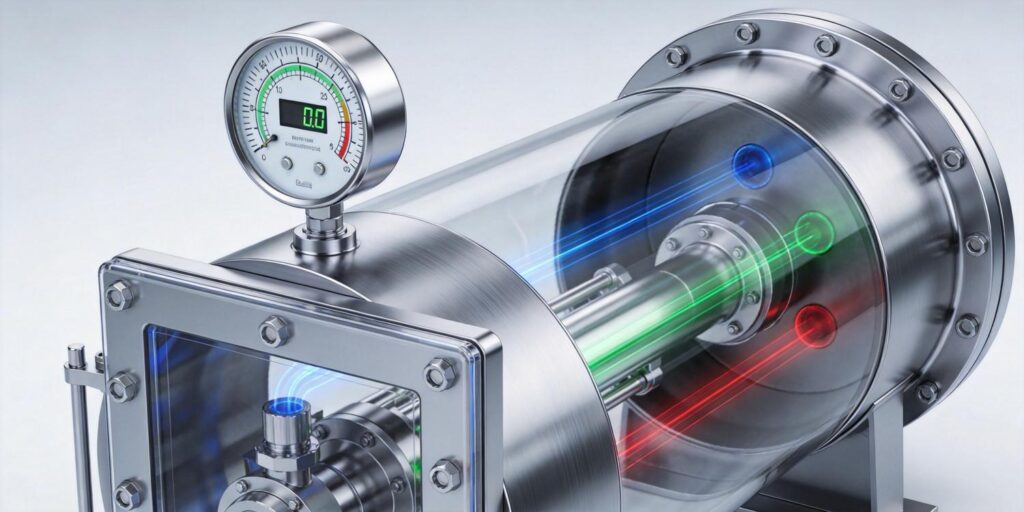
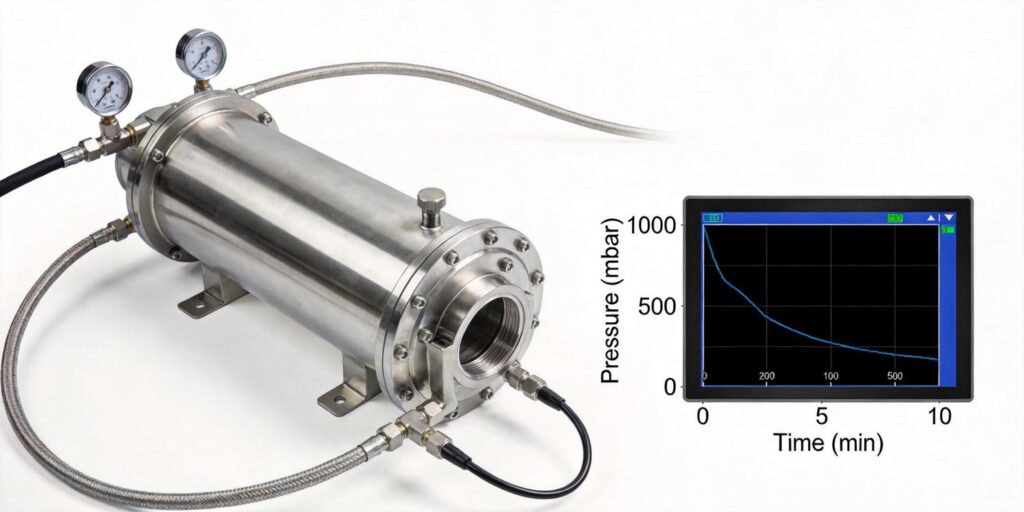
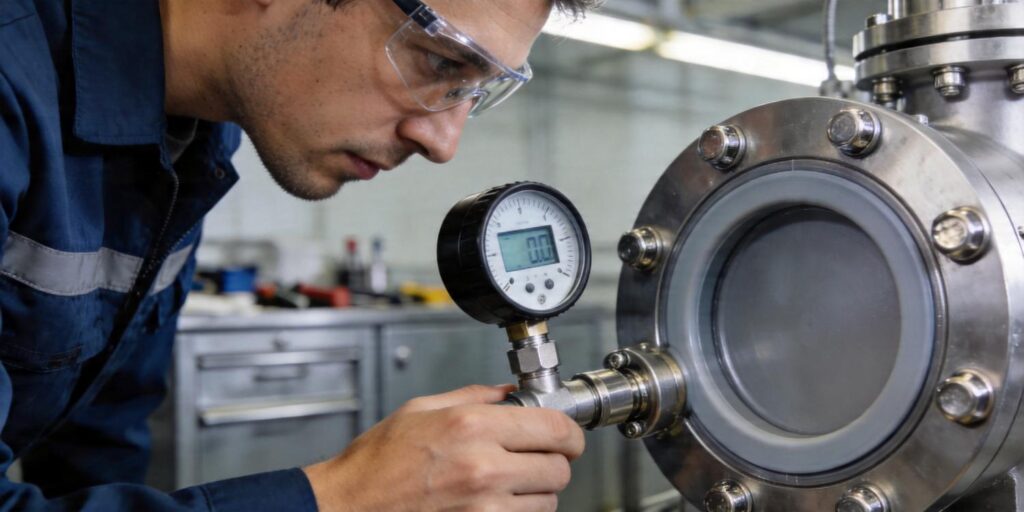
Cold cathode vacuum gauge mounted on vented chamber

Cold Cathode Gauge Recovery After Exposure to Atmosphere

Recovering Your Cold Cathode Vacuum Gauge After Atmospheric Exposure In high-vacuum systems, brief exposure to atmosphere is inevitable—whether during chamber maintenance, sample loading, or routine venting. For the VG-SM225 Cold Cathode Vacuum Gauge from Poseidon Scientific, such events introduce temporary challenges to plasma discharge stability. Unlike hot-cathode gauges, cold-cathode designs rely on Penning discharge, which […]

Cold Cathode Gauge Recovery After Exposure to Atmosphere Read More »

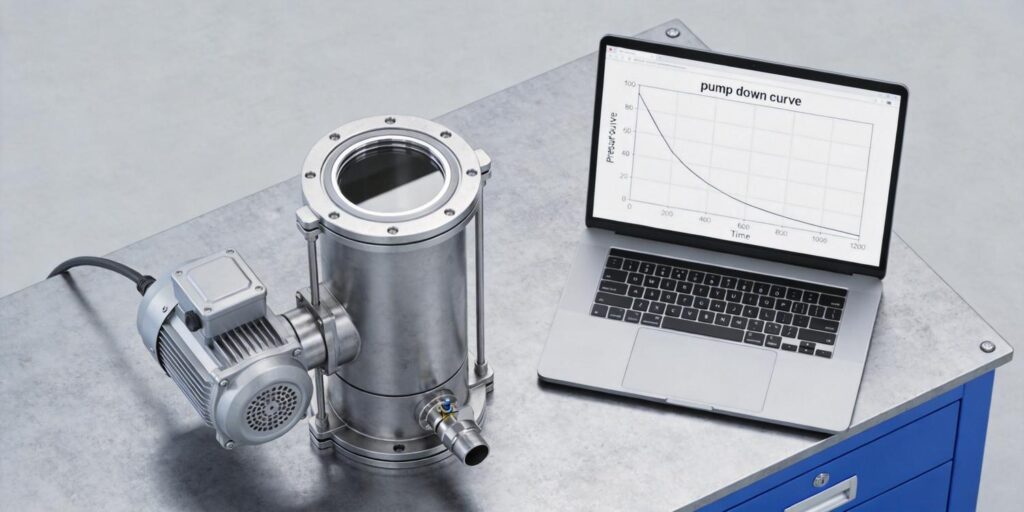
Pirani vacuum transmitter mounted on production vacuum line

Thermal Drift in Pirani Gauges During Long Production Runs

In long-duration production runs—such as continuous PVD coating, vacuum heat treatment, or 24/7 semiconductor processing—Pirani vacuum gauges face a subtle but persistent challenge: thermal drift. Over hours or days of continuous operation, small changes in filament temperature, ambient conditions, and electronic components accumulate, shifting the reported pressure by 10–30 % even when actual chamber vacuum

Thermal Drift in Pirani Gauges During Long Production Runs Read More »

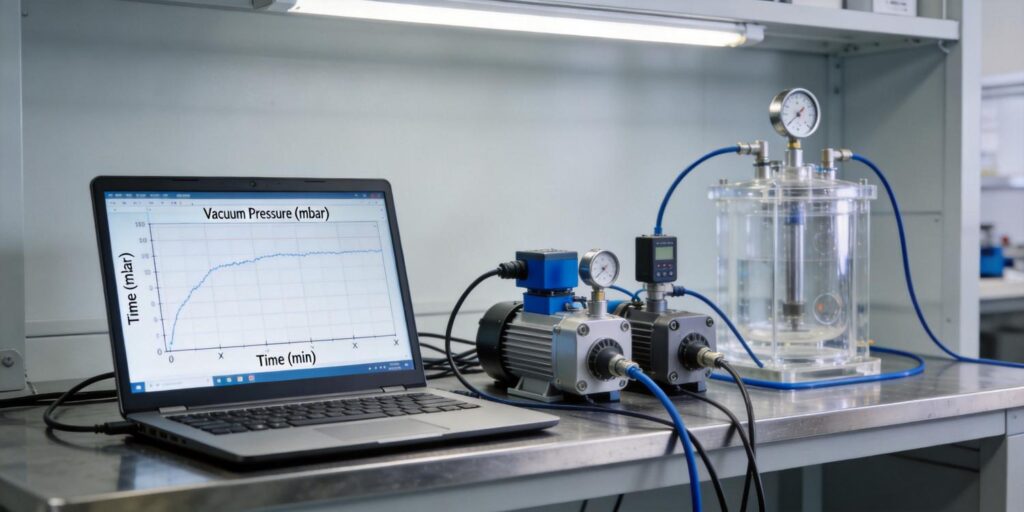
Vacuum gauge installed on chamber during venting

Vacuum Gauge Failure After Sudden Venting: Root Cause Analysis

Sudden venting—dropping a vacuum chamber from high vacuum to atmosphere in seconds—remains one of the most common causes of premature vacuum gauge failure. Engineers and maintenance teams report filament burnout in Pirani transmitters, erratic readings or permanent electrode damage in cold-cathode gauges, and occasional electronics faults after unplanned fast vents. These failures are not random;

Vacuum Gauge Failure After Sudden Venting: Root Cause Analysis Read More »

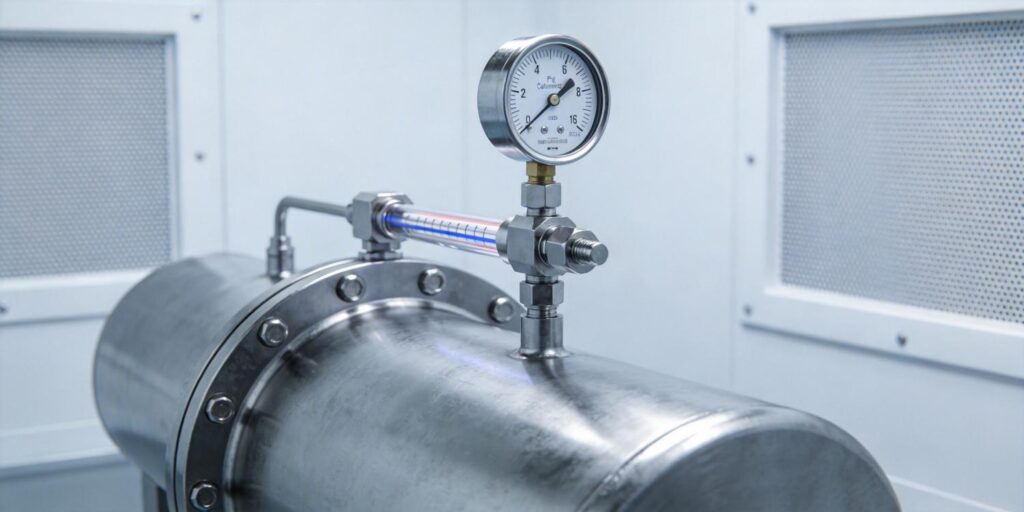
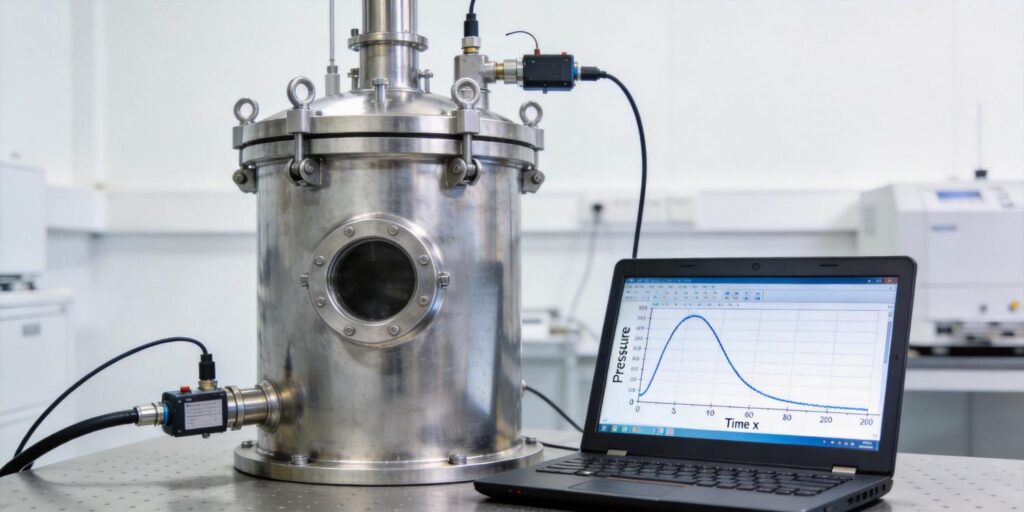
Industrial vacuum gauges installed on production line

Vacuum Gauge MTBF: What Reliability Metrics Should You Track?

Define MTBF in Industrial Context Mean Time Between Failures (MTBF) quantifies the average operating hours a vacuum gauge can deliver before requiring replacement or major service. In industrial vacuum applications—mass spectrometers, vacuum furnaces, PVD coating lines, battery dry rooms, and electron-beam systems—MTBF is not a laboratory ideal but a practical reliability metric tied directly to

Vacuum Gauge MTBF: What Reliability Metrics Should You Track? Read More »

Vacuum gauge calibrated at atmospheric pressure

Vacuum Gauge Zero Offset Adjustment Procedure

When Zero Adjustment Is Required Zero offset in vacuum transmitters refers to a systematic shift where the gauge reads a non-zero pressure at true atmosphere (≈760 Torr) or fails to approach zero at base vacuum. For Poseidon Scientific’s VG-SP205 Pirani Vacuum Transmitter and VG-SM225 Cold Cathode Vacuum Gauge, such offsets are rare thanks to factory

Vacuum Gauge Zero Offset Adjustment Procedure Read More »

Vacuum gauge monitoring isolated vacuum chamber

Vacuum Gauge Drift vs System Leak: How to Differentiate

Baseline Stability Test Distinguishing genuine system leaks from vacuum-gauge drift begins with a simple, repeatable baseline stability test. Pump the chamber to a known low-pressure setpoint—typically 10⁻⁴ Torr for Pirani range or 10⁻⁶ Torr for cold-cathode verification—using a clean, oil-free or well-trapped system. Isolate the pump and close all valves, then record the gauge output

Vacuum Gauge Drift vs System Leak: How to Differentiate Read More »

Vacuum pump system with installed vacuum gauge and oil trap

Vacuum Gauge Failure Due to Oil Backstreaming

Oil Vapor Migration Mechanism Oil backstreaming remains one of the most common yet preventable causes of vacuum-gauge failure in systems backed by oil-sealed rotary-vane or diffusion pumps. The mechanism is rooted in molecular-flow physics. When chamber pressure drops below ~10⁻² Torr, the mean free path of gas molecules exceeds the diameter of connecting tubing. Oil

Vacuum Gauge Failure Due to Oil Backstreaming Read More »

Vacuum gauge installed on industrial stainless steel pipeline

Vacuum Gauge Installation Angle: Does Orientation Matter?

Sensor Structural Design Differences Vacuum gauges come in two primary technologies for high-vacuum monitoring: Pirani thermal conduction gauges and cold-cathode ionization gauges. Their internal architectures directly influence how installation orientation affects performance, reliability, and contamination resistance. The VG-SP205 Pirani Vacuum Transmitter relies on a platinum filament suspended in a compact stainless-steel envelope. Heat loss from

Vacuum Gauge Installation Angle: Does Orientation Matter? Read More »

Vacuum gauge digital display during system startup

Vacuum Gauge Warm-Up Time: Why Stability Takes 10-20 Minutes

Sensor Thermal Equilibrium Explanation Vacuum gauges, whether thermal-conductivity or ionization types, require time to reach thermal equilibrium before delivering stable, repeatable readings. In the Poseidon Scientific VG-SP205 Pirani Vacuum Transmitter, a platinum filament is resistively heated to a constant temperature while the electronics monitor the power needed to maintain that set point. Immediately after power-on,

Vacuum Gauge Warm-Up Time: Why Stability Takes 10-20 Minutes Read More »

Technician installing vacuum gauge on stainless vacuum pipe

Why Your Vacuum Gauge Reads Differently After Maintenance

Reassembly Sealing Differences Maintenance on a cold-cathode gauge almost always involves disassembly. With the Poseidon Scientific VG-SM225 Cold Cathode Vacuum Gauge, the sensor head is intentionally removable without breaking the vacuum seal on the chamber. Operators unscrew the “工”-shaped electrode stack, lightly abrade the stainless-steel cathode and anode surfaces with 200- or 500-mesh sandpaper to

Why Your Vacuum Gauge Reads Differently After Maintenance Read More »

Shopping Cart
Poseidon Scientific
Privacy Overview

This website uses cookies so that we can provide you with the best user experience possible. Cookie information is stored in your browser and performs functions such as recognising you when you return to our website and helping our team to understand which sections of the website you find most interesting and useful.