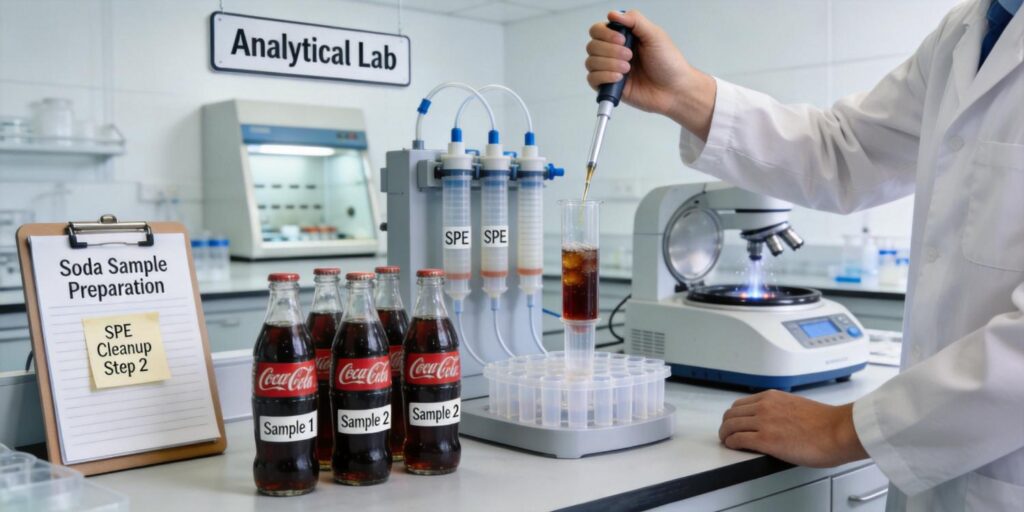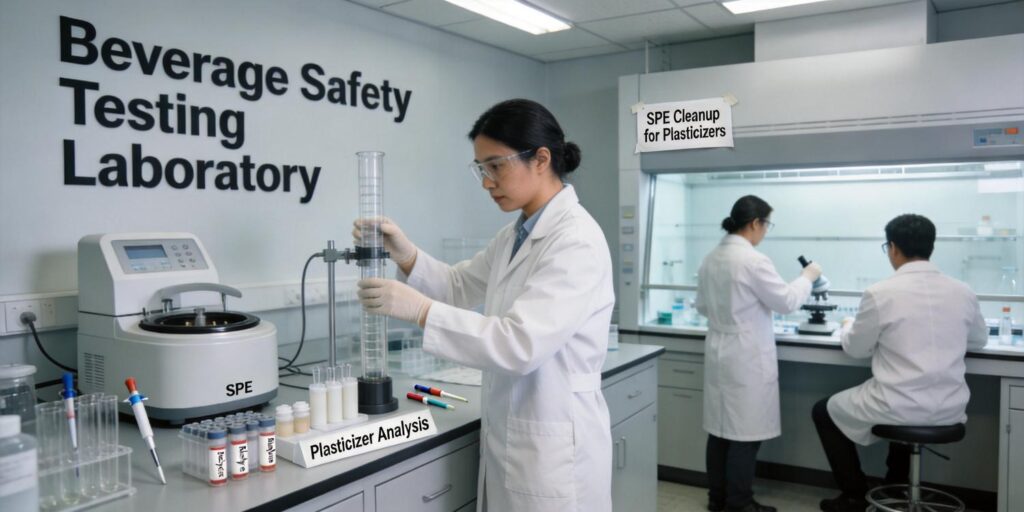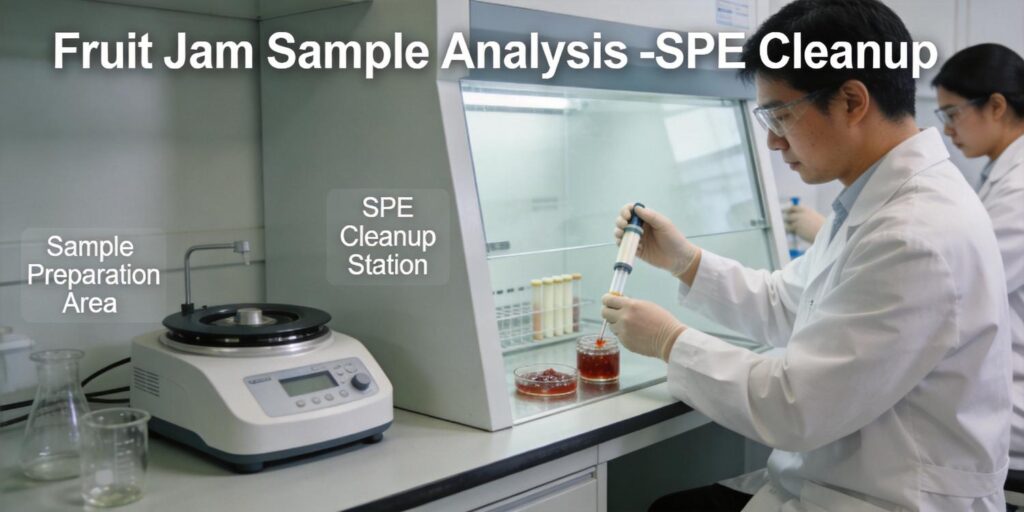
SPE Workflow for Removing Sugars from Beverage Samples Prior to LC Analysis
SPE Workflow for Removing Sugars from Beverage Samples Prior to LC Analysis Read More »
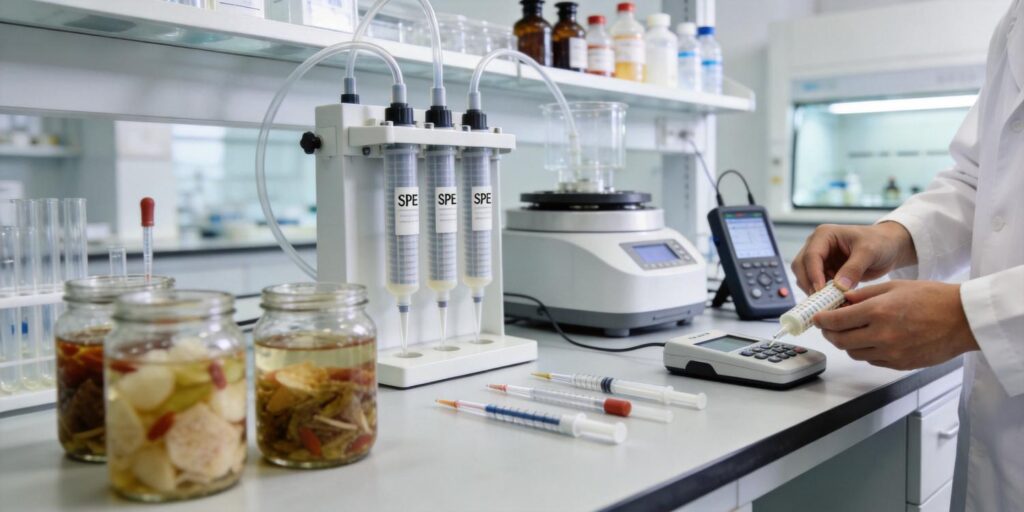
Common Pesticide Residues in Fruit Samples Fruit samples present unique challenges for pesticide residue analysis due to their complex matrices containing sugars, organic acids, pigments, and varying water content. The most commonly encountered pesticide residues in fruits span multiple chemical classes, each requiring specific analytical approaches. Organochlorine pesticides such as DDT, DDE, DDD, endosulfan, and
Solid Phase Extraction for Pesticide Residue Analysis in Fruits Read More »
1. Mycotoxin Contamination Overview Mycotoxins represent a significant food safety concern in grain commodities worldwide. These toxic secondary metabolites produced by fungi such as Aspergillus, Fusarium, and Penicillium species can contaminate various grains including corn, wheat, rice, and barley. Among the most concerning mycotoxins are aflatoxins (B1, B2, G1, G2), ochratoxin A, fumonisins, deoxynivalenol, and
SPE Cleanup for Mycotoxin Detection in Grain Samples Read More »
Regulatory Monitoring of Veterinary Drugs Veterinary drug residue monitoring in meat products represents a critical public health safeguard implemented by regulatory agencies worldwide. The detection of antibacterial drugs, sulfonamides, and other therapeutic agents in animal tissues requires robust analytical methodologies that can achieve detection limits at parts-per-billion (ppB) levels. As noted in the literature, “antibacterial
Extracting Veterinary Drug Residues from Meat Using SPE Read More »
Antibiotic Residue Regulations Overview Antibiotic residue analysis in milk represents a critical component of food safety monitoring worldwide. Regulatory frameworks such as the European Union’s Maximum Residue Limits (MRLs), the U.S. Food and Drug Administration’s tolerances, and China’s GB standards establish stringent requirements for veterinary drug residues in dairy products. These regulations typically specify detection
Using HLB SPE for Antibiotic Residue Analysis in Milk Read More »
1. Sample Homogenization Methods Effective pesticide residue extraction begins with proper sample homogenization. For food matrices, mechanical homogenization using high-speed blenders or food processors is essential to create a uniform sample. According to literature, the QuEChERS method (Quick, Easy, Cheap, Effective, Rugged, and Safe) has revolutionized multi-residue pesticide analysis by incorporating efficient homogenization techniques. For
HLB SPE Workflow for Pesticide Residue Extraction in Food Samples Read More »
Contaminant Monitoring Overview in Food Safety Testing Solid Phase Extraction (SPE) has become an indispensable tool in modern food safety testing, particularly for contaminant monitoring across diverse food matrices. The technique’s ability to selectively isolate target analytes from complex food samples while removing interfering matrix components makes it ideal for regulatory compliance testing and quality
What Are Mycotoxins? Mycotoxins are toxic secondary metabolites produced by various filamentous fungi that can contaminate agricultural commodities, particularly cereals, nuts, and spices. These naturally occurring toxins represent a significant threat to food safety and human health worldwide. The most concerning mycotoxins include aflatoxins (B1, B2, G1, G2), ochratoxin A, fumonisins, zearalenone, and deoxynivalenol, each
Veterinary Drug Classes in Residue Analysis Veterinary drug residue analysis encompasses a diverse range of therapeutic classes that require specialized SPE approaches. According to Simpson and Wynne (2000), the primary drug classes targeted in veterinary screening include: Non-Steroidal Anti-Inflammatory Drugs (NSAIDs) Common NSAIDs like phenylbutazone, flunixin, and ketoprofen represent one of the most frequently encountered