Food Safety Testing

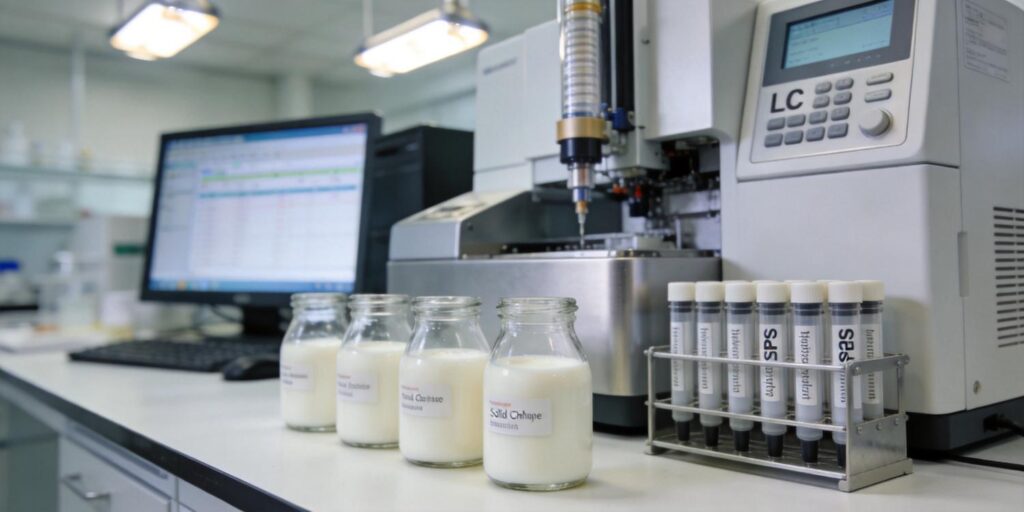
Laboratory workflow using SPE to analyze antibiotic residues in milk samples

SPE Sample Preparation for Antibiotic Residues in Milk

Regulatory Limits for Antibiotic Residues in Dairy Products Antibiotic residues in milk and dairy products are strictly regulated worldwide to ensure consumer safety and prevent antimicrobial resistance. Regulatory agencies including the FDA, EU Commission, and Codex Alimentarius establish Maximum Residue Limits (MRLs) for various antibiotic classes. These limits typically range from 4-100 μg/kg depending on […]

SPE Sample Preparation for Antibiotic Residues in Milk Read More »

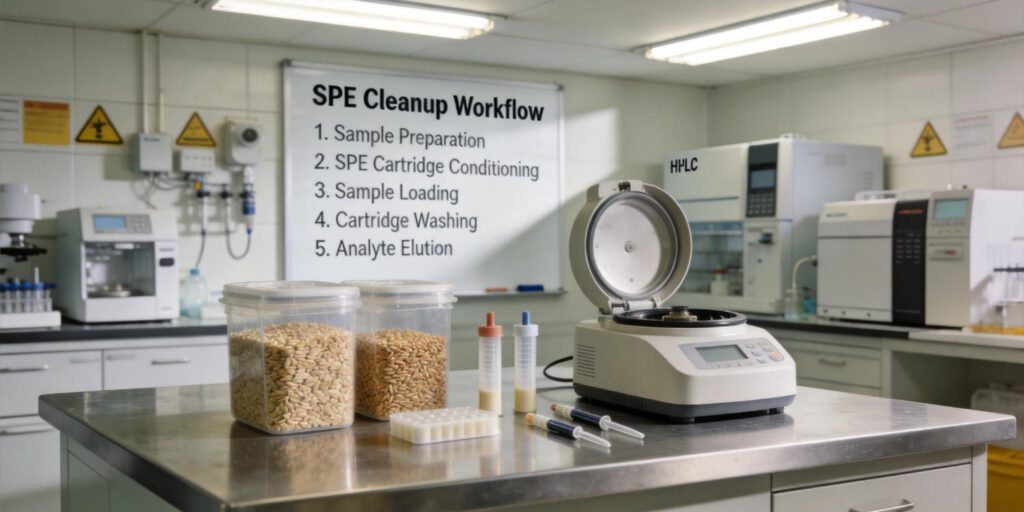
Solid phase extraction workflow for mycotoxin cleanup in grain laboratory testing

Optimizing SPE for Mycotoxin Analysis in Grain Samples

Overview of Common Mycotoxins in Grain Mycotoxin contamination in grain represents one of the most significant food safety challenges facing the agricultural and food processing industries. Among the hundreds of mycotoxins identified, three classes dominate grain contamination profiles: aflatoxins, deoxynivalenol (DON), and zearalenone (ZEA). Aflatoxins: The Carcinogenic Threat Aflatoxins, particularly B1, B2, G1, and G2,

Optimizing SPE for Mycotoxin Analysis in Grain Samples Read More »

Solid phase extraction cleanup workflow for pesticide analysis in leafy vegetable samples

SPE Cleanup Strategies for Pesticide Residues in Leafy Vegetables

Challenges of Pesticide Residue Extraction from Leafy Matrices Leafy vegetables present unique analytical challenges for pesticide residue analysis due to their complex matrix composition. The primary interfering compounds include chlorophyll, plant waxes, pigments (carotenoids, anthocyanins), organic acids, sugars, and various other plant metabolites. These components can significantly interfere with chromatographic analysis and mass spectrometric detection,

SPE Cleanup Strategies for Pesticide Residues in Leafy Vegetables Read More »

SPE cartridge extracting veterinary drug residues from milk

SPE Extraction of Veterinary Drug Residues from Milk

Overview of Veterinary Drugs Monitored in Dairy Testing Veterinary drug residue monitoring in milk represents a critical component of food safety programs worldwide. Regulatory agencies including the FDA, EU, and Codex Alimentarius establish maximum residue limits (MRLs) for various drug classes to ensure consumer protection. The primary veterinary drugs monitored in dairy testing fall into

SPE Extraction of Veterinary Drug Residues from Milk Read More »

SPE cartridge extracting antibiotic residues from meat samples

Extraction of Veterinary Antibiotics from Meat Using SPE

Veterinary Antibiotics Commonly Found in Livestock Products The detection and quantification of veterinary antibiotic residues in meat products represents a critical analytical challenge for food safety laboratories worldwide. These compounds, administered to livestock for therapeutic purposes and growth promotion, can persist in animal tissues and pose potential health risks to consumers. The most frequently encountered

Extraction of Veterinary Antibiotics from Meat Using SPE Read More »

SPE cartridge extracting mycotoxins from grain samples

SPE Workflow for Trace Mycotoxin Analysis in Grain Samples

1. Major Mycotoxins Monitored in Grain Testing Grain safety testing programs worldwide focus on several critical mycotoxins that pose significant health risks to humans and animals. The primary mycotoxins monitored in grain samples include aflatoxins (AFLA B1, B2, G1, G2), ochratoxin A, fumonisins (B1, B2), deoxynivalenol (DON), zearalenone, and T-2/HT-2 toxins. Among these, aflatoxin B1

SPE Workflow for Trace Mycotoxin Analysis in Grain Samples Read More »

SPE extraction workflow analyzing veterinary drug residues in food samples

SPE Sample Preparation for LC-MS Analysis of Veterinary Drugs

1. Veterinary Drugs Commonly Monitored in Food Products The analysis of veterinary drug residues in food products represents a critical component of food safety monitoring programs worldwide. These compounds span multiple therapeutic classes, each presenting unique analytical challenges for LC-MS detection. The most commonly monitored veterinary drugs include: Antibacterial Agents Sulfonamides (sulfamethazine, sulfadimethoxine), tetracyclines (oxytetracycline,

SPE Sample Preparation for LC-MS Analysis of Veterinary Drugs Read More »

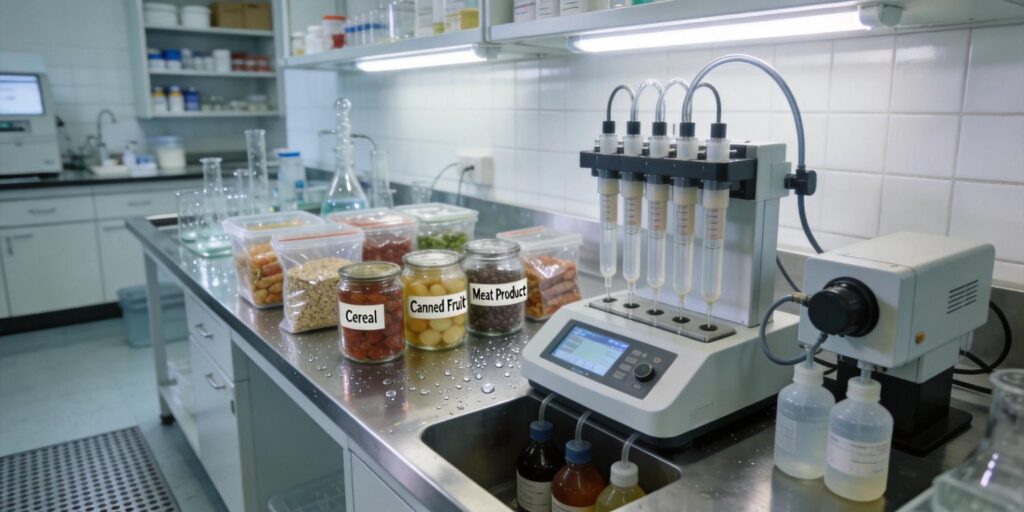
SPE extraction workflow for multi residue pesticide testing

Designing SPE Workflows for Multi-Residue Pesticide Screening

Requirements for Multi-Residue Pesticide Analysis Multi-residue pesticide screening represents one of the most challenging analytical tasks in environmental and food safety testing. According to established literature, comprehensive screening workflows must address several critical requirements simultaneously. The primary objective is to detect and quantify a broad spectrum of pesticide residues at trace levels, typically in the

Designing SPE Workflows for Multi-Residue Pesticide Screening Read More »

laboratory SPE extraction workflow analyzing antibiotic residues in milk samples

SPE Workflow for Antibiotic Residue Analysis in Milk Samples

1. Common Antibiotics Monitored in Dairy Testing Dairy product safety requires rigorous monitoring of antibiotic residues, with beta-lactams and tetracyclines being the most frequently analyzed classes. Beta-lactams, including penicillins (amoxicillin, ampicillin) and cephalosporins, are widely used in veterinary medicine for treating mastitis and other infections. Tetracyclines such as oxytetracycline, tetracycline, and chlortetracycline are broad-spectrum antibiotics

SPE Workflow for Antibiotic Residue Analysis in Milk Samples Read More »

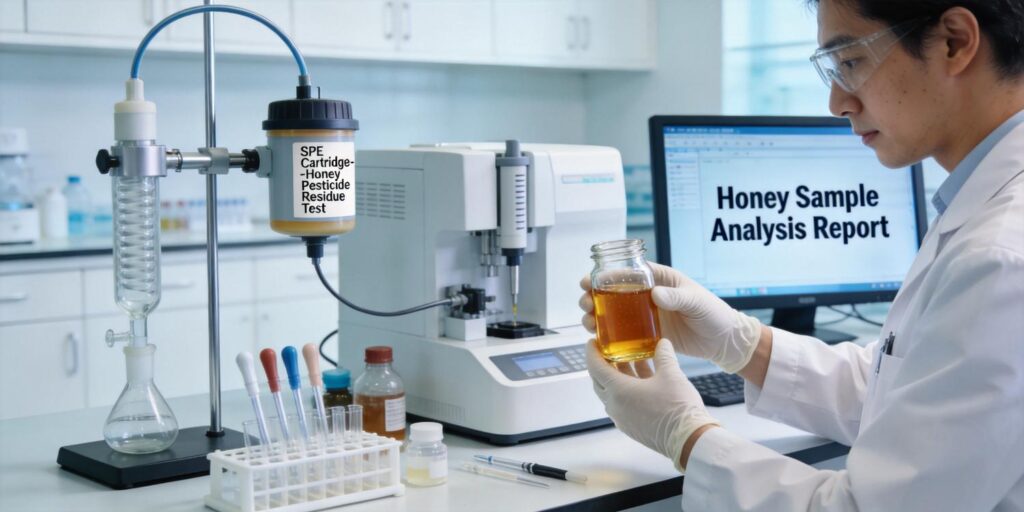
SPE cartridge extracting antibiotic residues from honey sample

SPE Method for Extraction of Veterinary Antibiotics from Honey

Honey Matrix Challenges Including High Sugar Content Honey presents unique analytical challenges for veterinary antibiotic residue analysis due to its complex matrix composition. As a natural product with approximately 80% sugar content (primarily fructose and glucose), honey creates significant interference issues for analytical methods. The high viscosity and sugar concentration can lead to: Column fouling

SPE Method for Extraction of Veterinary Antibiotics from Honey Read More »

Shopping Cart
Poseidon Scientific
Privacy Overview

This website uses cookies so that we can provide you with the best user experience possible. Cookie information is stored in your browser and performs functions such as recognising you when you return to our website and helping our team to understand which sections of the website you find most interesting and useful.