Introduction
Lipid oxidation is a major concern in food science because it degrades nutritional quality, alters flavor, and generates potentially toxic compounds. Monitoring oxidation products is essential for ensuring shelf stability and consumer safety. Solid-phase extraction (SPE) has become a cornerstone technique for isolating these analytes from complex food matrices prior to chromatographic analysis. This guide outlines best practices for SPE sample preparation when targeting lipid oxidation products.
Importance of Lipid Oxidation Monitoring in Food Science
Lipid oxidation produces a cascade of volatile and non-volatile compounds that contribute to rancidity. Regulatory limits exist for certain oxidation markers (e.g., malondialdehyde). Accurate quantification is critical for quality control in oils, meats, dairy, and processed foods. SPE offers high recovery and cleanup efficiency compared to liquid-liquid extraction, making it the preferred method for trace analysis.
Types of Oxidation Products Analyzed
Common analytes include primary products (hydroperoxides) and secondary products such as aldehydes (hexanal, malondialdehyde, 4-hydroxynonenal), ketones, and epoxides. Aldehydes and ketones are often derivatized (e.g., with DNPH) to improve stability and detectability. However, many analysts choose to purify underivatized species using SPE directly.
Extraction of Lipid Oxidation Products from Food Matrices
Initial extraction typically uses organic solvents like hexane or acetonitrile. The resulting lipid-rich extract must be further cleaned. SPE efficiently separates target compounds from bulk lipids, pigments, and other interferences. For high-fat samples (e.g., oils, butter), a preliminary defatting step may be necessary.
SPE Sorbent Selection for Aldehydes and Ketones
For underivatized carbonyls, silica-based sorbents like HLB SPE cartridges (hydrophilic-lipophilic balance) offer excellent retention via reversed-phase and polar interactions. Alternatively, amino (NH2) or diol phases can provide normal-phase selectivity. For strong cation exchange interactions with basic analytes, MCX SPE cartridges may be used if the compounds are charged. For derivatized aldehydes (e.g., DNPH derivatives), C18 sorbents are common. The key is to match sorbent polarity to analyte and matrix.
Conditioning Cartridges and Sample Loading
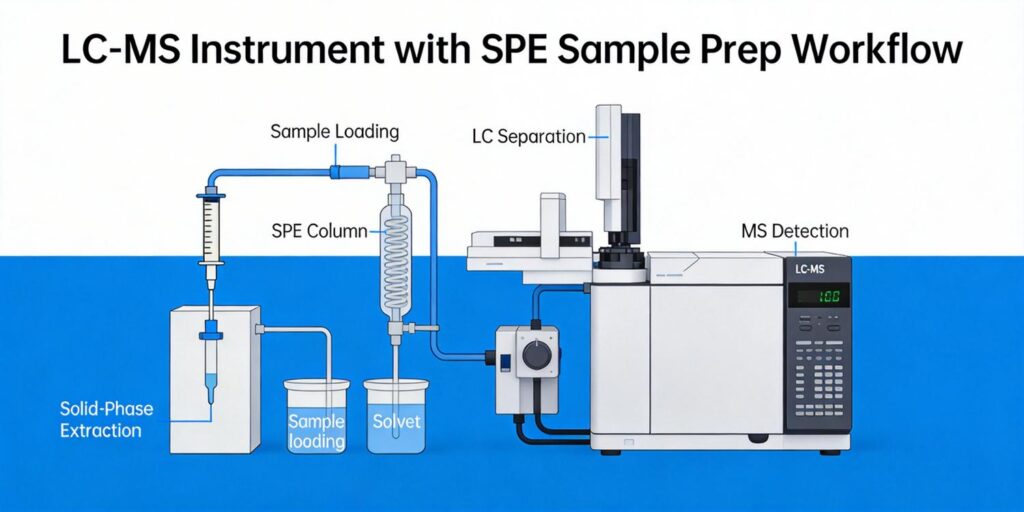
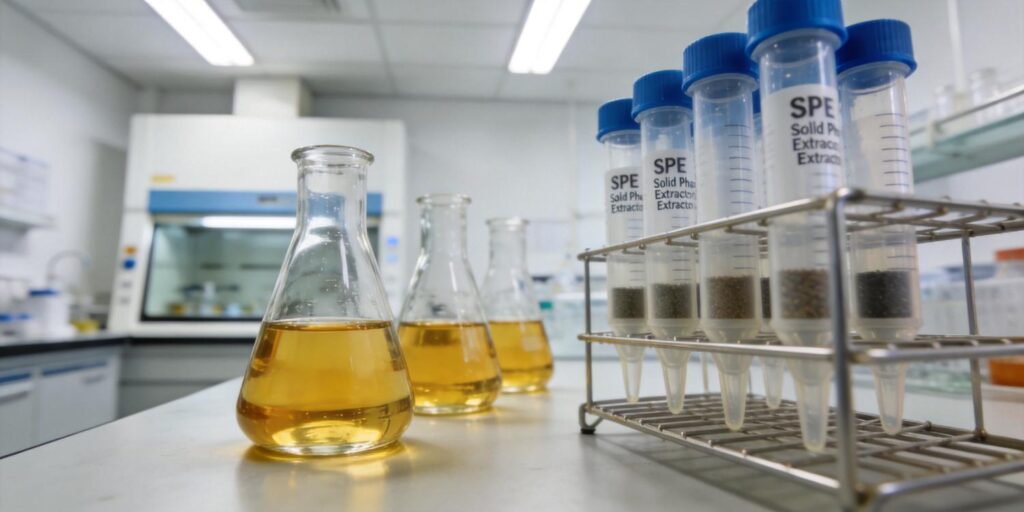
Condition the cartridge with methanol followed by water or buffer to activate the sorbent. For reversed-phase, use a polar loading solvent (e.g., water/acetonitrile mixture). Load the sample at a controlled flow rate (1–2 mL/min) to ensure complete retention. Avoid overloading—use sorbent mass proportional to sample lipid content.
Washing Steps Removing Fats
After loading, wash with a weak solvent mixture (e.g., 5–10% methanol in water) to remove polar interferences. For fats, a non-polar wash like hexane can be applied to elute neutral lipids while retaining analytes. However, some polar oxidation products may be lost—test with spiked samples. Alternatively, use a WAX SPE cartridge for weak anion exchange if analytes are acidic, allowing selective wash of neutral fats.
Elution Solvents for Chromatographic Analysis
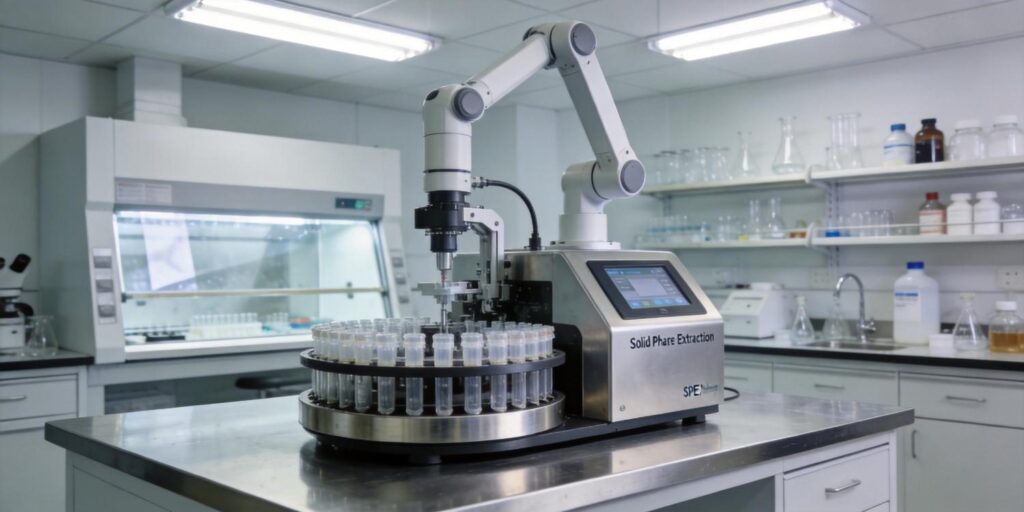
Elute target compounds with a solvent compatible with your analytical method. For reversed-phase LC, use methanol or acetonitrile. For GC analysis, elute with hexane or ethyl acetate. Elution volume should be minimal (2–5 mL) to maximize concentration. For 96-well SPE plates, elution can be performed under vacuum or positive pressure.
Applications in Food Quality Research
SPE-based methods have been applied to detect lipid oxidation markers in vegetable oils, fried foods, meat products, and infant formula. For example, hexanal in potato chips, malondialdehyde in fish oil, and 4-hydroxynonenal in dairy. The versatility of sorbents like WCX SPE cartridges (weak cation exchange) can also be exploited for basic oxidation products. By optimizing each step, researchers achieve high recoveries (>85%) and low detection limits (ppb level).
Conclusion
SPE is an indispensable tool for lipid oxidation product analysis. Selecting the right sorbent, conditioning, washing, and elution protocols ensures accurate and reproducible quantification. With a range of phases available, including mixed-mode ion exchange, analysts can tailor methods to their specific analytes and matrices. For further guidance, consult the product pages at MAX SPE cartridges for mixed-mode anion exchange options.