Why Polyphenols Matter in Fruit Juice Analysis
Polyphenols are a diverse group of naturally occurring compounds found in fruits, vegetables, and beverages like fruit juices. They include flavonoids, phenolic acids, stilbenes, and lignans, and are widely recognized for their antioxidant, anti-inflammatory, and cardioprotective properties. For juice manufacturers and food scientists, quantifying polyphenol content is essential for quality control, shelf-life stability, and health claim verification. However, fruit juices are complex matrices rich in sugars, organic acids, pigments, and other interfering substances that can compromise analytical accuracy. Solid-phase extraction (SPE) provides a robust cleanup and concentration step prior to chromatographic analysis, enabling reliable quantification of individual polyphenols.
Sample Preparation: Filtration and Dilution
Before SPE, juice samples must be clarified to remove suspended solids and prevent column clogging. Centrifugation at 10,000 rpm for 10 minutes or vacuum filtration through 0.45 μm cellulose acetate filters is typical. Dilution with acidified water (e.g., 0.1% formic acid) to a known volume reduces viscosity and optimizes analyte retention. For highly concentrated juices, a 1:10 dilution is recommended. The pH should be adjusted to 2–3 to keep phenolic acids in their neutral form, enhancing hydrophobic interactions with reversed-phase sorbents.
SPE Sorbent Selection for Phenolic Compounds
Reversed-phase sorbents, particularly C18 (octadecyl) bonded silica, are the gold standard for polyphenol extraction due to their broad retention of moderately polar to nonpolar analytes. For more selective isolation, polymeric sorbents like HLB (hydrophilic-lipophilic balanced) or MAX (mixed-mode anion exchange) are increasingly used. HLB cartridges offer excellent retention of both acidic and neutral polyphenols across a wide pH range, while MAX cartridges with quaternary amine groups provide additional anion-exchange selectivity for acidic polyphenols like chlorogenic acid and caffeic acid. For complex samples with many interferences, a mixed-mode sorbent such as WCX (weak cation exchange) can be used to isolate basic polyphenols.
Cartridge Conditioning and Sample Loading
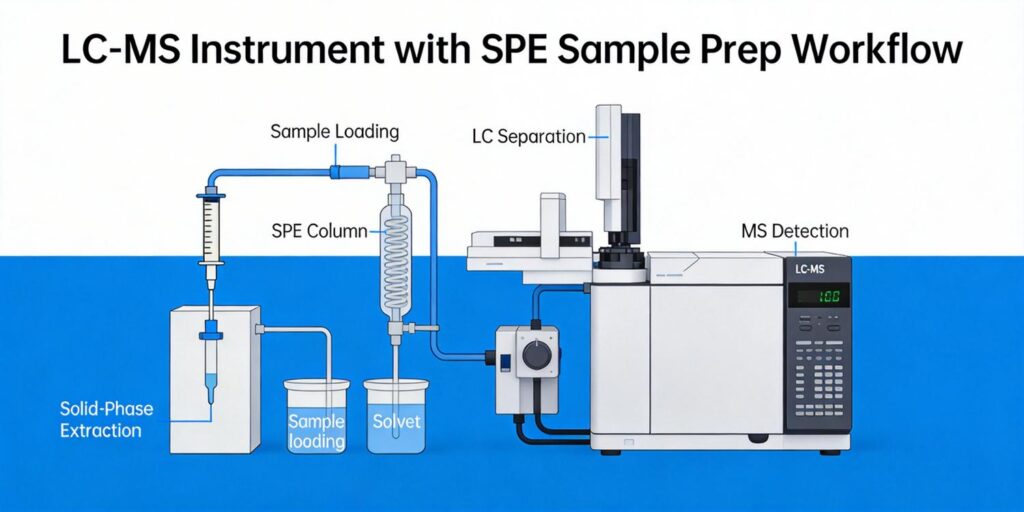
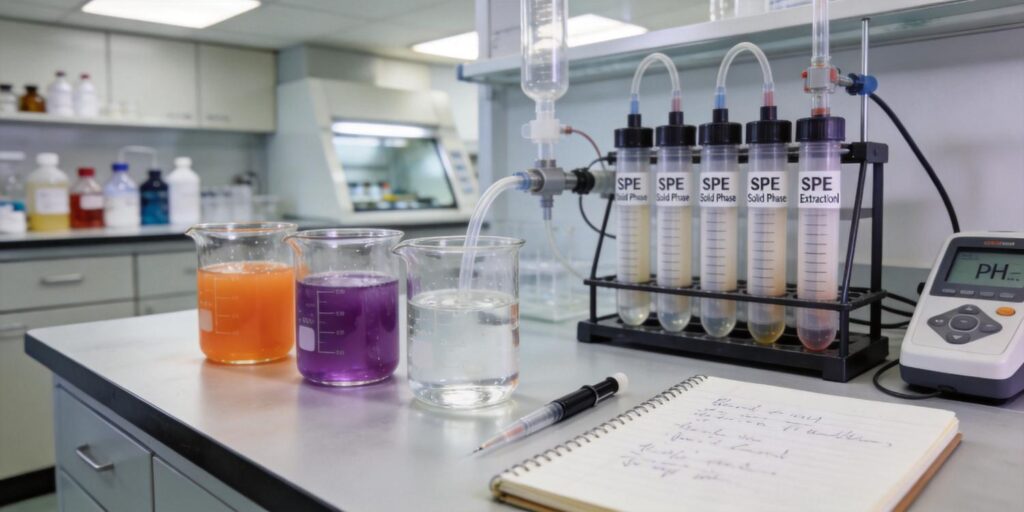
Proper conditioning is critical for reproducible results. For C18 or HLB cartridges, the sequence typically involves: (1) 3–5 mL of methanol or acetonitrile to wet the sorbent, (2) 3–5 mL of water or acidified water to equilibrate. The conditioned cartridge should not dry out before sample loading. The clarified juice sample is then loaded at a flow rate of 1–2 mL/min under gentle vacuum or positive pressure. For 200–500 mg sorbent beds, sample volumes of 5–20 mL are common. The loading pH is kept acidic (pH 2–3) to maximize retention of phenolic acids and flavanols.
Washing to Remove Sugars and Acids
After sample loading, a washing step removes polar interferences while retaining target polyphenols. A typical wash consists of 5% methanol in water (v/v) or 0.1% formic acid in water. For juices with high sugar content, two washes may be necessary. The wash volume should be 2–3 bed volumes (e.g., 6 mL for a 500 mg cartridge). Care must be taken not to use too much organic solvent, which could prematurely elute early-eluting polyphenols like gallic acid or catechin.
Elution of Polyphenols Using Organic Solvents
Polyphenols are eluted with a small volume of organic solvent, typically methanol or acetonitrile, often acidified with 0.1–1% formic acid or acetic acid to improve recovery of phenolic acids. For maximum recovery, two aliquots of 1–2 mL each are recommended. Elution can be performed under gravity or vacuum, and the combined eluate is evaporated to dryness under nitrogen or in a centrifugal evaporator. The residue is reconstituted in mobile phase (e.g., water/methanol with 0.1% formic acid) for injection. Typical recoveries for major polyphenols (e.g., quercetin, kaempferol, ferulic acid) range from 85% to 105% with RSD below 5%.
HPLC/LC-MS Analysis Methods
Reversed-phase HPLC with UV-Vis or diode array detection (DAD) at 280 nm (phenolic acids) or 360 nm (flavonoids) is standard. Gradient elution using water (A) and methanol or acetonitrile (B), both acidified with 0.1% formic acid, provides good separation. For complex mixtures, LC-MS/MS in negative ion mode offers superior sensitivity and selectivity. Multiple reaction monitoring (MRM) transitions are used for quantitation. An example method uses a C18 column (150 × 4.6 mm, 5 μm) at 30°C with a flow rate of 1.0 mL/min and a linear gradient from 5% to 60% B over 30 minutes.
Application in Beverage Quality Studies
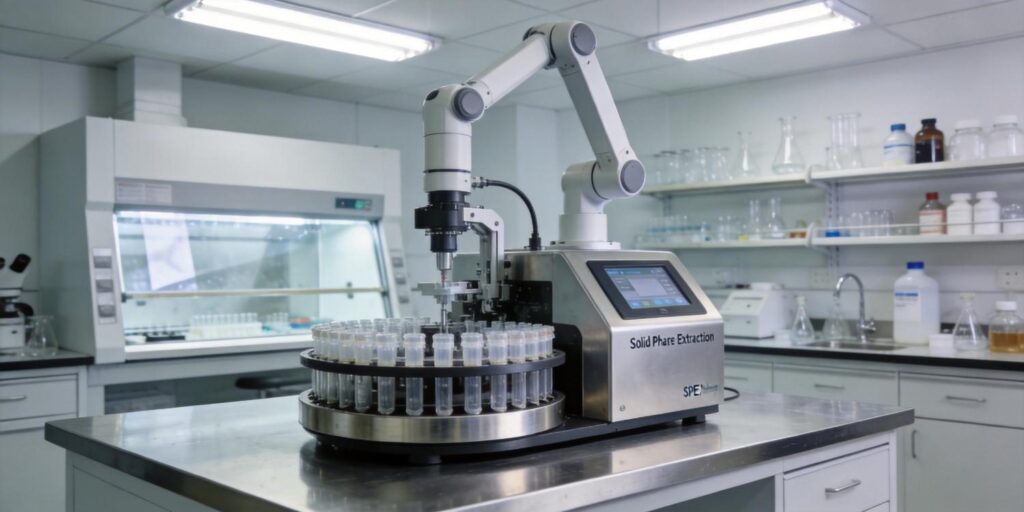
SPE-LC-MS workflows are widely applied to assess the polyphenol profile of commercial fruit juices, detect adulteration (e.g., addition of synthetic dyes or cheaper fruit extracts), and monitor changes during storage. For instance, a study using MCX cartridges (mixed-mode cation exchange) successfully quantified 15 polyphenols in apple and grape juices with limits of detection below 0.1 μg/mL. Such methods support label claims, ensure regulatory compliance, and guide product formulation. The use of 96-well SPE plates further enables high-throughput screening of multiple juice batches, making the entire workflow suitable for routine quality control laboratories.
Conclusion
SPE remains an indispensable tool for the accurate quantitation of polyphenols in fruit juices. By carefully selecting sorbent type, optimizing wash and elution conditions, and coupling with modern chromatographic techniques, analysts can achieve robust, reproducible results. For laboratories seeking reliable SPE consumables, Poseidon Scientific offers a comprehensive range of HLB, MAX, MCX, WAX, and WCX cartridges and plates tailored to polyphenol analysis, ensuring consistent performance for both research and QC applications.