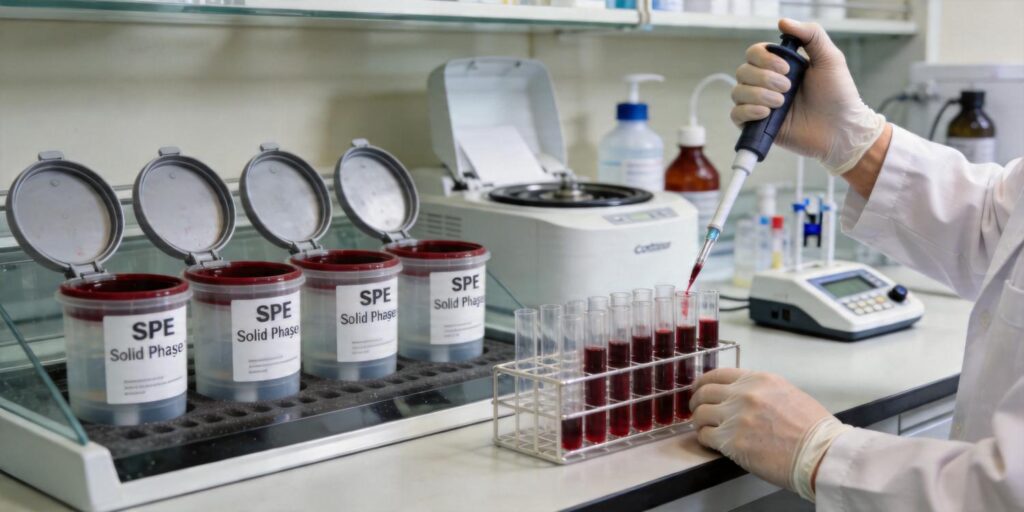
Sample Preparation

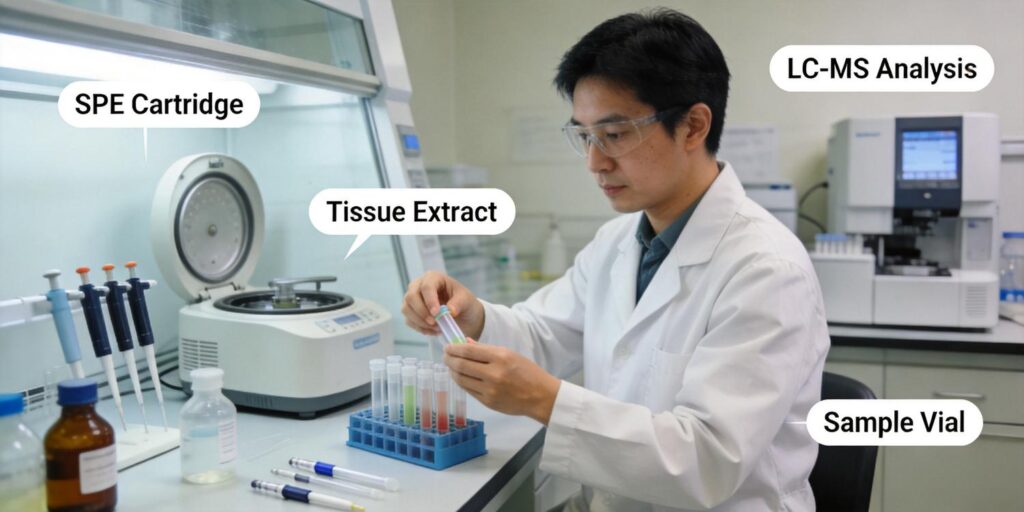
SPE cleanup process preparing serum or plasma samples for LC-MS

Preparing Biological Fluids for LC-MS Using SPE Cartridges

Matrix Complexity of Serum, Plasma, and Urine Biological fluids present unique challenges for LC-MS analysis due to their complex matrix composition. Serum and plasma contain high protein concentrations (approximately 60-80 g/L), primarily albumin and globulins, which can bind analytes and interfere with chromatography. According to established literature, plasma and serum are characterized by increased sample […]

Preparing Biological Fluids for LC-MS Using SPE Cartridges Read More »

SPE removal of pigments from food extracts before analysis

SPE Cleanup for Pigment-Rich Food Extracts

Analytical Challenges of Pigment-Rich Food Matrices Pigment-rich food matrices present unique analytical challenges that complicate accurate quantification of target analytes. These matrices, including fruits, vegetables, leafy greens, and certain processed foods, contain high concentrations of natural pigments such as chlorophylls, carotenoids, anthocyanins, and betalains. These colored compounds interfere with analytical methods through multiple mechanisms: they

SPE Cleanup for Pigment-Rich Food Extracts Read More »

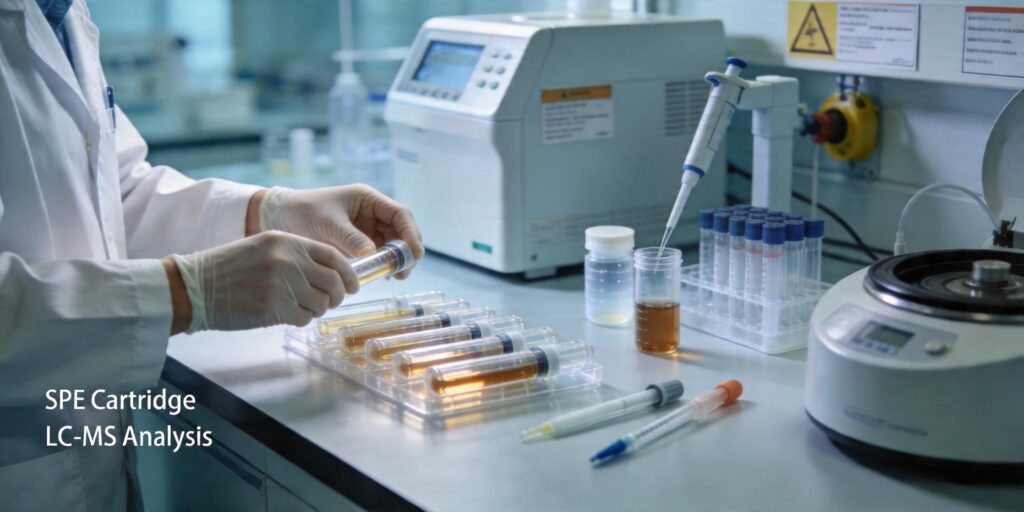
SPE cleanup workflow preparing blood samples for LC-MS

SPE Cleanup for LC-MS Analysis of Blood Samples

Matrix Challenges in Blood Analysis: Proteins, Lipids, and Cellular Components Blood analysis presents unique challenges for LC-MS due to its complex matrix composition. The primary components causing interference include proteins (albumin, globulins), lipids (cholesterol, triglycerides), and cellular debris from erythrocytes and leukocytes. According to Simpson and Wynne (2000), proteins constitute the largest fraction in human

SPE Cleanup for LC-MS Analysis of Blood Samples Read More »

SPE enrichment workflow used for environmental metabolomics sample preparation

SPE Sample Preparation for Environmental Metabolomics Studies

Overview of Environmental Metabolomics Environmental metabolomics represents a powerful analytical approach for understanding the biochemical responses of organisms to environmental stressors and contaminants. This emerging field combines the principles of traditional metabolomics with environmental monitoring to detect subtle changes in metabolite profiles resulting from exposure to pollutants, climate change, or other ecological disturbances. Unlike targeted

SPE Sample Preparation for Environmental Metabolomics Studies Read More »

SPE purification workflow for sugar-rich beverage samples

SPE Cleanup for Sugar-Rich Beverage Matrices Before LC-MS

1. Analytical Challenges in Sugar-Rich Beverages Analyzing trace contaminants, additives, or natural compounds in sugar-rich beverages like soft drinks, energy drinks, fruit juices, and sports beverages presents unique challenges for LC-MS (Liquid Chromatography-Mass Spectrometry) workflows. These matrices contain high concentrations of carbohydrates—primarily sucrose, glucose, fructose, and high-fructose corn syrup—that can range from 5% to 15%

SPE Cleanup for Sugar-Rich Beverage Matrices Before LC-MS Read More »

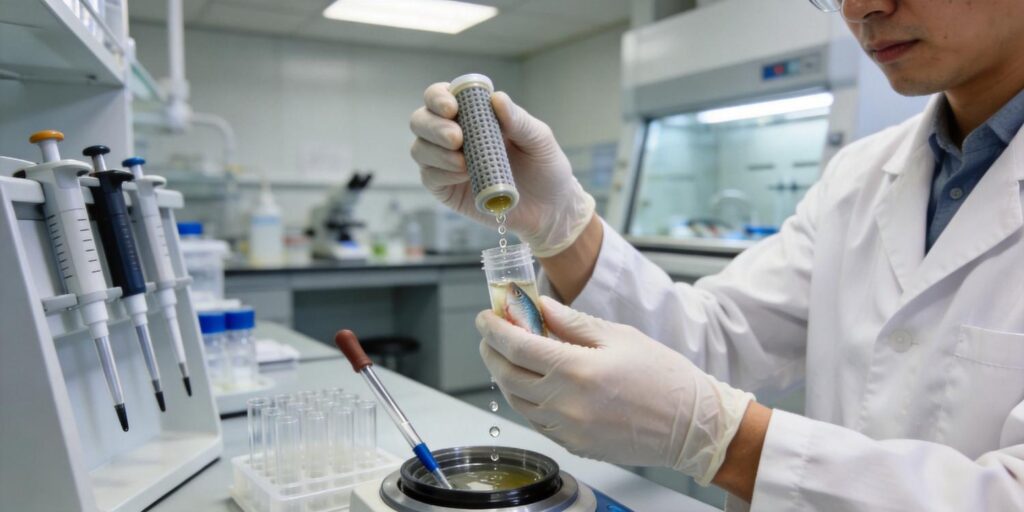
SPE cleanup process removing lipids from biological tissue extracts

SPE Techniques for Removing Interfering Lipids in Tissue Extracts

Lipid Interference Problems in Tissue Extracts Tissue extracts present unique analytical challenges due to their complex lipid composition. Liver, brain, adipose, and muscle tissues contain high concentrations of various lipid classes including triglycerides, phospholipids, cholesterol esters, free fatty acids, and cholesterol. These lipids can cause significant interference in analytical methods, particularly in LC-MS applications where

SPE Techniques for Removing Interfering Lipids in Tissue Extracts Read More »

SPE cleanup workflow used in LC-MS metabolomics analysis

SPE Cleanup for LC-MS Analysis of Metabolomics Samples

The Complexity of Metabolomics Samples Metabolomics samples represent one of the most challenging analytical matrices in modern science. Biological samples are notoriously dirty, containing thousands of chemical components ranging from small polar metabolites to large macromolecules like proteins and lipids. As noted in forensic and clinical applications, injecting these samples with minimal cleanup onto sensitive

SPE Cleanup for LC-MS Analysis of Metabolomics Samples Read More »

SPE sample cleanup process used to reduce LC-MS ion suppression

Reducing LC-MS Ion Suppression Using SPE Sample Cleanup

1. Causes of Ion Suppression in LC-MS Ion suppression represents one of the most significant challenges in liquid chromatography-mass spectrometry (LC-MS) analysis, particularly when dealing with complex biological or environmental matrices. This phenomenon occurs when co-eluting matrix components interfere with the ionization process of target analytes, leading to reduced signal intensity and compromised analytical performance.

Reducing LC-MS Ion Suppression Using SPE Sample Cleanup Read More »

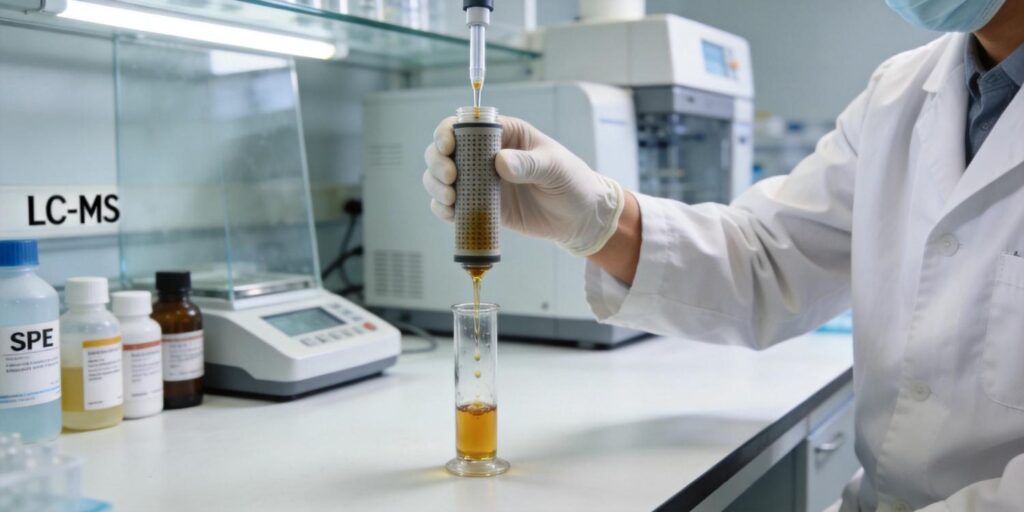
SPE cartridge purification of plant extract samples for LC-MS analysis

Sample Cleanup of Plant Extracts Using SPE Prior to LC-MS

1. Complexity of Plant Metabolite Extracts Plant extracts represent one of the most challenging matrices for analytical chemists, containing thousands of chemical components with diverse physicochemical properties. As noted in SPE literature, plants can be considered as consisting of “an aqueous portion, a fatty portion and an insoluble or fibrous portion” (Simpson & Wynne, 2000).

Sample Cleanup of Plant Extracts Using SPE Prior to LC-MS Read More »

SPE preparation workflow for LC-MS analysis of human serum samples

Improving Matrix Cleanup in Serum LC-MS Analysis Using SPE

Matrix Complexity in Human Serum Human serum presents one of the most challenging matrices for LC-MS analysis due to its complex composition. As noted in the literature, serum contains proteins, lipids, salts, and various endogenous compounds that can interfere with analytical measurements. The presence of proteins is particularly problematic, as they can bind to target

Improving Matrix Cleanup in Serum LC-MS Analysis Using SPE Read More »

Shopping Cart
Poseidon Scientific
Privacy Overview

This website uses cookies so that we can provide you with the best user experience possible. Cookie information is stored in your browser and performs functions such as recognising you when you return to our website and helping our team to understand which sections of the website you find most interesting and useful.