Clinical Significance of Amino Acid Metabolite Profiling
Amino acid metabolites serve as critical biomarkers for a range of metabolic disorders, including phenylketonuria, maple syrup urine disease, and homocystinuria. Their profiling in urine offers a non-invasive window into systemic metabolism, aiding early diagnosis and therapeutic monitoring. Solid-phase extraction (SPE) enables selective enrichment of these polar analytes from complex urine matrices, significantly enhancing detection sensitivity in downstream LC-MS analysis. Recent studies have validated SPE-based workflows for quantifying over 40 amino acid metabolites, with limits of detection reaching sub-nanomolar levels.
Urine Sample Preparation Procedures
Fresh urine samples should be collected in sterile containers and stored at –80°C within 2 hours to minimize metabolite degradation. Before SPE, thaw samples on ice and centrifuge at 10,000 × g for 10 minutes at 4°C to remove cellular debris and particulates. A 1:1 dilution with 0.1% formic acid in water is recommended to adjust pH and reduce viscosity, ensuring consistent retention on the sorbent. For highly concentrated samples, a 1:4 dilution may be necessary to avoid sorbent overloading.
SPE Sorbent Selection Rationale
For amino acid metabolites, mixed-mode reversed-phase/weak cation exchange (WCX) sorbents provide optimal retention. The Poseidon Scientific WCX SPE Cartridges feature a weak cation exchanger that retains basic amino acids (e.g., lysine, arginine, histidine) and metabolites with primary amine groups via electrostatic interactions, while the C18 chains capture hydrophobic moieties. This dual retention mechanism effectively isolates target analytes from salts, urea, and other polar interferences. Alternatively, for highly polar amino acids, hydrophilic-lipophilic balanced (HLB) sorbents from our HLB SPE Cartridges line can be considered, offering a water-wettable polymer with both hydrophilic N-vinylpyrrolidone and lipophilic divinylbenzene domains.
Conditioning and Loading Protocol
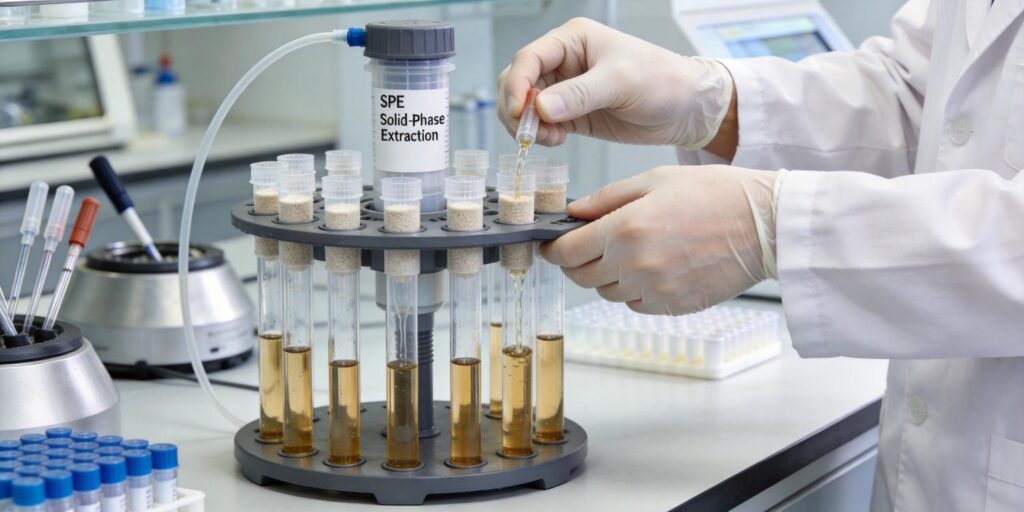
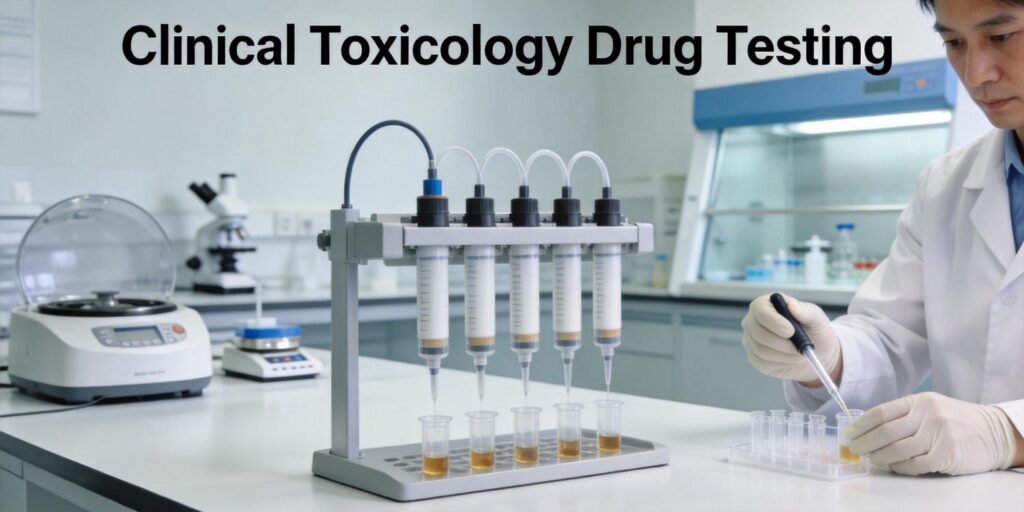
Condition the WCX cartridge with 1 mL methanol followed by 1 mL water to activate the sorbent. Load the diluted urine sample (0.5–1 mL) at a flow rate of 1 mL/min using a vacuum manifold. For optimal retention, ensure the sample pH is adjusted to 3–4 using formic acid, which protonates the amine groups and maximizes cation exchange. A wash step with 1 mL 0.1% formic acid in water removes loosely bound matrix components without compromising analyte retention.
Washing Steps Removing Salts and Urea
After loading, a wash buffer of 1 mL 0.1% formic acid in 10% methanol is employed to remove salts, urea, and other polar interferences. This step is critical for reducing ion suppression in LC-MS. A second wash with 1 mL 0.5% ammonia in water (pH ~10) neutralizes the sorbent and can release some weakly bound non-target species. Careful optimization of wash volumes ensures high recovery (typically >85%) while maintaining cleanup efficiency.
Elution with Aqueous Organic Solvents
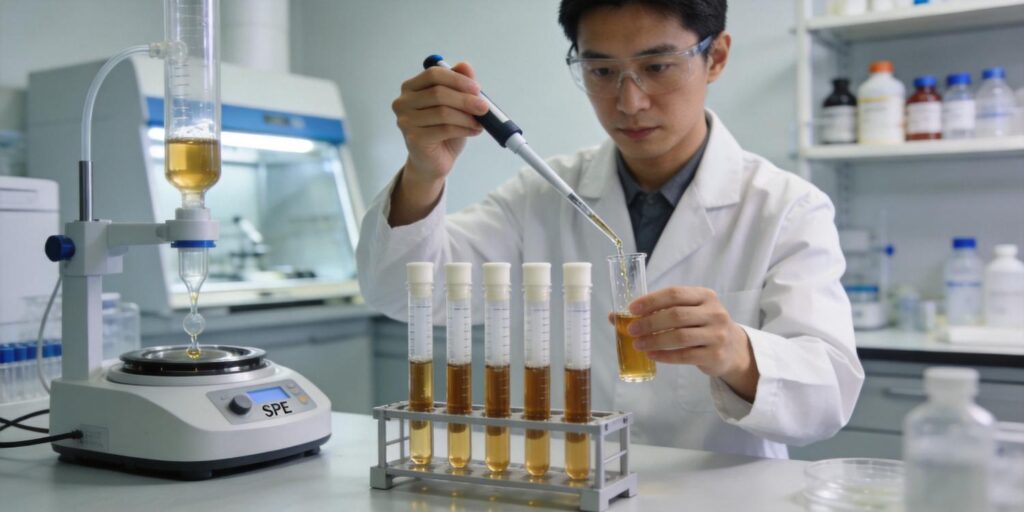
Elute retained amino acid metabolites using 1 mL of 5% ammonia in methanol. This basic, organic-rich solvent disrupts both ionic and hydrophobic interactions. For more hydrophobic metabolites, increasing methanol to 50% may improve recovery. Collect eluate in polypropylene vials and evaporate under nitrogen at 40°C. Reconstitute in 100 μL of 0.1% formic acid in water/acetonitrile (95:5) prior to LC-MS injection. For high-throughput workflows, our 96-Well SPE Plates enable parallel processing of multiple samples.
LC-MS Detection Workflow
Separate analytes on a C18 column (e.g., 2.1 × 100 mm, 1.7 μm) using a gradient of 0.1% formic acid in water (A) and 0.1% formic acid in acetonitrile (B). A typical gradient: 0–2 min 2% B, 2–10 min 2–50% B, 10–12 min 50% B, then re-equilibrate. Perform detection in positive electrospray ionization mode on a triple quadrupole mass spectrometer. Quantify using multiple reaction monitoring (MRM) transitions for each analyte. Internal standards (e.g., deuterated analogues) should be added prior to SPE to correct for recovery variability.
Method Validation and Reproducibility
Validate the method according to FDA bioanalytical guidelines. Assess linearity over the expected concentration range (typically 0.1–100 μM), with R² > 0.99 for all analytes. Determine intra-day and inter-day precision (%RSD 80% across the panel. Reproducibility across different SPE batches and operators must be confirmed with no significant differences (p > 0.05, ANOVA). For sorbent lot-to-lot consistency, rely on Poseidon Scientific’s quality-controlled manufacturing. Our MAX SPE Cartridges, MCX SPE Cartridges, and WAX SPE Cartridges offer complementary selectivity for diverse metabolite classes, supporting multi-analyte expansion of this method.