SPE Cartridge Selection

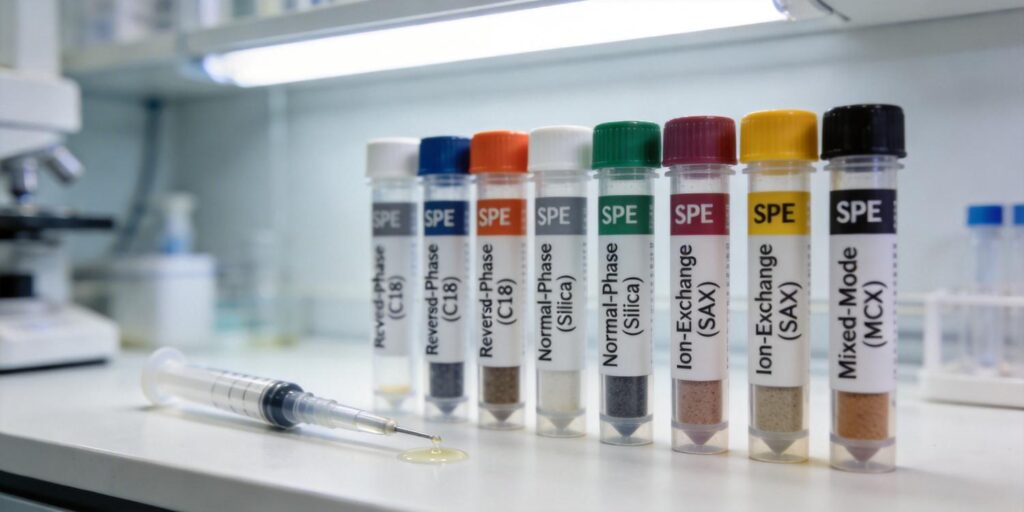
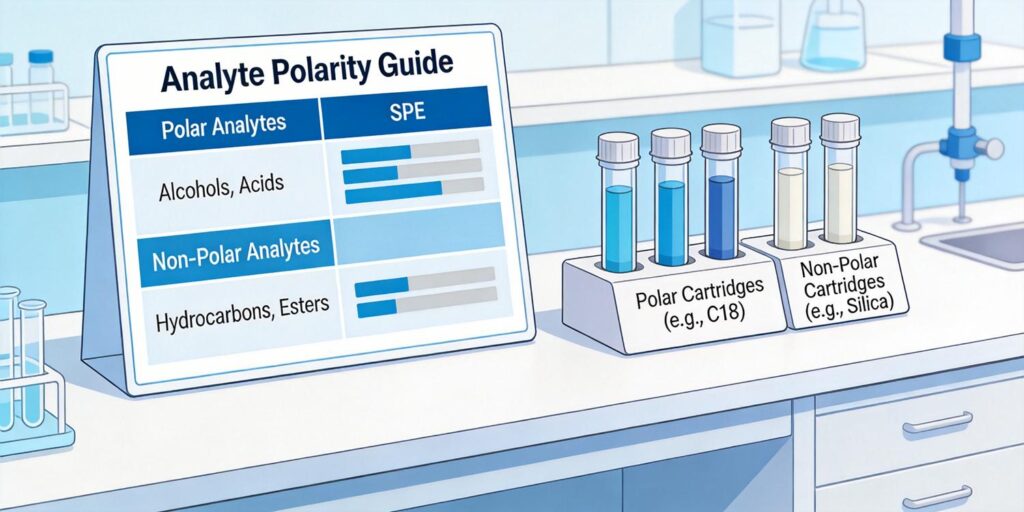
chart illustrating SPE sorbent selection based on polarity

Selecting SPE Sorbents Based on Analyte Polarity

Understanding Analyte Polarity: The Foundation of SPE Sorbent Selection Solid-phase extraction (SPE) represents a cornerstone technology in modern analytical chemistry, enabling scientists to isolate, concentrate, and purify target compounds from complex matrices. At the heart of successful SPE method development lies a fundamental understanding of analyte polarity and its relationship to sorbent chemistry. As Dr. […]

Selecting SPE Sorbents Based on Analyte Polarity Read More »

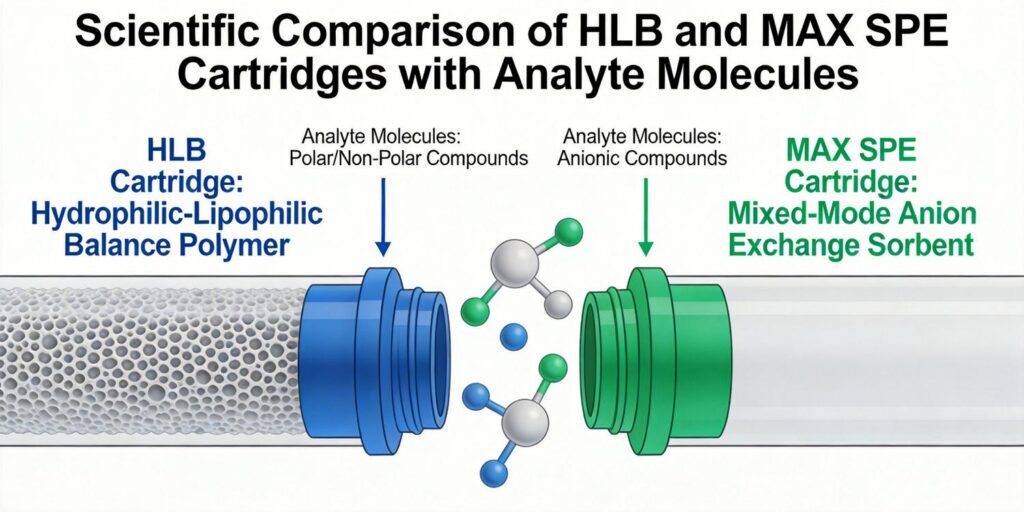
comparison of HLB and MAX SPE cartridges

Choosing Between HLB and MAX SPE for Acidic Drugs

Chemical Properties of Acidic Pharmaceuticals Acidic pharmaceuticals represent a diverse class of compounds characterized by their ability to donate protons in aqueous solutions. These drugs typically contain carboxylic acid (-COOH), sulfonic acid (-SO3H), or phenolic hydroxyl (-OH) functional groups that can dissociate to form negatively charged species. Understanding their chemical properties is fundamental to selecting

Choosing Between HLB and MAX SPE for Acidic Drugs Read More »

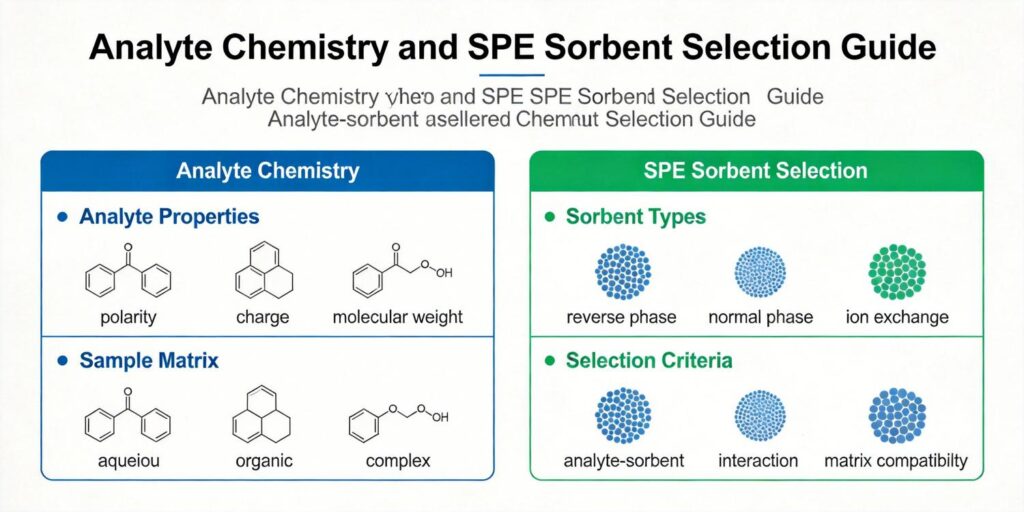
diagram explaining SPE sorbent selection

How to Select SPE Sorbent Based on Analyte Chemistry

Analyte Polarity Considerations The foundation of SPE sorbent selection begins with understanding analyte polarity. Polarity determines which intermolecular forces will dominate retention on the sorbent surface. Non-polar analytes like hydrocarbons, fat-soluble vitamins, triglycerides, steroids, aflatoxins, and phthalates primarily interact through van der Waals forces or hydrophobic interactions. These compounds are best retained on non-polar sorbents

How to Select SPE Sorbent Based on Analyte Chemistry Read More »

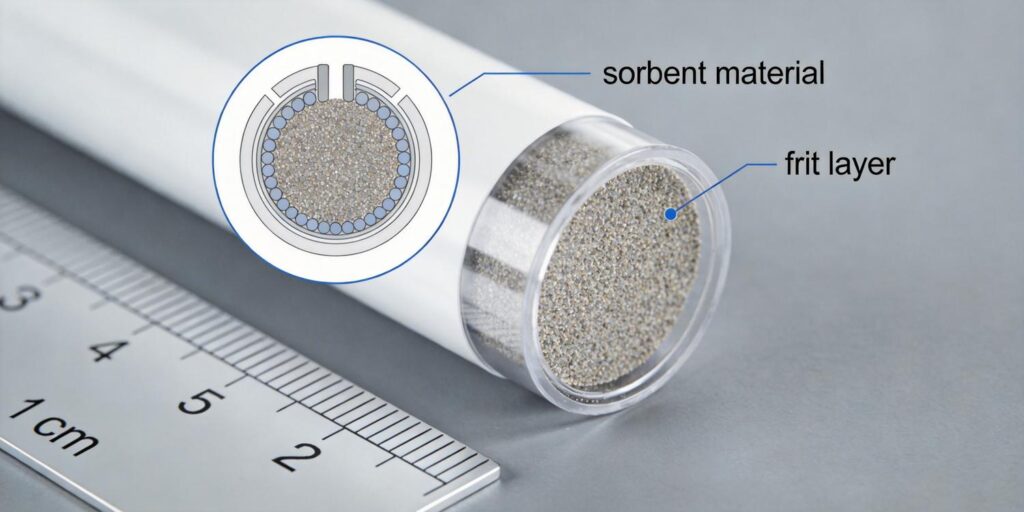
SPE cartridge sorbent bed close up

SPE Cartridge Bed Mass: How It Affects Recovery

What Is Sorbent Bed Mass in SPE Cartridges? In solid-phase extraction (SPE), the sorbent bed mass refers to the total weight of the stationary phase material packed within a cartridge or column. This parameter is fundamental to SPE performance, as it directly determines the device’s capacity to retain analytes from sample matrices. Commercial SPE cartridges

SPE Cartridge Bed Mass: How It Affects Recovery Read More »

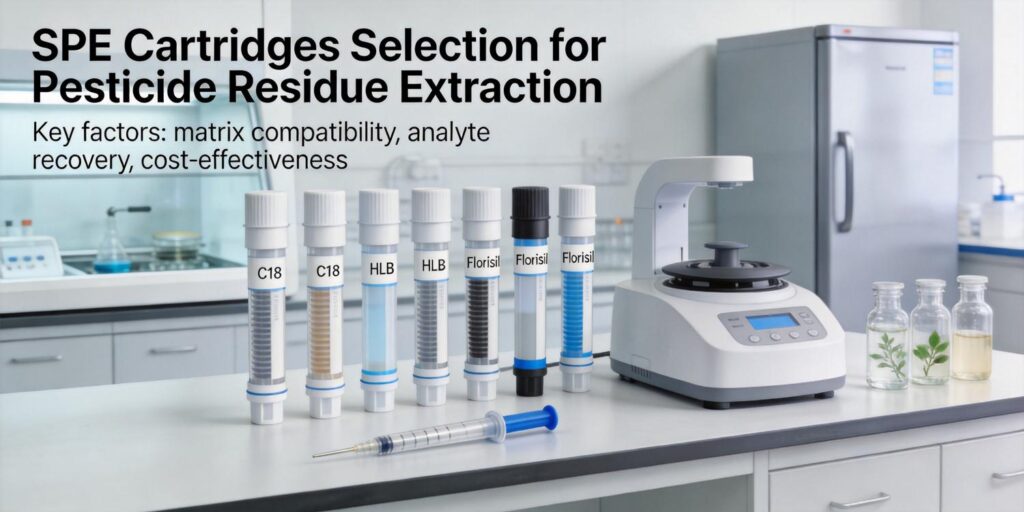
SPE cartridges used in environmental water testing laboratory

SPE Cartridge Selection for Environmental Water Testing

Typical Environmental Contaminants in Water Testing Environmental water testing requires comprehensive analysis of diverse contaminants that pose risks to human health and ecosystems. The primary categories include: Pesticides and Herbicides Triazine herbicides (atrazine, simazine), organophosphorus pesticides, carbamates, and chlorinated pesticides are routinely monitored. Research demonstrates that solid-phase extraction enables detection at sub-parts-per-trillion levels for compounds

SPE Cartridge Selection for Environmental Water Testing Read More »

diagram showing analyte ionization and SPE cartridge choice

SPE Cartridge Selection Based on Analyte pKa

Importance of pKa in SPE In solid-phase extraction (SPE), the acid dissociation constant (pKa) serves as the fundamental parameter governing analyte retention and selectivity. As defined in forensic SPE literature, pKa represents “the pH where half of the compound present is ionized and half non-ionized (neutral).” This seemingly simple value determines whether your extraction will

SPE Cartridge Selection Based on Analyte pKa Read More »

comparison of HLB MCX and MAX SPE cartridges in analytical laboratory

How to Choose Between HLB, MCX, and MAX SPE Sorbents

Overview of Mixed-Mode and Reversed-Phase SPE Sorbents Solid-phase extraction (SPE) has revolutionized sample preparation by enabling scientists to reduce chromatographic complexity, increase signal-to-noise ratios, improve detection limits, minimize matrix effects, concentrate analytes of interest, and enhance analytical robustness. The introduction of Oasis HLB in 1996 fundamentally changed how scientists perform SPE, establishing new possibilities for

How to Choose Between HLB, MCX, and MAX SPE Sorbents Read More »

comparison of WCX and MCX SPE cartridges

WCX vs MCX SPE Cartridges: Cation Exchange Comparison

Understanding Cation Exchange SPE: MCX vs WCX Fundamentals In the world of solid-phase extraction (SPE), cation exchange cartridges play a crucial role in isolating and purifying basic compounds from complex matrices. Two primary cation exchange options dominate the market: Mixed-mode Cation eXchange (MCX) and Weak Cation eXchange (WCX). As Dr. Xu, product manager at Poseidon

WCX vs MCX SPE Cartridges: Cation Exchange Comparison Read More »

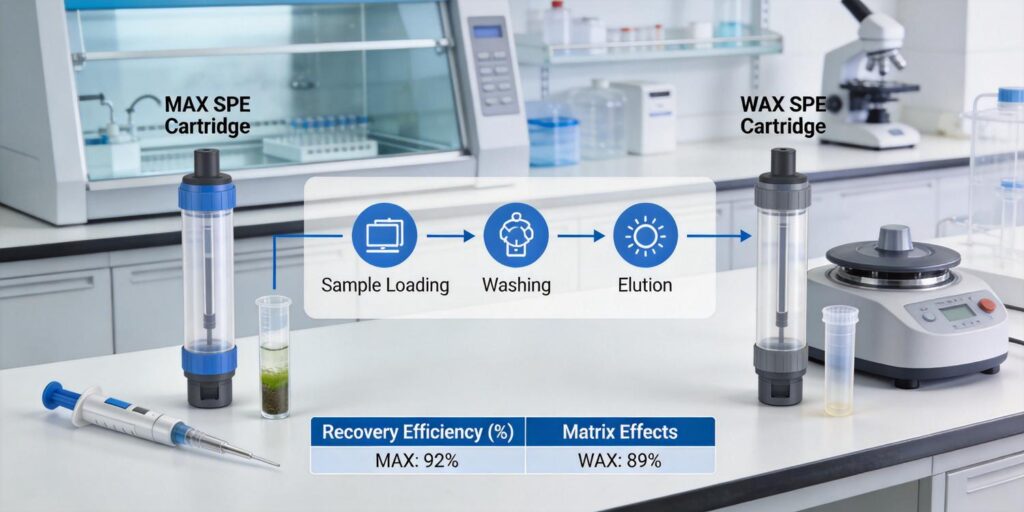
comparison of MAX and WAX SPE cartridges

MAX vs WAX SPE Cartridges: Understanding the Differences

Strong vs Weak Anion Exchange: The Fundamental Distinction When selecting between MAX (Mixed-mode Anion eXchange) and WAX (Weak Anion eXchange) SPE cartridges, the primary distinction lies in their ion-exchange strength and retention mechanisms. MAX cartridges feature strong anion exchange functionality with a tightly controlled ion-exchange capacity of 0.25 meq/g, designed specifically for acidic compounds with

MAX vs WAX SPE Cartridges: Understanding the Differences Read More »

comparison of HLB and MCX SPE cartridges

Choosing Between HLB and MCX SPE Cartridges

Comparison of Sorbent Chemistry When selecting between HLB (Hydrophilic-Lipophilic Balanced) and MCX (Mixed-mode Cation eXchange) SPE cartridges, understanding their fundamental sorbent chemistry is crucial for making informed decisions. These two sorbent types represent different approaches to solid-phase extraction, each with distinct retention mechanisms and applications. HLB Sorbent Chemistry Oasis HLB, introduced in 1996, revolutionized SPE

Choosing Between HLB and MCX SPE Cartridges Read More »

Shopping Cart
Poseidon Scientific
Privacy Overview

This website uses cookies so that we can provide you with the best user experience possible. Cookie information is stored in your browser and performs functions such as recognising you when you return to our website and helping our team to understand which sections of the website you find most interesting and useful.