Impact of Chlorophyll Interference in Plant Metabolite Analysis
Chlorophyll presents a major challenge in plant metabolite analysis via HPLC. As the primary pigment in green plant tissues, chlorophyll and its derivatives (pheophytins, chlorophyllides) co-extract with target analytes. These pigments absorb strongly in the UV-Vis range, causing baseline drift, peak distortion, and reduced sensitivity. Additionally, chlorophylls can oxidize and degrade during analysis, generating artifact peaks. This interference is particularly problematic for quantification of phenolic compounds, alkaloids, and other UV-active metabolites at low concentrations. Removing chlorophyll prior to HPLC is essential for accurate, reproducible results, especially in complex matrices like leaves, algae, or herbs.
Extraction of Plant Metabolites Using Ethanol or Methanol
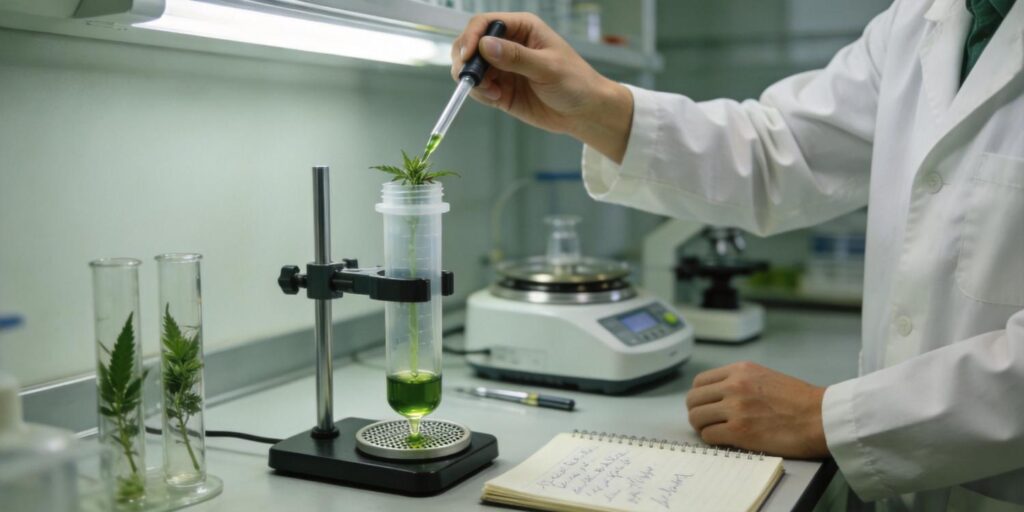
Typical extraction protocols for plant metabolites favor polar organic solvents such as ethanol or methanol, often with water mixtures (e.g., 70% ethanol or 80% methanol). These solvents effectively solubilize a wide range of secondary metabolites including flavonoids, saponins, and glycosides. However, they also efficiently extract chlorophylls and carotenoids. The resulting crude extract is dark green and requires cleanup before HPLC injection. To maximize metabolite recovery while minimizing pigment carryover, extraction time, temperature, and solvent-to-sample ratio must be optimized. In many botanical studies, a simple centrifugation or filtration step precedes SPE to remove particulate matter.
SPE Sorbent Selection for Pigment Removal
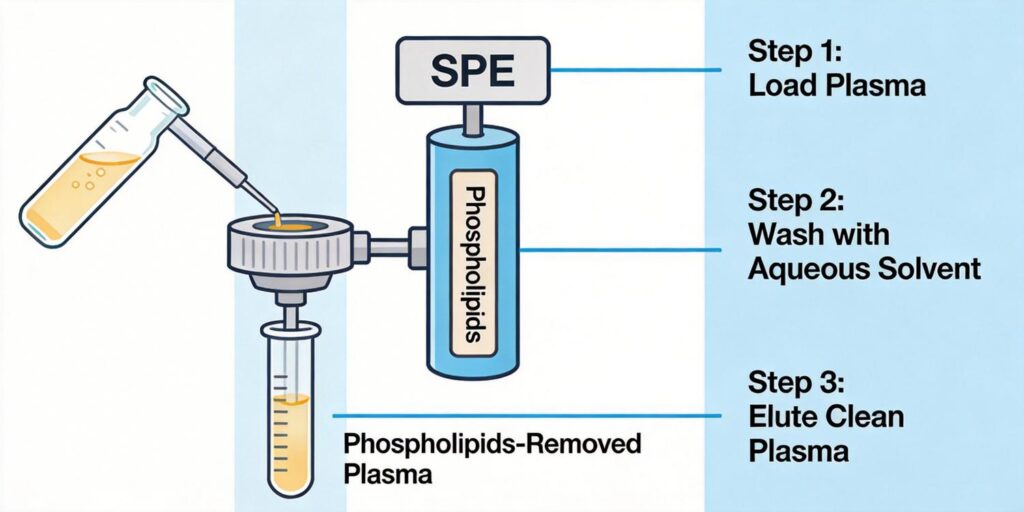
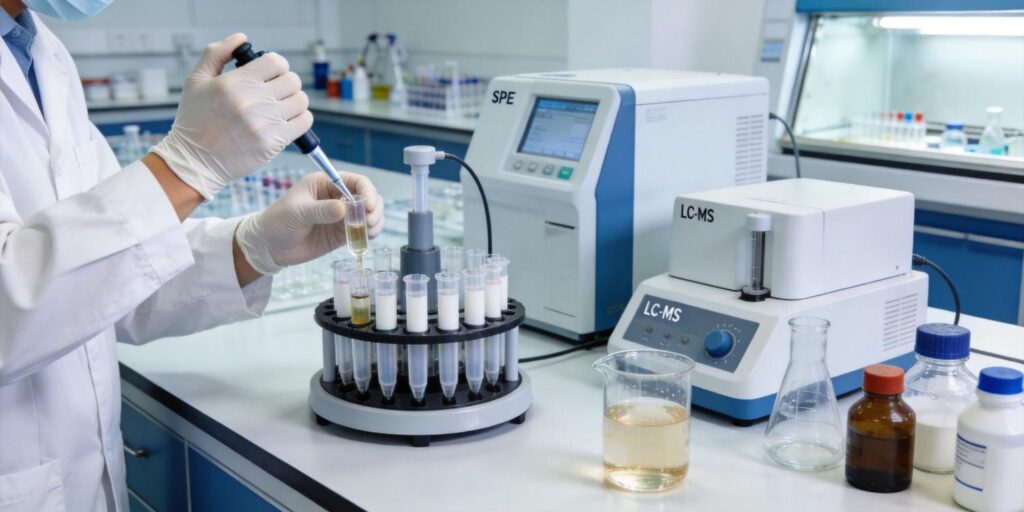
Solid-phase extraction offers a versatile solution for chlorophyll removal. The choice of sorbent depends on the target analytes and the pigment load. Non-polar sorbents like C18 retain chlorophylls strongly while allowing many polar metabolites to pass through. Mixed-mode sorbents, such as HLB (hydrophilic-lipophilic balanced), provide balanced retention, making them suitable for both polar and non-polar compounds. For acidic or basic analytes, ion-exchange sorbents like MCX (mixed-mode cation exchange) or WAX (weak anion exchange) can be used in clever wash steps to selectively elute pigments or retain them. In many protocols, a dedicated chlorophyll-retaining sorbent like MAX (mixed-mode anion exchange) is employed. For high-throughput applications, 96-well SPE plates are ideal for parallel processing.
Conditioning and Loading Procedures
Proper conditioning of the SPE cartridge is critical for reproducible chlorophyll retention. Typically, the sorbent is conditioned with methanol or acetonitrile, followed by equilibration with the loading solvent (often aqueous ethanol or dilute acid). The crude plant extract, after filtration, is loaded onto the cartridge at a controlled flow rate (e.g., 1–2 mL/min). Pigments are retained on the sorbent while many polar metabolites pass through or are weakly retained. It is essential to avoid overloading the cartridge; typical loading volumes are 1–5 mL of extract per 100 mg sorbent. For efficient cleanup, the sample pH should match the chosen sorbent’s retention mechanism.
Washing Steps Selectively Removing Chlorophyll
After loading, a series of wash steps selectively removes chlorophyll while preserving target analytes. For C18 or HLB cartridges, a wash with 10–20% methanol in water eliminates hydrophilic pigments and salts. Then, a stronger solvent like 50% methanol or acetonitrile can elute chlorophylls as a dark green fraction, which is discarded. Alternatively, the chlorophyll can be retained on the cartridge while analytes are eluted first (reverse approach). On mixed-mode ion-exchange sorbents, pH manipulation can selectively release chlorophyll: for example, on WCX (weak cation exchange), washing with acidic methanol removes pigments without affecting retained bases. The choice of wash solvent must balance pigment removal efficiency with analyte recovery, which should be verified using spiked samples.
Elution of Analytes Without Pigment Contamination
The final elution step recovers the cleaned-up analytes. For C18 or HLB, analytes are typically eluted with 100% methanol or acetonitrile. On ion-exchange sorbents, elution may require a change in pH or ionic strength; e.g., on MCX, basic methanol elutes retained amines while chlorophyll remains bound. The eluate should be colorless or pale yellow, indicating effective chlorophyll removal. Evaporation and reconstitution in HPLC mobile phase ensures compatibility. The recovery of target metabolites should be >80% with minimal chlorophyll breakthrough.
Improvement in Chromatographic Peak Shape
Post-SPE cleanup dramatically improves HPLC performance. Without cleanup, chlorophylls cause broad, tailing peaks, especially for early-eluting polar compounds. After SPE, baselines stabilize, peak symmetry improves, and resolution increases. Detection limits improve because the noise from pigment degradation is eliminated. For example, analysis of flavonoids in spinach extracts showed a 3-fold increase in signal-to-noise ratio after SPE cleanup. Consistent retention times and area precision are achieved, making quantification reliable.
Example Application in Botanical Research
In a study of Artemisia annua (sweet wormwood) for artemisinin content, researchers used a SPE protocol with C18 cartridges. Artemisinin was extracted with 70% ethanol, loaded onto a conditioned C18 SPE, washed with 30% methanol to remove chlorophyll, and eluted with 80% methanol. The resulting HPLC chromatogram showed a clean artemisinin peak without interferences. This method allowed quantification at ng/mL levels, demonstrating the efficiency of SPE cleanup for plant extracts. Such protocols are now standard in quality control of herbal medicines and botanical dietary supplements.