Why Caffeine Testing Matters in Beverages
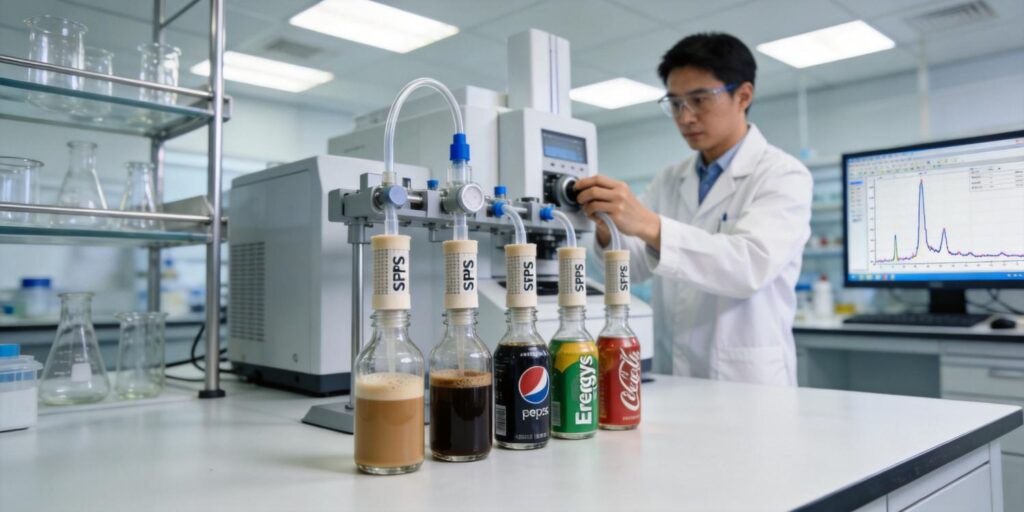
Caffeine is one of the most widely consumed psychoactive substances globally, found in coffee, tea, energy drinks, and soft drinks. Accurate quantification is critical for regulatory compliance, nutritional labeling, and quality control. Overconsumption can lead to health issues such as insomnia, palpitations, and anxiety, while under-reporting can mislead consumers. Therefore, robust analytical methods are essential for beverage manufacturers, contract labs, and regulatory agencies.
Matrix Challenges in Coffee and Energy Drinks
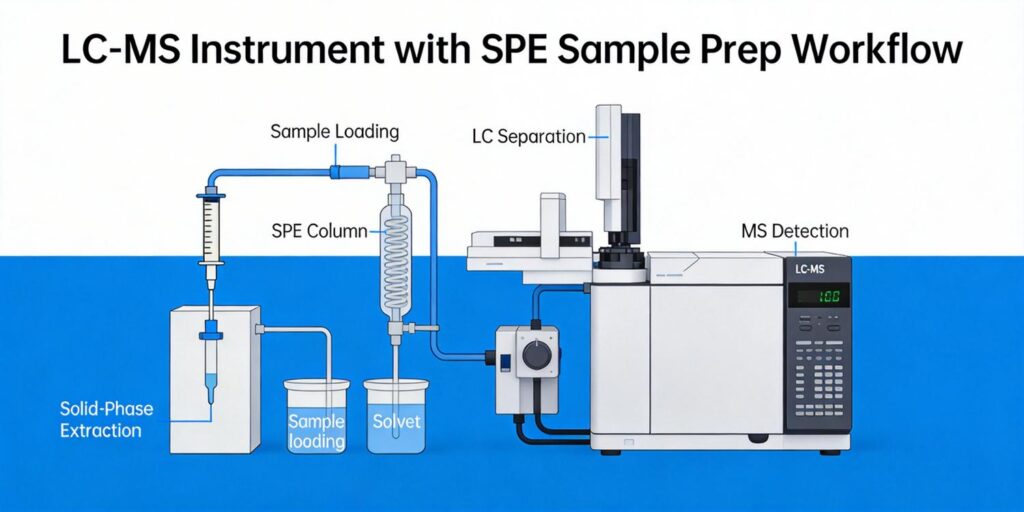
Beverage matrices are notoriously complex. Coffee contains hundreds of compounds including chlorogenic acids, lipids, and melanoidins. Energy drinks add taurine, B vitamins, artificial sweeteners, and synthetic colors. These co-extractives can interfere with HPLC analysis by co-eluting with caffeine, suppressing ionization in mass spectrometry, or clogging columns. Direct injection often fails due to overloaded peaks or rapid column degradation. Solid-phase extraction (SPE) is the go-to technique to isolate caffeine while eliminating matrix interferents.
Dilution and Extraction Steps
Before SPE, beverage samples typically require dilution with deionized water or acidified water to reduce viscosity and prevent cartridge clogging. For carbonated beverages, degassing via sonication or shaking is necessary. A typical protocol: dilute 1 mL of sample with 9 mL of 0.1 M HCl or water (pH 2–3) to protonate caffeine and enhance retention on mixed-mode sorbents. If particulate matter is present (e.g., coffee grounds), filtration through a 0.45 µm PTFE syringe filter is recommended.
SPE Sorbent Selection for Caffeine Cleanup
Caffeine is a weak base (pKa ~10.4) and relatively polar. For maximum selectivity, MCX (mixed-mode strong cation exchange) cartridges are ideal. The sulfonic acid groups retain caffeine via cation exchange at low pH, while the reversed-phase C18 backbone retains hydrophobic compounds. Alternatively, WCX (weak cation exchange) cartridges can be used if milder elution is desired. For simpler matrices like soda, HLB (hydrophilic-lipophilic balance) cartridges provide good recovery without ion exchange. The choice depends on co-extractive profile; MCX is preferred for highly colored or sugary drinks.
Conditioning Cartridges
Proper conditioning ensures reproducible results. For MCX cartridges: sequentially apply 3 mL methanol to wet the sorbent, then 3 mL 0.1 M HCl to equilibrate the ion-exchange groups. Avoid letting the bed dry between steps. For HLB: use 3 mL methanol followed by 3 mL water. Conditioning removes impurities and activates the sorbent surface.
Loading Beverage Samples
Load the diluted, acidified sample (pH 2–3) onto the conditioned cartridge at a flow rate of 1–2 mL/min. For efficient retention, the sample should be passed completely through. If using vacuum manifold, apply gentle vacuum (~5 inHg). Caffeine and other basic compounds are retained via cation exchange, while neutral interferences pass through. Wash the cartridge with 1 mL of 0.1 M HCl to remove unretained sugars and proteins.
Washing Steps Removing Sugars and Pigments
The critical wash step differentiates SPE success from failure. After loading, wash with 3 mL of 5% methanol in water (v/v) to elute polar pigments, sugars, and ionic compounds while caffeine remains bound. For coffee, a second wash with 3 mL of 0.1 M HCl/methanol (95:5) can remove chlorogenic acids. Finally, dry the cartridge under full vacuum for 1 minute to remove residual water before elution.
Elution and HPLC Analysis Workflow
Elute caffeine with 3 mL of 5% ammonium hydroxide in methanol (v/v). Ammonia deprotonates the sulfonic acid groups, releasing caffeine. Collect the eluate and evaporate to dryness under nitrogen at 40°C, then reconstitute in 1 mL mobile phase (typically 20:80 acetonitrile:water with 0.1% formic acid). Inject 10 µL onto a C18 HPLC column (e.g., 150 mm × 4.6 mm, 5 µm) with UV detection at 273 nm. The method is linear from 1–500 µg/mL, with recoveries >95% and RSD <3%.
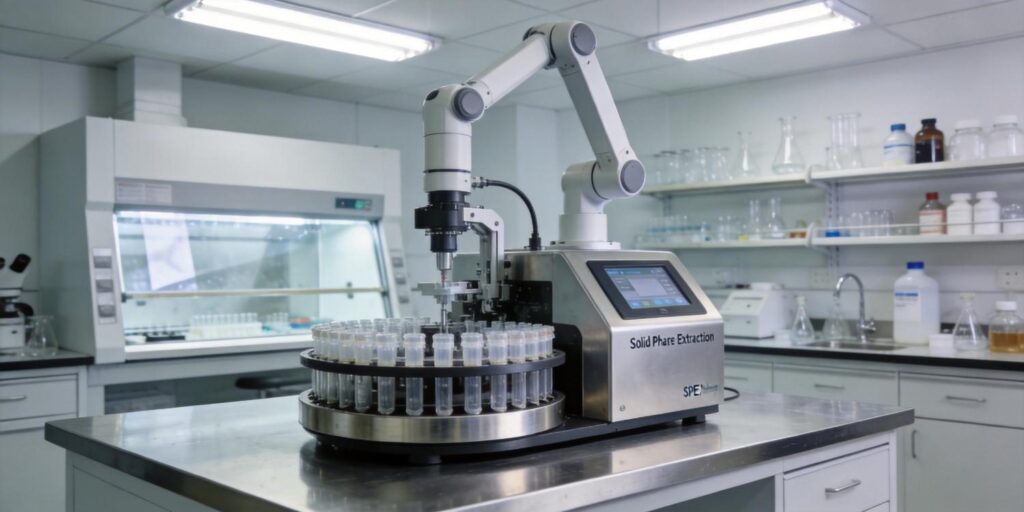
For high-throughput labs, 96-well SPE plates are available to process dozens of samples simultaneously. Using a vacuum manifold, the entire cleanup can be completed in under 30 minutes. For more challenging fatty matrices like latte or cappuccino, combine SPE with MAX (mixed-mode strong anion exchange) to remove anionic interferences. Proper SPE cleanup ensures reliable caffeine data, protects analytical columns, and satisfies regulatory standards.