The Indispensable Role of SPE in Modern Forensic Toxicology
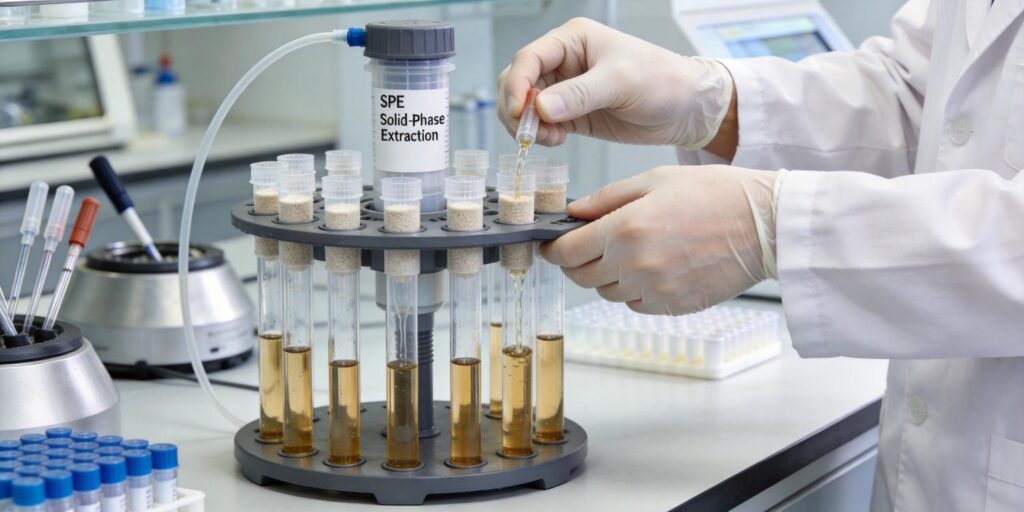
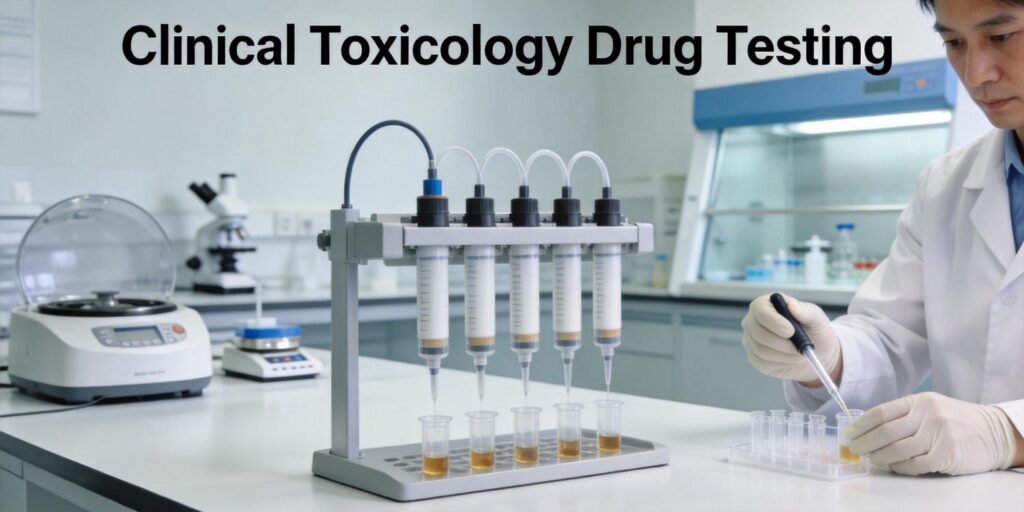
Solid-phase extraction (SPE) has become a cornerstone technique in forensic toxicology laboratories worldwide. Its ability to selectively isolate target analytes from complex biological matrices—while removing interfering endogenous compounds—makes it essential for achieving the sensitivity, specificity, and reproducibility demanded by confirmatory analysis methods like LC-MS/MS and GC-MS. Without efficient sample cleanup, the risk of ion suppression or enhancement, false positives, and instrument downtime increases dramatically. SPE provides forensic scientists with cleaner extracts, lower detection limits, and robust quantitative performance, ultimately supporting defensible courtroom evidence.
Common Biological Matrices in Forensic Toxicology
Blood and Plasma
Whole blood or plasma is a primary matrix for assessing recent drug exposure. These matrices contain high levels of proteins, lipids, and salts that require effective SPE cleanup. Polymeric reversed-phase sorbents, such as HLB SPE cartridges, are widely favored because they tolerate high aqueous content and provide balanced retention for both acidic and basic drugs.
Urine
Urine is frequently used in workplace and postmortem drug testing due to its non-invasive collection and high drug/metabolite concentrations. However, urine contains variable salt levels and pH, which can affect retention. Mixed-mode sorbents like MCX or WAX offer orthogonal selectivity for acidic or basic analytes after pH adjustment.
Oral Fluid
Oral fluid is gaining popularity for roadside testing due to its correlation with blood concentrations. It is less complex but still requires cleanup. Small-bed-mass SPE cartridges or 96-well SPE plates are ideal for processing limited sample volumes efficiently.
Tissue and Hair
Postmortem tissues and hair require extensive homogenization and digestion prior to SPE. Strong cation exchange (SCX) sorbents, such as WCX, are useful for basic drugs after acidic digestion, while mixed-mode sorbents handle diverse analyte panels.
Selecting the Right SPE Sorbent for Drugs of Abuse
Choosing the correct sorbent is critical for maximizing recovery and cleanup efficiency. For broad-spectrum screening of acidic, neutral, and basic drugs, polymeric reversed-phase (HLB) sorbents are the first choice. When targeting specific classes, mixed-mode ion exchange sorbents provide higher selectivity:
- MCX (Mixed-mode Cation exchange): Ideal for basic drugs (e.g., amphetamines, opiates, benzodiazepines). Retains positively charged analytes at low pH.
- MAX (Mixed-mode Anion exchange): Suitable for acidic drugs (e.g., THC-COOH, barbiturates) at high pH.
- WCX/WAX: Weak ion exchangers that allow gentler elution conditions, useful for labile analytes.
- C18 or Silica-based: Often used for non-polar drugs, but less tolerant of high aqueous loads compared to polymeric phases.
For comprehensive multi-class panels, many laboratories opt for a dual SPE approach or use a single mixed-mode sorbent with wash pH optimization.
Sample Pretreatment and Dilution
Before SPE, biological samples must be pretreated to release protein-bound drugs and ensure consistent pH. Typical steps include:
- Protein precipitation: Adding acetonitrile or methanol (1:1 to 1:4 ratio) with centrifugation. The supernatant is often diluted with water to reduce organic content before loading onto reversed-phase SPE.
- pH adjustment: For ion-exchange SPE, sample pH must be adjusted to ensure target analytes are ionized. Blood and plasma are typically diluted with phosphate buffer (pH 6–7).
- Hydrolysis: Glucuronide conjugates in urine may require enzymatic or alkaline hydrolysis to release parent drugs.
Dilution of pretreated samples with water or buffer (e.g., 2–5% organic) reduces breakthrough and improves retention on reversed-phase and mixed-mode sorbents.
Cartridge Conditioning and Loading
Proper conditioning is essential for reproducible results. Standard protocol:
- Conditioning: 1–2 bed volumes of methanol, then 1–2 bed volumes of water or loading buffer. This wets the sorbent and equilibrates the surface chemistry.
- Loading: Apply the pretreated sample at a flow rate of 1–2 mL/min. For high-viscosity samples (e.g., digested tissue), slower rates improve retention. For 96-well plates, vacuum manifold settings must be calibrated to ensure even flow across wells.
Overloading can cause breakthrough. A general rule: keep sample volume within 2× the sorbent bed mass (e.g., 60 mg sorbent per 120 mg equivalent sample).
Washing Steps to Minimize Matrix Effects
Washing is where selectivity is fine-tuned. A weak wash removes salts, proteins, and polar interferences while retaining analytes:
- 5% methanol in water (with 2% formic acid for basic analytes on MCX).
- 2% ammonium hydroxide in water for acidic analytes on MAX.
- A second wash with 100% water or low organic content can further reduce phospholipids, which are major causes of ion suppression in LC-MS/MS.
To remove neutral interferences from mixed-mode sorbents, a high-organic wash (e.g., 100% methanol) may be used after the aqueous wash, provided analytes remain ionically retained. This step dramatically improves LC-MS/MS signal-to-noise.
Elution Solvents Compatible with LC-MS/MS
Elution should disrupt the retention mechanism while delivering a solvent compatible with mass spectrometry. Common eluents:
- For reversed-phase (HLB): 100% methanol or acetonitrile, or 1:1 methanol/acetonitrile with 0.1% formic acid.
- For MCX: 5% ammonium hydroxide in methanol (basic condition neutralizes the cation exchange).
- For MAX: 2–5% formic acid in methanol (acidic condition neutralizes the anion exchange).
- For WCX/WAX: Buffered eluents (e.g., 50 mM ammonium acetate in methanol) provide gentler elution for labile compounds.
Elution volumes should be kept minimal (0.5–1 mL for 30–60 mg cartridges) to achieve high concentration factors. After elution, samples are often evaporated under nitrogen and reconstituted in mobile phase—this step can further reduce solvent effects and improve peak shape.
Confirmatory Analysis Workflows
In forensic laboratories, SPE is integrated into a multi-step workflow that includes:
- Immunoassay screening: Rapid preliminary results, but prone to cross-reactivity.
- SPE sample cleanup: As described above, provides a clean extract for downstream analysis.
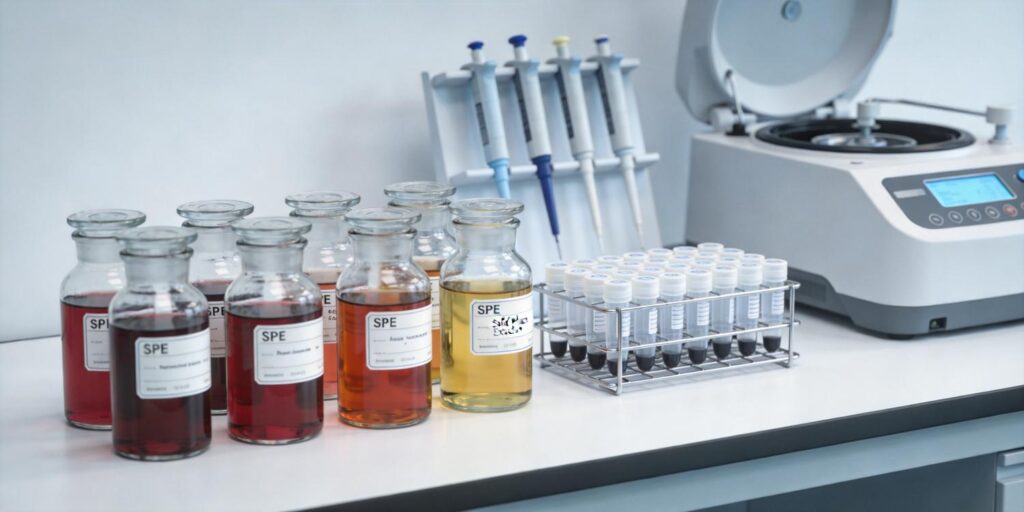
- LC-MS/MS or GC-MS analysis: Typically run in MRM mode with isotopically labeled internal standards. SPE extracts must be free of particulates; post-extraction centrifugation or filtration is recommended.
- Data review and reporting: Recovery, matrix effects, and reproducibility must meet SWGTOX or other guidelines. Internal standard responses are monitored for each batch.
For high-throughput labs, automation using 96-well SPE plates and robotic systems reduces hands-on time and improves precision. Many labs also explore parallel SPE with mixed-mode sorbents for multi-analyte coverage in a single run.
Conclusion
SPE remains an indispensable tool in forensic toxicology, enabling the robust and reliable analysis of drugs of abuse from complex biological matrices. By carefully selecting sorbent chemistry, optimizing wash and elution conditions, and ensuring instrument compatibility, forensic scientists can achieve the low detection limits and high confidence required for legal proceedings. Whether using traditional cartridges or modern 96-well plate formats, the principles of SPE are the foundation of defensible analytical results.