Importance of Metabolite Profiling in Plant Science
Metabolite profiling in plants provides a snapshot of the biochemical status, revealing how genetic and environmental factors influence metabolic pathways. This approach is essential for functional genomics, stress response studies, and biomarker discovery. The complexity and dynamic range of plant metabolites—from primary sugars and amino acids to secondary flavonoids and alkaloids—demand robust sample preparation methods. Solid-phase extraction (SPE) has emerged as a cornerstone technique for cleaning and concentrating plant extracts before liquid chromatography–mass spectrometry (LC-MS) analysis.
Extraction of Plant Metabolites Using Solvent Systems
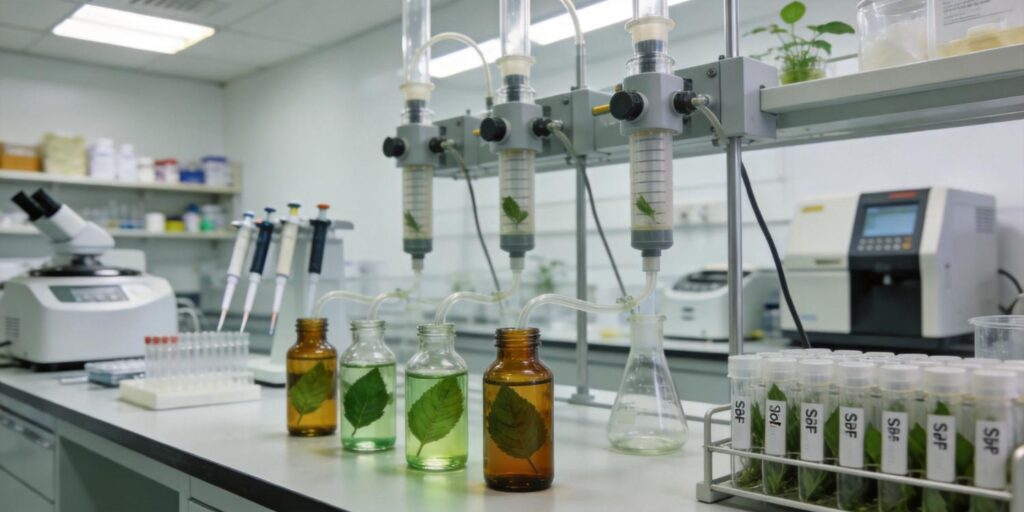
Efficient metabolite extraction begins with solvent selection. Common solvent systems include methanol/water (70:30, v/v) for polar metabolites and chloroform/methanol/water for global metabolomics. For targeted analyses, acidified acetonitrile or ethanol may be used. The extraction step typically involves homogenizing fresh or lyophilized plant tissue, followed by centrifugation to remove debris. The resulting crude extract contains a broad range of compounds, but also pigments, lipids, and sugars that can interfere with downstream LC-MS analysis. SPE serves as the cleanup step to isolate the metabolites of interest.
SPE Sorbent Selection for Diverse Metabolites
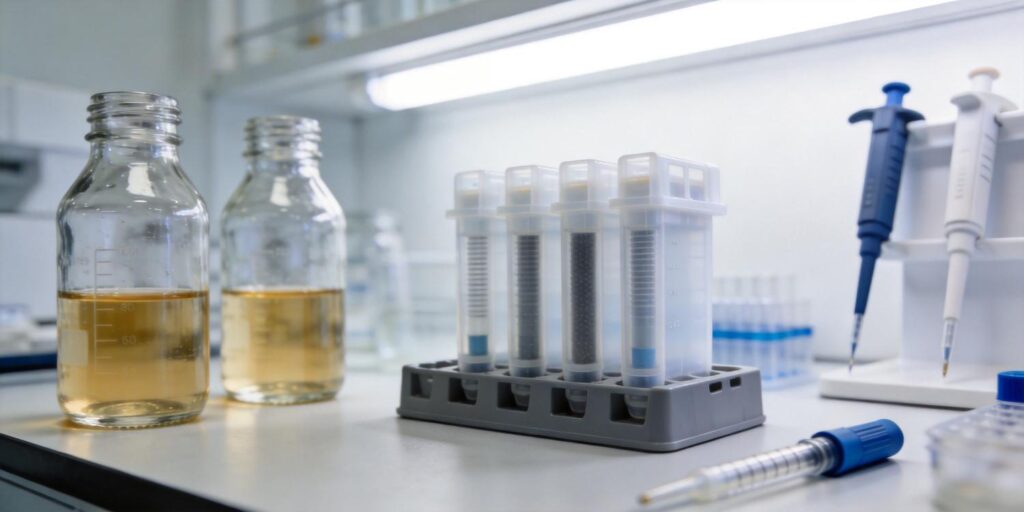
The choice of SPE sorbent is critical for retaining target metabolites while eliminating interferences. HLB (Hydrophilic-Lipophilic Balanced) cartridges are a popular choice for broad-spectrum metabolomics, as they retain both polar and nonpolar compounds. For acidic metabolites such as organic acids and phenolic acids, MAX (Mixed-Mode Strong Anion Exchange) cartridges provide excellent selectivity. Cationic metabolites like alkaloids are best captured using MCX (Mixed-Mode Strong Cation Exchange) cartridges. For neutral or weakly acidic compounds, WAX (Weak Anion Exchange) cartridges offer mild selectivity. Similarly, WCX (Weak Cation Exchange) cartridges are ideal for basic metabolites. When throughput is a priority, 96-well SPE plates enable parallel processing of multiple samples, reducing preparation time.
Cartridge Conditioning and Sample Loading
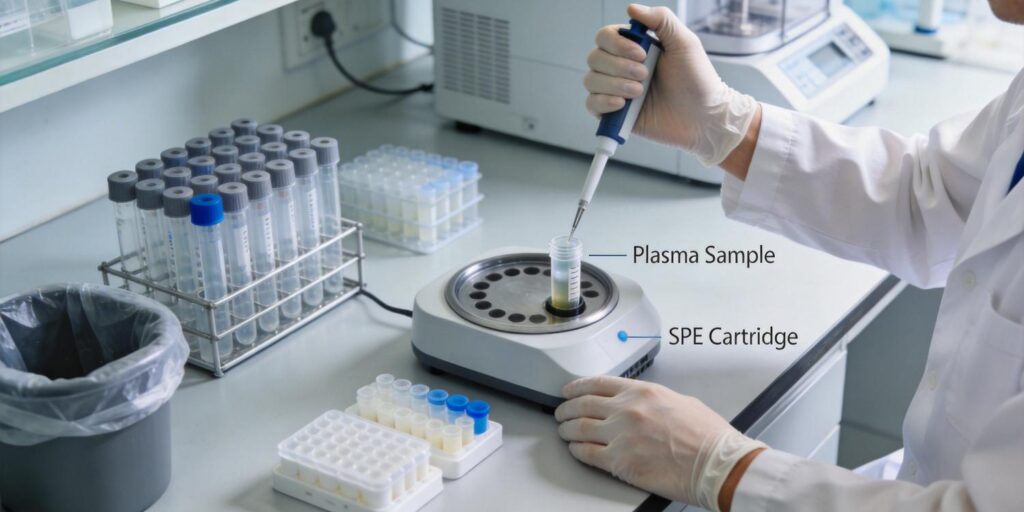
Proper cartridge conditioning is essential for reproducible results. For reversed-phase sorbents like HLB, condition with methanol followed by water or the extraction solvent. For mixed-mode sorbents (MAX, MCX, WAX, WCX), use the appropriate buffer to activate ion-exchange sites. Load the sample at a controlled flow rate (typically 1–2 mL/min) to ensure optimal retention. For dilute extracts, multiple loading cycles may be necessary to concentrate the metabolites.
Washing to Remove Pigments and Sugars
A well-designed wash step removes unwanted matrix components without eluting target analytes. For HLB cartridges, wash with 5% methanol in water to flush out sugars and salts. Pigments like chlorophyll can be removed with a mixture of water and methanol (e.g., 60:40) containing a small amount of ammonium hydroxide for acidic metabolites. For ion-exchange sorbents, use a wash buffer with intermediate pH and low organic content to retain analytes while flushing interferences. The optimization of wash composition and volume (typically 1–2 column volumes) is key to balancing recovery and cleanup efficiency.
Elution of Metabolites
Elution conditions depend on the sorbent and metabolite class. For HLB, elute with 100% methanol or acetonitrile. For MAX, use acidified methanol (e.g., 2% formic acid in methanol) to neutralize ionic interactions. MCX requires basic methanol (e.g., 5% ammonium hydroxide in methanol) for elution. WAX cartridges are eluted with acidic methanol, while WCX cartridges use basic methanol. Elution volumes are typically 1–2 mL, collected in a single fraction. For 96-well plates, vacuum manifolds ensure consistent flow across wells. The eluate is then dried under nitrogen and reconstituted in the LC-MS mobile phase.
LC-MS Metabolomics Analysis
The cleaned and concentrated SPE eluate is ready for LC-MS analysis. Reversed-phase LC (C18) is standard for nonpolar to moderately polar metabolites, while hydrophilic interaction liquid chromatography (HILIC) is preferred for highly polar compounds. High-resolution mass spectrometry (HRMS) with electrospray ionization (ESI) in both positive and negative modes provides comprehensive coverage. Metabolite identification relies on accurate mass, retention time, and fragmentation patterns, often matched against public databases such as METLIN or HMDB.
Data Interpretation Considerations
Data from SPE-LC-MS metabolomics requires careful normalization. Internal standards (e.g., stable isotope-labeled compounds) added before extraction correct for variations in recovery and ionization efficiency. Batch effects should be monitored with pooled quality control (QC) samples run periodically. Principal component analysis (PCA) and partial least squares discriminant analysis (PLS-DA) are common chemometric tools for identifying differential metabolites. SPE sorbent lot-to-lot variability can affect retention, so consistency across batches is vital. Incorporating blank and spiked samples ensures data integrity.
In summary, SPE is an indispensable tool for plant metabolite profiling, offering flexibility through sorbent selection and method optimization. By following the outlined workflow—extraction, SPE cleanup, and LC-MS analysis—researchers can achieve robust, reproducible metabolome coverage. For laboratories seeking high-throughput solutions, HLB, MAX, MCX, WAX, WCX cartridges, and 96-well plates from Poseidon Scientific provide reliable performance across diverse plant metabolomics applications.