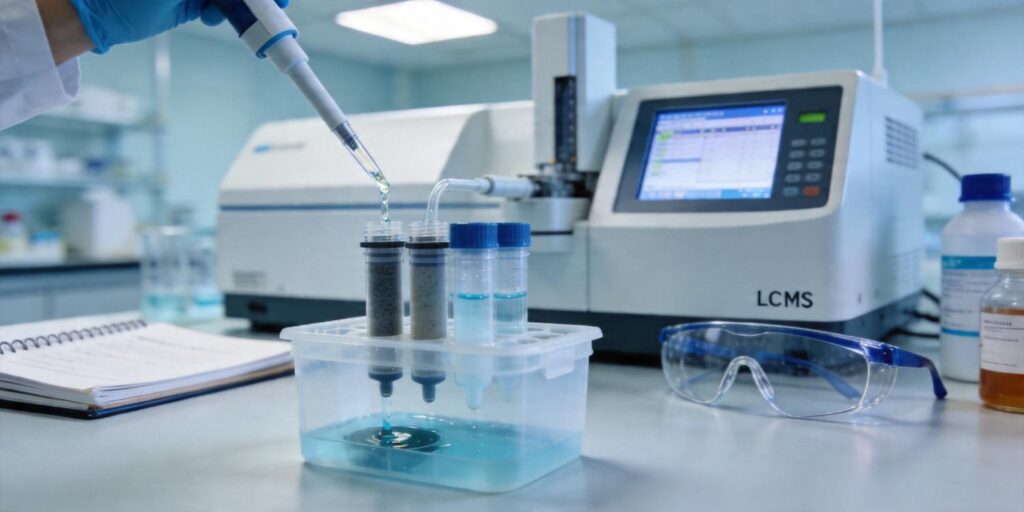
Sample Preparation

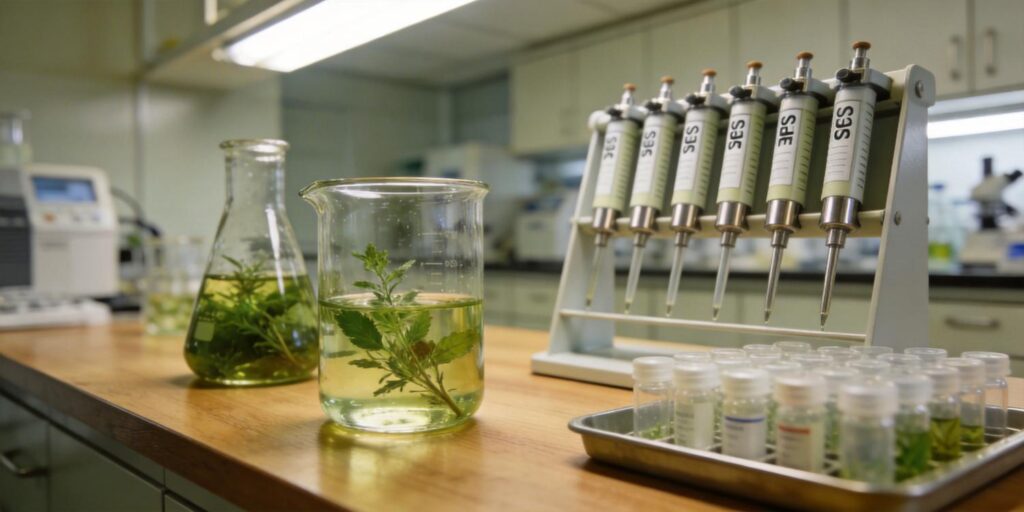
SPE cartridge cleaning herbal extract samples

SPE Cleanup Strategies for Complex Herbal Extracts

Complexity of Herbal Extract Matrices Herbal extracts represent one of the most challenging sample matrices for analytical chemists, containing hundreds to thousands of chemical constituents with diverse physicochemical properties. These complex mixtures typically include alkaloids, flavonoids, terpenoids, glycosides, tannins, polysaccharides, proteins, and pigments, all coexisting in varying concentrations. The matrix complexity arises from the natural […]

SPE Cleanup Strategies for Complex Herbal Extracts Read More »

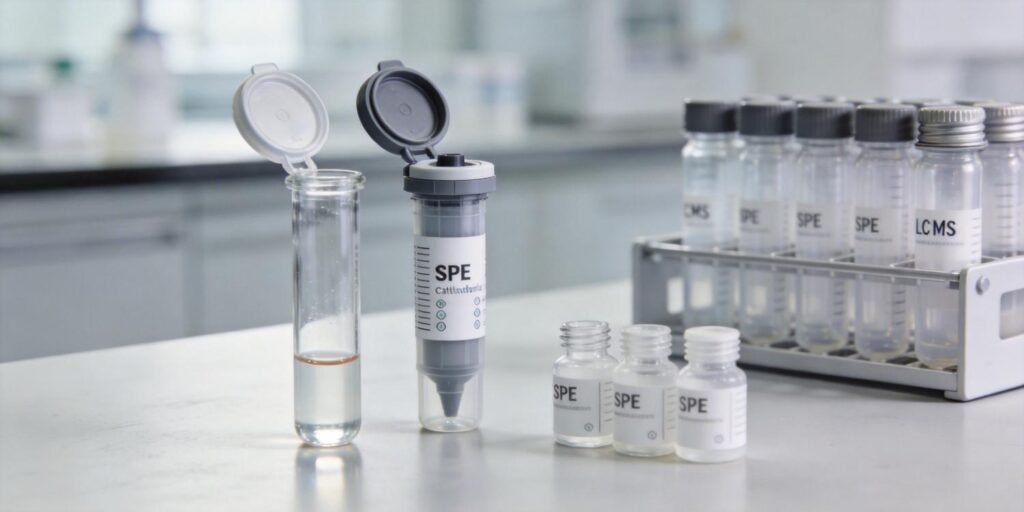
SPE sample preparation integrated with LC-MS analytical workflow

LC-MS Method Integration with SPE Sample Preparation

In modern analytical laboratories, the integration of solid-phase extraction (SPE) with liquid chromatography-mass spectrometry (LC-MS) represents a critical advancement for achieving high-quality analytical results. This comprehensive guide explores the strategic integration of SPE sample preparation with LC-MS methodologies, addressing key considerations for analytical chemists, method developers, and laboratory managers. 1. The Foundational Role of SPE

LC-MS Method Integration with SPE Sample Preparation Read More »

SPE cartridge removing chlorophyll from plant extract samples

Removing Chlorophyll from Plant Samples with SPE Cleanup

Chlorophyll Interference in LC-MS and HPLC Analysis Chlorophyll, the primary photosynthetic pigment in plants, presents significant analytical challenges in LC-MS and HPLC analysis of plant samples. These green pigments exhibit strong UV-Vis absorption, particularly in the 400-700 nm range, which can cause severe interference with both UV detection and mass spectrometry analysis. In HPLC systems,

Removing Chlorophyll from Plant Samples with SPE Cleanup Read More »

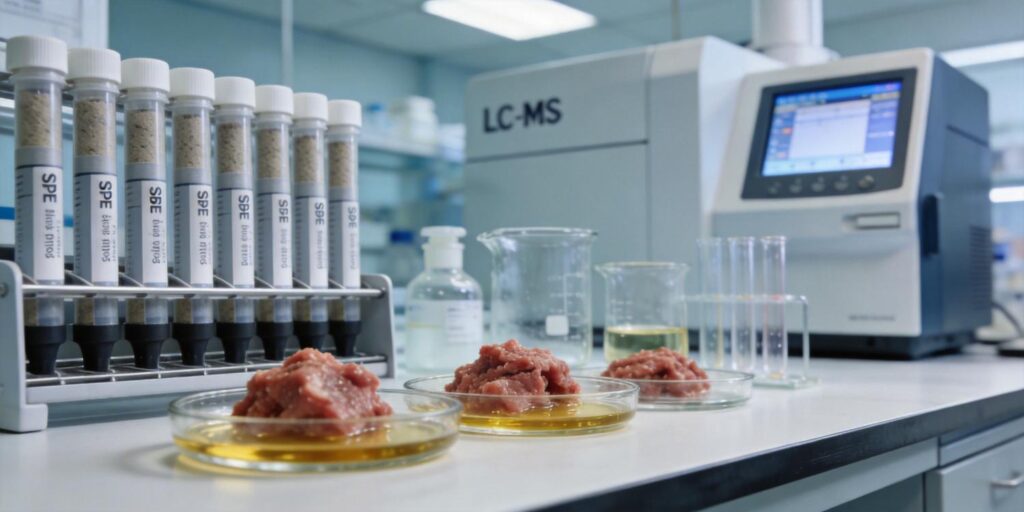
SPE cartridge removing lipids from food extract samples

Using SPE to Remove Interfering Lipids from Food Extracts

Lipid Interference in LC-MS Food Analysis In liquid chromatography-mass spectrometry (LC-MS) analysis of food extracts, lipid interference represents one of the most significant analytical challenges. Lipids can cause ion suppression or enhancement in the mass spectrometer, leading to inaccurate quantification and reduced method sensitivity. According to Simpson and Wynne (2000), co-extracted lipids from food matrices

Using SPE to Remove Interfering Lipids from Food Extracts Read More »

SPE cartridge desalting biological samples prior to LC-MS testing

SPE Cleanup Strategies for Removing Salts from Biological Samples

Salt Interference in LC-MS Analysis In liquid chromatography-mass spectrometry (LC-MS) analysis, salts present in biological samples can cause significant analytical challenges. These inorganic ions interfere with the ionization process in the mass spectrometer, leading to ion suppression or enhancement effects that compromise quantitative accuracy. According to research, atmospheric pressure ionization-MS systems are particularly susceptible to

SPE Cleanup Strategies for Removing Salts from Biological Samples Read More »

SPE cartridge removing pigments from plant extract samples

SPE Cleanup for Removal of Pigments from Plant Extracts

Pigments Commonly Present in Plant Extracts Plant extracts present a complex analytical challenge due to their rich pigment content, primarily chlorophylls and carotenoids. Chlorophylls, the green photosynthetic pigments, exist in several forms including chlorophyll a and b, each with distinct chemical structures and polarities. Carotenoids encompass both carotenes (non-polar hydrocarbons like β-carotene) and xanthophylls (oxygen-containing

SPE Cleanup for Removal of Pigments from Plant Extracts Read More »

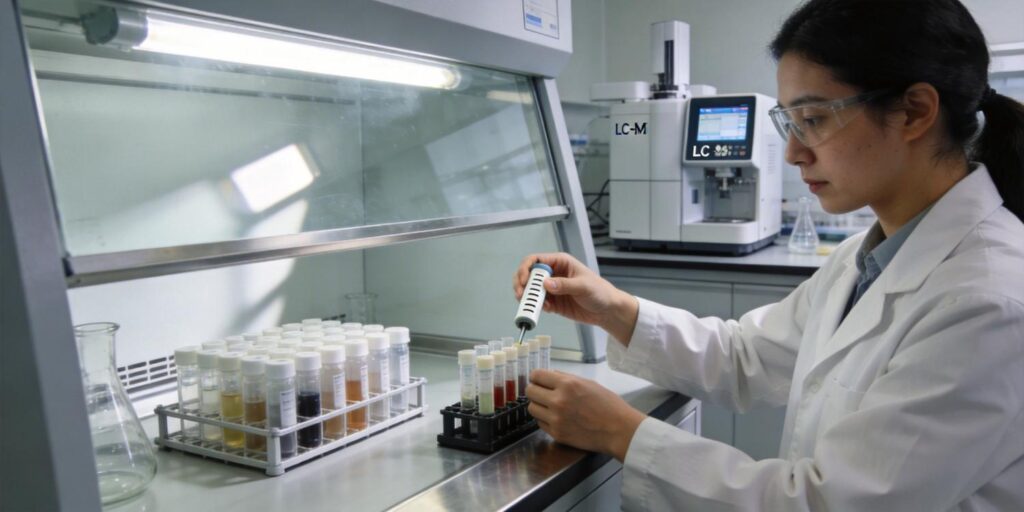
laboratory SPE preparation workflow for metabolomics analysis

Sample Preparation Workflow for Metabolomics Studies Using SPE

Overview of Metabolomics Sample Preparation Requirements Metabolomics studies present unique challenges in sample preparation due to the vast chemical diversity of metabolites present in biological systems. These small molecules span an enormous range of physicochemical properties, from highly polar amino acids and organic acids to non-polar lipids and steroids. The primary goals of metabolomics sample

Sample Preparation Workflow for Metabolomics Studies Using SPE Read More »

laboratory SPE wash step improving sample cleanup efficiency

Optimizing SPE Wash Steps to Improve Sample Cleanup

Role of Wash Steps in SPE Workflows Solid-phase extraction (SPE) wash steps serve as the critical bridge between sample loading and analyte elution, functioning as the primary mechanism for removing matrix interferences while preserving target compounds. As described in SPE literature, “To remove unwanted, weakly retained materials, wash the packing with solutions that are stronger

Optimizing SPE Wash Steps to Improve Sample Cleanup Read More »

SPE cartridge cleanup removing endogenous compounds from plasma samples

SPE Workflow for Removing Endogenous Interferences in Plasma Samples

1. Types of Endogenous Compounds Interfering in LC-MS Analysis Plasma samples present a complex matrix challenge for LC-MS analysis due to numerous endogenous compounds that can interfere with accurate analyte detection. These interfering substances fall into several key categories: Proteinaceous Components Proteins represent the most abundant endogenous interferents in plasma, comprising approximately 60-80 g/L. Albumin,

SPE Workflow for Removing Endogenous Interferences in Plasma Samples Read More »

mixed mode SPE cartridge used for complex laboratory sample cleanup

Improving Sample Cleanup Efficiency with Mixed-Mode SPE Sorbents

Principle of Mixed-Mode SPE Interactions Mixed-mode solid phase extraction represents a sophisticated advancement in sample preparation technology that combines multiple retention mechanisms within a single sorbent. According to established literature, mixed-mode SPE columns are prevalent in drug extractions because they offer multiple binding mechanisms for improved sensitivity and excellent sample cleanup. A mixed-mode sorbent employs

Improving Sample Cleanup Efficiency with Mixed-Mode SPE Sorbents Read More »

Shopping Cart
Poseidon Scientific
Privacy Overview

This website uses cookies so that we can provide you with the best user experience possible. Cookie information is stored in your browser and performs functions such as recognising you when you return to our website and helping our team to understand which sections of the website you find most interesting and useful.