Lipid Interference Problems in Tissue Extracts
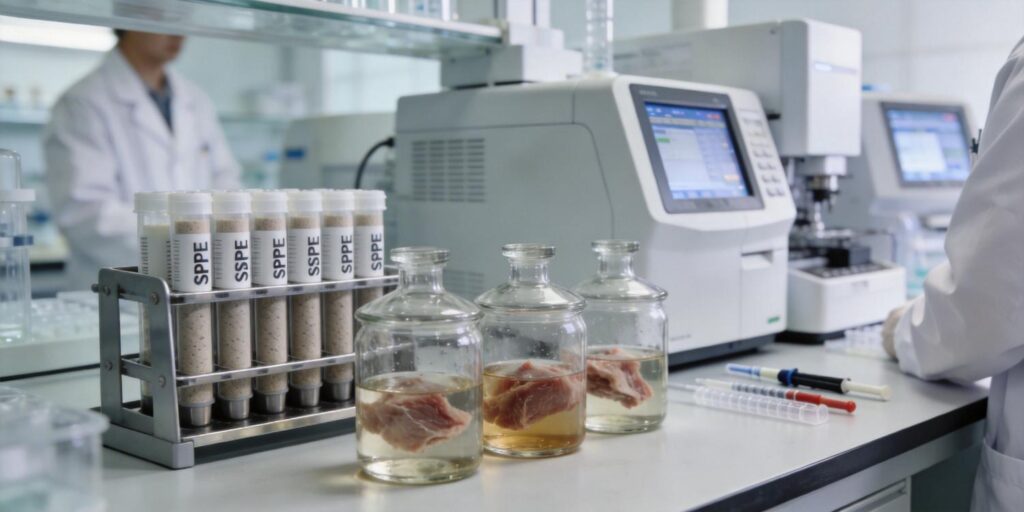
Tissue extracts present unique analytical challenges due to their complex lipid composition. Liver, brain, adipose, and muscle tissues contain high concentrations of various lipid classes including triglycerides, phospholipids, cholesterol esters, free fatty acids, and cholesterol. These lipids can cause significant interference in analytical methods, particularly in LC-MS applications where they can:
- Suppress ionization efficiency through competitive ionization processes
- Cause matrix effects leading to inaccurate quantification
- Clog analytical columns and reduce column lifetime
- Generate interfering peaks in chromatograms
- Reduce instrument uptime due to frequent source cleaning requirements
According to research from Simpson and Wynne (2000), the high lipid load combined with protein content in tissue samples creates a particularly challenging matrix for analytical chemists. Lipids often bind to proteins, requiring additional pretreatment steps to achieve effective separation. The problem is especially pronounced in tissues like liver and brain, which contain complex lipid mixtures including sphingolipids, cerebrosides, and gangliosides that can interfere with drug metabolite analysis.
Sorbent Materials for Lipid Removal
Primary SPE Phases for Lipid Cleanup
Several solid-phase extraction sorbents have proven effective for lipid removal from tissue extracts:
Aminopropyl (NH2) Sorbents
Aminopropyl-modified silica sorbents are particularly effective for comprehensive lipid class fractionation. The classic method developed by Kaluzny et al. (1985) demonstrates how NH2 sorbents can separate chloroform extracts of lipid tissue into seven principle fractions with high efficiency and purity. This approach has been adapted by numerous researchers for specific applications, including the separation of free fatty acids from other lipid classes.
Hydrophilic-Lipophilic Balance (HLB) Sorbents
HLB sorbents, such as those available from Poseidon Scientific, offer excellent retention of both polar and non-polar compounds while effectively removing lipids. These copolymeric sorbents provide superior cleanup compared to traditional C18 phases, as demonstrated in forensic applications where they produce cleaner extracts with higher recoveries.
Mixed-Mode Sorbents
Mixed-mode sorbents combining reversed-phase and ion-exchange mechanisms (such as MCX and WAX phases) can be particularly effective for removing acidic lipids while retaining basic analytes of interest. These sorbents allow selective retention based on both hydrophobicity and ionic interactions.
Silver-Ion Modified Sorbents
For specialized applications involving unsaturated fatty acids, silver-ion complexation chromatography offers unique selectivity. However, as noted in the literature, this approach is typically limited to small samples due to capacity constraints with saturated fatty acids.
Combining SPE with Protein Precipitation
Effective lipid removal from tissue extracts often requires a multi-step approach combining protein precipitation with solid-phase extraction. The sequential application of these techniques addresses both protein-bound lipids and free lipids:
Protein Precipitation Strategies
Initial protein precipitation can be achieved using:
- Organic solvents: Acetonitrile, methanol, or acetone in ratios of 2:1 to 4:1 (solvent:sample)
- Acid precipitation: Metaphosphoric acid/methanol mixtures (3:2 v/v) for effective deproteinization
- Enzymatic digestion: Proteolytic enzymes like Subtilisin Carlsberg for gentle protein hydrolysis
Integrated Workflow
The combined approach typically follows this sequence:
- Homogenize tissue sample with appropriate solvent (e.g., 1g wet tissue to 1mL chloroform)
- Centrifuge to separate particulates
- Perform protein precipitation on supernatant
- Centrifuge again and collect supernatant
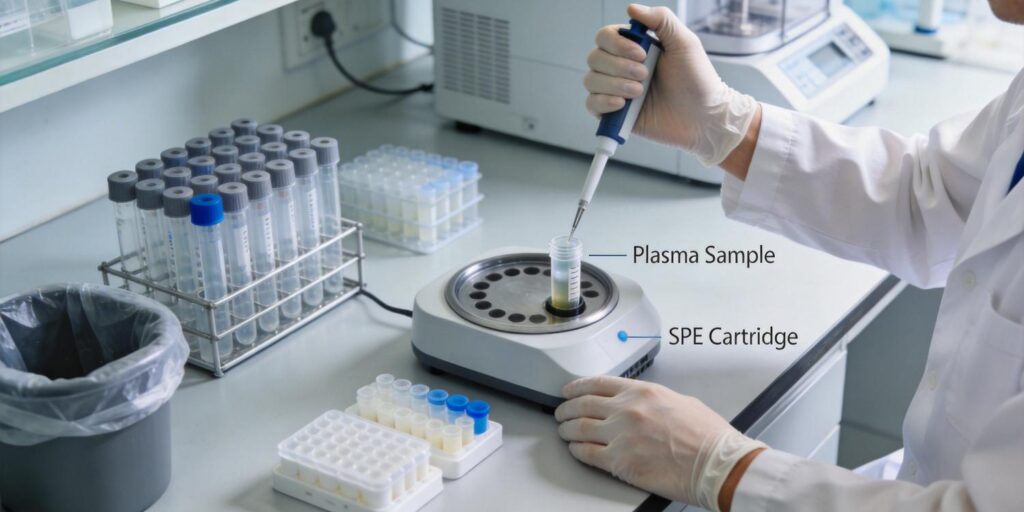
- Apply to conditioned SPE cartridge for lipid removal
- Elute analytes of interest while leaving lipids retained on sorbent
This integrated approach is particularly valuable for samples with high protein content that binds to lipids, as noted in studies of whey protein concentrates where initial chloroform:methanol extraction followed by protein removal was essential.
Example Cleanup Workflow for Liver or Brain Tissue
Comprehensive Lipid Class Fractionation Method
Based on the classic method by Kaluzny et al. (1985) and subsequent adaptations, here’s a detailed workflow for liver or brain tissue cleanup:
Sample Preparation
- Homogenize 1g of wet tissue with 1mL chloroform using mechanical disruption
- Centrifuge at 3000×g for 10 minutes to separate particulates
- Retain supernatant for SPE application
SPE Procedure Using Aminopropyl Cartridge
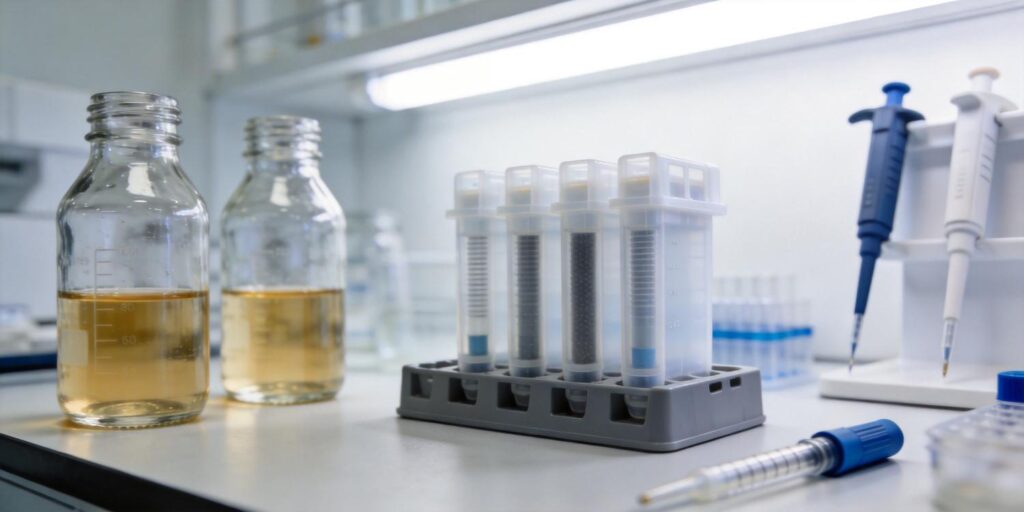
- Conditioning: Sequential conditioning with 3mL methanol, 3mL ethyl acetate, 3mL methylene chloride, and 3×3mL hexane
- Sample Application: Load tissue extract at 1mL/min flow rate
- Initial Wash: 1mL chloroform to retain all lipid classes
- Elution Step 1: 4mL chloroform-IPA (2:1) to elute cholesterol esters, triglycerides, cholesterol, diglycerides, and monoglycerides
- Elution Step 2: 4mL acetic acid-diethyl ether (2:98) to elute fatty acids
- Elution Step 3: 4mL methanol to elute phospholipids
Alternative Simplified Method for Drug Analysis
For routine drug metabolite analysis in liver tissue:
- Homogenize tissue in methanol (1:4 w/v)
- Centrifuge and collect supernatant
- Dilute with phosphate buffer (pH 6.0)
- Apply to HLB cartridge (preconditioned with methanol and water)
- Wash with 5% methanol in water
- Elute analytes with methanol containing 2% formic acid
Effects on LC-MS Sensitivity
Effective lipid removal significantly enhances LC-MS performance through several mechanisms:
Ionization Efficiency Improvement
Lipids compete with analytes for ionization in the MS source. By removing 90-95% of lipids, signal-to-noise ratios typically improve by 5-10 fold for many analytes. This is particularly important for low-abundance metabolites in tissue samples.
Reduced Matrix Effects
Matrix effects, where co-eluting compounds alter analyte ionization, are minimized through comprehensive lipid cleanup. Studies show that proper SPE cleanup can reduce matrix effects from >50% to <15% for most analytes.
Instrument Maintenance Benefits
Regular injection of lipid-rich samples without proper cleanup leads to:
- Frequent source cleaning (every 50-100 injections vs. 500+ with cleanup)
- Reduced column lifetime (weeks vs. months)
- Increased instrument downtime for maintenance
Proper SPE cleanup extends column life and reduces MS source cleaning frequency by 5-10 times, significantly improving laboratory productivity.
Quantitative Accuracy Enhancement
By removing lipid interferences, method accuracy and precision improve substantially. Recovery studies typically show that SPE methods achieve >90% absolute recovery for most analytes, compared to 60-80% for liquid-liquid extraction methods.
Method Validation Strategies
Recovery and Efficiency Validation
When validating SPE methods for lipid removal from tissue extracts, consider these key parameters:
Absolute Recovery Determination
Calculate recovery using the formula:
Recovery (%) = (Amount recovered / Amount spiked) × 100
Target: >90% for most analytes, with RSD <15%
Lipid Removal Efficiency
Quantify lipid removal using:
- Gravimetric analysis of eluates
- TLC purity evaluations
- LC-MS monitoring of characteristic lipid ions
Target: >95% removal of total lipids
Selectivity and Specificity Testing
Validate method selectivity by:
- Analyzing blank tissue extracts from multiple sources
- Testing for interference from endogenous compounds
- Verifying no carryover between samples
- Confirming specificity through MS/MS fragmentation patterns
Robustness and Ruggedness Assessment
Evaluate method robustness by varying:
- Sample loading volume (±20%)
- Flow rates during loading and elution (±50%)
- Solvent composition (±5% absolute)
- pH of loading solutions (±0.5 units)
Stability Studies
Assess stability of:
- Processed samples in autosampler conditions
- SPE cartridges after conditioning
- Extracts during storage at various temperatures
Comparative Validation with Reference Methods
Compare SPE method performance against:
- Traditional liquid-liquid extraction methods
- Protein precipitation alone
- Other SPE phases (C18, silica, etc.)
Document improvements in recovery, cleanliness, and throughput.
Quality Control Implementation
Establish QC procedures including:
- System suitability tests with reference compounds
- Blank and spiked QC samples in each batch
- Monitoring of characteristic lipid markers
- Regular assessment of SPE cartridge performance
By implementing these validation strategies, laboratories can ensure that their SPE methods for lipid removal from tissue extracts provide reliable, reproducible results that meet regulatory requirements for analytical methods in pharmaceutical, forensic, and clinical applications.
For researchers seeking optimized SPE solutions for tissue extract cleanup, Poseidon Scientific offers a range of specialized cartridges including HLB SPE cartridges for comprehensive cleanup, MCX cartridges for mixed-mode applications, and 96-well SPE plates for high-throughput processing. These products are designed to address the specific challenges of lipid-rich matrices while maintaining high recovery of target analytes.