Preservatives Commonly Used in Cosmetic Products
Cosmetic creams are formulated with water, oils, emulsifiers, and active ingredients, creating an environment susceptible to microbial growth. To ensure safety and shelf stability, preservatives such as parabens (methylparaben, ethylparaben, propylparaben, butylparaben), phenoxyethanol, formaldehyde-releasers (DMDM hydantoin, imidazolidinyl urea), isothiazolinones (methylisothiazolinone, methylchloroisothiazolinone), and organic acids (benzoic acid, sorbic acid) are commonly added. These compounds are regulated under global standards like the EU Cosmetics Regulation (EC 1223/2009) and the US FDA guidelines, requiring accurate analytical monitoring.
Challenges of Cream-Based Matrices
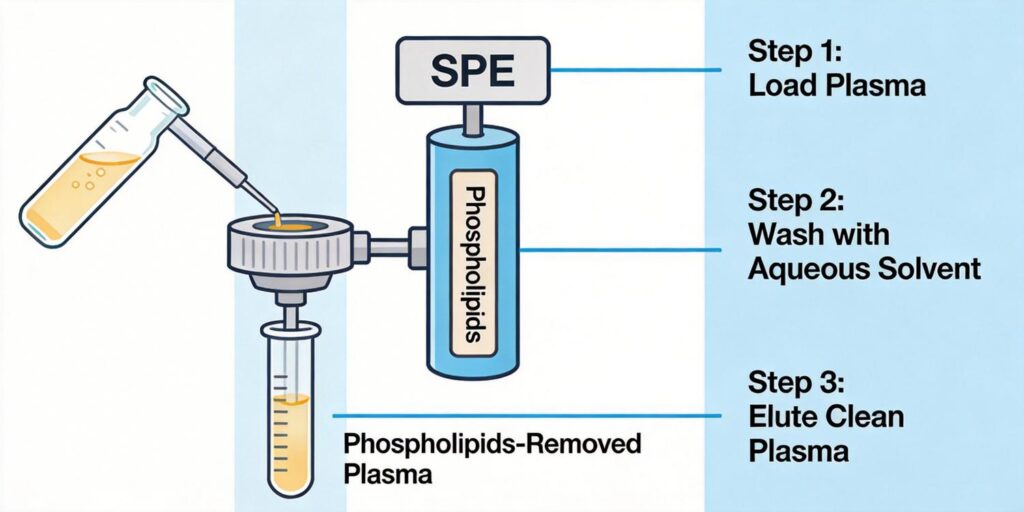
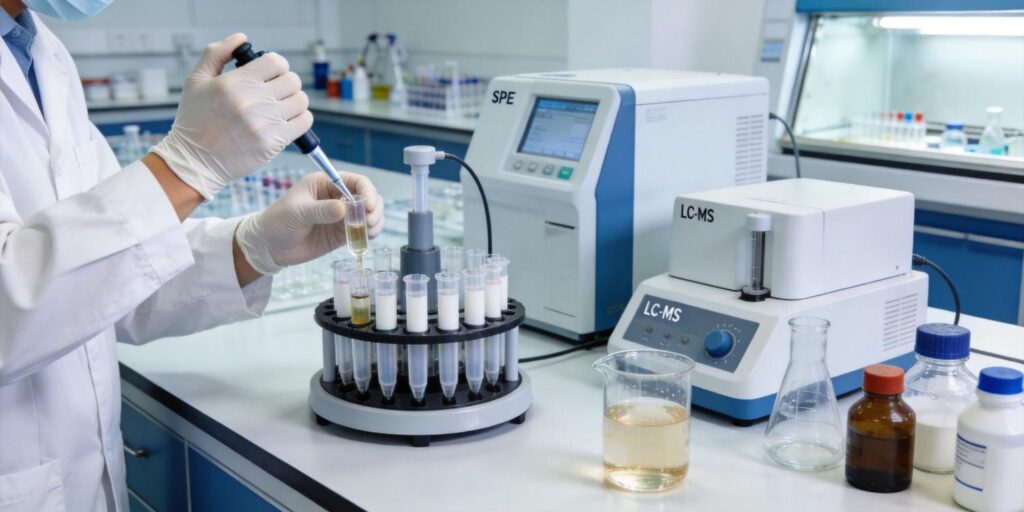
The complex emulsion structure of cosmetic creams poses significant analytical challenges. The high lipid, wax, and surfactant content can cause severe matrix effects, column fouling, and ion suppression in HPLC-MS analysis. Without proper sample preparation, preservative quantification is unreliable. Solid-phase extraction (SPE) effectively addresses these issues by isolating target analytes from interfering hydrophobic components.
Solvent Extraction of Cosmetic Creams
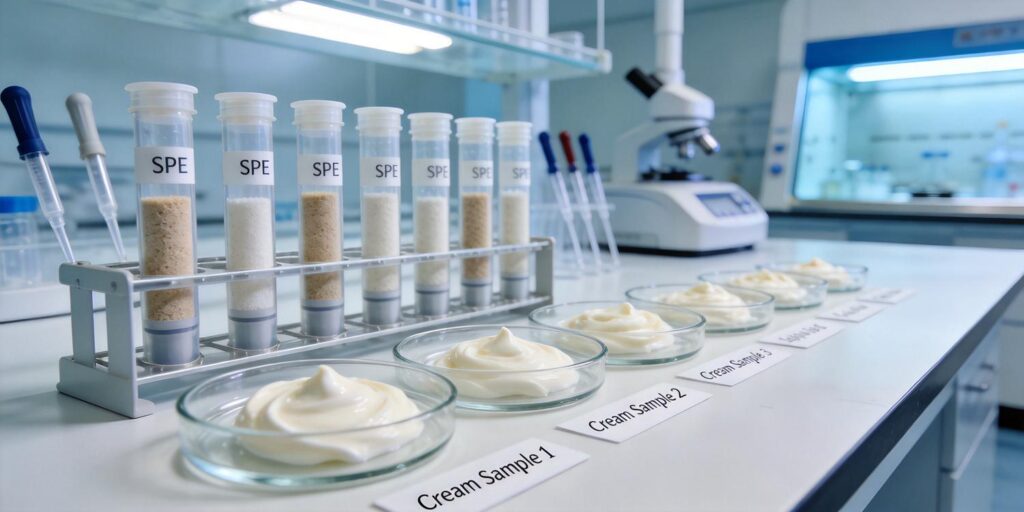
Before SPE, the cream must be broken. A typical procedure involves weighing 0.5–1.0 g of cream into a centrifuge tube, adding 5–10 mL of a polar organic solvent such as methanol or acetonitrile, vortexing, sonicating for 15 minutes, and centrifuging at 4000 rpm for 10 minutes. The supernatant is collected. This step extracts preservatives while leaving bulk lipids and waxes in the pellet.
SPE Sorbent Selection for Preservative Compounds
Choosing the right SPE sorbent is critical. For mixed-mode retention, MAX (mixed-mode anion exchange) cartridges are ideal for acidic preservatives (e.g., benzoic acid, sorbic acid), while MCX (mixed-mode cation exchange) cartridges suit basic compounds. For neutral preservatives like parabens and phenoxyethanol, reversed-phase HLB (hydrophilic-lipophilic balanced) cartridges provide broad retention. For dedicated applications, WAX (weak anion exchange) and WCX (weak cation exchange) cartridges offer selective clean-up for acidic or basic preservatives respectively.
Conditioning Cartridges and Loading Extracts
Proper conditioning ensures consistent retention. For reversed-phase HLB, sequentially pass 3 mL methanol and 3 mL water through the cartridge at 1 mL/min. For mixed-mode sorbents (MAX, MCX), use methanol followed by buffer at the appropriate pH (e.g., pH 6 for MAX, pH 2 for MCX). Load the clarified extract (diluted with water if necessary to reduce organic solvent content below 10%) onto the conditioned cartridge at a slow flow rate (approx. 1 mL/min).
Washing to Remove Oils and Waxes
Interferences from triglycerides, fatty acids, waxes, and emulsifiers must be removed. For HLB cartridges, wash with 5% methanol in water (3 mL) to retain preservatives while eluting polar interferences. For MAX, use a 5% ammonia in water wash to remove neutrals; for MCX, use 2% formic acid in water. A final hexane wash (2 mL) can effectively remove residual oils and waxes without affecting polar preservatives.
Elution Solvents for HPLC Analysis
For reversed-phase HLB, elute preservatives with 3 mL methanol or acetonitrile. For MAX cartridges, acidic preservatives are eluted with 2% formic acid in methanol (3 mL). For MCX, basic preservatives elute with 5% ammonia in methanol. Evaporate the eluate under nitrogen and reconstitute in mobile phase for HPLC-UV or HPLC-MS analysis. Typical recoveries exceed 85% for most preservatives.
Regulatory Compliance Testing
Analytical methods must comply with international standards. For example, the European Pharmacopoeia (Ph. Eur.) specifies limits for preservatives in cosmetic products. Using validated SPE methods with 96-well SPE plates enables high-throughput testing for quality control and regulatory submissions. Accurate SPE preparation ensures reproducible results, helping manufacturers meet safety requirements and avoid costly recalls.