Importance of Polyphenols in Wine Chemistry
Polyphenols represent a crucial class of compounds in wine chemistry, serving as key determinants of color, flavor, mouthfeel, and aging potential. These secondary metabolites, derived primarily from grape skins, seeds, and stems, include flavonoids (anthocyanins, flavonols, flavan-3-ols), phenolic acids, and stilbenes. Anthocyanins, for instance, are responsible for the red and purple hues in wines, while flavonols contribute to color stability and UV protection. Beyond their sensory impact, polyphenols exhibit significant antioxidant properties and potential health benefits, making their accurate quantification essential for both quality control and nutritional assessment.
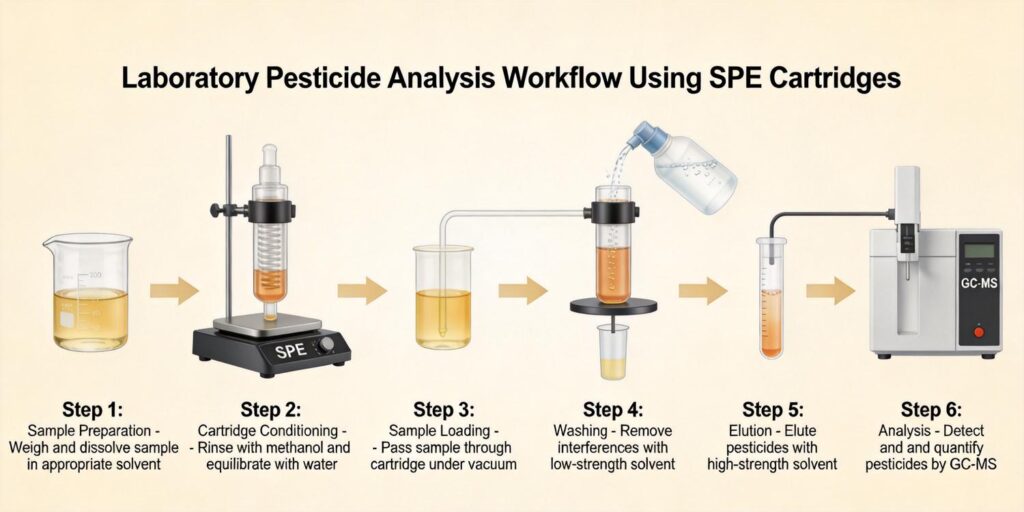
According to literature, wine analysis requires examination of both volatile components responsible for bouquet and non-volatile species like pigments and acids that contribute to flavor. Solid-phase extraction (SPE) has been extensively used for wine analysis because it enables class fractionation into acid, base, and neutral fractions while concentrating target analytes for enhanced sensitivity. The ability to extract under mild pH conditions is particularly valuable for preserving labile phenolic compounds that might otherwise decompose or rearrange during sample preparation.
Sample Dilution and Filtration Strategies
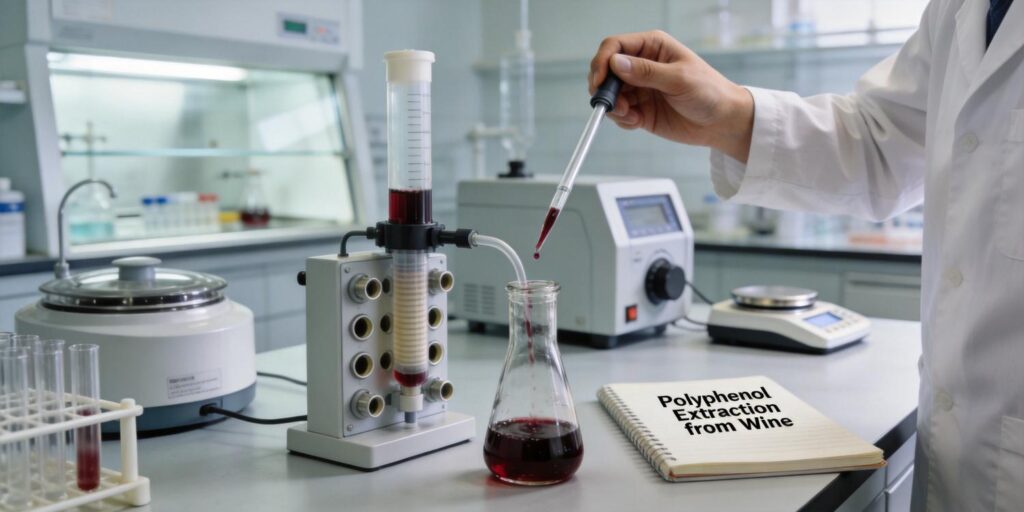
Proper sample preparation is fundamental to successful polyphenol isolation from wine matrices. Wine samples typically contain 10-15% ethanol, sugars, organic acids, and various pigments that can interfere with SPE efficiency. Dilution with acidified water (pH 2-3) at ratios of 1:1 to 1:5 reduces ethanol concentration and ionic strength, improving retention of phenolic compounds on polymeric sorbents. Acidification with hydrochloric or phosphoric acid helps maintain phenolic compounds in their neutral form, enhancing hydrophobic interactions with the sorbent.
Filtration through 0.45 μm or 0.22 μm membrane filters is recommended to remove particulate matter that could clog SPE cartridges. For particularly turbid samples, centrifugation at 4000-5000 rpm for 10-15 minutes prior to filtration can improve clarity. It’s important to note that wine, as a beverage matrix, is relatively simple to process by SPE compared to more complex matrices like milk or cheese, provided the alcohol and sugar content is properly managed through dilution.
Selection of Polymeric SPE Sorbents for Phenolic Enrichment
The choice of sorbent material significantly impacts the efficiency of polyphenol extraction from wine. While traditional C18 bonded silica phases have been widely used, polymeric sorbents offer distinct advantages for phenolic compound isolation. Styrene-divinylbenzene (SDVB) copolymers, such as those found in HLB (Hydrophilic-Lipophilic Balance) cartridges, provide superior retention of polar phenolic compounds due to their balanced hydrophilic and lipophilic characteristics.
Research indicates that polymeric sorbents effectively extract bioflavonoids like rutin from plant materials and have been successfully applied to phenolic acid isolation. For wine analysis specifically, C18 bonded phases have been used to extract pigments (anthocyanins) while leaving sugars in the effluent, demonstrating crude class fractionation capabilities. The advantage of polymeric sorbents lies in their higher capacity and better retention of polar compounds compared to traditional reversed-phase materials.
Conditioning Steps for Reproducible Retention
Proper conditioning of SPE cartridges is essential for achieving consistent and reproducible polyphenol recovery. The standard conditioning protocol involves sequential washing with methanol (or acetonitrile) followed by acidified water. For polymeric sorbents, 3-5 mL of methanol is typically passed through the cartridge to activate the polymer surface and remove any residual monomers, followed by 3-5 mL of acidified water (pH 2-3) to create an aqueous environment compatible with the wine sample.
The conditioning solvent should match the elution strength of the sample loading solution to prevent breakthrough. For wine samples diluted with acidified water, conditioning with the same pH-adjusted water ensures optimal retention. It’s crucial to prevent the sorbent from drying out between conditioning and sample loading, as this can create channels in the packing material and reduce extraction efficiency.
Washing to Remove Sugars and Organic Acids
Effective washing steps are critical for removing matrix interferences while retaining target polyphenols. Wine contains significant amounts of sugars (glucose, fructose), organic acids (tartaric, malic, citric), and other polar compounds that can co-extract with phenolic compounds. A carefully optimized washing protocol typically involves 3-5 mL of 5-10% methanol in acidified water (pH 2-3), which removes sugars and most organic acids while retaining phenolic compounds on the sorbent.
Research demonstrates that wine can be fractionated using SPE on bonded phases to extract pigments while leaving sugars in the effluent. This crude class fractionation can be extended by passing wine through an anion exchanger to trap wine acids separately. The washing step should be sufficiently strong to remove interferences but weak enough to prevent premature elution of target analytes. For particularly complex samples, a two-cartridge extraction system (such as C8 followed by SCX) has been shown effective in removing caffeine, aspartame, sodium benzoate, and color acids from beverage matrices.
Elution Solvents for Phenolic Compounds
Selection of appropriate elution solvents is paramount for efficient recovery of polyphenols from SPE cartridges. Methanol and acetonitrile, often acidified with 0.1-1% formic acid or hydrochloric acid, are commonly used for eluting phenolic compounds. Acidification helps maintain phenolic compounds in their neutral form and improves recovery, particularly for anthocyanins and other pH-sensitive compounds.
For comprehensive polyphenol profiling, a gradient elution approach may be employed, starting with 50-70% methanol/water and progressing to 100% methanol. Typically, 3-5 mL of elution solvent is sufficient for complete recovery, though this should be optimized based on sorbent capacity and sample loading. Evaporation of eluates under nitrogen stream at 30-40°C followed by reconstitution in mobile phase compatible solvent (usually 50% methanol/water) prepares samples for subsequent HPLC analysis.
HPLC Analysis of Flavonoids and Phenolics
Following SPE cleanup, high-performance liquid chromatography (HPLC) provides the analytical separation and quantification of individual polyphenols. Reversed-phase C18 columns (150-250 mm × 4.6 mm, 3-5 μm particle size) with gradient elution using water-acidified with 0.1% formic acid (mobile phase A) and acetonitrile or methanol (mobile phase B) represent the standard analytical approach.
Detection typically employs diode array detectors (DAD) monitoring at 280 nm (hydroxybenzoic acids, flavan-3-ols), 320 nm (hydroxycinnamic acids), and 520 nm (anthocyanins). For enhanced sensitivity and specificity, mass spectrometric detection (LC-MS/MS) offers superior compound identification and quantification, particularly for complex wine polyphenol profiles. The SPE concentration effect (often 50-fold or greater) brings analytes into the linear response range of detectors, facilitating accurate quantification even at trace levels.
Application in Wine Quality Control
The SPE-HPLC methodology for polyphenol analysis finds extensive application in wine quality control and authentication. Polyphenol profiles serve as chemical fingerprints that can indicate grape variety, geographical origin, vintage, and winemaking practices. Anthocyanin ratios, for instance, can differentiate between certain grape varieties, while hydroxycinnamic acid profiles may reflect specific winemaking techniques.
Beyond authentication, polyphenol monitoring supports quality assurance throughout production, from grape maturity assessment to finished product evaluation. Antioxidant capacity measurements, correlated with total phenolic content, provide insights into potential health benefits and aging potential. The SPE approach offers winemakers and quality control laboratories a robust, reproducible method for routine polyphenol analysis that supports product consistency, regulatory compliance, and consumer information requirements.
For laboratories seeking reliable SPE solutions for wine polyphenol analysis, Poseidon Scientific offers a comprehensive range of polymeric SPE cartridges including HLB SPE cartridges specifically designed for polar compound retention. Our MAX and MCX mixed-mode cartridges provide additional selectivity for challenging applications, while WAX and WCX phases offer specialized retention mechanisms. For high-throughput laboratories, our 96-well SPE plates enable efficient processing of multiple samples simultaneously.