Preservatives Commonly Analyzed in Cosmetics
Cosmetic formulations require effective preservation systems to prevent microbial growth and ensure product stability during shelf life. Among the most widely used preservatives are parabens (methylparaben, ethylparaben, propylparaben, butylparaben) and phenoxyethanol. These compounds are frequently monitored in quality control laboratories due to regulatory restrictions, safety concerns, and the need to verify label claims.
Parabens are esters of p-hydroxybenzoic acid that exhibit broad-spectrum antimicrobial activity. Their hydrophobic nature increases with alkyl chain length, affecting both their preservative efficacy and analytical behavior. Phenoxyethanol (2-phenoxyethanol) is a glycol ether preservative commonly used in combination with other preservatives to enhance efficacy against Pseudomonas aeruginosa.
Other preservatives occasionally analyzed include formaldehyde-releasing agents (imidazolidinyl urea, DMDM hydantoin), isothiazolinones (methylisothiazolinone, methylchloroisothiazolinone), and organic acids (benzoic acid, sorbic acid). The selection of target analytes depends on the specific formulation and regulatory requirements.
Extraction of Cosmetic Formulations
Cosmetic matrices present unique challenges for extraction due to their complex composition, which typically includes oils, emulsifiers, thickeners, pigments, and various active ingredients. The extraction process must effectively liberate preservatives from these matrices while minimizing co-extraction of interfering components.
For aqueous-based products (lotions, creams, gels), sample preparation often involves dilution with water-methanol mixtures. Research by Bonazzi et al. (1995) demonstrated that dissolving cream samples in aqueous medium (20% v/v methanol) effectively prepared the sample for SPE processing while maintaining preservative stability. For oil-based formulations, organic solvents like dichloromethane or hexane may be required, sometimes with appropriate solvent mixtures to achieve optimal extraction efficiency.
The extraction step must consider the preservatives’ chemical properties. Parabens, being relatively hydrophobic, may require organic solvents for efficient extraction from lipophilic matrices, while phenoxyethanol’s moderate polarity allows extraction with aqueous-organic mixtures. Proper pH adjustment is crucial for ionizable preservatives to ensure they exist in the appropriate form for subsequent SPE retention.
SPE Sorbent Selection for Preservative Compounds
Selecting the appropriate SPE sorbent is critical for successful preservative analysis. The choice depends on the preservatives’ chemical properties, the matrix composition, and the analytical technique to be used.
For hydrophobic preservatives like parabens, reversed-phase sorbents such as C18 are commonly employed. As demonstrated in pharmaceutical cream analysis, C18 sorbents effectively retain hydrophobic parabens while allowing more polar matrix components to pass through. The study by Bonazzi et al. showed that using a C-18 sorbent with cream samples dissolved in aqueous medium (20% v/v methanol) completely retained methyl- and propyl-parabens while allowing the drug fluorouracil to pass through unretained.
For more polar preservatives or when analyzing multiple preservatives with varying polarities, hydrophilic-lipophilic balanced (HLB) sorbents offer advantages. These polymeric sorbents provide dual retention mechanisms through both hydrophilic and lipophilic interactions, making them suitable for a wide range of preservatives including phenoxyethanol.
When dealing with ionizable preservatives or when enhanced selectivity is required, mixed-mode sorbents combining reversed-phase and ion-exchange mechanisms can be employed. For acidic preservatives like benzoic acid, weak anion exchange (WAX) or mixed-mode anion exchange (MAX) sorbents may be appropriate, while for basic preservatives, weak cation exchange (WCX) or mixed-mode cation exchange (MCX) sorbents can provide superior cleanup.
Conditioning and Sample Loading Procedures
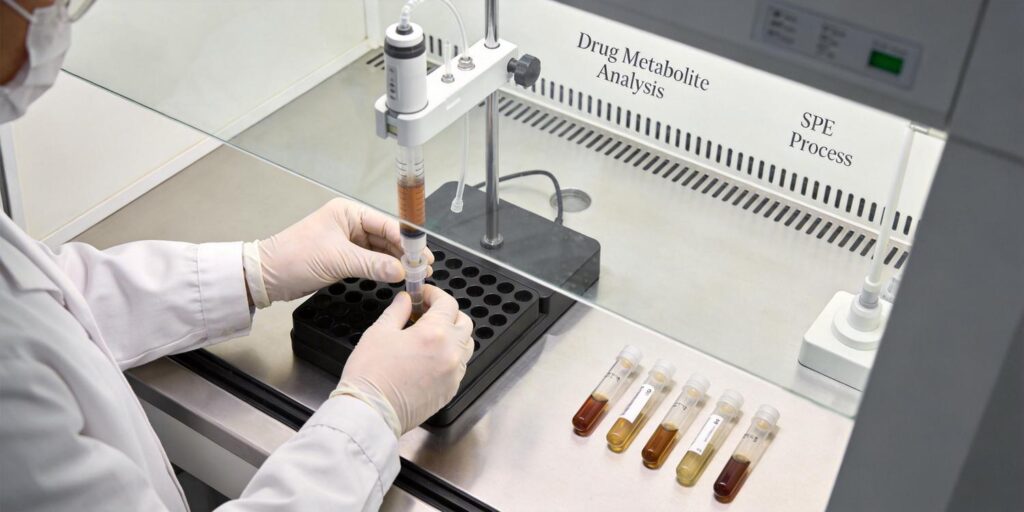
Proper SPE cartridge conditioning is essential for reproducible and efficient extraction. The conditioning process prepares the sorbent surface for optimal analyte retention by removing impurities and ensuring proper solvation of the stationary phase.
For reversed-phase sorbents like C18, typical conditioning involves sequential washing with methanol (or acetonitrile) followed by water or buffer. The methanol step activates the hydrophobic surface, while the aqueous step ensures compatibility with the sample matrix. Research protocols typically specify rinsing with 6 ml of methanol followed by appropriate aqueous conditioning.
Sample loading conditions must be optimized for preservative retention. Flow rates should be controlled (typically 1-3 drops per second) to ensure adequate contact time between analytes and sorbent. For preservative analysis in cosmetics, sample volumes typically range from 1-10 ml, depending on preservative concentration and detection sensitivity requirements.
pH adjustment during sample loading can significantly impact recovery, especially for ionizable preservatives. As noted in forensic applications, lowering the pH from 6.0 to 5.0 increased ibuprofen recovery on hydrophobic sorbents due to reduced ionization (pKa = 5.9). Similar principles apply to preservatives with ionizable groups.
Washing Steps Removing Oils and Emulsifiers
Effective washing steps are crucial for removing cosmetic matrix interferences while preserving analyte retention. The washing solvent must be strong enough to elute interfering components but weak enough to retain target preservatives.
For reversed-phase extractions of hydrophobic preservatives like parabens, washing with water or low-percentage methanol/water mixtures (5-20% methanol) effectively removes polar matrix components such as sugars, salts, and some emulsifiers. More hydrophobic interferences like oils and waxes may require washing with intermediate polarity solvents.
In the analysis of pharmaceutical creams containing hydrophobic drugs and parabens, washing with the same solvent system used for sample loading (20% v/v methanol) effectively removed excipients while retaining target analytes. For diol sorbent applications with cream samples dissolved in dichloromethane-hexane mixtures, washing with n-hexane-dichloromethane (7:3, v/v) removed matrix interferences before analyte elution.
When using mixed-mode sorbents, washing strategies become more sophisticated. For anion-exchange mixed-mode sorbents, washing might involve methanol with small percentages of acid or base to remove neutral and weakly retained components while preserving ionic interactions with target preservatives.
Elution Solvents Suitable for LC-MS Analysis
Elution solvent selection must balance complete analyte recovery with compatibility with subsequent analytical techniques, particularly LC-MS which is commonly used for preservative analysis due to its sensitivity and selectivity.
For reversed-phase sorbents retaining hydrophobic preservatives, methanol and acetonitrile are common elution solvents. Studies have shown that elution with two 1.5-ml portions of methanol provides quantitative recovery of retained compounds. For more strongly retained analytes, mixtures like 90/10 acetonitrile/methanol or addition of acid/base modifiers may be required.
When using mixed-mode sorbents, elution typically requires breaking both hydrophobic and ionic interactions. For anion-exchange mixed-mode sorbents retaining acidic preservatives, elution might involve methanol with acid modifiers (2% formic acid in methanol) followed by methanol with base modifiers (5% ammonium hydroxide in methanol) to ensure complete recovery.
Elution solvent volume should be minimized to achieve maximum concentration factors while ensuring complete analyte recovery. Typical elution volumes range from 1-5 ml, with multiple small aliquots often providing better recovery than a single large volume. Allowing the cartridge to soak with eluent for 0.5-1 minute before applying vacuum can significantly improve recovery.
Quantification Methods and Calibration
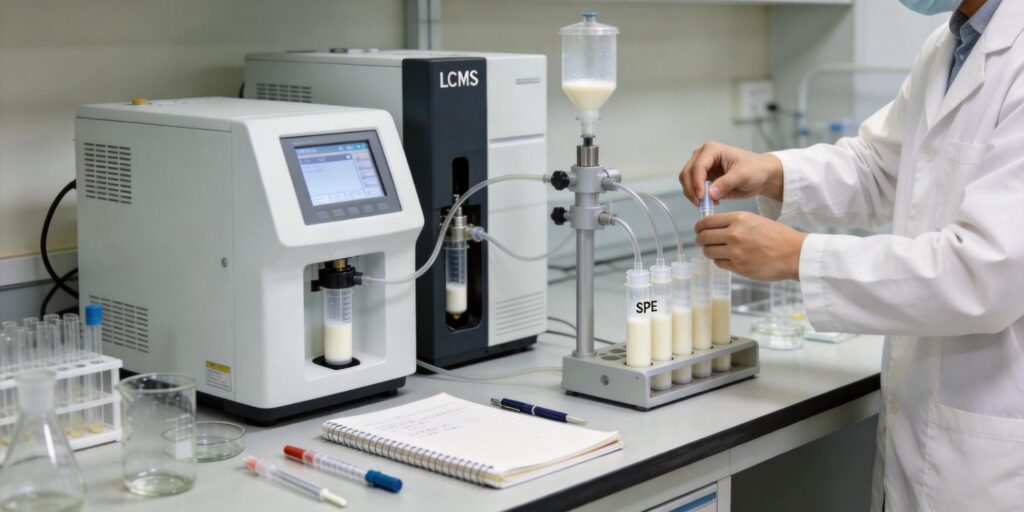
Accurate quantification of preservatives requires appropriate calibration strategies that account for matrix effects and extraction efficiency. Most modern cosmetic preservative analysis employs LC-MS/MS due to its superior sensitivity, selectivity, and ability to handle complex matrices.
Calibration typically involves preparing standards in blank matrix or solvent-matched solutions. For preservatives like parabens and phenoxyethanol, linear calibration curves are generally obtained over concentration ranges relevant to cosmetic formulations (typically 0.1-100 μg/ml). Internal standards, preferably stable isotope-labeled analogs of target preservatives, are recommended to correct for extraction variability and matrix effects.
Method validation should include assessment of linearity, accuracy, precision, limit of detection (LOD), limit of quantification (LOQ), and recovery. Recovery studies are particularly important for SPE methods, with acceptable recoveries typically ranging from 70-120% with RSD < 15%. As demonstrated in forensic applications, recovery values for various compounds using optimized SPE methods typically range from 67-99% with good precision.
Quality control samples (blanks, fortified samples, and continuing calibration verification) should be incorporated into each analytical batch to ensure method performance throughout the analysis.
Application in Cosmetic Quality Control Labs
SPE-based preservative analysis has become a cornerstone of cosmetic quality control laboratories worldwide. The technique offers numerous advantages over traditional liquid-liquid extraction, including improved throughput, reduced solvent consumption, higher reproducibility, and cleaner extracts.
In routine quality control, SPE methods enable laboratories to efficiently monitor preservative concentrations to ensure compliance with regulatory limits (such as the EU Cosmetics Regulation 1223/2009), verify label claims, and assess batch-to-batch consistency. The ability to process multiple samples simultaneously using 96-well SPE plates makes the technique particularly valuable for high-throughput environments.
The application extends beyond simple quantification to include stability testing (monitoring preservative degradation over time), compatibility studies (assessing interactions between preservatives and other formulation components), and troubleshooting (identifying causes of preservative failure in finished products).
As cosmetic formulations become increasingly complex and regulatory requirements more stringent, SPE-based preservative analysis continues to evolve. New sorbent chemistries, automated platforms, and integrated sample preparation-analysis systems are enhancing the efficiency, reliability, and scope of preservative monitoring in cosmetic quality control laboratories.
For laboratories seeking optimized SPE solutions for cosmetic preservative analysis, Poseidon Scientific offers a comprehensive range of HLB SPE cartridges, MAX SPE cartridges, MCX SPE cartridges, WAX SPE cartridges, WCX SPE cartridges, and 96-well SPE plates designed to meet the specific challenges of cosmetic matrix analysis.