Analytical Challenges for Steroid Hormones
Steroid hormones in serum present a unique set of analytical hurdles. Their low circulating concentrations (often in ng/mL or pg/mL), combined with a complex biological matrix rich in proteins, lipids, and salts, demand highly selective sample preparation. Additionally, steroids vary in polarity—from hydrophobic androgens like testosterone to more polar corticosteroids—requiring a multi-modal solid-phase extraction (SPE) approach. Without effective cleanup, matrix effects can severely suppress or enhance ionization in LC-MS/MS, compromising sensitivity and accuracy.
Serum Pretreatment and Protein Removal
Protein precipitation is the first critical step. Adding organic solvents such as acetonitrile or methanol (typically 2:1 or 3:1 solvent-to-serum ratio) denatures and precipitates proteins. After vortex mixing and centrifugation at high speed (e.g., 10,000×g for 10 min), the supernatant containing steroids is collected. This step removes >90% of proteins, reducing matrix load on the SPE column. For complete protein removal, consider using a 96-well filter plate with a protein-binding membrane before SPE.
HLB SPE Retention of Hydrophobic Steroids
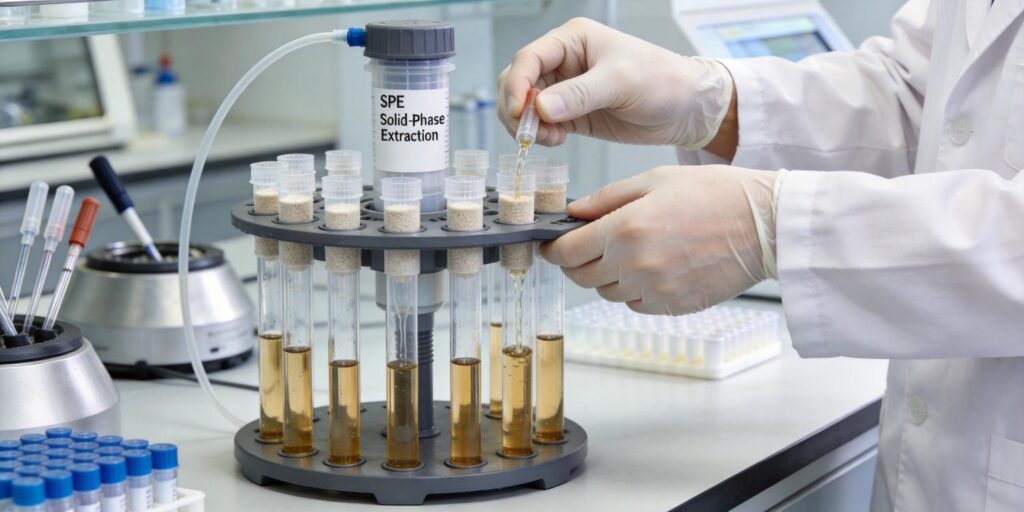
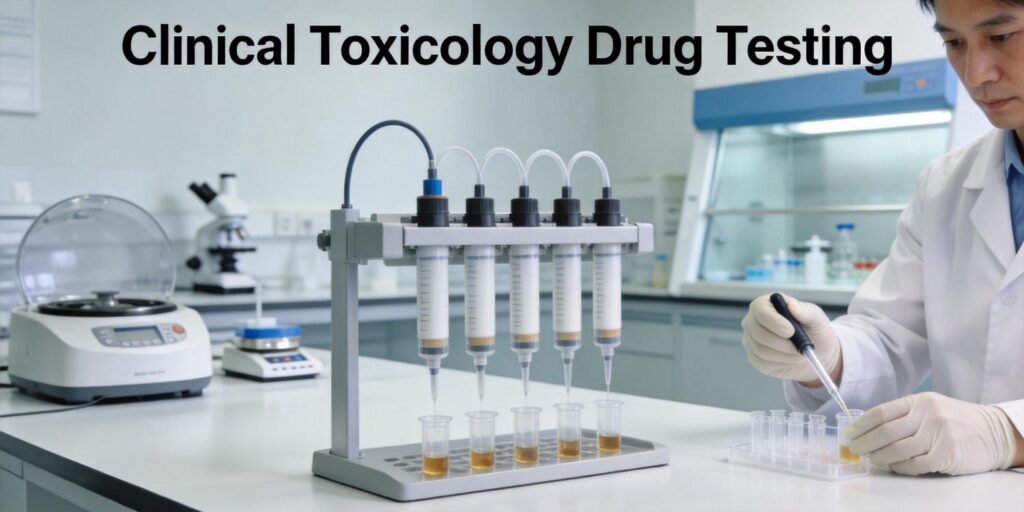
Poseidon Scientific HLB SPE cartridges are the ideal choice for steroid extraction. The hydrophilic-lipophilic balanced (HLB) polymer exhibits strong reversed-phase retention for a broad range of steroids, including hydrophobic analytes like testosterone, cortisol, and estradiol. Condition the cartridge with methanol (3 mL), followed by water (3 mL). Load the protein-precipitated supernatant (diluted with water to <10% organic) at 1 mL/min. The high surface area of the HLB resin ensures quantitative retention of target steroids while polar interferences pass through.
Washing Protocol to Eliminate Phospholipids
Phospholipids are a major source of matrix effects in LC-MS/MS. After sample loading, wash the HLB cartridge with 5% methanol in water (2 mL) to remove salts and polar biomolecules. To selectively elute phospholipids without losing steroids, a second wash with 60% methanol in water (2 mL) is recommended. This step leverages the fact that phospholipids remain retained at this solvent strength while most steroids are not yet eluted. For maximum phospholipid removal, use a dedicated phospholipid removal plate in tandem with SPE if high-throughput is needed.
Elution Solvent Optimization
Elution is performed using a solvent that disrupts the reversed-phase interaction. For HLB cartridges, pure methanol (3 mL) is effective for most steroids, but for highly hydrophobic analytes (e.g., vitamin D derivatives), methanol/ethyl acetate (1:1) may improve recovery. Elute slowly (1 mL/min) to maximize mass transfer. Collect the eluate, evaporate to dryness under nitrogen at 40°C, and reconstitute in a mobile-phase-compatible solvent (e.g., 50% methanol in water).
LC-MS/MS Quantification
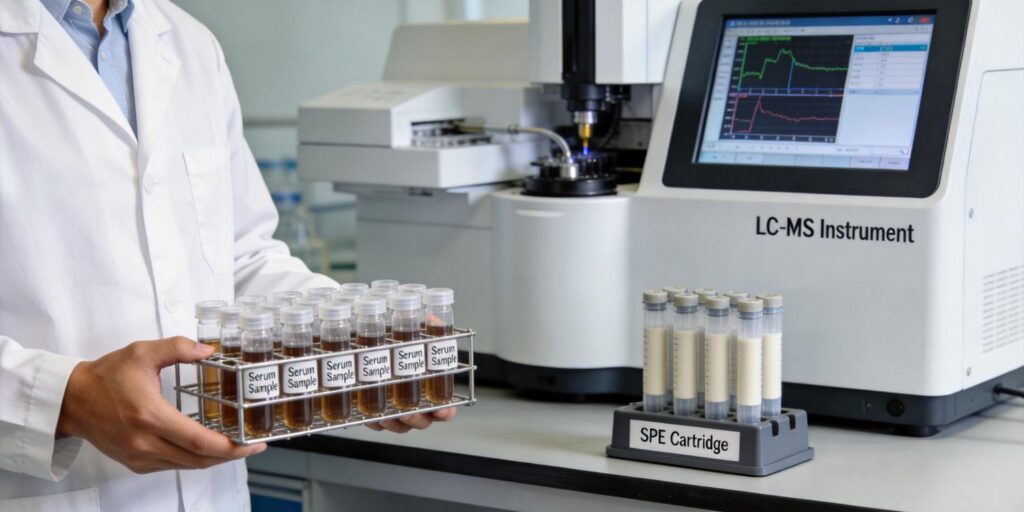
Reversed-phase LC using a C18 column (e.g., 2.1×50 mm, 1.7 μm) with a water-methanol gradient containing 0.1% formic acid separates steroids by hydrophobicity. Typical gradient: 30% to 95% methanol in 6 min. MS/MS detection in positive electrospray ionization mode with multiple reaction monitoring (MRM) provides high specificity. Common transitions: testosterone (289→97), cortisol (363→121), and estradiol (273→145).
Calibration and Validation Considerations
Matrix-matched calibration is essential due to ion suppression. Prepare calibrators in charcoal-stripped serum to mimic the sample matrix. Include at least six concentration levels spanning the expected range. Internal standards (IS) such as deuterated analogs (e.g., testosterone-d3) correct for recovery and matrix effects. Validate the method for accuracy (85–115%), precision (CV <15%), and limit of quantitation (LOQ).
Typical Recoveries and Sensitivity
With the outlined protocol, recoveries for steroids typically range from 80–110% for most analytes. LOQs reach 0.1 ng/mL for testosterone and 1 ng/mL for cortisol using 0.5 mL serum. The combination of HLB SPE and optimized LC-MS/MS yields a robust method for clinical and research applications. For high-throughput analysis, 96-well SPE plates from Poseidon Scientific can process 96 samples in parallel, maintaining equivalent performance.
For further optimization, explore MAX, MCX, WAX, or WCX cartridges for ion-exchange selectivity if analyzing conjugated steroids. Each product line offers distinct selectivity to address specific analytical challenges.