Trace Pharmaceuticals in Drinking Water
Pharmaceutical residues in drinking water represent a growing concern for environmental regulators and public health officials worldwide. Even at trace levels (ng/L to µg/L), compounds such as antibiotics, hormones, and analgesics can pose ecological risks and potential human health effects. The challenge lies in their low concentrations and the complexity of water matrices, which require robust sample preparation techniques. Solid Phase Extraction (SPE) using hydrophilic-lipophilic balance (HLB) sorbents has emerged as the gold standard for isolating these contaminants, offering high recovery and reproducibility. This blog outlines a validated method for detecting pharmaceuticals in drinking water using Poseidon HLB SPE cartridges, from sampling through LC-MS/MS analysis.
Target Analyte Classes
The method targets a broad spectrum of pharmaceuticals, including acidic, neutral, and basic compounds. Typical classes include non-steroidal anti-inflammatory drugs (NSAIDs) like ibuprofen and diclofenac, antibiotics (sulfonamides, macrolides), beta-blockers (atenolol, metoprolol), anticonvulsants (carbamazepine), and hormones (estradiol, estrone). The wide polarity range of these analytes demands a sorbent with both hydrophilic and lipophilic retention mechanisms. HLB sorbents, composed of a water-wettable copolymer (divinylbenzene-co-N-vinylpyrrolidone), provide balanced retention across pH values, making them ideal for multi-residue analysis.
Large-Volume Water Sampling
To achieve low detection limits, large volumes of drinking water (500 mL to 1 L) are typically sampled. Samples are collected in amber glass bottles and preserved by adjusting pH to approximately 2.5–3.0 with hydrochloric acid to stabilize analytes and prevent microbial degradation. For neutral and basic compounds, a separate aliquot at neutral pH may be processed. Samples should be filtered through 0.45 µm glass fiber filters to remove suspended solids that could clog the SPE cartridge. Immediate extraction is recommended; if storage is necessary, samples can be kept at 4°C for up to 48 hours.
HLB SPE Conditioning and Loading
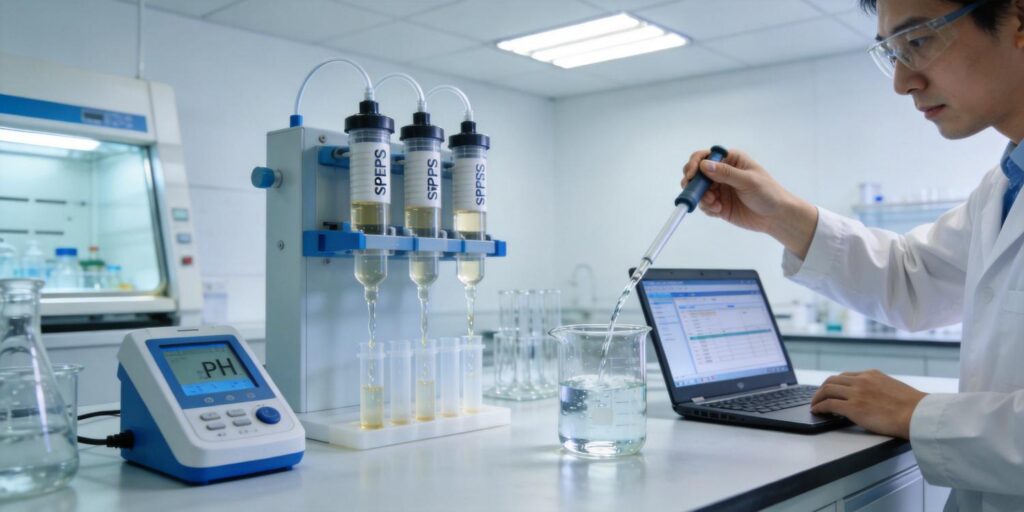
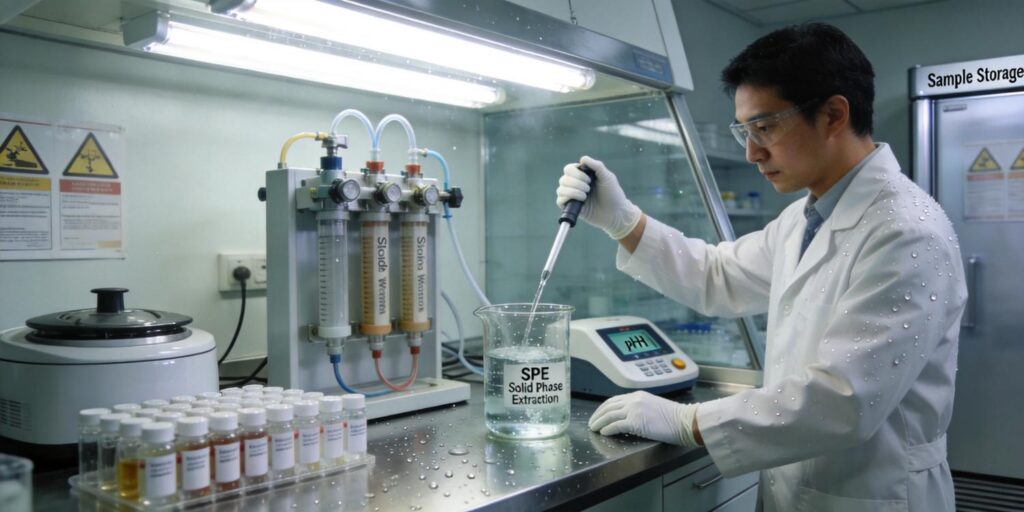
HLB cartridges require proper conditioning to activate the sorbent surface. For Poseidon HLB SPE cartridges (e.g., 200 mg/6 mL), condition with 5 mL of methanol followed by 5 mL of HPLC-grade water, taking care not to let the bed dry between steps. Load the water sample at a flow rate of 5–10 mL/min under vacuum or positive pressure. After loading, rinse the sample bottle with 10 mL of deionized water and pass it through the cartridge to maximize recovery. The cartridge is then dried under vacuum for 10–15 minutes to remove residual water, which can interfere with subsequent elution.
Washing to Remove Natural Organic Matter
Drinking water contains natural organic matter (NOM) such as humic and fulvic acids, which can co-extract and cause ion suppression during LC-MS/MS. A wash step using 5% methanol in water (v/v) effectively removes NOM while retaining target analytes. Typically, 5 mL of this solution is passed through the cartridge, followed by a 30-second vacuum dry. For more polar analytes, the methanol content may be reduced to 2% to avoid breakthrough. This step significantly improves method selectivity without compromising recovery for most pharmaceutical classes.
Elution and Concentration Steps
Elution is performed using a solvent that disrupts the hydrophobic and hydrophilic interactions. A mixture of methanol and 0.1% formic acid (or ammonia for basic compounds) is commonly used. For acidic and neutral analytes, elute with 5 mL of methanol followed by 5 mL of methanol containing 0.1% formic acid. Collect the eluate in a glass tube and evaporate to near dryness under a gentle nitrogen stream at 40°C. Reconstitute in 200 µL of initial mobile phase (e.g., 10% methanol/0.1% formic acid in water). The final extract is transferred to an autosampler vial for LC-MS/MS analysis. An enrichment factor of 500 to 1000 is typical, enabling detection at low ng/L levels.
LC-MS/MS Detection
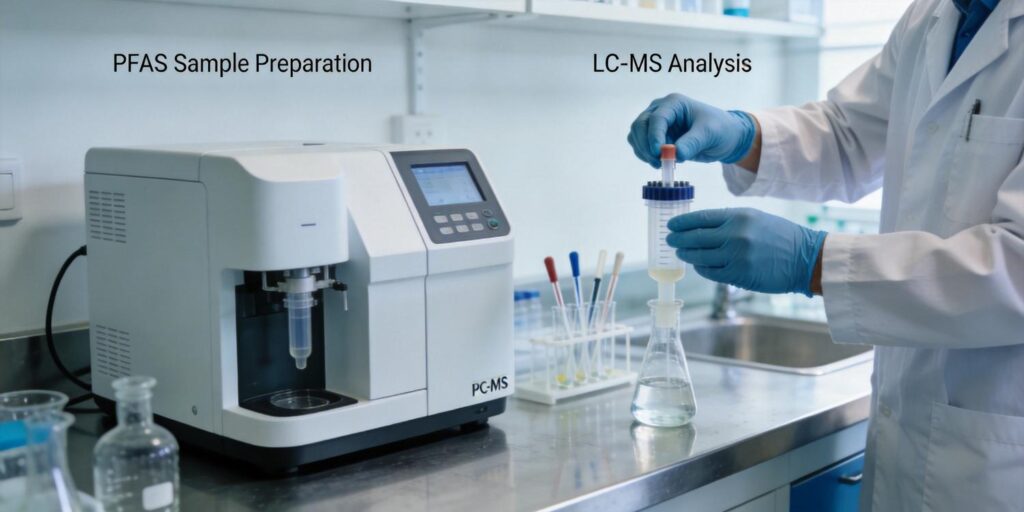
High-performance liquid chromatography coupled with tandem mass spectrometry (LC-MS/MS) provides the sensitivity and selectivity needed for trace analysis. A reversed-phase C18 column (e.g., 2.1 × 100 mm, 1.7 µm) with a gradient elution of water and methanol (both containing 0.1% formic acid) is recommended. The mass spectrometer is operated in multiple reaction monitoring (MRM) mode, using electrospray ionization (ESI) in both positive and negative modes. Two MRM transitions per analyte (quantifier and qualifier) ensure confirmation. Limits of quantitation (LOQ) typically range from 0.1 to 10 ng/L, depending on the compound.
Environmental Monitoring Guidelines
This method aligns with frameworks such as the EU Water Framework Directive and US EPA Method 1694 for pharmaceuticals in water. Key quality control measures include: (1) matrix-matched calibration standards to correct for ion suppression, (2) surrogate standards (e.g., isotopically labeled analogs) added before extraction, (3) field blanks and laboratory blanks to assess contamination, and (4) replicate analysis (n=3) for precision. Recovery should fall within 70–130% for most analytes, with RSD below 20%. Regular proficiency testing and interlaboratory validation ensure data reliability. For a complete workflow, consider integrating mixed-mode SPE options for targeted applications.