Product Selection Guide

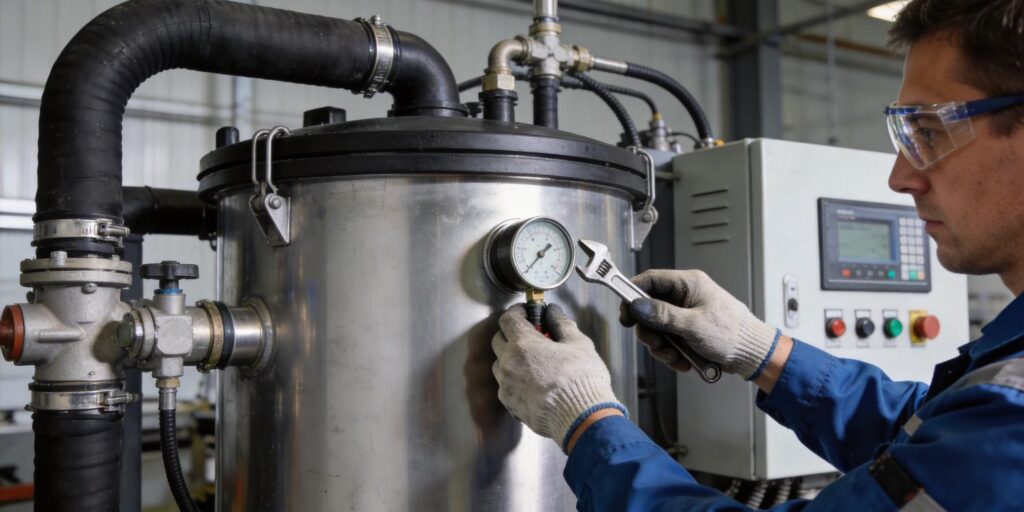
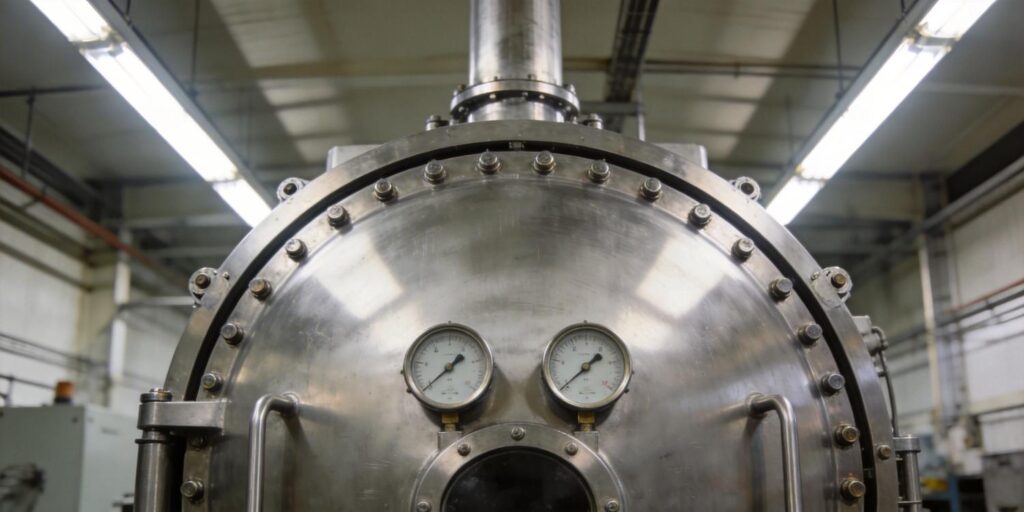
Compact vacuum gauge integrated into OEM equipment

Choosing Vacuum Gauges for OEM Equipment Manufacturers

OEM Design Constraints in Vacuum Instrumentation OEM equipment manufacturers in mass spectrometry, thin-film deposition, vacuum heat treatment, and analytical instruments face relentless pressure to shrink footprints, lower power budgets, reduce BOM costs, and accelerate time-to-market—all while delivering repeatable vacuum performance that meets ISO and SEMI standards. A vacuum gauge is rarely the headline feature, yet […]

Choosing Vacuum Gauges for OEM Equipment Manufacturers Read More »

Analog and digital connections on vacuum transmitter

How to Choose Between Analog and Digital Vacuum Outputs

Understanding the 0-10V Analog Output for Vacuum Gauges In vacuum systems for thin-film deposition, semiconductor processing, and analytical instrumentation, the choice of signal output directly affects integration speed, long-term reliability, and total system cost. Poseidon Scientific’s VG-SP205 Pirani Vacuum Transmitter and VG-SM225 Cold Cathode Vacuum Gauge both provide a standard 0-10 V DC analog output

How to Choose Between Analog and Digital Vacuum Outputs Read More »

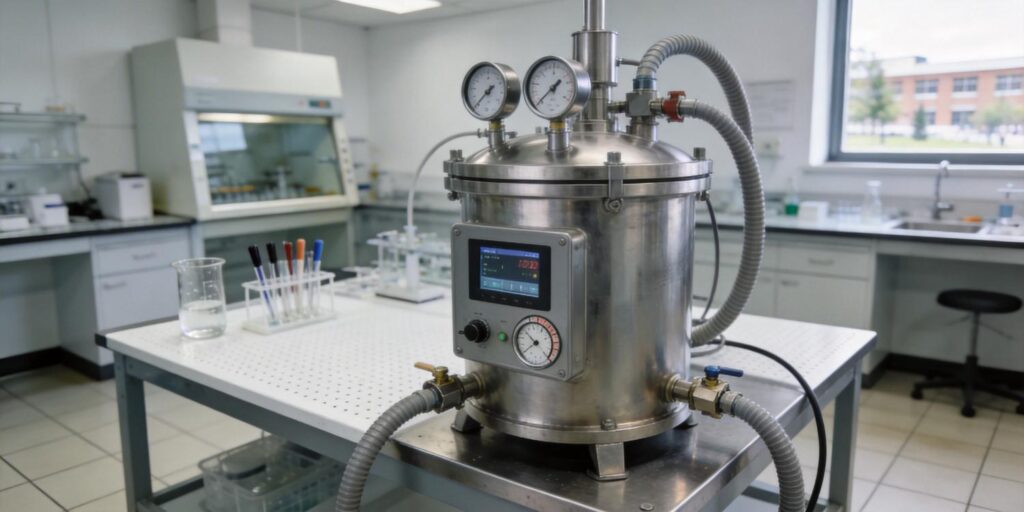
Compact vacuum gauges installed in research laboratory system

Selecting Vacuum Gauges for Research & Development Laboratories

Introduction Research and development laboratories operate at the forefront of vacuum science, pushing the boundaries of materials, processes, and instrumentation. Whether developing next-generation semiconductors, testing thin-film coatings, calibrating analytical instruments, or exploring surface physics, every experiment demands precise, repeatable pressure measurement across a wide dynamic range. A single gauge that covers only part of the

Selecting Vacuum Gauges for Research & Development Laboratories Read More »

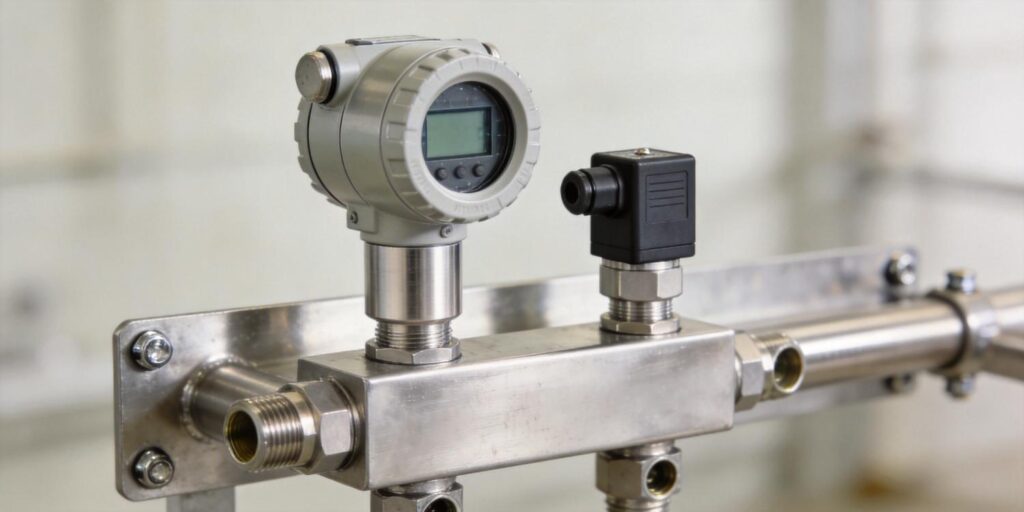
Small vacuum transmitter mounted on compact vacuum equipment

Vacuum Gauge Selection for Compact Equipment Design

Introduction Compact equipment design is a growing priority in semiconductor research tools, portable analytical instruments, glovebox systems, and space-constrained PVD coaters. Every cubic centimeter and watt counts when engineers are packing high-performance vacuum monitoring into tight footprints. Selecting the wrong gauge can force oversized enclosures, complex cooling, or heavy mounting brackets—adding cost, weight, and integration

Vacuum Gauge Selection for Compact Equipment Design Read More »

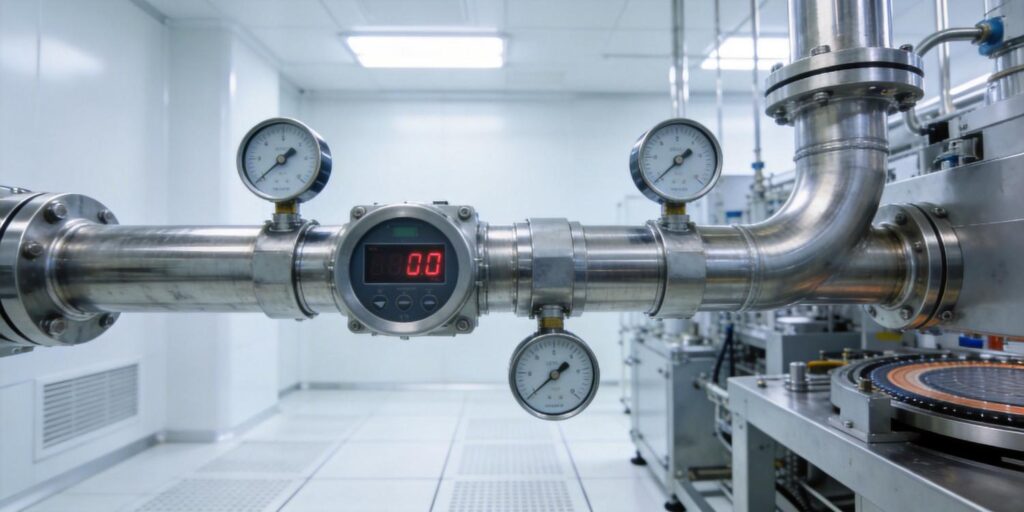
Engineer reviewing vacuum system design before selecting gauge

How to Request the Right Vacuum Gauge for Your Application

Introduction Selecting the right vacuum gauge for your specific application is one of the highest-ROI decisions you can make in vacuum system design. The correct instrument delivers stable, repeatable pressure data that improves yield, reduces scrap, shortens pump-down times, and minimizes maintenance. The wrong choice leads to range gaps, signal noise, calibration drift, or safety

How to Request the Right Vacuum Gauge for Your Application Read More »

Compact vacuum gauge installed in research laboratory system

Vacuum Gauge Selection Guide for Laboratory Applications

Introduction Laboratory vacuum systems demand instruments that are precise, compact, easy to integrate, and cost-effective. Whether you are running surface-science experiments, operating an analytical mass spectrometer, performing thin-film deposition in a research coater, or calibrating vacuum standards, the right gauge selection directly affects data quality, experiment repeatability, and lab throughput. Over-specifying a gauge wastes budget;

Vacuum Gauge Selection Guide for Laboratory Applications Read More »

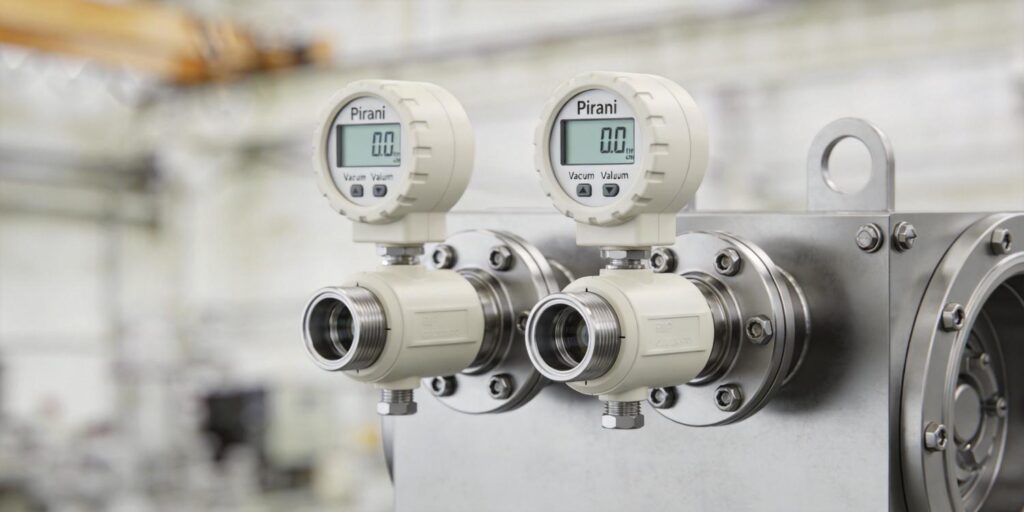
Side by side comparison of Pirani and cold cathode vacuum gauges

Pirani vs Cold Cathode Vacuum Gauge: How to Choose the Right One

Introduction Vacuum gauges are the eyes of any vacuum system. Selecting the wrong sensor can lead to inaccurate process control, extended pump-down times, or premature equipment failure. Two of the most widely used technologies—Pirani thermal conductivity gauges and cold cathode ionization gauges—cover the majority of industrial high-vacuum applications from 10−3 Torr down to 10−7 Torr.

Pirani vs Cold Cathode Vacuum Gauge: How to Choose the Right One Read More »

Shopping Cart
Poseidon Scientific
Privacy Overview

This website uses cookies so that we can provide you with the best user experience possible. Cookie information is stored in your browser and performs functions such as recognising you when you return to our website and helping our team to understand which sections of the website you find most interesting and useful.