Common Environmental Pollutants Extracted Using SPE
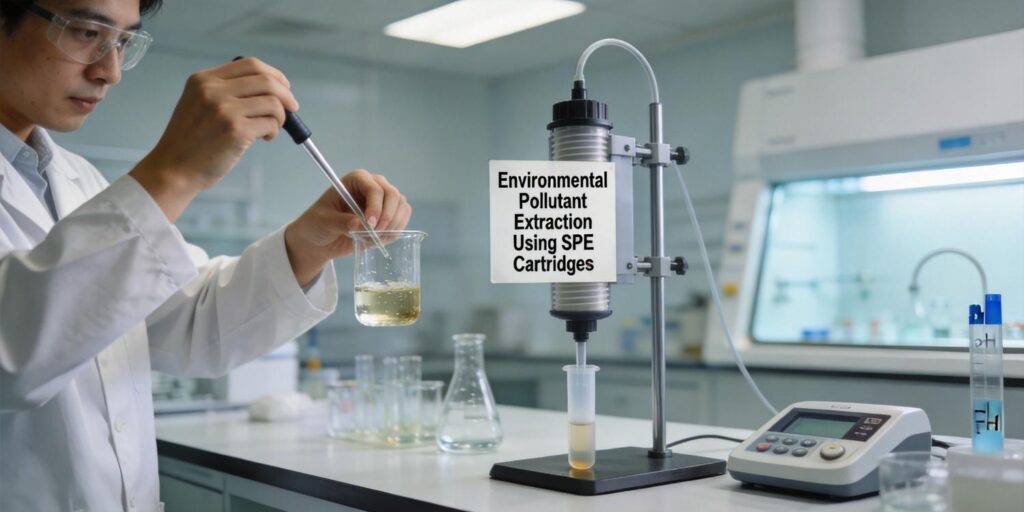
Solid Phase Extraction (SPE) has become an indispensable tool for environmental monitoring, particularly for extracting trace-level pollutants from water matrices. The technique’s ability to concentrate analytes while removing matrix interferences makes it ideal for detecting contaminants at parts-per-billion (ppb) and parts-per-trillion (ppt) levels that are typical in environmental samples.
Pesticides and Herbicides
Agricultural chemicals represent one of the most common classes of environmental pollutants monitored using SPE. Research demonstrates that SPE effectively extracts:
- Triazine herbicides including atrazine, simazine, and their degradation products
- Organophosphorus pesticides from aqueous samples using on-line membrane disk extraction and capillary gas chromatography
- Sulfonylurea herbicides from aqueous matrices via solid phase extraction
- Organochlorine pesticides from water samples, with optimization studies showing improved recovery through orthogonal array design
- N-methylcarbamate insecticides in vegetables, fruits, and foods using solid phase extraction cleanup
Studies by Meyer et al. (1993) demonstrated automated solid-phase extraction of herbicides from water for gas chromatographic-mass spectrometric analysis, highlighting the technique’s suitability for routine monitoring.
Pharmaceuticals and Personal Care Products
Emerging contaminants from pharmaceutical and personal care products have become increasingly important in environmental monitoring:
- Antibiotics and veterinary drugs in water and soil samples
- Analgesics and anti-inflammatory drugs in wastewater and surface waters
- Beta-blockers such as atenolol detected in pharmaceutical formulations and urine by capillary zone electrophoresis
Industrial Chemicals and Byproducts
SPE effectively captures various industrial pollutants:
- Polychlorinated biphenyls (PCBs) and organochlorine pesticides in river water and drinking waters
- Polychlorinated dibenzo-p-dioxins and dibenzofurans at ultratrace levels
- Polycyclic aromatic hydrocarbons (PAHs) in refinery effluents and diesel particulate matter
- Surfactants including sodium linear alkylbenzene sulfonates in river waters
- Benzene- and naphthalenesulfonates in wastewater using solid-phase extraction with graphitized carbon black
Heavy Metals and Inorganic Species
While traditionally associated with organic compounds, SPE also finds application for inorganic pollutants:
- Arsenic species through on-column formation of As(III)-trispyrrolidenedithiocarbamate
- Chromium(VI) in aqueous samples using highly selective field tests
- Organotin compounds in seawater through specialized SPE protocols
- Lead in soil samples using in-valve solid-phase extraction-flow injection flame atomic absorption spectrometry
Phenolic Compounds and Endocrine Disruptors
Phenolic compounds represent another important class of environmental pollutants effectively extracted using SPE:
- Chlorophenols in river water and drinking waters
- Bisphenol A and alkylphenols as endocrine-disrupting compounds
- Environmental phenols determined by liquid chromatography/electrochemistry
Environmental Monitoring Workflows Using SPE
Effective environmental monitoring requires systematic workflows that ensure reliable detection of pollutants at trace levels. SPE-based workflows typically follow standardized procedures while allowing for method optimization based on specific analyte and matrix characteristics.
Standard SPE Protocol for Water Samples
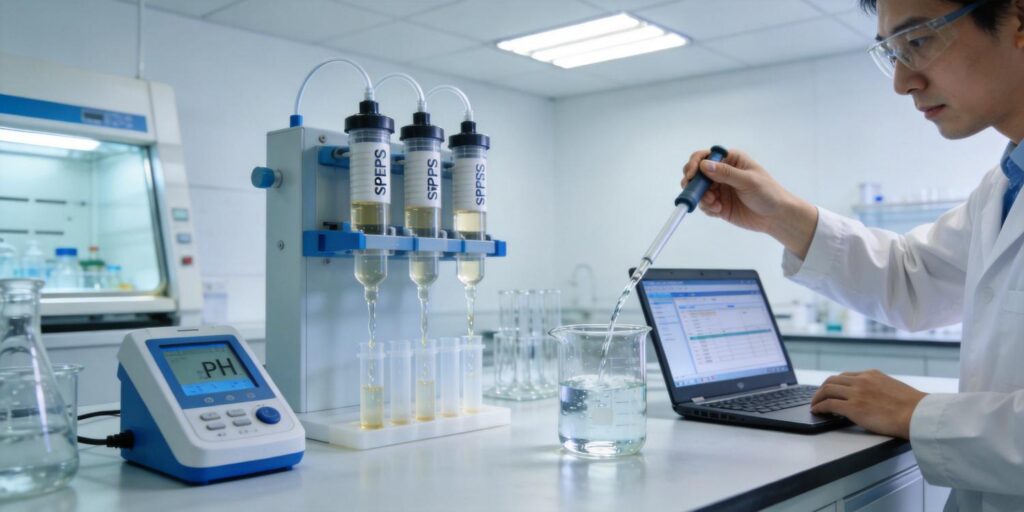
The fundamental SPE process for environmental applications involves four key steps:
- Conditioning: Preparing the sorbent bed with appropriate solvents (typically methanol followed by water or buffer)
- Loading: Passing the sample through the sorbent at controlled flow rates (typically 1-3 drops/second for optimal recovery)
- Washing: Removing weakly retained matrix components with solvents that won’t elute the target analytes
- Elution: Recovering the concentrated analytes in the smallest possible volume of appropriate solvent
Large Volume Sample Handling
Environmental samples often require processing large volumes (liters rather than milliliters) to achieve necessary detection limits. Key considerations include:
- Breakthrough volume optimization: Determining the maximum sample volume that can be processed without analyte loss
- Flow rate control: Maintaining optimal flow rates to ensure complete analyte retention
- Cartridge capacity considerations: Selecting appropriate sorbent mass and format for the expected analyte load
Research by Wells (1994) emphasizes that environmental analyses present unique challenges including large volume samples, non-homogeneous samples containing particulates and dissolved organic matter, and a wide range of analytes covering both hydrophilic to hydrophobic extremes.
Matrix Effect Management
Natural water matrices contain various components that can interfere with SPE efficiency:
- Dissolved organic matter (DOM): Humic and fulvic acids can compete with analytes for sorption sites
- Particulates: Suspended solids can clog SPE devices and reduce efficiency
- Ionic strength variations: Can affect ion-exchange mechanisms and analyte retention
Studies by Johnson et al. (1991) investigated possible interferences from dissolved organic material during solid-phase extraction of pesticides from water, providing valuable insights for method development.
Method Development Strategy
Successful SPE method development for environmental applications follows a systematic approach:
- Analyte characterization: Understanding chemical properties including pKa, polarity, and functional groups
- Matrix assessment: Identifying potential interferences and matrix effects
- Sorbent selection: Choosing appropriate SPE mechanisms (reversed-phase, ion-exchange, mixed-mode) based on analyte properties
- Solvent optimization: Determining optimal conditioning, washing, and elution solvents
- Validation: Establishing method performance characteristics including recovery, precision, and detection limits
Automation and High-Throughput Applications
Modern environmental laboratories increasingly employ automated SPE systems for improved efficiency and reproducibility:
- 96-well plate formats: Enable parallel processing of multiple samples
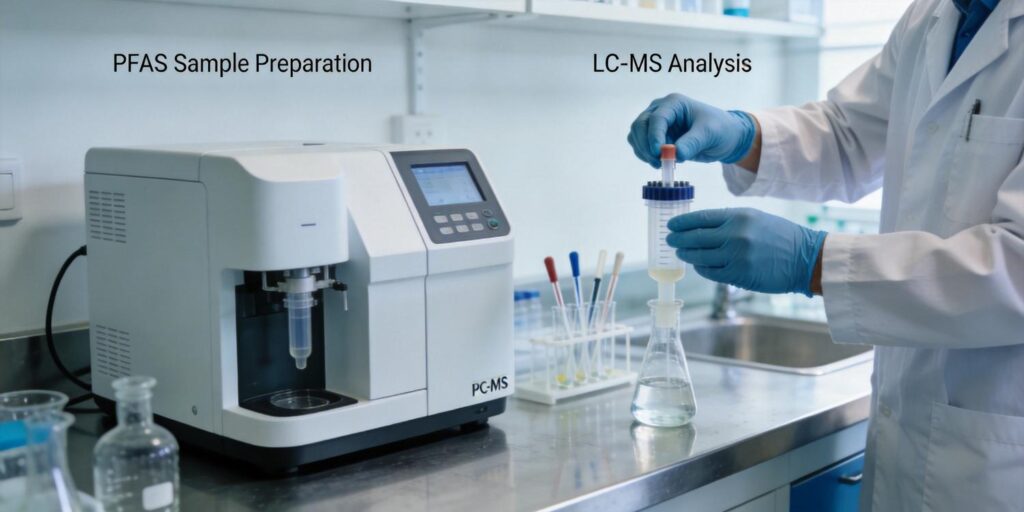
- On-line SPE-LC systems: Provide automated trace-level determination of polar pesticides and other contaminants
- Automated solid-phase extraction workstations: Improve throughput and reduce manual intervention
Research by Ooms et al. (1997) demonstrated high sample throughput for LC-MS/MS by automated on-line SPE-MS/MS, highlighting the potential for increased analytical efficiency.
Quality Control and Method Validation
Reliable environmental monitoring requires rigorous quality control measures:
- Method blanks: To identify contamination sources
- Matrix spikes: To assess method performance in specific sample matrices
- Surrogate standards: To monitor extraction efficiency throughout the analytical process
- Duplicate analyses: To assess method precision
- Certified reference materials: When available, to verify method accuracy
Emerging Trends and Future Directions
The future of SPE in environmental monitoring includes several promising developments:
- Novel sorbent materials: Including molecularly imprinted polymers and nanostructured materials
- Miniaturized SPE devices: For field sampling and reduced solvent consumption
- Integrated sampling-extraction systems: For real-time or near-real-time monitoring
- Multi-residue methods: Capable of simultaneously extracting diverse contaminant classes
As environmental regulations become more stringent and the list of monitored contaminants expands, SPE will continue to evolve as a critical tool for environmental protection and public health monitoring. The technique’s versatility, efficiency, and compatibility with various analytical instruments ensure its ongoing relevance in environmental analytical chemistry.
For laboratories seeking reliable SPE solutions for environmental applications, Poseidon Scientific’s HLB SPE cartridges offer excellent performance for a wide range of environmental pollutants. Our MCX cartridges are particularly effective for basic compounds, while WAX cartridges excel at extracting acidic analytes. For high-throughput applications, consider our 96-well SPE plates designed for automated environmental monitoring workflows.