Fundamentals of Elution
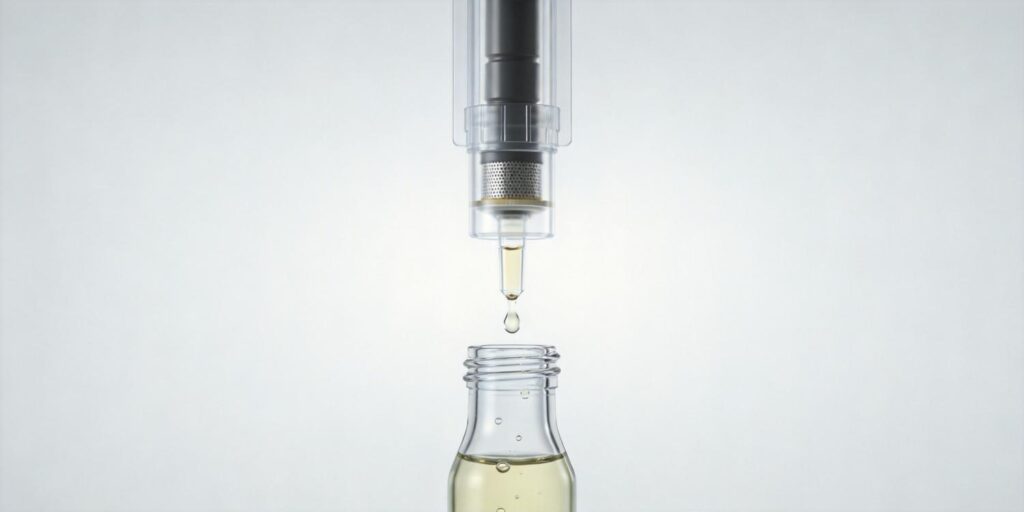
Elution represents the critical final step in solid phase extraction (SPE) where retained analytes are selectively desorbed from the sorbent surface. This process involves creating conditions where the distribution coefficient (k’) between the analyte concentration on the solid surface and in the eluting liquid becomes very small, favoring analyte movement into the mobile phase. Unlike liquid-liquid extraction where immiscible solvents are required, SPE allows the use of elution solvents that are miscible with the sample matrix, since the elution solvent and sample never come into direct contact.
The fundamental principle governing elution is the disruption of all binding mechanisms between the analyte and sorbent. For successful elution, the solvent must provide a more desirable environment for the analyte than the solid phase does. This requires careful consideration of solvent strength, polarity, and compatibility with both the sorbent chemistry and subsequent analytical instrumentation.
Elution efficiency depends on several factors including solvent eluotropic strength, analyte solubility, and the kinetics of desorption. The goal is to achieve complete analyte recovery in the smallest possible volume, thereby maximizing concentration effects and minimizing solvent consumption. As noted in SPE literature, “Elution is most successfully accomplished with a solvent having the highest eluotropic strength toward the sorbent being used, thereby minimizing the total elution volume and maximizing the concentration effect of SPE.”
Solvent Selection Principles
Eluotropic Series and Solvent Properties
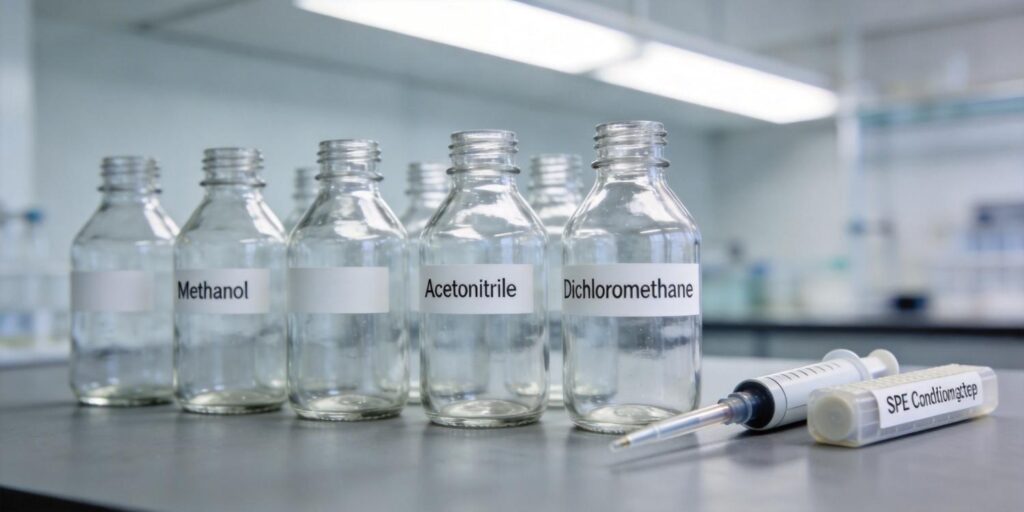
The eluotropic series provides a systematic framework for solvent selection based on their relative eluting strengths. For reversed-phase sorbents, solvents in increasing order of expected eluotropic strength include: acetic acid, methanol, acetonitrile, acetone, ethyl acetate, diethyl ether, methyl ‘butyl ether, methylene chloride, benzene, and hexane. However, this order can be disrupted by secondary interactions between polar functional groups on the molecule and the sorbent.
Key solvent properties to consider include:
- Eluotropic Strength: The ability to displace analytes from the sorbent surface
- Solubility: The capacity to dissolve target analytes effectively
- Volatility: Important for evaporation and concentration steps
- Chromophoric Nature: UV transparency for HPLC compatibility
- Miscibility: Compatibility with sample matrix and analytical instrumentation
Practical Considerations
Solvent selection must balance elution efficiency with practical considerations. Methanol and acetonitrile are commonly used elution solvents for reversed-phase SPE due to their strong eluting properties and compatibility with HPLC systems. However, research has shown that methanol and acetonitrile can have remarkably different elution abilities for certain compounds. For example, methanol gives recoveries of up to 98% for tertiary nitrogen bases like pentacaine and stobadin from C18 sorbents, while acetonitrile may have no elution power at all in some cases.
When selecting elution solvents, consider:
- Analytical Compatibility: Choose solvents compatible with your final analytical method
- Evaporation Requirements: Volatile solvents facilitate concentration steps
- Safety and Toxicity: Consider operator safety and environmental impact
- Cost and Availability: Practical considerations for routine applications
Acid/Base Modifiers
Role of pH Modifiers
Acid and base modifiers play a crucial role in elution strategies, particularly for ionizable compounds. These modifiers function similarly to HPLC mobile-phase modifiers by affecting secondary interactions between sorbent and analyte. By changing the effective pH of the applied solution, these interactions can be weakened or strengthened during wash and elution steps.
For ion-exchange SPE, pH control is essential for disrupting ionic bonds. Typically, 0.05 to 0.2 N solutions of acids or bases will suffice, but concentration optimization is necessary for each application. The pH of the elution solvent must be at least 2 units above the analyte pKa for basic compounds or 2 units below for acidic compounds to ensure complete protonation or deprotonation.
Common Modifiers and Applications
Volatile acids and bases are preferred for elution solvents when evaporation is required. Common choices include:
- Acidic Modifiers: Formic acid, acetic acid, trifluoroacetic acid (0.1% in acetonitrile)
- Basic Modifiers: Ammonium hydroxide, triethylamine (5% in methanol)
For cation exchange extractions of basic drugs, elution solvents often utilize ammonium hydroxide to reverse the ionic state of the drugs with subsequent release from ionic bonds. It’s critical that the pH of the elution solvent be at least 2 units above the analyte pKa to fully protonate the compound. Note that ammonium hydroxide quickly loses pH strength when exposed to air, so elution solvents should be prepared shortly before use.
Example Elution Strategies for Mixed Mode SPE
Understanding Mixed-Mode Mechanisms
Mixed-mode SPE columns employ two or more binding mechanisms in the same column, most commonly combining reversed-phase with ion-exchange functionalities. These sorbents offer multiple binding mechanisms for improved sensitivity and excellent sample cleanup. When using mixed-mode extractions, the elution solvent must be able to reverse or disrupt all bonding mechanisms simultaneously, requiring careful consideration of pH, polarity, and solubility.
Mixed-mode sorbents can be manufactured by blending sorbents of each functional type or as true copolymers where different functional silanes are polymerized to the substrate. Each approach has advantages: blended phases offer greater capacity flexibility, while copolymers typically yield greater lot-to-lot reproducibility.
Practical Elution Protocols
For mixed-mode SPE, elution requires simultaneous disruption of both hydrophobic and ionic interactions. A typical strategy involves:
- Initial Elution: Use organic solvents to disrupt hydrophobic interactions
- Secondary Elution: Apply pH-modified solvents to disrupt ionic bonds
Example 1: Mixed-Mode Cation Exchange (MCX)
For weak bases (pKa 2-10) on Oasis MCX columns:
- Load pre-treated sample at appropriate pH
- Wash with 2% formic acid to remove interferences
- Elute with 100% methanol to disrupt hydrophobic interactions
- Follow with 5% ammonium hydroxide in methanol to disrupt ionic bonds
Example 2: Mixed-Mode Anion Exchange (MAX)
For weak acids (pKa 2-8) on Oasis MAX columns:
- Load pre-treated sample at appropriate pH
- Wash with 5% ammonium hydroxide
- Elute with 100% methanol
- Follow with 2% formic acid in methanol
Optimization Strategies
Method development for mixed-mode elution should consider:
- pH Optimization: Ensure elution pH is at least 2 units from relevant pKa values
- Solvent Strength: Use the weakest solvent that completely disrupts all binding mechanisms
- Flow Rate Control: Slower flow rates during elution improve recovery
- Volume Optimization: Use minimal elution volumes for greater selectivity
Safe elution volumes vary by sorbent mass: 0.5-0.75 mL for 100 mg cartridges, 1.0-1.5 mL for 200 mg, 2.5-4.0 mL for 500 mg, and 5.0-8.0 mL for 1000 mg cartridges.
Advanced Techniques
For complex applications, consider these advanced elution strategies:
- Selective Desorption: Fractionate components by eluting more hydrophilic compounds first with aqueous solvents, followed by hydrophobic compounds with organic solvents
- Gradient Elution: Use gradient mobile phases (100% aqueous to 100% methanol) to optimize elution conditions
- Solvent Mixtures: Combine solvents to achieve optimal hydrophilic-hydrophobic balance
Conclusion
Effective elution strategies are fundamental to successful SPE applications. By understanding the principles of solvent selection, the role of acid/base modifiers, and the specific requirements of mixed-mode sorbents, analysts can develop robust elution protocols that maximize recovery while maintaining selectivity. Remember that elution optimization often requires methodical experimentation, changing one variable at a time to identify the best conditions for your specific application. With careful attention to solvent properties, pH control, and flow rates, you can achieve the cleanest extracts and highest recoveries for your analytical needs.
For more information about SPE products and applications, visit our HLB SPE Cartridges, MAX SPE Cartridges, MCX SPE Cartridges, WAX SPE Cartridges, WCX SPE Cartridges, and 96-Well SPE Plates.