Sources of Particulate Contamination in SPE Cartridges
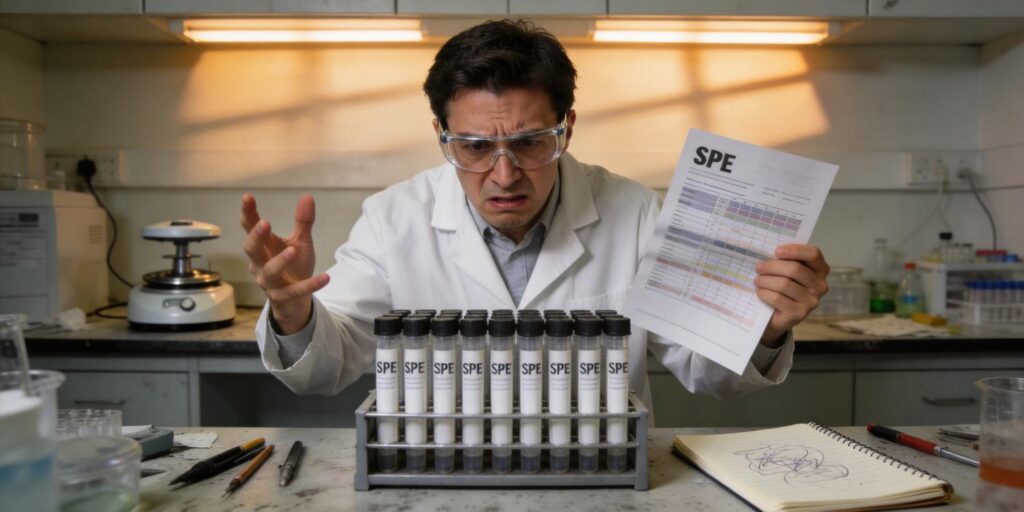
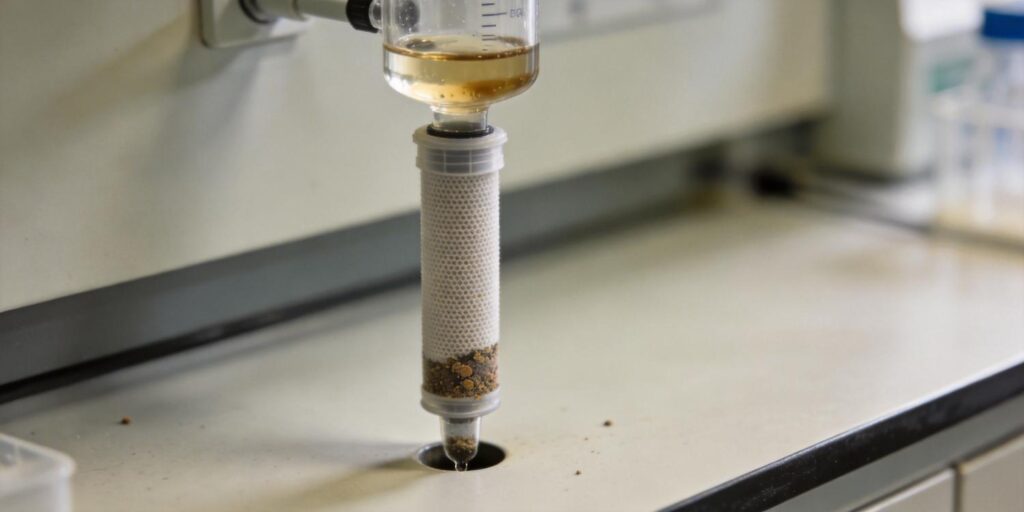
Particulate contamination represents one of the most common and frustrating challenges in solid-phase extraction workflows. As an experienced product manager at Poseidon Scientific, I’ve seen firsthand how particulate matter can compromise SPE cartridge performance, leading to clogging, reduced flow rates, and inconsistent recoveries.
Environmental samples frequently contain a complex mixture of inorganic, organic, and biological particulates that can bind pollutants reversibly or irreversibly. According to established SPE literature, these particulates can be more successfully removed from samples prior to analysis by SPE compared to dissolved organic matter (DOM). For instance, researchers analyzing atrazine and simazine in seawater samples have employed step-wise prefiltration through glass-fiber filters at 0.7 μm followed by 0.45 μm filtration to trap particulate matter effectively.
The SPE cartridge itself can also contribute to contamination issues. Components such as syringe barrels, frits, and filters often contain impurities including plasticizers, mold release agents, antioxidants, and monomers that can leach into extracts. The cleanliness of SPE devices depends significantly on the quality of initial polymer resins like polypropylene and high-density polyethylene. Polyethylene frits are particularly noted as common sources of contaminants, while Teflon frits remain inert and don’t leach additives.
Common Contamination Sources:
- Sample Matrix Particulates: Environmental samples containing soil, sediment, cellular debris, or industrial particulates
- Manufacturing Residues: Fines and dust created by physical abrasion of sorbent particles during shipping and storage
- Polymer Leachables: Plasticizers/phthalates from polypropylene cartridges or polyethylene frits
- Sorbent Residuals: Various polymer residuals and phthalates from the sorbent material itself
- Inorganic Salt Trapping: Inorganic salts trapped in the bonded layer during sample loading that resist aqueous washing
Quality manufactured SPE devices should not contribute measurable contaminants above low nanogram (ppb) levels. Below nanogram levels, contamination is possible and may require prewashing of the column using strong wash solvents. The recommended approach involves prewashing with the strongest eluotropic solution to be used (typically the elution solvent) at 10–20 times the bed volume (3–4 mL for a 200-mg column).
Sample Filtration Methods for SPE Optimization
Effective filtration represents the first line of defense against SPE cartridge clogging. The permeability of an SPE device depends on several system properties including the viscosity and particulate content of the sample, bed length, pressure difference, and specific permeability of the sorbent bed. When a sample contains particles that the bed filters out, the specific permeability decreases as the sample is processed, ultimately leading to clogging and unacceptably low flow rates.
Primary Filtration Techniques:
1. Off-line Centrifugation
Centrifugation remains the most effective method for removing particles from samples and is amenable to parallel sample processing. Conditions of several thousand rpm for a couple of minutes typically provide satisfactory clarity. For plasma or urine samples, centrifugation at 1500 × g for 10 minutes before transfer to the SPE cartridge is essential to prevent clogging.
2. Integrated Filtration Systems
Many SPE cartridges incorporate filters above the sorbent bed to prevent clogging. These filters are largely constructed of binder-free glass fiber mats and should not contribute measurable quantities of contaminants. For samples containing high amounts of particulates or when high flow rates are required, SPE disks are recommended as they can function as depth filters themselves.
3. Depth Filter Aids
Researchers have tested various filter aids including glass wool, glass beads, and diatomaceous earth (such as Hydromatrix™) to alleviate the need for prefiltration. A particularly useful tool is silanized glass wool – after column conditioning, a small pinch can be pushed into the SPE cartridge to rest loosely on top of the column frit. This approach allows otherwise resistant samples to pass through while minimizing sample loss due to the relatively small surface area of the glass wool.
4. Membrane Filtration
Standard syringe-type filter cartridges, filter paper, and gauze can be employed, provided that target compounds are not bound to filter surfaces or to macromolecules that would be filtered out. For environmental water samples, prefiltering through glass-fiber filters at 0.7 μm followed by 0.45 μm filtration has proven effective for trapping particulate matter.
Dilution Strategies to Prevent Cartridge Clogging
Dilution represents one of the simplest and most effective solutions to matrix flow problems. Dense or viscous samples diluted with water or appropriate buffers often resolve flow issues that would otherwise lead to cartridge clogging. The relationship between sample viscosity and flow characteristics is well-documented in SPE literature, with dilution serving as a primary intervention for challenging matrices.
Strategic Dilution Approaches:
1. Aqueous Dilution for Viscous Samples
For biological samples containing proteins, cellular components, or mucous, dilution with water or buffer reduces viscosity and prevents frit clogging. Adding small amounts of organic solvent (<10% v/v) such as methanol to the sample mix can help maintain proper solvation of the phase while improving flow characteristics.
2. Organic Solvent Addition
When working with highly aqueous samples that might cause hydrophobic frits to resist flow, adding small percentages of methanol or acetonitrile can improve wetting and flow characteristics. This is particularly important with polyethylene frits, which are naturally hydrophobic and resistant to aqueous liquids.
3. Protein Precipitation Protocols
For biological samples, protein precipitation using organic solvents or acids can dramatically clean the matrix. Acetonitrile and dilute acetone (10%) at 1:1 ratios with biological samples effectively precipitate proteins with a 10–15 minute standing time followed by centrifugation. If analyzing on a hydrophobic phase, the organic supernatant must be diluted to 80–90% aqueous character for proper retention on the sorbent.
4. Sonication-Assisted Dilution
Sonication can disrupt fibrin, mucosal constituents, proteins, and cellular components, depending on sonic frequency and duration. While potentially time-consuming, this technique combined with dilution reduces the number of particles per unit volume in the sample.
Cartridge Capacity Considerations for Optimal Performance
Proper cartridge selection based on capacity requirements is fundamental to preventing clogging and ensuring consistent performance. The container defines the bed shape and size, naturally determining absolute capacity – a critical performance criterion. The general approximation suggests that the amount of analyte should be no more than about 5% of the sorbent weight, though this represents an extreme approximation that requires careful consideration of specific application requirements.
Capacity Optimization Factors:
1. Sorbent Bed Mass Selection
Cartridges are available with sorbent bed masses ranging from 10 mg to 10 g or more. The appropriate size depends on the expected mass of both the analyte and contaminants in the sample. Using the least amount of sorbent that provides sufficient capacity for target compounds and matrix, packed in a cartridge suitable for your sample volume, represents optimal practice.
2. Particle Size and Pore Diameter
Most standard SPE products offer 40–60 μm particle size with 60 Å pore diameter. Special phases are available with average 150-μm particles and 200 Å pore size – these high-flow sorbents are ideal for extremely viscous sample types. However, caution is warranted as flows can become too fast, resulting in decreased or irregular recoveries.
3. Frit Pore Diameter Considerations
The most common source of matrix flow problems is clogged frits. For standard 40–60 μm particle sorbents, frits are typically 20 μm. Particulates or proteins often clog the top frit before the sample reaches the sorbent. If larger frits are needed based on the matrix, larger particle size sorbents should also be considered. Hydrophilic frits in glass-weave designs are less resistant to aqueous sample flow compared to hydrophobic polyethylene frits.
4. Cartridge Geometry and Flow Dynamics
Changing the surface area affects flow characteristics significantly. Spreading the sample over a larger surface using wider-diameter cartridges sometimes improves flow, while narrower columns may improve deficiencies in the flow source. Tapered or wide-mouth cartridge types allow use of larger sample volumes while maintaining small sorbent volumes.
5. Pressure Source Optimization
Positive pressure sources, where samples are pushed through from the top rather than pulled from the bottom, provide more precise flow control and appear less prone to flow difficulties. Most automated SPE systems utilize positive pressure, which offers benefits for oxygen-sensitive analytes when using nitrogen compressed gas rather than laboratory air drawn through under vacuum.
Practical Implementation Guidelines:
When developing SPE methods, analysts must evaluate sample size limitations and the amount (concentration) of analyte necessary when choosing sorbent bed capacity. Larger columns with several grams of sorbent may process one liter in 20 minutes or less but require more eluting solvent. The final sample solution may need evaporation to bring analytes into detectable concentration ranges, potentially offsetting time saved during extraction.
For samples containing sediments or soil extracts, centrifugation followed by filtration has proven effective for reducing SPE disc plugging. In our experience at Poseidon Scientific, depth filters consisting of diatomaceous earth have shown preference over nylon depth filters for SPE of non-homogeneous oil and grease samples.
Remember that prevention always surpasses remediation in SPE workflows. By implementing proper sample preparation, strategic dilution, appropriate filtration, and careful cartridge selection, laboratories can significantly reduce SPE cartridge clogging incidents, improve reproducibility, and enhance overall analytical performance.
For more information about our SPE product line, including HLB SPE cartridges, MAX SPE cartridges, MCX SPE cartridges, WAX SPE cartridges, WCX SPE cartridges, and 96-well SPE plates, visit our product pages or contact our technical support team for application-specific guidance.