
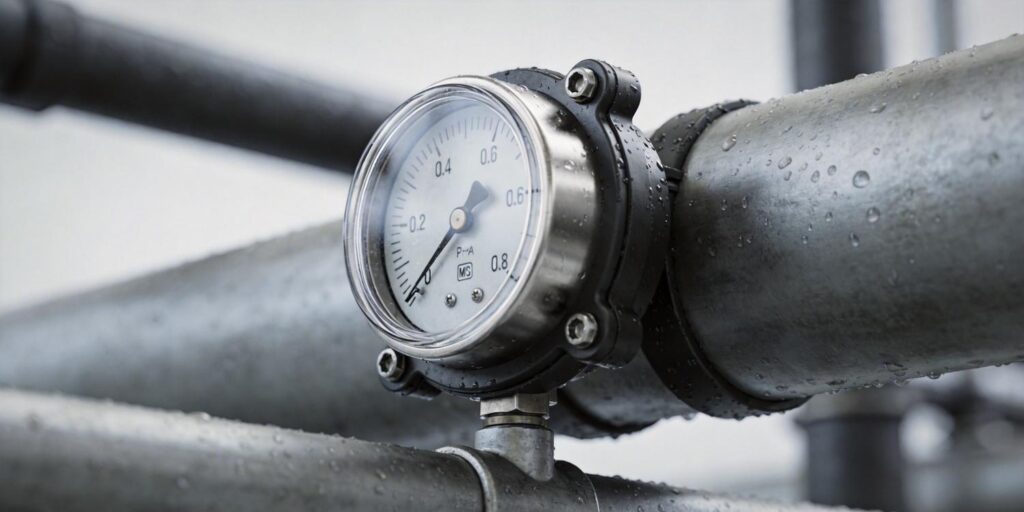
Vacuum Gauge Failure Modes in High-Humidity Environments
High-humidity laboratories, tropical installations, or facilities near steam processes create unique challenges for vacuum instrumentation. Even when the vacuum chamber itself remains dry, ambient moisture can condense on external surfaces, penetrate connectors, or migrate along feedthroughs when the system vents. For the VG-SP205 Pirani Vacuum Transmitter and VG-SM225 Cold Cathode Vacuum Gauge from Poseidon Scientific, these conditions primarily affect electrical insulation, surface cleanliness, and long-term stability rather than core measurement physics. Understanding the failure modes—and the practical mitigations built into our compact, cost-effective designs—helps engineers and procurement teams maintain reliable monitoring from atmosphere to 10−7 Torr while minimizing unplanned downtime.
Both gauges operate reliably in standard 15–50 °C laboratory conditions, but elevated relative humidity (>80 % RH) combined with temperature cycling increases risk. The VG-SP205’s thermal-conductivity principle and platinum filament are inherently robust, while the VG-SM225’s Penning discharge benefits from its fully disassemblable sensor and software safeguards. This article details each failure mode with mitigation strategies drawn from our internal testing, user manuals, and established vacuum practice.
1. Moisture Condensation Impact
When ambient temperature drops below the local dew point, water vapor condenses on cooler gauge surfaces—especially the KF flange, connector housing, and any exposed insulator. Inside the VG-SP205 Pirani, condensation on the platinum filament or support structures subtly alters the heat-transfer baseline, introducing transient errors up to ±20 % in the 10 Torr to 10−2 Torr linear range. Because the Pirani measures power required to maintain constant filament temperature, even thin adsorbed layers change thermal conductivity readings until evaporation or outgassing clears the surface.
The VG-SM225 Cold Cathode experiences more pronounced effects. Condensed moisture on the discharge plate (“之”字形 geometry), cathode rod, or PEEK insulators reduces field-emission efficiency and extends plasma re-ignition delay. At 10−6 Torr, startup may stretch from 5 minutes to 30+ minutes or fail entirely, triggering the red indicator and halting data acquisition. In dual-gauge systems, the VG-SP205 continues to report rough vacuum accurately, giving operators early warning before the cold-cathode stage activates.
Recovery follows the standard stabilization sequence: evacuate below 10−3 Torr, apply the initial –2500 V boost for up to 10 minutes, then allow 30–60 minutes of continuous operation. Ion bombardment gradually desorbs the moisture layer. In clean mass-spectrometry or heat-treatment applications, full recovery occurs within hours; repeated cycling in humid environments simply accelerates the need for the 15-minute electrode cleaning detailed in our user manual.
2. Electrical Short Risk
The VG-SM225 operates at –2000 V nominal (–2500 V startup boost) across a ~2 mm electrode gap. High humidity lowers the dielectric strength of air and surface insulators, raising the probability of surface tracking or direct arcing. Moisture films on the RJ45 connector pins, feedthrough insulators, or internal PEEK spacers create low-resistance paths that can bypass the ion-current measurement and trigger protective circuitry shutdown.
Our design incorporates multiple safeguards:
- Software interlock automatically disables high voltage when pressure exceeds 10−3 Torr (detected via analog output or RS232 status code).
- Stainless-steel electrodes and rounded auxiliary-cathode edges minimize field-emission hotspots even when slightly damp.
- Vacuum-grade O-ring seals maintain <10−11 Pa·m³/s leak rate, preventing moisture ingress into the sensor volume.
In contrast, many legacy cold-cathode gauges lack this automatic protection and require external relays or manual intervention—adding cost and complexity. The VG-SP205 Pirani, operating at low voltage (<10 V), faces negligible short risk but still benefits from dry connectors to preserve temperature-compensation accuracy.
3. Corrosion Potential
Prolonged exposure to high humidity can promote surface oxidation or pitting, especially if airborne salts or process residues are present. The VG-SM225’s stainless-steel electrodes and discharge plate resist general atmospheric corrosion far better than tungsten alternatives, but extended damp conditions (>6 months at >90 % RH) may produce thin oxide films that slightly bias ion-current readings downward by one decade. The Pirani’s platinum filament is chemically inert and immune to oxidation under normal operating temperatures.
PEEK insulators and vacuum-grade sealing compounds further limit galvanic effects. Our internal qualification tests in 85 % RH / 85 °C accelerated aging (equivalent to years of tropical exposure) showed no measurable drift in calibration curves after electrode cleaning restored metallic luster. In aggressive environments, however, the same 200–500 mesh sanding procedure used for carbon removal also eliminates oxide layers in under 15 minutes—without affecting the factory voltage-to-pressure map.
4. Protective Enclosure Strategy
While the gauges themselves carry IP40-equivalent protection on electronics housings (per standard vacuum-instrument practice), the optimal solution in high-humidity sites is an external protective enclosure. Mount the gauge head inside the vacuum chamber or KF flange as usual, then enclose the transmitter body and RJ45 connector in a NEMA 4X / IP65 stainless-steel or polycarbonate box with desiccant breather and cable glands.
Key recommendations:
- Position the enclosure so the gauge remains at or above ambient temperature (avoid cold spots).
- Use sealed RJ45 feedthroughs or conformal-coated PCBs for added moisture resistance.
- For the VG-SM225, route the high-voltage enable line through a moisture-tight switch or PLC interlock.
This strategy adds <$150 per gauge yet extends service life by 2–3× in humid facilities. Many OEMs already standardize on such enclosures for tropical export models; Poseidon’s compact footprint (significantly smaller than INFICON or MKS equivalents) fits easily inside standard 4×4-inch or DIN-rail boxes without redesign.
5. Dry Purge Recommendation
The most effective active mitigation is a continuous low-flow dry-gas purge around the gauge exterior and connector. Instrument-grade nitrogen or dry air (dew point <–40 °C) at 0.1–0.5 slpm through a small tube into the enclosure maintains positive pressure and prevents condensation even during temperature cycling. Cost is minimal—typically <$50/year in gas—and integrates easily with existing facility dry-air lines.
In closed-loop systems, route a fraction of the foreline backing-pump exhaust (already dry after the turbo) back to the enclosure. The VG-SP205 and VG-SM225’s RJ45 interface allows simple integration of a purge solenoid controlled by the same PLC that monitors pressure and temperature. This approach has proven especially valuable in semiconductor-adjacent research labs and vacuum-furnace installations operating in coastal or tropical climates.
6. Preventive Checklist
Implement this monthly or quarterly routine to keep both gauges operating at peak reliability:
- Verify ambient temperature remains 5–10 °C above dew point (use inexpensive hygrometer near gauge location).
- Inspect RJ45 connector and housing for condensation or discoloration; wipe with isopropyl alcohol if needed.
- Monitor VG-SM225 startup time at 10−6 Torr via RS232 status codes; any extension beyond 10 minutes signals cleaning.
- Confirm high-voltage interlock functions correctly during simulated vent cycles.
- Log analog output (2–8 V range) trends; any unexplained offset >10 % triggers electrode inspection.
- For the VG-SP205, cross-check Pirani reading against a reference gauge at one known point (e.g., 1 Torr) quarterly.
- Replace desiccant in protective enclosure every 3–6 months or when indicator changes color.
These steps require <30 minutes per gauge per quarter and virtually eliminate humidity-related failures. The customizable RS232 protocol on both Poseidon units can automate checklist logging and alarm generation, further reducing operator workload.
Conclusion: Humidity Resilience Without Added Cost
High-humidity environments do not require exotic wide-range gauges or expensive enclosures when using the Poseidon VG-SP205 Pirani and VG-SM225 Cold Cathode pair. Their platinum filament, stainless-steel electrodes, PEEK insulators, software interlocks, and field-serviceable design provide built-in resilience that outperforms many higher-priced competitors. By combining simple condensation prevention, dry purge, and the quick-clean procedure, engineers achieve the same 3–5 year lifespan in tropical or steam-adjacent installations as in standard laboratories—at 30–50 % lower total ownership cost.
Procurement teams gain additional flexibility through protocol customization (even at 5–10 unit volumes) and drop-in compatibility with INFICON PTR225N footprints, ensuring seamless integration without redesign.
Protect your vacuum monitoring investment in humid conditions today. Explore the VG-SM225 Cold Cathode Vacuum Gauge and VG-SP205 Pirani Vacuum Transmitter specifications, request a sample pair for humidity-chamber testing, or ask our team for a customized enclosure and purge kit recommendation. Contact Poseidon Scientific now—your reliable vacuum data in any climate starts here.


