Challenges of Detecting Trace Pharmaceuticals (ng/L Levels)
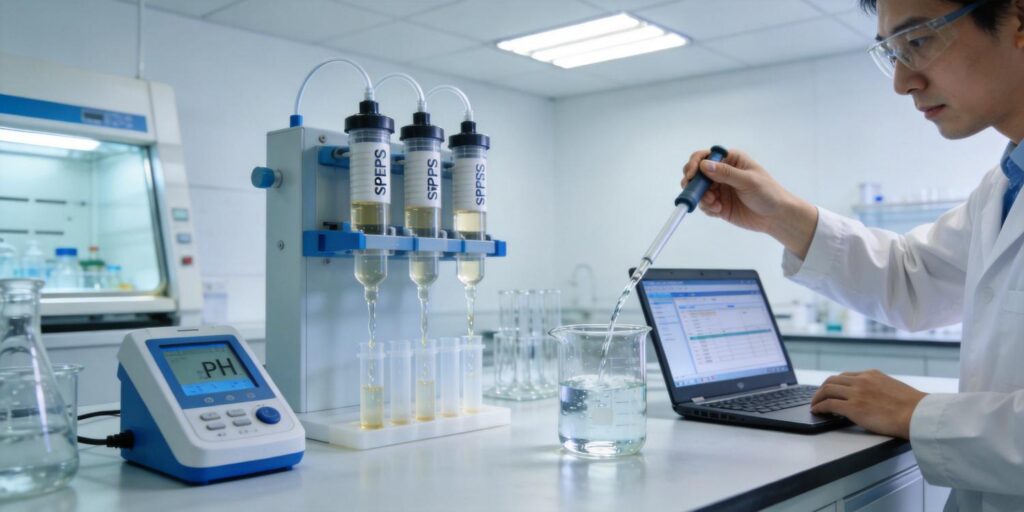
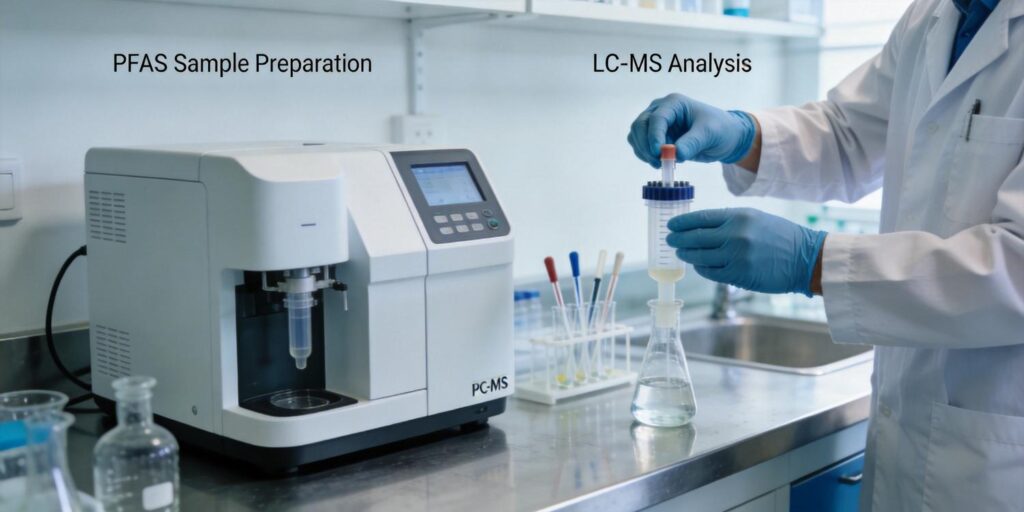
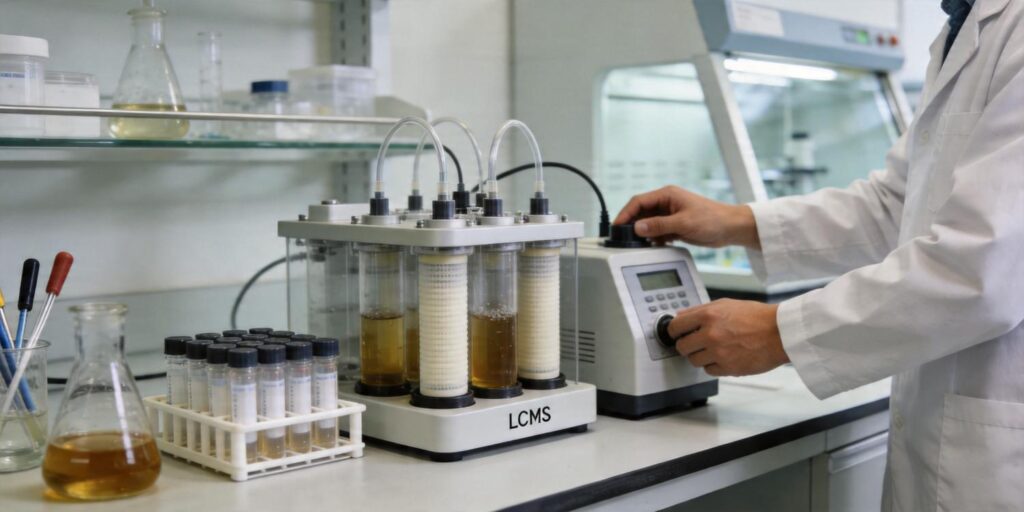
The analysis of pharmaceuticals in wastewater at trace concentrations (ng/L levels) presents significant analytical challenges. At these ultra-low concentrations, even minor losses during sample preparation can lead to substantial errors in quantification. The complexity of wastewater matrices compounds these difficulties, as humic acids, suspended solids, and other organic matter can interfere with both extraction efficiency and subsequent LC-MS/MS analysis.
According to SPE fundamentals, the technique operates on principles similar to HPLC for selective adsorption of analytes from complex matrices. For trace analysis, SPE serves as both a cleanup technique and a concentration method, allowing analysts to increase analyte concentrations to detectable levels while removing matrix interferences. The extremely low ng/L concentrations require careful optimization of every step in the SPE process to achieve reproducible recoveries above 70-80%.
Sorbent Selection Criteria for Mixed Pharmaceutical Classes
Selecting the appropriate sorbent is critical when dealing with mixed pharmaceutical classes in wastewater. The ideal sorbent must provide adequate retention for compounds with diverse chemical properties while maintaining selectivity against matrix interferences. Based on SPE technology principles, several sorbent options exist:
Polymeric Sorbents for Broad-Spectrum Retention
Hydrophilic-lipophilic balanced (HLB) polymeric sorbents offer excellent retention for a wide range of pharmaceuticals, including both polar and non-polar compounds. These sorbents contain both hydrophilic N-vinylpyrrolidone and lipophilic divinylbenzene monomers, providing dual retention mechanisms that work effectively across pH ranges 0-14. For wastewater applications, HLB sorbents are particularly valuable because they maintain performance even with highly variable sample matrices.
Mixed-Mode Sorbents for Enhanced Selectivity
When dealing with specific pharmaceutical classes, mixed-mode sorbents provide superior selectivity. These include:
- MCX (Mixed-mode Cation Exchange): Ideal for basic pharmaceuticals (pKa 2-10)
- MAX (Mixed-mode Anion Exchange): Suitable for acidic pharmaceuticals (pKa 2-8)
- WCX (Weak Cation Exchange): For strong bases (pKa >10)
- WAX (Weak Anion Exchange): For strong acids (pKa <1)
The Oasis 2×4 strategy demonstrates that only two protocols and four sorbents can analyze all types of compounds: acids, bases, and neutrals, making mixed-mode approaches highly efficient for comprehensive pharmaceutical screening.
Traditional Silica-Based Sorbents
For specific applications, traditional silica-based sorbents like C18, C8, and phenyl phases remain valuable, particularly when dealing with non-polar pharmaceuticals. However, their performance can be compromised by the high organic content and variable pH of wastewater samples.
Conditioning Protocol Optimization for Polymeric SPE Cartridges
Proper conditioning is essential for achieving consistent, high recoveries with polymeric SPE cartridges. Conditioning serves three primary functions: activating the sorbent surface, preparing the chemical environment for optimal binding, and removing impurities from the sorbent material.
Standard Conditioning Protocol
For polymeric sorbents like HLB, the standard conditioning protocol involves:
- Methanol or Acetonitrile (1.5 mL per 100 mg sorbent): Applied at low vacuum (approximately 3 in. Hg) to solvate the hydrophobic surface and remove impurities
- Deionized Water (1 mL per 100 mg sorbent): Removes excess organic solvent that could interfere with hydrophobic binding
- Optional Buffer Solution: When ion-exchange mechanisms are involved, applying 1 mL of appropriate buffer ensures optimal pH for sorbent-analyte interactions
Critical Considerations
Several factors significantly impact conditioning effectiveness:
- Flow Rate: Maintain consistent flow rates (1-3 drops/second) to ensure proper sorbent activation
- Prevention of Drying: Never allow the sorbent to dry between conditioning and sample loading, as this severely reduces sample capacity
- Buffer Compatibility: When using buffers, ensure counter ions don’t interfere with subsequent analytical steps
- Timing: Use cartridges immediately after conditioning to prevent sorbent drying
Sample pH Adjustment Strategies for Neutral vs Ionizable Drugs
pH adjustment is one of the most powerful tools for optimizing SPE recovery, particularly when dealing with ionizable pharmaceuticals. The fundamental principle involves manipulating the ionization state of target compounds to enhance their retention on the sorbent.
For Neutral Pharmaceuticals
Neutral compounds rely primarily on hydrophobic interactions for retention. For these analytes:
- Maintain sample pH away from their pKa values to prevent ionization
- Typically use pH 6-8 for most neutral pharmaceuticals
- Consider adding small amounts of organic modifier (≤5% methanol) to improve solubility without compromising retention
For Acidic Pharmaceuticals
Acidic compounds (carboxylic acids, phenols) require specific pH conditions:
- Adjust sample pH to at least 2 units below the pKa to ensure protonation (neutral form)
- For mixed-mode anion exchange (MAX), adjust pH to 2 units above pKa to ensure deprotonation (anionic form)
- Common acidification agents: formic acid, phosphoric acid, or hydrochloric acid
For Basic Pharmaceuticals
Basic compounds (amines, nitrogen-containing heterocycles) follow opposite principles:
- Adjust sample pH to at least 2 units above the pKa to ensure deprotonation (neutral form)
- For mixed-mode cation exchange (MCX), adjust pH to 2 units below pKa to ensure protonation (cationic form)
- Common basification agents: ammonium hydroxide, sodium hydroxide
Practical Implementation
When dealing with mixed pharmaceutical classes, a sequential or parallel extraction approach may be necessary. Some laboratories employ dual pH adjustments or use mixed-mode sorbents that can retain compounds in multiple ionization states simultaneously.
Loading Large-Volume Wastewater Samples (500–1000 mL)
Processing large sample volumes is essential for achieving adequate preconcentration factors when dealing with ng/L concentrations. However, large-volume loading introduces several technical challenges that must be addressed.
Sorbent Capacity Considerations
When loading 500-1000 mL samples:
- Increase Sorbent Mass: Use 500 mg or 1000 mg cartridges rather than standard 100-200 mg formats
- Monitor Breakthrough: Analyze fractions during loading to detect analyte breakthrough, which occurs when flow rates exceed sorbent affinity for binding
- Consider Disk Formats: For very large volumes, SPE disks provide higher flow rates without compromising recovery
Flow Rate Optimization
Flow rate is critical for large-volume applications:
- Optimal Loading Rate: 1-3 mL/min for most pharmaceutical applications
- Vacuum Control: Maintain consistent vacuum (3-5 in. Hg) to ensure steady flow
- Gravity Flow: For maximum recovery, consider gravity flow loading, though this significantly increases processing time
Sample Pretreatment
Before loading large volumes:
- Filtration: Remove suspended solids using 0.45 μm or 0.7 μm glass fiber filters
- pH Adjustment: Adjust pH immediately after sampling to prevent analyte degradation
- Preservation: Add appropriate preservatives (sodium azide, ascorbic acid) to prevent biological degradation
Washing Strategies to Reduce Humic Acid Interference
Humic acids represent one of the most challenging interferences in wastewater analysis, as they can co-extract with target pharmaceuticals and cause significant matrix effects in LC-MS/MS. Effective washing strategies are essential for minimizing these interferences.
Standard Washing Approaches
For polymeric sorbents, effective washing typically involves:
- Water Wash (5% methanol in water): Removes polar interferences and residual salts
- Acidified Water Wash (2% formic acid in water): Particularly effective for basic pharmaceuticals, helps remove acidic humic substances
- Organic Wash (5-20% methanol in water): Removes moderately polar interferences without eluting target analytes
Advanced Washing Strategies
For particularly challenging matrices:
- Sequential pH Washes: Alternate between acidic and basic washes to remove different humic acid fractions
- Mixed Solvent Washes: Use water-methanol-acetonitrile mixtures optimized for specific pharmaceutical classes
- Ionic Strength Adjustment: Add ammonium acetate or formate to washing solutions to disrupt ionic interactions with humic acids
Column Drying
After washing, proper column drying is essential:
- Vacuum Drying: Apply maximum vacuum for 5 minutes
- Visual Inspection: The column should return to room temperature (not feel cold) indicating complete drying
- Importance: Prevents dilution of elution solvent and ensures efficient analyte transfer
Elution Solvent Combinations Improving Recovery
Elution represents the final critical step in SPE, where the goal is to recover 100% of retained analytes in the smallest possible volume while leaving behind remaining interferences.
Standard Elution Solvents
For most pharmaceutical applications:
- Methanol: Effective for a wide range of pharmaceuticals, compatible with reversed-phase LC-MS/MS
- Acetonitrile: Provides cleaner extracts with less co-elution of humic substances
- Acetone: Useful for very non-polar compounds, though less compatible with LC-MS/MS
Optimized Solvent Combinations
Research shows that solvent combinations often outperform single solvents:
- Methanol:Acetonitrile (90:10): Combines the elution strength of methanol with the cleaner background of acetonitrile
- Methanol with Acid/Base Modifiers: For ionizable compounds, adding 2% formic acid (for bases) or 5% ammonium hydroxide (for acids) significantly improves recovery
- Dichloromethane:Isopropanol:Ammonium Hydroxide (78:20:2): Highly effective for basic drugs from mixed-mode sorbents
Elution Volume Optimization
Safe elution volumes depend on sorbent mass:
| Sorbent Mass (mg) | Safe Elution Volume (mL) | Typical Assay Volume (mL) |
|---|---|---|
| 100 | 0.5 | 0.75 |
| 200 | 1.0 | 1.5 |
| 500 | 2.5 | 4.0 |
| 1000 | 5.0 | 8.0 |
Flow Rate Considerations
During elution, slower flow rates generally yield better recoveries:
- Optimal Flow: 0.5-1 mL/min
- Gravity Flow Preferred: When possible, use gravity flow for maximum recovery
- Multiple Fractions: Collect eluate in 0.5-1 mL fractions to monitor elution profile
Method Validation Using LC-MS/MS and Recovery Calculations
Comprehensive method validation is essential for ensuring the reliability of trace pharmaceutical analysis in wastewater. LC-MS/MS provides the sensitivity and selectivity required for ng/L level detection, but proper validation protocols must be followed.
Recovery Calculations
Recovery is typically calculated using the formula:
% Recovery = (Cfound / Cadded) × 100
Where:
- Cfound = Concentration measured in spiked sample after extraction
- Cadded = Known concentration added to the sample
Validation Parameters
Complete method validation should include:
- Linearity: Evaluate over at least three orders of magnitude, typically 1-1000 ng/L
- Accuracy and Precision: Assess using replicate analyses (n≥5) at low, medium, and high concentrations
- Limit of Detection (LOD) and Quantification (LOQ): Determine using signal-to-noise ratios of 3:1 and 10:1, respectively
- Matrix Effects: Evaluate by comparing standard curves in solvent vs. matrix extracts
- Carryover: Assess by analyzing blank samples after high-concentration standards
Quality Control Measures
Implement robust QC protocols:
- Process Blanks: Include with each batch to monitor contamination
- Matrix Spikes: Analyze in duplicate at relevant concentrations
- Internal Standards: Use isotopically labeled analogs for each analyte class
- Continuing Calibration Verification: Analyze standards at beginning, middle, and end of each batch
Documentation and Reporting
Maintain comprehensive documentation including:
- Detailed SPE protocols with all parameters (sorbent type, conditioning, washing, elution volumes)
- LC-MS/MS method parameters (column, mobile phase, gradient, ionization conditions)
- Validation data (calibration curves, recovery calculations, precision data)
- Sample tracking information (collection dates, preservation methods, holding times)
By systematically addressing each of these optimization areas, analysts can develop robust SPE methods for trace pharmaceutical analysis in wastewater that provide reliable, reproducible results even at ng/L concentrations. The combination of proper sorbent selection, optimized protocols, and comprehensive validation ensures data quality that meets regulatory requirements and supports meaningful environmental monitoring.