Integration & Automation

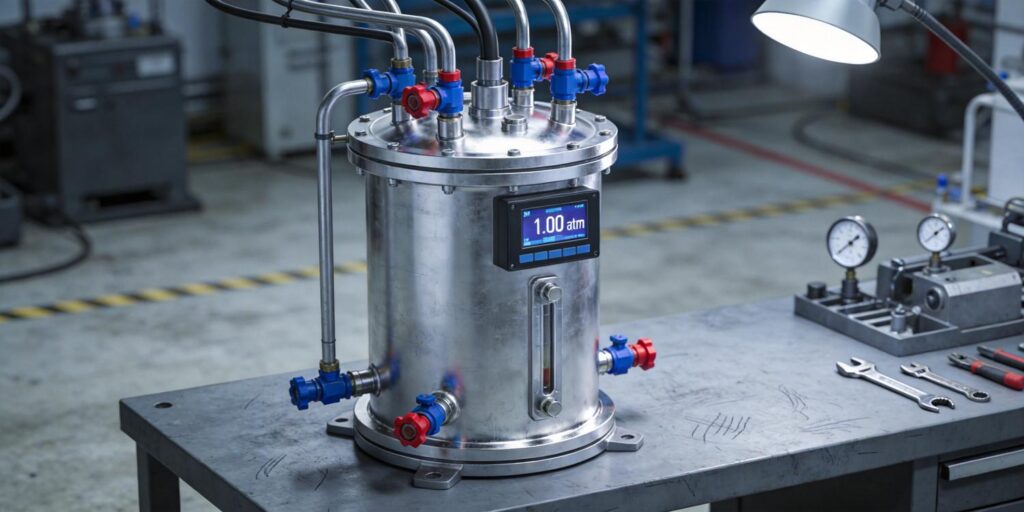
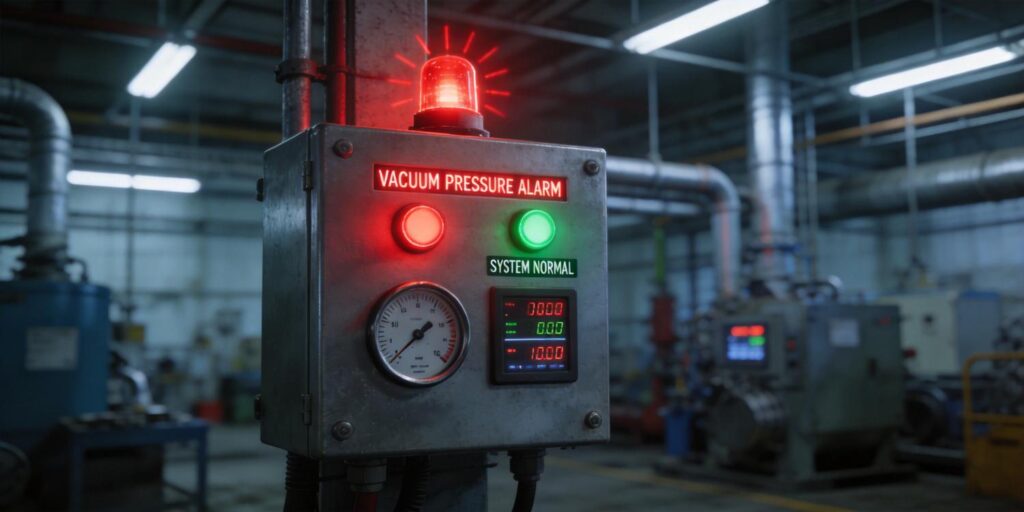
Digital vacuum gauge display during rapid pressure decrease

Vacuum Gauge Response Time in Fast Pump-Down Cycles

Vacuum Gauge Response Time in Fast Pump-Down Cycles In semiconductor processing, PVD coating systems, and analytical instruments, pump-down cycles are increasingly aggressive. Turbomolecular and cryo pumps can drop chamber pressure from atmosphere to 10⁻⁶ Torr in under 60 seconds. Vacuum gauges must keep pace—otherwise interlocks trip late, process recipes start at the wrong pressure, or […]

Vacuum Gauge Response Time in Fast Pump-Down Cycles Read More »

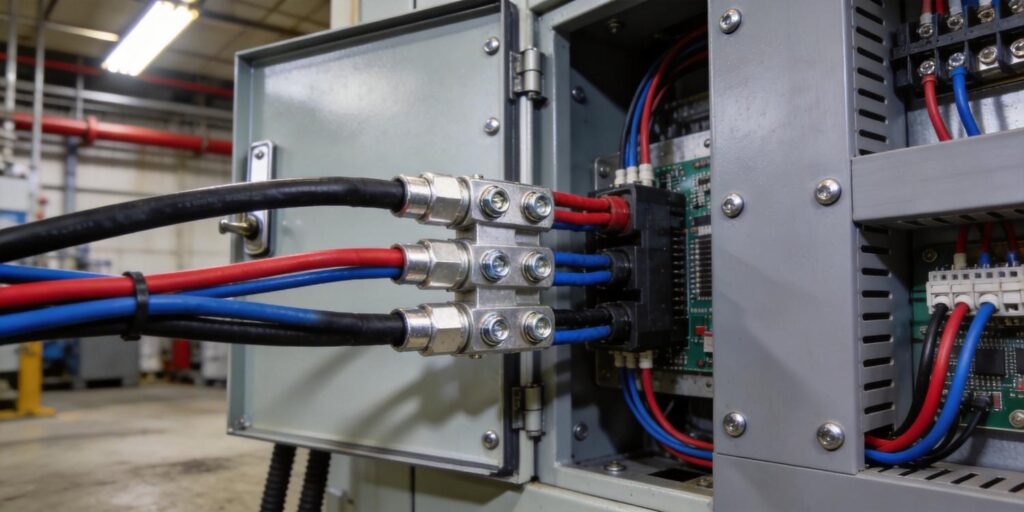
Vacuum transmitter wired to PLC inside industrial cabinet

4-20mA vs 0-10V Vacuum Gauge Output: Which Is More Stable in Industrial Environments?

4-20mA vs 0-10V Vacuum Gauge Output: Which Is More Stable in Industrial Environments? Industrial vacuum systems—whether in semiconductor fabs, PVD coating lines, or analytical instruments—demand reliable pressure signals that survive electromagnetic interference, long cable runs, and PLC integration. Two analog standards dominate: the 4-20 mA current loop and the 0-10 V voltage output. At Poseidon

4-20mA vs 0-10V Vacuum Gauge Output: Which Is More Stable in Industrial Environments? Read More »

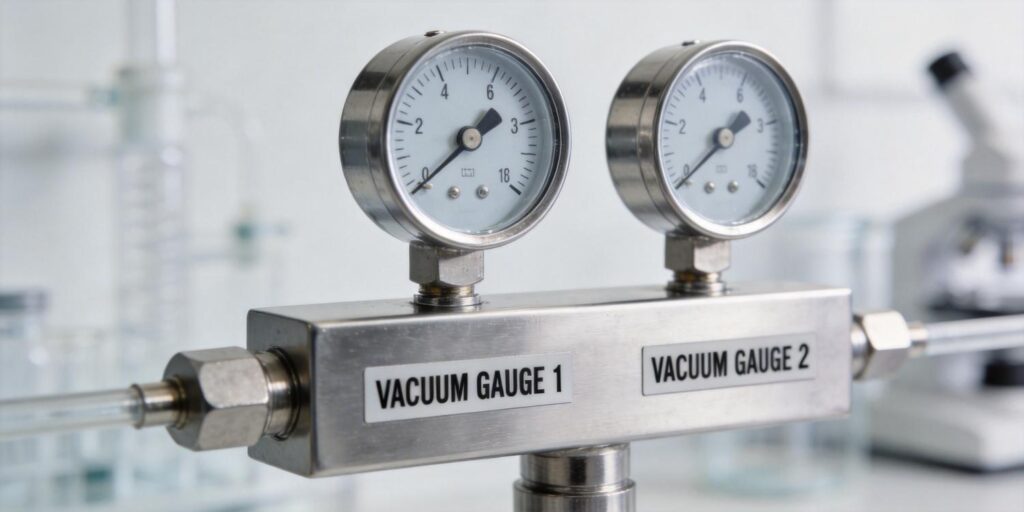
Pirani and cold cathode vacuum gauges installed on industrial vacuum line

How to Configure a Dual-Gauge System (Pirani + Cold Cathode) for Full-Range Measurement

Define Rough to High Vacuum Transition In vacuum systems for analytical instruments, vacuum furnaces, solar deposition tools, and coating equipment, pressure measurement spans two distinct regimes that no single gauge covers with optimal accuracy and reliability. Rough vacuum—typically from atmosphere down to approximately 10-3 Torr (or ~1.33 × 10⁻¹ Pa)—is the domain of mechanical pumps

How to Configure a Dual-Gauge System (Pirani + Cold Cathode) for Full-Range Measurement Read More »

Vacuum gauge installed on automated industrial vacuum system

Why Vacuum Gauge Response Time Matters in Automation

Response Definition: What “Response Time” Really Means for Vacuum Gauges In automated vacuum systems, response time is the interval between a sudden pressure change in the chamber and the moment the gauge output reaches a stable, usable value. Engineers typically measure it as the time to 63 % of final reading (one time constant, τ)

Why Vacuum Gauge Response Time Matters in Automation Read More »

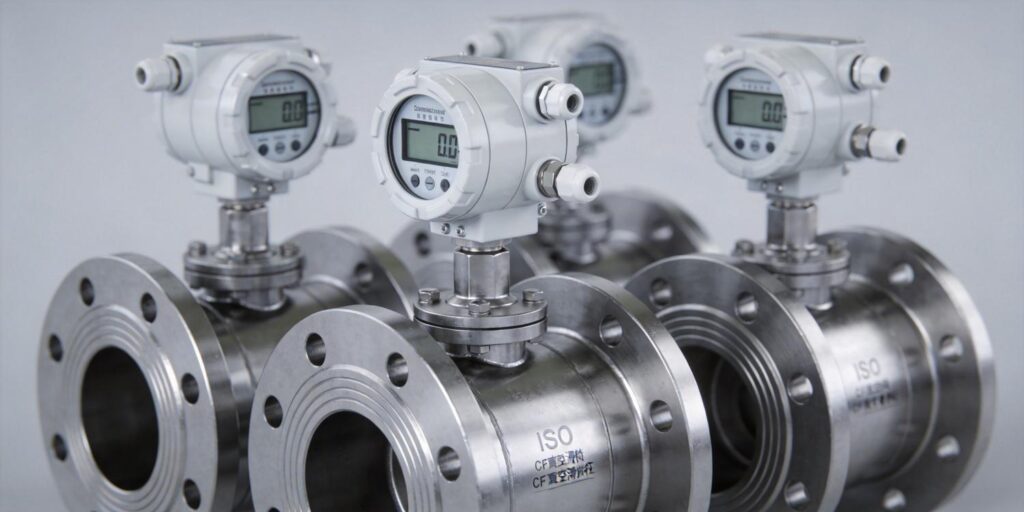
Vacuum transmitter with digital display installed on vacuum pipeline

Comparing Analog and Digital Vacuum Gauge Outputs

Analog Outputs: The 4-20 mA Standard and Alternatives Analog signals remain the workhorse of industrial vacuum monitoring because they are simple, widely supported by legacy PLCs, and require no protocol programming. The 4-20 mA current loop is the most common analog standard in process industries. It transmits pressure data as a current rather than voltage,

Comparing Analog and Digital Vacuum Gauge Outputs Read More »

Compact vacuum equipment with integrated vacuum transmitter

Vacuum Gauge Installation in Compact Equipment Designs

Space Limitations Modern analytical instruments, benchtop mass spectrometers, portable vacuum systems, and compact coating tools leave little room for traditional vacuum gauges. Legacy cold cathode or Pirani sensors often measure 50–100 mm in diameter and require bulky flanges or separate controller boxes, forcing designers to enlarge enclosures, reroute tubing, or compromise on component layout. In

Vacuum Gauge Installation in Compact Equipment Designs Read More »

Vacuum gauges installed on industrial production vacuum line

Reducing Downtime with Reliable Vacuum Monitoring

Downtime Causes Unplanned downtime in vacuum-dependent equipment—whether vacuum furnaces, coating systems, mass spectrometers, or solar panel deposition tools—directly erodes productivity and profitability. The leading culprits almost always trace back to vacuum system issues that could have been caught early with reliable monitoring. Common root causes include: Leaks and virtual leaks: O-ring damage, scratched flanges, or

Reducing Downtime with Reliable Vacuum Monitoring Read More »

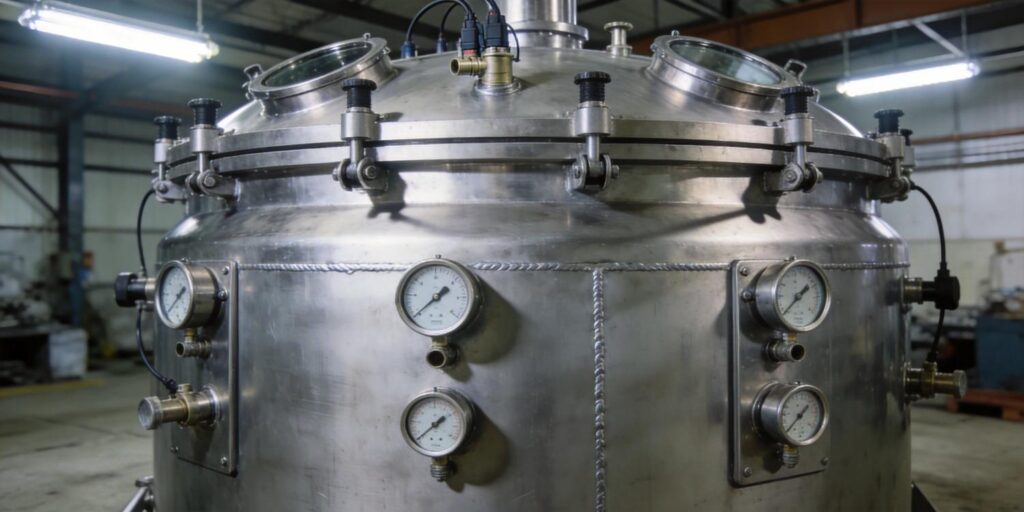
Vacuum chamber during pump-down process with pressure gauge installed

Optimizing Pump-Down Time with Proper Vacuum Gauge Strategy

Pump-down Curve Basics Every vacuum system follows a characteristic pump-down curve: a plot of pressure versus time that reveals how quickly the chamber reaches target vacuum levels. The curve is typically plotted on a logarithmic pressure scale against linear time, showing three distinct phases driven by gas-flow regimes. In the initial viscous-flow stage (atmosphere down

Optimizing Pump-Down Time with Proper Vacuum Gauge Strategy Read More »

Vacuum transmitter wired to PLC inside industrial control cabinet

Vacuum Gauge Signal Integration with PLC Systems

Output Signal Types Available on Poseidon Vacuum Gauges Modern PLC-based automation systems require vacuum gauges that deliver clean, reliable signals without custom converters or excessive integration effort. The VG-SP205 Pirani Vacuum Transmitter and VG-SM225 Cold Cathode Vacuum Gauge from Poseidon Scientific are engineered for direct compatibility with industrial control architectures. Both models provide two primary

Vacuum Gauge Signal Integration with PLC Systems Read More »

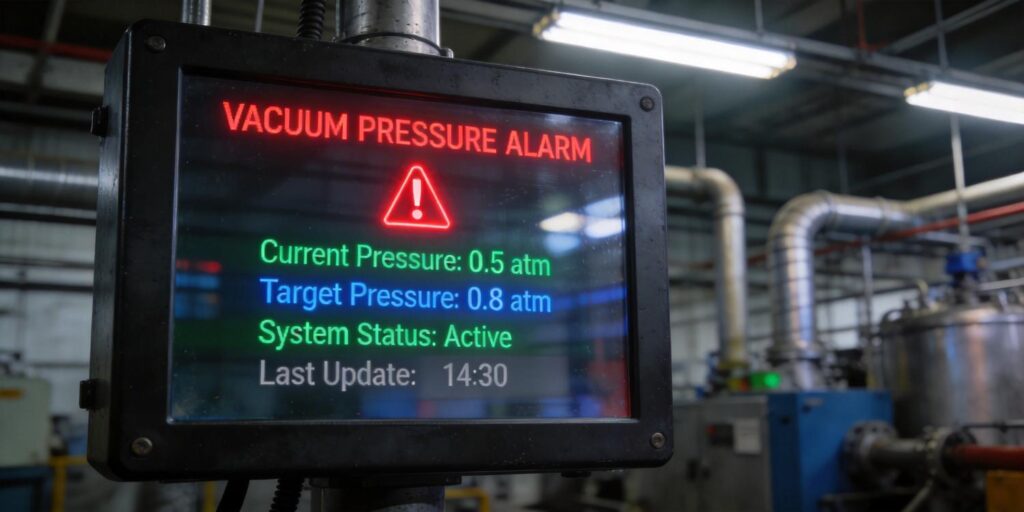
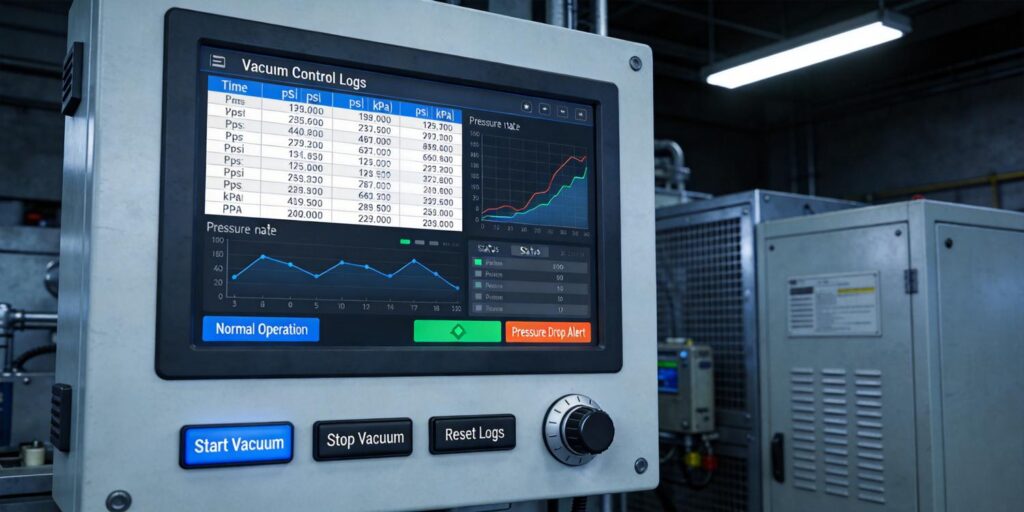
MES screen displaying real-time vacuum data

Vacuum Gauge Integration into MES Systems

In today’s smart factories, Manufacturing Execution Systems (MES) serve as the digital backbone that connects shop-floor equipment to enterprise resource planning (ERP) and quality management platforms. For vacuum-dependent processes—whether in semiconductor fabrication, pharmaceutical lyophilization, vacuum metallurgy, or thin-film coating—real-time pressure data is not optional; it is a critical production parameter that directly affects yield, purity,

Vacuum Gauge Integration into MES Systems Read More »

Shopping Cart
Poseidon Scientific
Privacy Overview

This website uses cookies so that we can provide you with the best user experience possible. Cookie information is stored in your browser and performs functions such as recognising you when you return to our website and helping our team to understand which sections of the website you find most interesting and useful.