Integration & Automation

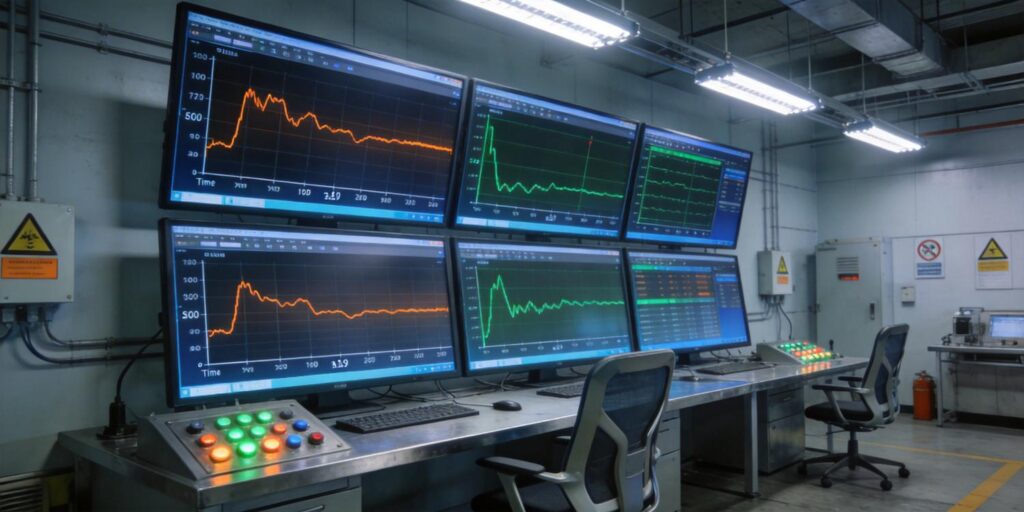
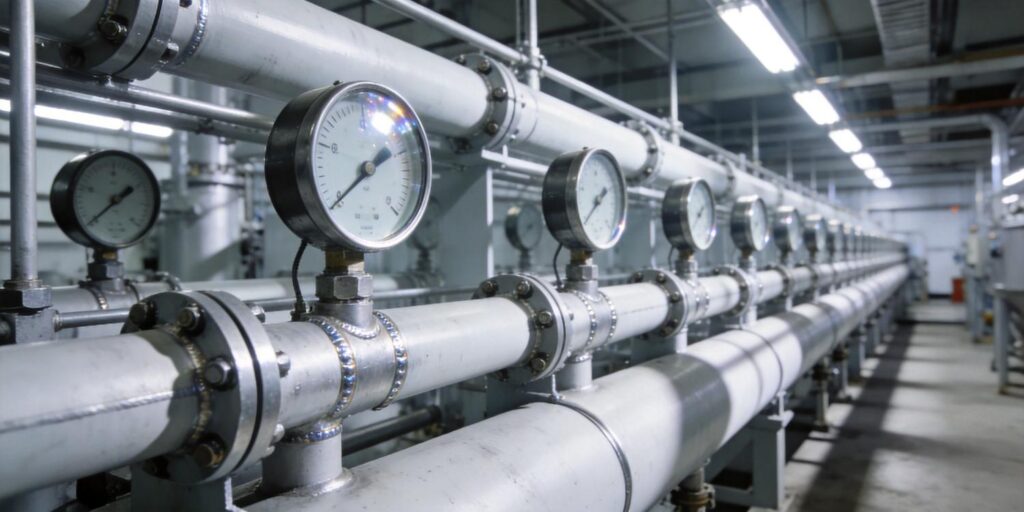
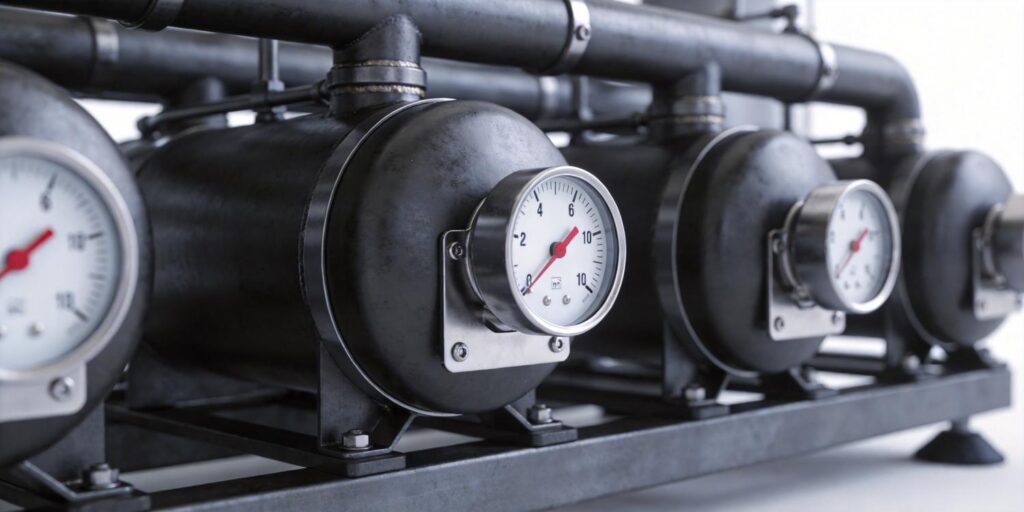
Multiple vacuum gauges installed on industrial multi-chamber system

Optimizing Vacuum Measurement in Multi-Chamber Systems

Shared Pump Configuration Multi-chamber vacuum systems—cluster tools for semiconductor processing, load-lock furnaces, glovebox-integrated dry rooms, and vacuum-assisted additive manufacturing lines—commonly share a single roughing or turbo pump stack to reduce footprint and capital cost. A central pump manifold connects multiple chambers through isolation valves, allowing sequential pump-down, transfer, and venting while one set of pumps […]

Optimizing Vacuum Measurement in Multi-Chamber Systems Read More »

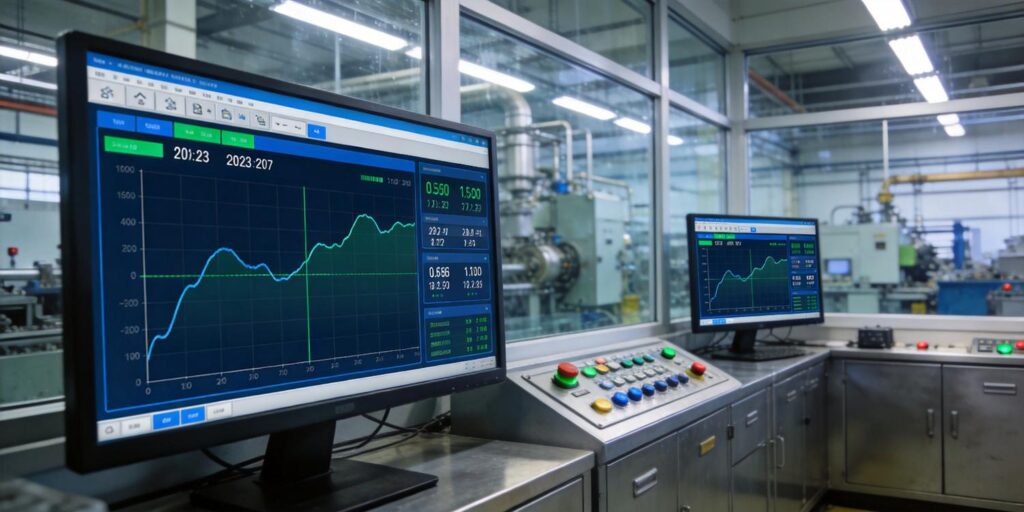
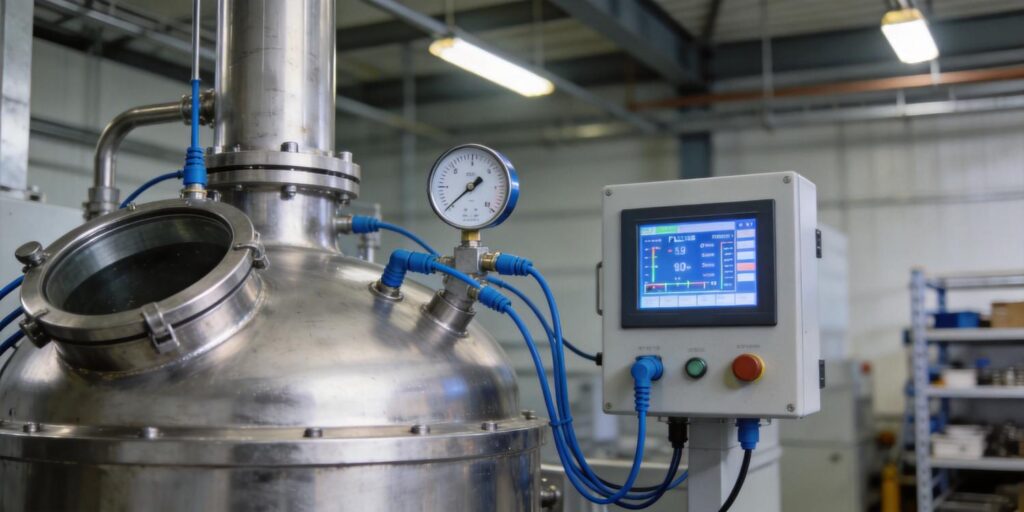
Vacuum transmitter connected to automated control system

Pressure Control Loop Tuning with Vacuum Transmitters

Control Loop Fundamentals (PID) Pressure control in vacuum systems—whether maintaining a stable process pressure in a coating chamber or protecting sensitive instruments—relies on closed-loop feedback. The most common controller architecture is PID (Proportional-Integral-Derivative). The controller continuously calculates an error value as the difference between a desired setpoint and the actual pressure measured by the vacuum

Pressure Control Loop Tuning with Vacuum Transmitters Read More »
Vacuum transmitter wired to PLC with alarm lights

Designing Interlock Logic Using Vacuum Gauge Threshold Signals

Define Process Critical Pressure Thresholds Effective interlock logic begins with a clear understanding of the vacuum pressures that directly impact process safety, quality, and equipment protection. In most analytical and production vacuum systems, three critical thresholds emerge from the pump-down curve and recipe requirements: Roughing threshold (atmosphere to 10⁻³ Torr): Protects turbomolecular pumps from operation

Designing Interlock Logic Using Vacuum Gauge Threshold Signals Read More »

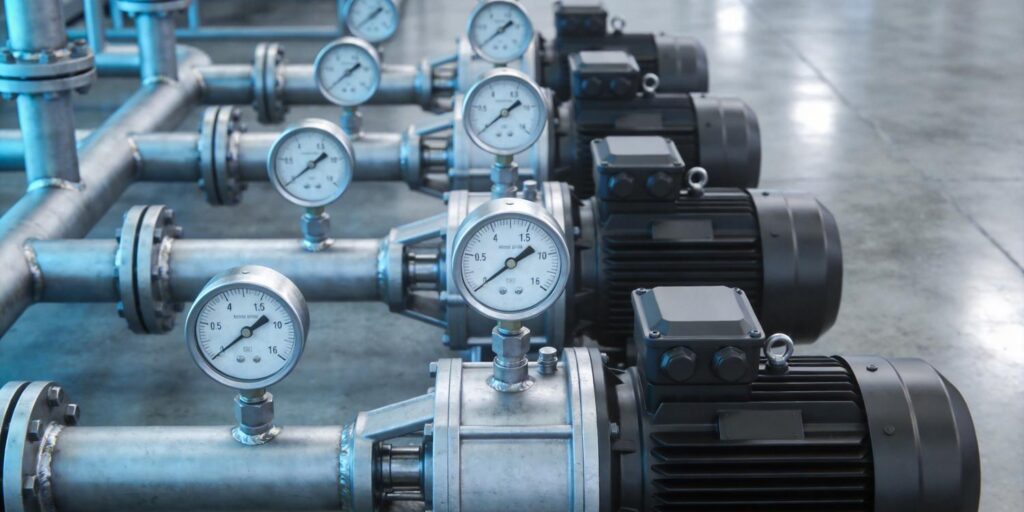
Dual vacuum gauges installed on critical industrial vacuum system

Designing a Redundant Vacuum Monitoring System for Critical Processes

Redundancy Concept In critical vacuum processes—such as mass-spectrometer operation, semiconductor wafer processing, vacuum heat treatment of aerospace alloys, or electron-beam welding—unplanned loss of vacuum monitoring can trigger batch failure, equipment damage, or safety events. Redundancy addresses this by deploying multiple independent sensors whose outputs are continuously cross-checked. The goal is not merely duplication but fault-tolerant

Designing a Redundant Vacuum Monitoring System for Critical Processes Read More »

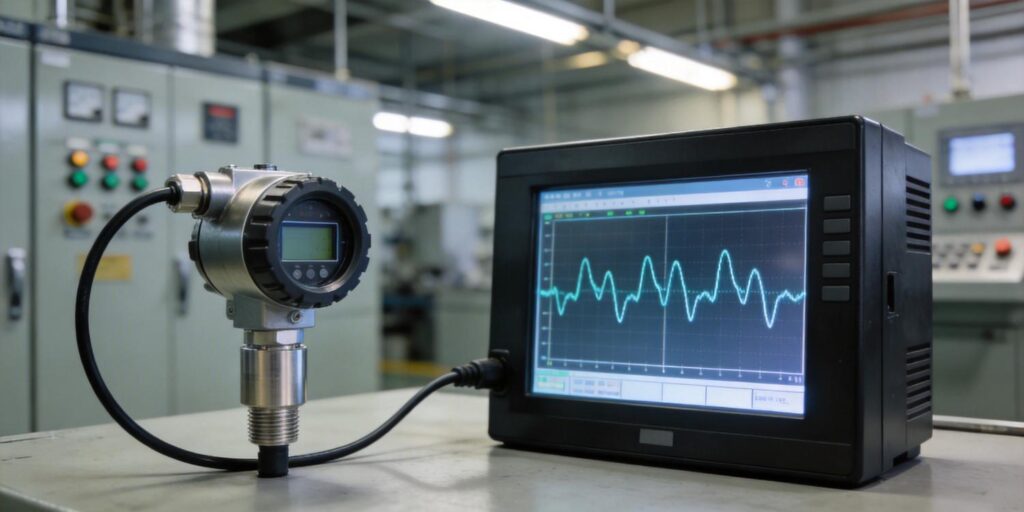
Vacuum transmitter connected with long shielded cable

How Cable Length Impacts Vacuum Gauge Signal Stability

Signal Attenuation Analog signals from vacuum gauges—particularly the 0–10 V output used by both the Poseidon Scientific VG-SP205 Pirani Vacuum Transmitter and VG-SM225 Cold Cathode Vacuum Gauge—travel as voltage levels referenced to ground. Over distance, two primary mechanisms cause attenuation: resistive voltage drop in the cable conductors and capacitive loading that rounds sharp edges in

How Cable Length Impacts Vacuum Gauge Signal Stability Read More »

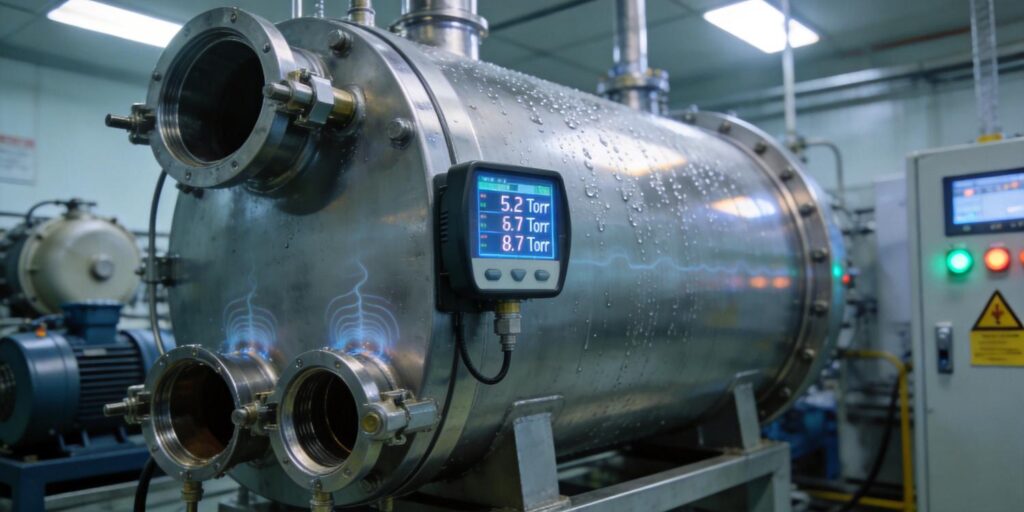
Digital vacuum gauge display during rapid pressure decrease

Vacuum Gauge Response Time in Fast Pump-Down Cycles

Vacuum Gauge Response Time in Fast Pump-Down Cycles In semiconductor processing, PVD coating systems, and analytical instruments, pump-down cycles are increasingly aggressive. Turbomolecular and cryo pumps can drop chamber pressure from atmosphere to 10⁻⁶ Torr in under 60 seconds. Vacuum gauges must keep pace—otherwise interlocks trip late, process recipes start at the wrong pressure, or

Vacuum Gauge Response Time in Fast Pump-Down Cycles Read More »

Vacuum transmitter wired to PLC inside industrial cabinet

4-20mA vs 0-10V Vacuum Gauge Output: Which Is More Stable in Industrial Environments?

4-20mA vs 0-10V Vacuum Gauge Output: Which Is More Stable in Industrial Environments? Industrial vacuum systems—whether in semiconductor fabs, PVD coating lines, or analytical instruments—demand reliable pressure signals that survive electromagnetic interference, long cable runs, and PLC integration. Two analog standards dominate: the 4-20 mA current loop and the 0-10 V voltage output. At Poseidon

4-20mA vs 0-10V Vacuum Gauge Output: Which Is More Stable in Industrial Environments? Read More »

Pirani and cold cathode vacuum gauges installed on industrial vacuum line

How to Configure a Dual-Gauge System (Pirani + Cold Cathode) for Full-Range Measurement

Define Rough to High Vacuum Transition In vacuum systems for analytical instruments, vacuum furnaces, solar deposition tools, and coating equipment, pressure measurement spans two distinct regimes that no single gauge covers with optimal accuracy and reliability. Rough vacuum—typically from atmosphere down to approximately 10-3 Torr (or ~1.33 × 10⁻¹ Pa)—is the domain of mechanical pumps

How to Configure a Dual-Gauge System (Pirani + Cold Cathode) for Full-Range Measurement Read More »

Vacuum gauge installed on automated industrial vacuum system

Why Vacuum Gauge Response Time Matters in Automation

Response Definition: What “Response Time” Really Means for Vacuum Gauges In automated vacuum systems, response time is the interval between a sudden pressure change in the chamber and the moment the gauge output reaches a stable, usable value. Engineers typically measure it as the time to 63 % of final reading (one time constant, τ)

Why Vacuum Gauge Response Time Matters in Automation Read More »

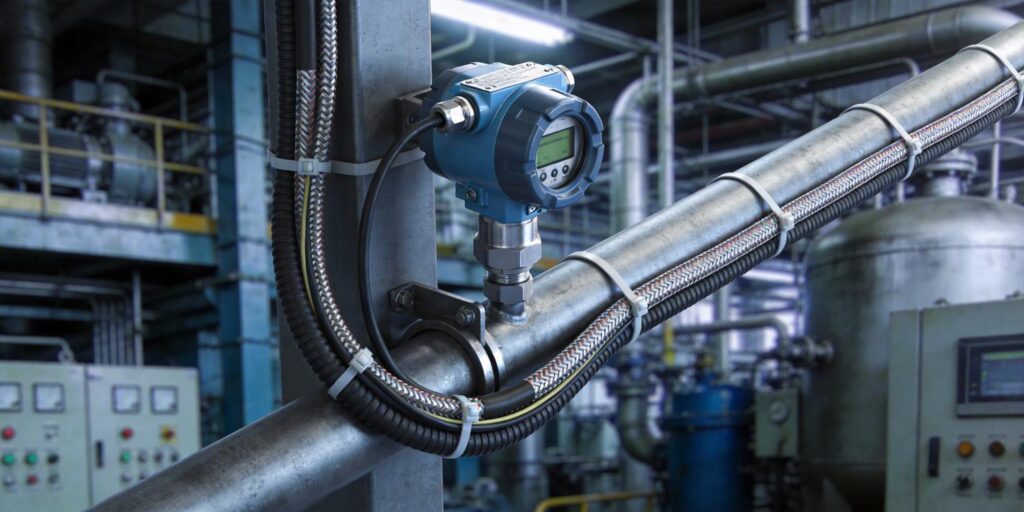
Vacuum transmitter with digital display installed on vacuum pipeline

Comparing Analog and Digital Vacuum Gauge Outputs

Analog Outputs: The 4-20 mA Standard and Alternatives Analog signals remain the workhorse of industrial vacuum monitoring because they are simple, widely supported by legacy PLCs, and require no protocol programming. The 4-20 mA current loop is the most common analog standard in process industries. It transmits pressure data as a current rather than voltage,

Comparing Analog and Digital Vacuum Gauge Outputs Read More »

Shopping Cart
Poseidon Scientific
Privacy Overview

This website uses cookies so that we can provide you with the best user experience possible. Cookie information is stored in your browser and performs functions such as recognising you when you return to our website and helping our team to understand which sections of the website you find most interesting and useful.