Integration & Automation

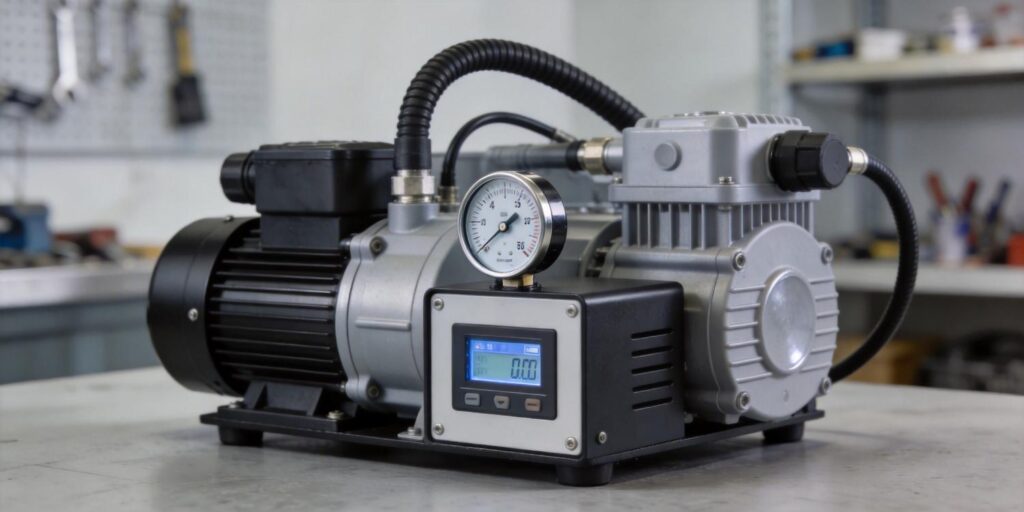
Compact vacuum equipment with integrated vacuum transmitter

Vacuum Gauge Installation in Compact Equipment Designs

Space Limitations Modern analytical instruments, benchtop mass spectrometers, portable vacuum systems, and compact coating tools leave little room for traditional vacuum gauges. Legacy cold cathode or Pirani sensors often measure 50–100 mm in diameter and require bulky flanges or separate controller boxes, forcing designers to enlarge enclosures, reroute tubing, or compromise on component layout. In […]

Vacuum Gauge Installation in Compact Equipment Designs Read More »

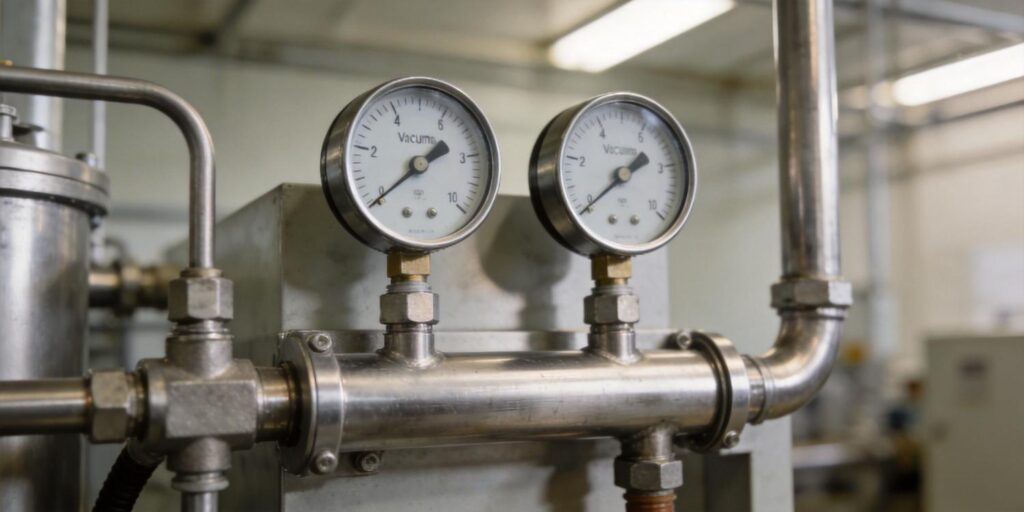
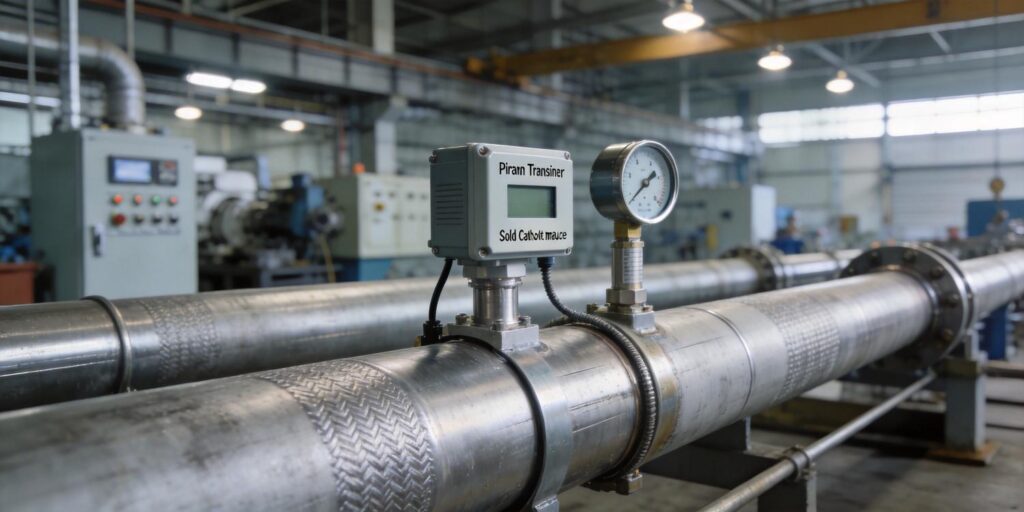
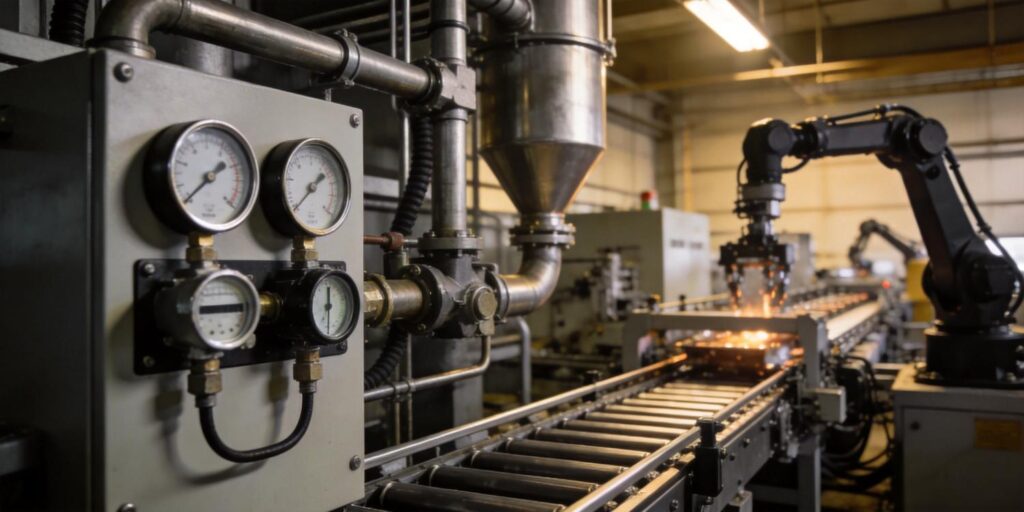
Vacuum gauges installed on industrial production vacuum line

Reducing Downtime with Reliable Vacuum Monitoring

Downtime Causes Unplanned downtime in vacuum-dependent equipment—whether vacuum furnaces, coating systems, mass spectrometers, or solar panel deposition tools—directly erodes productivity and profitability. The leading culprits almost always trace back to vacuum system issues that could have been caught early with reliable monitoring. Common root causes include: Leaks and virtual leaks: O-ring damage, scratched flanges, or

Reducing Downtime with Reliable Vacuum Monitoring Read More »

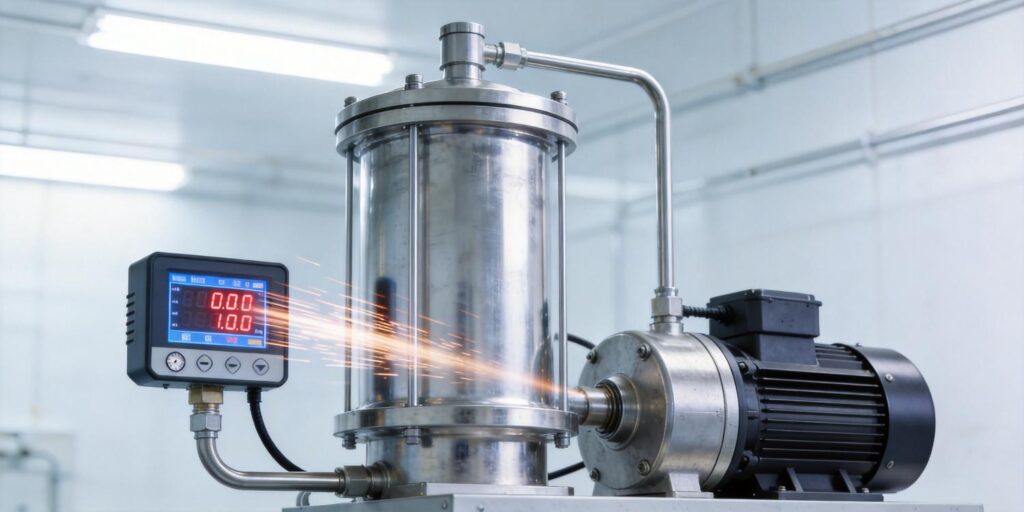
Vacuum chamber during pump-down process with pressure gauge installed

Optimizing Pump-Down Time with Proper Vacuum Gauge Strategy

Pump-down Curve Basics Every vacuum system follows a characteristic pump-down curve: a plot of pressure versus time that reveals how quickly the chamber reaches target vacuum levels. The curve is typically plotted on a logarithmic pressure scale against linear time, showing three distinct phases driven by gas-flow regimes. In the initial viscous-flow stage (atmosphere down

Optimizing Pump-Down Time with Proper Vacuum Gauge Strategy Read More »

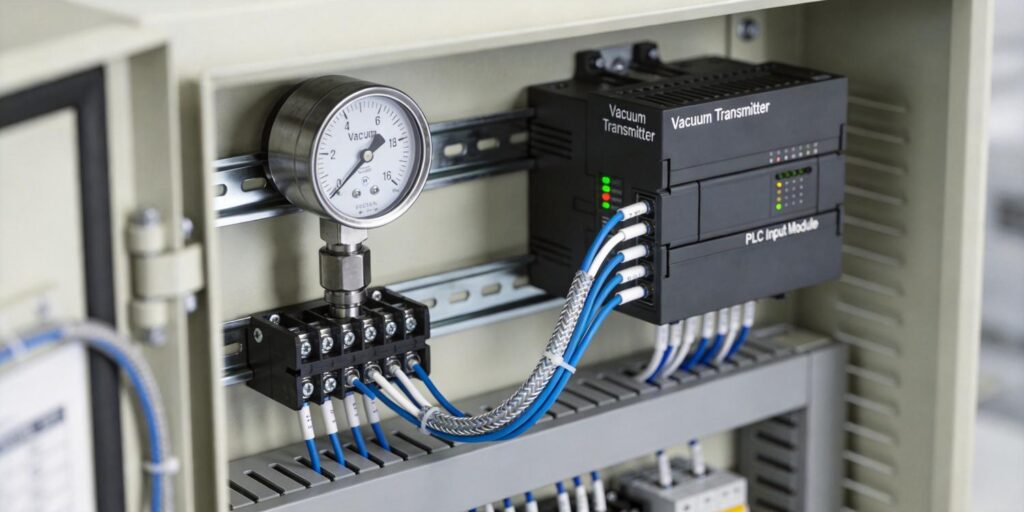
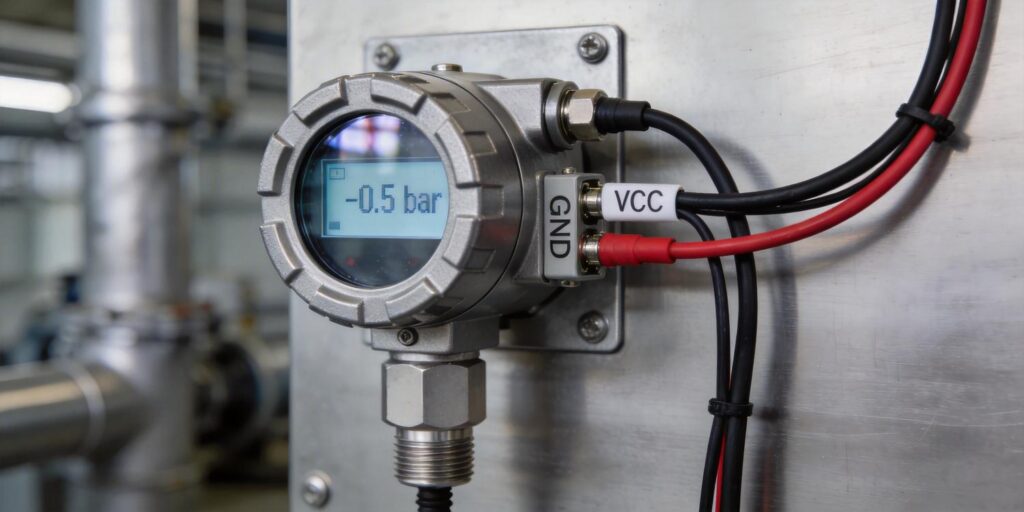
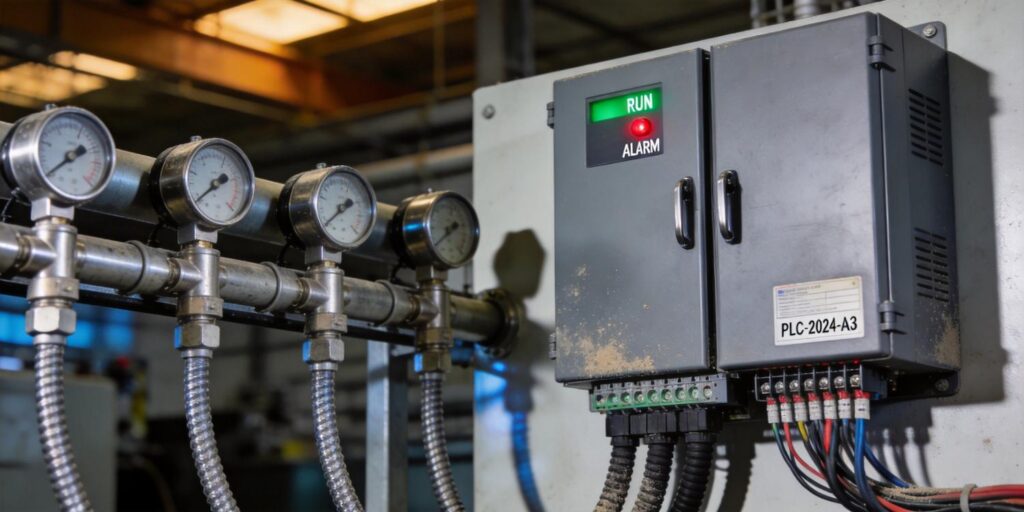
Vacuum transmitter wired to PLC inside industrial control cabinet

Vacuum Gauge Signal Integration with PLC Systems

Output Signal Types Available on Poseidon Vacuum Gauges Modern PLC-based automation systems require vacuum gauges that deliver clean, reliable signals without custom converters or excessive integration effort. The VG-SP205 Pirani Vacuum Transmitter and VG-SM225 Cold Cathode Vacuum Gauge from Poseidon Scientific are engineered for direct compatibility with industrial control architectures. Both models provide two primary

Vacuum Gauge Signal Integration with PLC Systems Read More »

MES screen displaying real-time vacuum data

Vacuum Gauge Integration into MES Systems

In today’s smart factories, Manufacturing Execution Systems (MES) serve as the digital backbone that connects shop-floor equipment to enterprise resource planning (ERP) and quality management platforms. For vacuum-dependent processes—whether in semiconductor fabrication, pharmaceutical lyophilization, vacuum metallurgy, or thin-film coating—real-time pressure data is not optional; it is a critical production parameter that directly affects yield, purity,

Vacuum Gauge Integration into MES Systems Read More »

IoT dashboard showing vacuum pressure data

Vacuum Gauge Integration into IoT Monitoring Platforms

In modern manufacturing and research facilities, vacuum systems are no longer isolated islands of equipment. Industrial IoT (IIoT) platforms now connect pressure sensors, pumps, and valves into unified dashboards that deliver real-time visibility, automated alerts, and predictive analytics across multiple sites. For engineers and procurement teams managing mass spectrometers, pharmaceutical lyophilizers, vacuum metallurgy furnaces, or

Vacuum Gauge Integration into IoT Monitoring Platforms Read More »

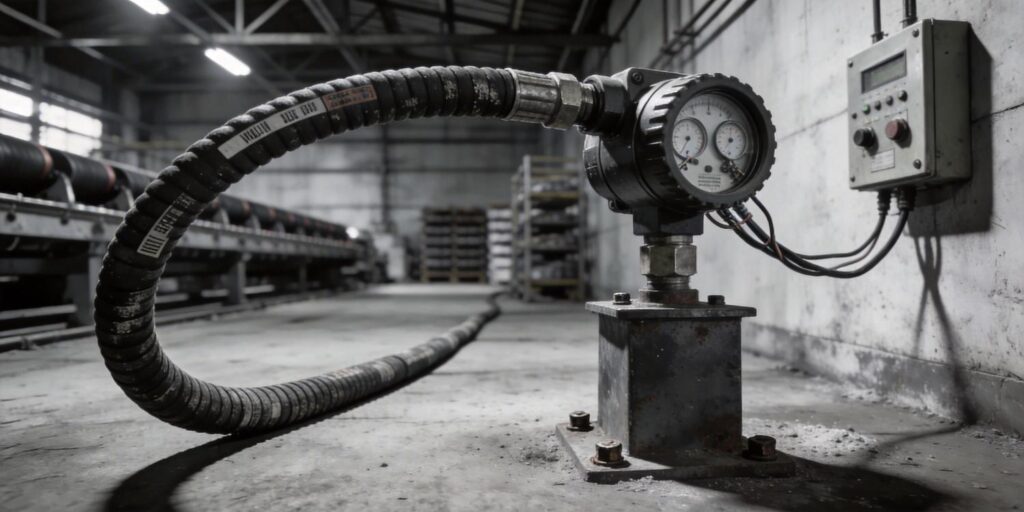
Multiple vacuum gauges mounted on large industrial vacuum chamber

Vacuum Monitoring Strategy for Large-Scale Industrial Chambers

Large-scale industrial vacuum chambers—whether 10 m³ vacuum heat-treatment furnaces, multi-meter PVD coating systems, or aerospace simulation chambers—present unique monitoring challenges that small analytical instruments simply do not face. With volumes measured in cubic meters rather than liters, pump-down times stretch from minutes to hours, outgassing becomes significant, and pressure gradients across the chamber can reach

Vacuum Monitoring Strategy for Large-Scale Industrial Chambers Read More »

Two vacuum gauges installed on industrial chamber for redundancy

Why Dual Vacuum Gauge Systems Improve Reliability

In vacuum-dependent processes such as mass spectrometry, pharmaceutical freeze-drying, scanning electron microscopy, and multi-zone heat treatment, a single pressure reading can determine whether a batch succeeds or fails. Yet many systems still rely on one gauge to monitor the entire range from atmosphere to 10⁻⁷ Torr. This creates a classic single point of failure: if

Why Dual Vacuum Gauge Systems Improve Reliability Read More »

Multiple vacuum gauges across industrial multi-chamber system

Vacuum Measurement Strategy for Multi-Chamber Systems

In multi-chamber vacuum systems—whether load-locked PVD coaters, multi-stage mass spectrometers, or vacuum heat-treatment furnaces—pressure varies dramatically from atmosphere in the load lock to high vacuum in the process chamber. A single-gauge approach quickly fails: Pirani sensors lose accuracy below 10⁻³ Torr, while cold-cathode gauges cannot start or survive exposure to atmosphere. Poseidon Scientific’s complementary pair—the

Vacuum Measurement Strategy for Multi-Chamber Systems Read More »

Dual vacuum gauges installed on critical vacuum chamber

Vacuum Gauge Redundancy Design for Critical Applications

Defining Redundancy in Vacuum Measurement In safety-critical and high-value vacuum processes, a single point of failure in pressure measurement can trigger scrap batches, unplanned downtime, or even safety incidents. Redundancy in vacuum gauge design means deploying multiple independent sensors that continuously monitor the same pressure regime, with the system automatically detecting degradation or failure in

Vacuum Gauge Redundancy Design for Critical Applications Read More »

Shopping Cart
Poseidon Scientific
Privacy Overview

This website uses cookies so that we can provide you with the best user experience possible. Cookie information is stored in your browser and performs functions such as recognising you when you return to our website and helping our team to understand which sections of the website you find most interesting and useful.