Vacuum Gauge

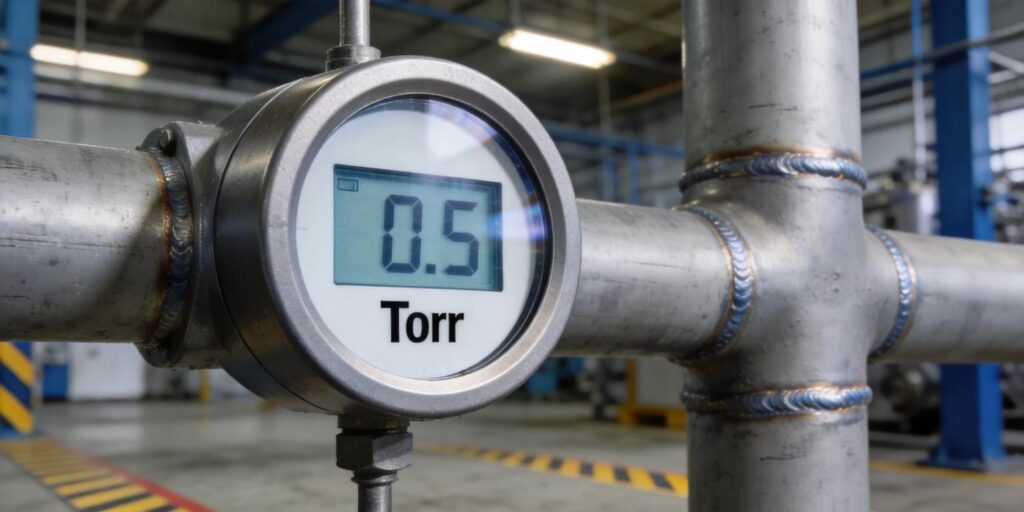
Digital high vacuum gauge display reading near zero

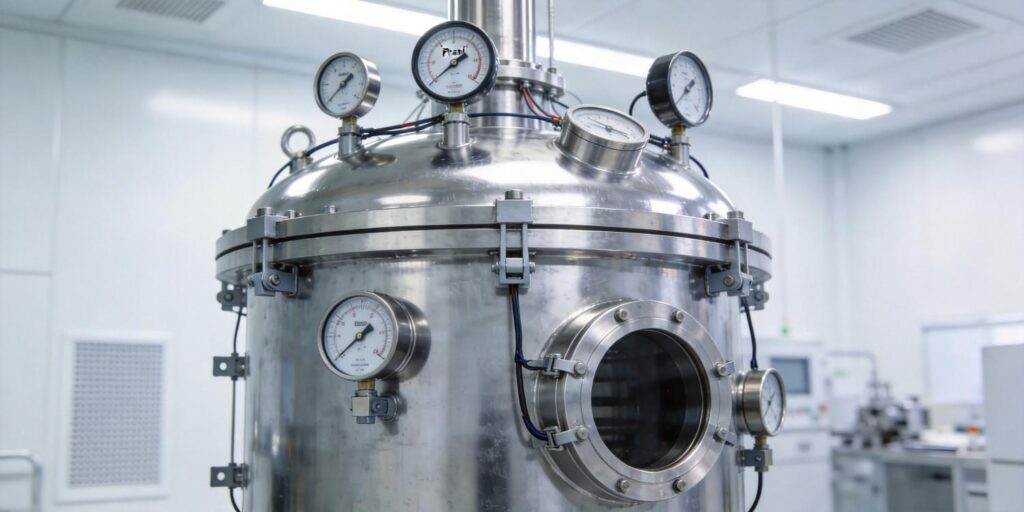
Why Your High Vacuum Gauge Shows Zero Too Early

Cold Cathode Ignition Threshold: The Physics Behind Premature “Zero” Readings High-vacuum cold cathode gauges, such as the VG-SM225 Cold Cathode Vacuum Transmitter from Poseidon Scientific, rely on a Penning discharge to generate a measurable ion current. A compact NdFeB magnet produces an axial field of ~100 Gauss while a high negative voltage (–2500 V for […]
Why Your High Vacuum Gauge Shows Zero Too Early Read More »

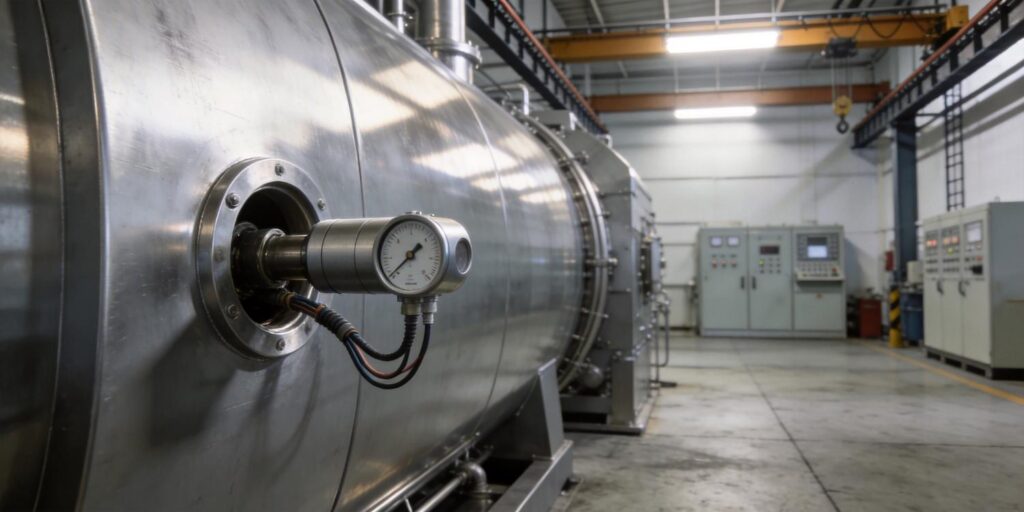
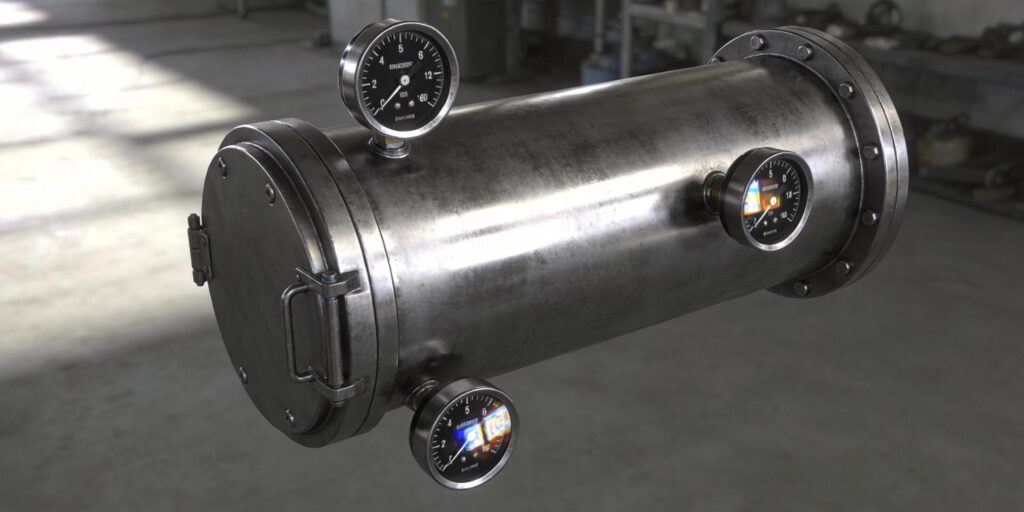
Vacuum gauge mounted on side of industrial chamber

Vacuum Gauge Placement: Does Position Affect Accuracy?

Conductance: Why Tube Length and Diameter Change What Your Gauge Reads In vacuum systems, gas does not flow instantly or uniformly. Conductance—the ease with which gas molecules move through a tube or orifice—creates a pressure drop between the chamber interior and any gauge mounted on an extension. In the molecular-flow regime (pressures below ~10⁻³ Torr,

Vacuum Gauge Placement: Does Position Affect Accuracy? Read More »

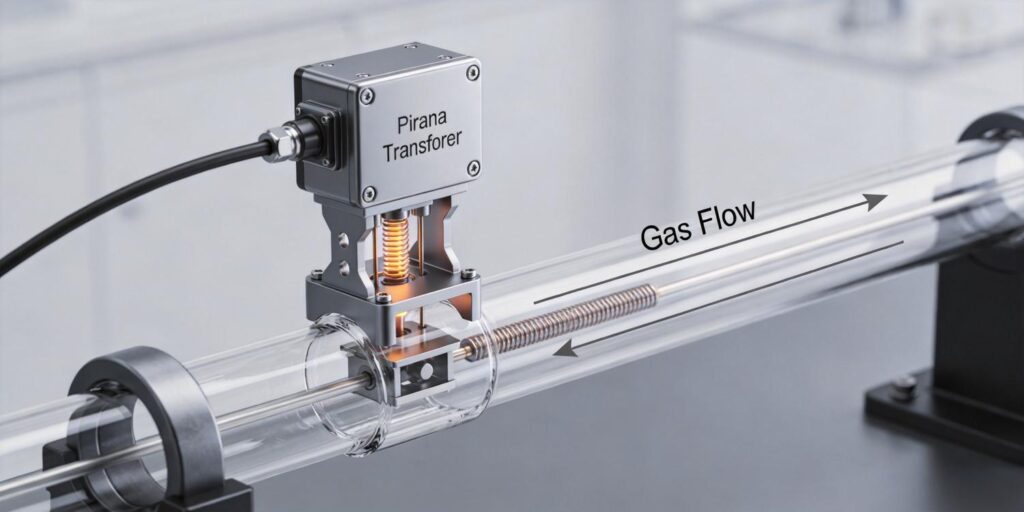
Pirani vacuum transmitter connected to vacuum system with gas lines

Understanding Gas Sensitivity in Pirani Vacuum Gauges

Thermal Conductivity Differences: Why Gas Type Matters Pirani vacuum gauges measure pressure indirectly through the thermal conductivity of the residual gas. In the VG-SP205 Pirani Vacuum Transmitter from Poseidon Scientific, a platinum filament is held at constant temperature by a precision feedback circuit. Gas molecules collide with the hot filament and transfer heat to the

Understanding Gas Sensitivity in Pirani Vacuum Gauges Read More »

Cold cathode vacuum gauge installed on PVD coating chamber

High Vacuum Monitoring in PVD Systems

PVD Vacuum Stages: From Roughing to Deposition Physical Vapor Deposition (PVD) processes—sputtering, evaporation, and cathodic arc—rely on controlled vacuum environments to achieve line-of-sight atom transport, minimize oxidation, and ensure dense, adherent films. Each stage imposes distinct vacuum demands that directly affect coating quality, deposition rate, and system uptime. The typical PVD cycle includes: Load-lock and

High Vacuum Monitoring in PVD Systems Read More »

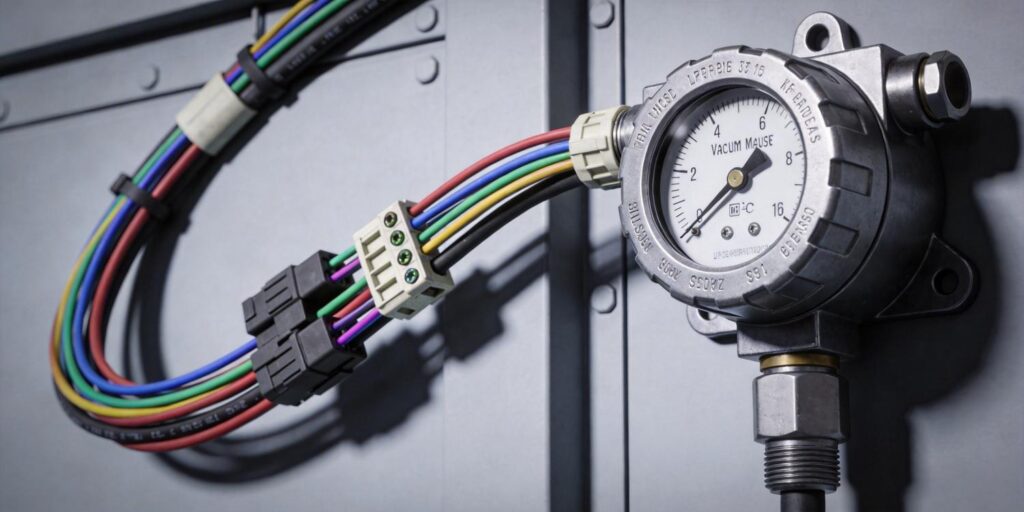
Industrial vacuum transmitter wiring close-up

Common Wiring Mistakes in Vacuum Gauge Installation

Incorrect Polarity: The Most Common and Costly Mistake Connecting 24 V DC power with reversed polarity is the single most frequent wiring error when installing vacuum gauges in research labs, semiconductor tools, or vacuum heat-treatment systems. Both the VG-SP205 Pirani Vacuum Transmitter and VG-SM225 Cold Cathode Vacuum Gauge from Poseidon Scientific incorporate internal reverse-polarity protection

Common Wiring Mistakes in Vacuum Gauge Installation Read More »

Pirani vacuum transmitter installed in laboratory vacuum experiment

How to Choose a Vacuum Gauge for Research Laboratories

Lab Vacuum Requirements: Understanding the Research Environment Research laboratories in universities, national labs, and R&D centers demand vacuum systems that deliver repeatable, contamination-free performance without the high capital budgets or long lead times of industrial production tools. Typical applications include mass spectrometers (source and analyzer chambers), scanning electron microscopes (SEM column and sample stage), vacuum

How to Choose a Vacuum Gauge for Research Laboratories Read More »

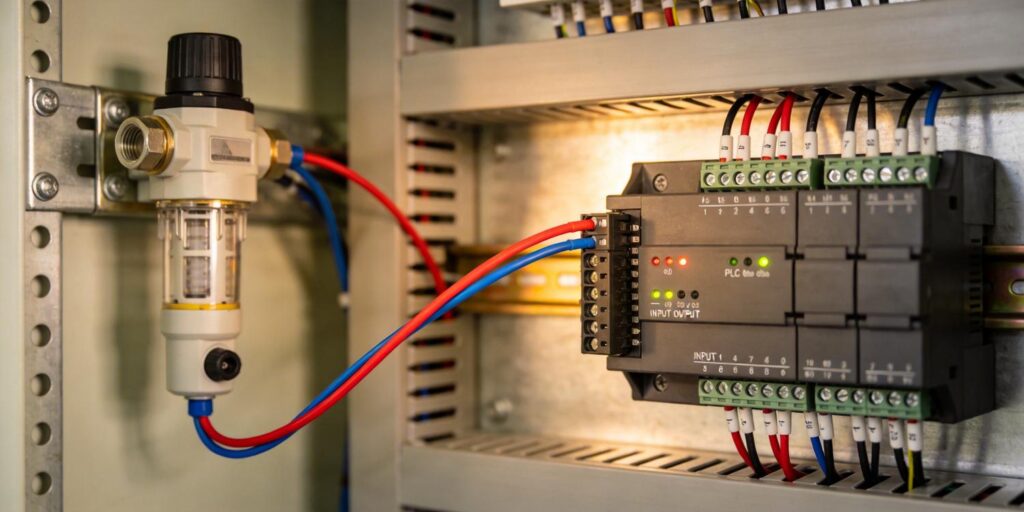
Vacuum transmitter wired to PLC inside industrial control cabinet

Vacuum Gauge Signal Integration with PLC Systems

Output Signal Types Available on Poseidon Vacuum Gauges Modern PLC-based automation systems require vacuum gauges that deliver clean, reliable signals without custom converters or excessive integration effort. The VG-SP205 Pirani Vacuum Transmitter and VG-SM225 Cold Cathode Vacuum Gauge from Poseidon Scientific are engineered for direct compatibility with industrial control architectures. Both models provide two primary

Vacuum Gauge Signal Integration with PLC Systems Read More »

Cold cathode vacuum gauge mounted on industrial chamber

How Cold Cathode Gauges Handle Contamination

Ionization Principle Behind Cold Cathode Gauges Cold cathode vacuum gauges, such as the Poseidon Scientific VG-SM225 Cold Cathode Vacuum Transmitter, operate on the Penning discharge principle—also known as a crossed-field or magnetron discharge. A permanent NdFeB magnet generates an axial field of approximately 100 Gauss while a high negative voltage (startup at –2500 V, steady-state

How Cold Cathode Gauges Handle Contamination Read More »

Multiple vacuum gauges installed on semiconductor processing chamber

Best Vacuum Gauge Setup for Semiconductor Equipment

Semiconductor Vacuum Levels: Why Precision Matters Semiconductor fabrication operates across an exceptionally wide vacuum spectrum, from atmospheric pressure during wafer loading to ultra-clean high-vacuum environments during critical deposition and etch steps. Typical process pressures include: Load-lock and transfer chambers: 1–1000 mbar (rough vacuum for fast cycling) Physical vapor deposition (PVD) and chemical vapor deposition (CVD):

Best Vacuum Gauge Setup for Semiconductor Equipment Read More »

Pirani vacuum transmitter installed on laboratory vacuum pipeline

Understanding Pressure Drift in Pirani Gauges

Pirani Thermal Conductivity Principle Pirani vacuum gauges measure pressure by exploiting the thermal conductivity of residual gas molecules. In the VG-SP205 Pirani Vacuum Transmitter from Poseidon Scientific, a thin platinum filament is resistively heated and maintained at constant temperature by a precision feedback circuit. As gas pressure changes, the rate at which heat is conducted

Understanding Pressure Drift in Pirani Gauges Read More »

Shopping Cart
Poseidon Scientific
Privacy Overview

This website uses cookies so that we can provide you with the best user experience possible. Cookie information is stored in your browser and performs functions such as recognising you when you return to our website and helping our team to understand which sections of the website you find most interesting and useful.