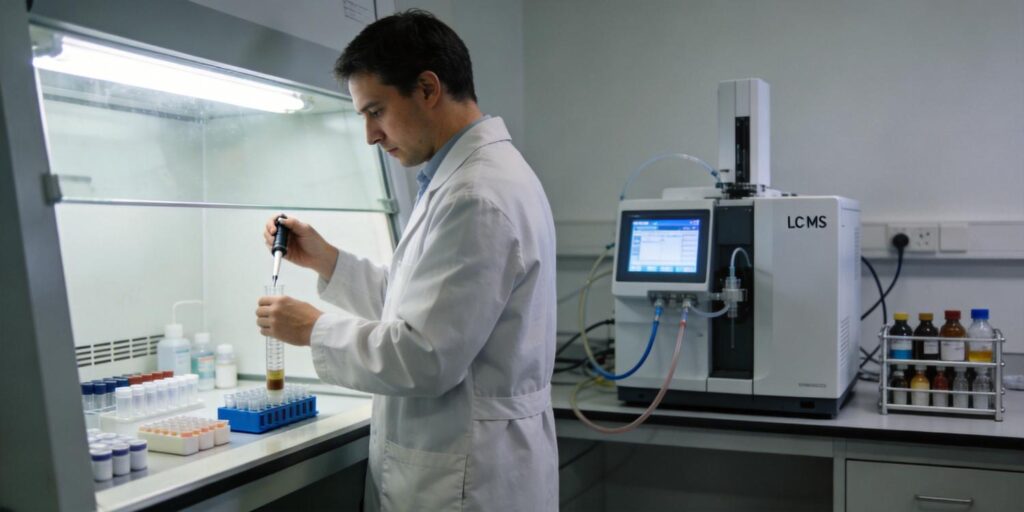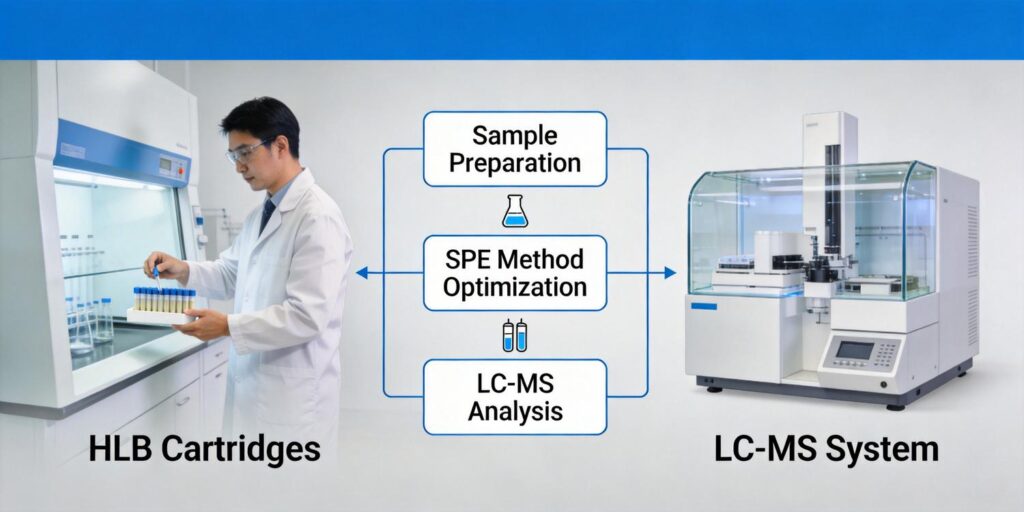
Overview of Multi-Residue Pharmaceutical Screening Requirements
Multi-residue pharmaceutical analysis represents one of the most challenging frontiers in analytical chemistry, requiring simultaneous extraction and quantification of diverse pharmaceutical compounds from complex biological and environmental matrices. The fundamental requirement for such screening methods is comprehensive coverage of analytes spanning broad chemical diversity while maintaining analytical sensitivity and specificity. As noted in pharmaceutical analysis literature, these methods must address compounds with varying pharmacological activities, from anti-inflammatory drugs to antimycotic agents, often present in complex formulations containing excipients, emulsifying agents, and preservatives.
The primary objectives of multi-residue screening include: comprehensive analyte coverage, minimal matrix interference, high recovery rates, reproducibility across laboratories, and compatibility with modern analytical instrumentation. These requirements are particularly critical in pharmaceutical quality control, environmental monitoring, and forensic toxicology applications where simultaneous detection of multiple drug classes is essential.
Chemical Diversity of Analytes (logP 0–5, pKa 3–10)
The chemical diversity encountered in multi-residue pharmaceutical screening presents significant challenges for method development. Analytes typically span a wide range of physicochemical properties, with logP values ranging from 0 to 5 and pKa values between 3 and 10. This diversity encompasses acidic drugs like ketoprofen (pKa=5.9) and ibuprofen (pKa=5.2), basic compounds such as promethazine and chlorhexidine, and neutral drugs including hydrocortisone acetate and piroxicam.
As demonstrated in pharmaceutical cream analysis studies, the hydrophobic and acidic-basic properties of drugs constitute critical elements for determining the appropriate extraction methodology. The presence of multiple functional groups within single molecules further complicates extraction strategy development. For instance, gabapentin contains an amine group (cationic), a carboxylic acid (anionic), and a ring structure requiring reversed-phase extraction capabilities—a perfect example of the complex interactions that must be considered in method development.
Selecting HLB Sorbent for Broad Retention Capability
Hydrophilic-Lipophilic Balanced (HLB) sorbents represent the gold standard for multi-residue pharmaceutical analysis due to their unique copolymer structure that provides simultaneous retention of acidic, basic, and neutral compounds. The water-wettable nature of HLB sorbents, stable across pH 0–14, eliminates the need for conditioning and equilibration steps required by traditional silica-based sorbents, allowing direct loading of aqueous samples without sacrificing recovery.
Research indicates that HLB sorbents offer superior capacity for polar compounds compared to traditional C18 materials, making them particularly suitable for pharmaceutical compounds with logP values at the lower end of the spectrum. The balanced hydrophilic-lipophilic properties ensure retention of both polar and non-polar analytes, while the absence of silanol interactions minimizes secondary interactions that can complicate elution and recovery.
Conditioning Protocol (1 mL Methanol → 1 mL Water)
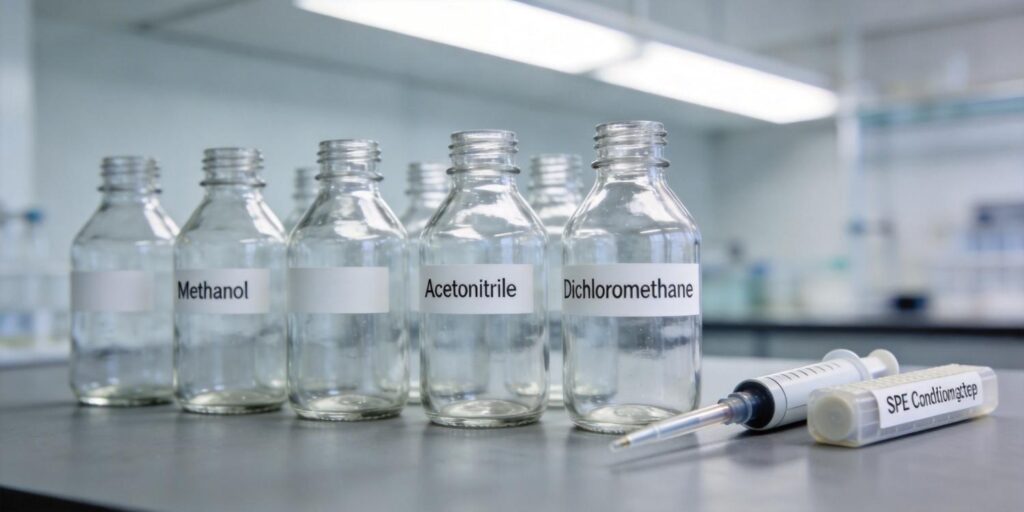
Proper conditioning of HLB sorbents is essential for optimal performance, though the protocol is significantly simplified compared to traditional SPE materials. The standard conditioning sequence involves sequential application of 1 mL methanol followed by 1 mL water or aqueous buffer. This two-step process serves multiple purposes: methanol solvates the polymeric structure and removes any residual manufacturing contaminants, while water establishes the appropriate aqueous environment for sample loading.
It’s crucial to maintain the sorbent bed wet throughout the conditioning and sample loading process. The water-wettable nature of HLB sorbents means they do not require the extensive conditioning needed for silica-based materials, but proper wetting ensures consistent flow characteristics and prevents channeling that could compromise recovery and reproducibility.
Sample Dilution Strategy for Plasma and Wastewater Matrices
Matrix-specific dilution strategies are critical for successful multi-residue extraction. For plasma samples, dilution with appropriate buffer (typically 1:1 to 1:4) serves to reduce protein binding and viscosity while adjusting pH for optimal analyte retention. Studies have shown that starting pH significantly affects recovery of polar acidic compounds; pH 2.2 conditions minimize ionization of acidic drugs, improving retention on the sorbent.
Wastewater matrices present different challenges, often containing high levels of dissolved organic matter, salts, and particulate matter. Dilution with acidified water (pH 2-3) helps protonate acidic analytes while reducing matrix effects. For both matrices, maintaining appropriate ionic strength through buffer addition can improve retention of polar compounds while minimizing non-specific interactions with matrix components.
Wash Solvent Optimization: Water Followed by 5–10% Methanol
Wash optimization represents a critical balance between removing matrix interferences and retaining target analytes. The standard HLB wash protocol typically involves sequential washing with water followed by 5–10% methanol in water. Water washing removes salts, sugars, and other highly polar matrix components, while the low-percentage methanol wash eliminates moderately polar interferences without eluting target analytes.
Research indicates that wash volumes should be minimized for polar acidic compounds to prevent premature elution. For comprehensive screening methods, 0.5-1 mL wash volumes are typically sufficient, with careful monitoring of pH effects. The wash step’s effectiveness can be monitored using UV spectroscopy, as demonstrated in pharmaceutical cream analyses where derivative UV spectroscopy proved valuable for evaluating SPE method performance.
Elution Solvents: Methanol or Methanol/Acetonitrile Mixtures
Elution solvent selection depends on analyte polarity and the need for LC-MS/MS compatibility. Methanol provides strong elution strength for most pharmaceutical compounds while maintaining compatibility with reversed-phase LC systems. For more comprehensive elution of diverse analytes, methanol/acetonitrile mixtures (typically 90:10 or 80:20) offer enhanced elution of both polar and non-polar compounds.
Studies have shown that pure organic solvents without modifiers or buffer ions are desirable for LC-MS/MS applications to minimize ion suppression and source contamination. The use of 2-3 mL elution volumes in two aliquots typically provides quantitative recovery while minimizing final eluate volume for subsequent concentration steps. For mixed-mode applications, sequential elution with different solvent systems may be employed to fractionate analytes based on their chemical properties.
LC-MS/MS Compatibility and Evaporation Steps
HLB SPE extracts demonstrate excellent compatibility with LC-MS/MS systems, particularly when elution is performed with pure organic solvents. The absence of buffer salts and ion-pairing reagents in the final eluate minimizes ion suppression and source contamination, critical factors for maintaining MS sensitivity and stability.
Evaporation and reconstitution steps require careful optimization to prevent analyte loss, particularly for volatile or thermally labile compounds. Nitrogen evaporation at 30-40°C with gentle heating typically provides efficient solvent removal while maintaining analyte integrity. Reconstitution in initial mobile phase composition (typically 5-10% organic in water) ensures compatibility with LC injection and minimizes solvent effects on chromatography.
For high-throughput applications, 96-well plate formats with reduced elution volumes (50-200 μL) eliminate the need for evaporation, significantly improving workflow efficiency while maintaining sensitivity through sample concentration.
Method Validation Metrics (Recovery >80%, RSD <10%)
Robust method validation is essential for multi-residue pharmaceutical screening. Acceptable performance criteria typically include recovery >80% across the analytical range with relative standard deviations (RSD) <10% for precision studies. These metrics ensure the method's suitability for quantitative analysis while accounting for the inherent variability in complex matrix extractions.
Validation should encompass linearity across relevant concentration ranges (typically 1-100 ng/mL for environmental samples, higher for pharmaceutical formulations), specificity against matrix interferences, and stability under storage and processing conditions. As noted in SPE methodology literature, a robust method must yield near-quantitative recovery over the entire desired concentration range with acceptable precision both within and between laboratories.
Matrix effects evaluation using post-extraction addition and comparison with neat standards is particularly important for LC-MS/MS applications, where ion suppression or enhancement can significantly impact quantitative accuracy. The use of stable isotope-labeled internal standards provides the most reliable compensation for extraction variability and matrix effects.
Practical Considerations for Method Implementation
Successful implementation of HLB-based multi-residue methods requires attention to several practical considerations. Sorbent capacity should be matched to expected analyte concentrations and matrix load, with typical loading capacities of 1-5% of sorbent mass. Flow rates during sample loading and elution should be controlled to ensure adequate contact time while maintaining reasonable processing times.
For high-throughput applications, 96-well SPE plates offer significant advantages in automation compatibility and processing efficiency. The development of on-line SPE-LC-MS/MS systems has further enhanced throughput capabilities, with some systems achieving 320-960 samples per day while maintaining excellent sensitivity through reduced sample handling and minimized analyte loss.
Future Directions and Emerging Technologies
The field of multi-residue pharmaceutical analysis continues to evolve with advances in sorbent technology and instrumentation. Newer HLB formulations with enhanced capacity for polar compounds and improved matrix removal capabilities are expanding application ranges. The integration of SPE with advanced detection technologies, including high-resolution mass spectrometry and multidimensional chromatography, promises even greater analytical capabilities for complex pharmaceutical screening applications.
As regulatory requirements for pharmaceutical monitoring continue to expand, particularly in environmental and food safety contexts, the development of robust, comprehensive screening methods using HLB SPE technology will remain a critical focus for analytical chemists and method development specialists.