Introduction
The presence of pharmaceuticals in municipal wastewater has become a major environmental concern. These compounds, which include antibiotics, analgesics, hormones, and beta-blockers, enter sewage systems through human excretion and improper disposal. Even at trace levels, they can disrupt aquatic ecosystems and contribute to antibiotic resistance. Effective sample preparation is essential for monitoring these contaminants, and HLB (Hydrophilic-Lipophilic Balanced) solid-phase extraction (SPE) has emerged as a gold standard for multi-class pharmaceutical analysis due to its broad retention capabilities.
Occurrence of Pharmaceuticals in Municipal Wastewater
Municipal wastewater is a complex matrix containing hundreds of pharmaceutical residues from both human and veterinary sources. Common classes include non-steroidal anti-inflammatory drugs (NSAIDs) like ibuprofen and diclofenac, antibiotics such as sulfamethoxazole and ciprofloxacin, and cardiovascular drugs like atenolol and metoprolol. Concentrations range from ng/L to µg/L, requiring highly sensitive and selective analytical methods. The diversity of physicochemical properties—from polar acids to neutral bases—demands a versatile sorbent capable of retaining a wide polarity range.
Sample Collection and Filtration
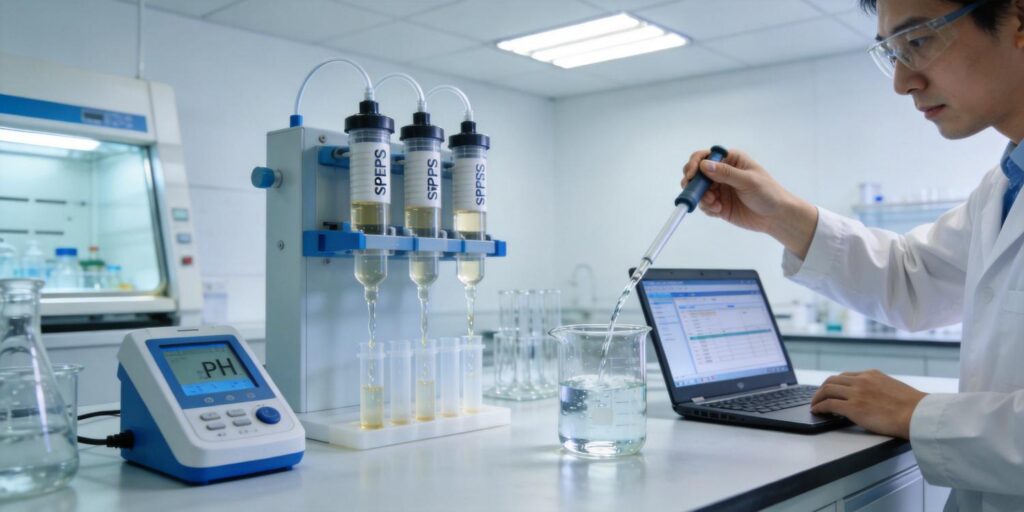
Composite 24-hour samples are typically collected from wastewater treatment plant influents and effluents using refrigerated autosamplers. Immediately after collection, samples are filtered through 0.45 µm or 0.7 µm glass fiber filters to remove suspended solids and microorganisms that could clog SPE cartridges or degrade target analytes. Filtration is often performed under vacuum, and the filtrate is adjusted to pH 2–3 with hydrochloric acid to suppress ionization of acidic compounds and enhance retention on HLB sorbents. For basic analytes, neutral pH (6–7) is sometimes preferred. Sample preservation at 4°C in amber glass bottles is recommended to minimize degradation.
Why HLB Sorbent Is Ideal for Multi-Class Cleanup
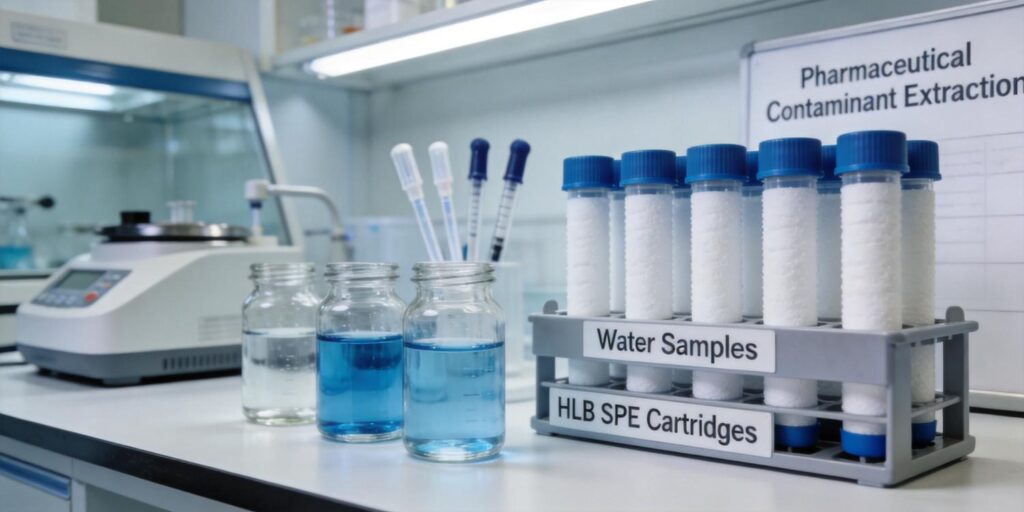
HLB sorbent is a co-polymer of HLB SPE cartridges offer superior retention across a wide pH range, typically from pH 0 to 14. This versatility allows extraction of both acidic and basic pharmaceuticals without the need for ion-pairing reagents. The high specific surface area (≈600 m²/g) and balanced hydrophilic and lipophilic interactions ensure high recoveries for a broad spectrum of compounds, as demonstrated in numerous peer-reviewed studies.
Conditioning for High Recovery
Proper conditioning of the HLB cartridge is critical to activate the sorbent and achieve reproducible results. The protocol typically involves: (1) 5 mL of methanol to wet the sorbent and expand the polymer chains, (2) 5 mL of deionized water to remove excess methanol and prepare the column for aqueous sample loading. It is essential to avoid letting the column dry out between conditioning and sample loading, as this can cause channeling and reduce recoveries. Vacuum or positive pressure should be used to maintain a steady flow rate of 1–2 mL/min.
Large-Volume Sample Loading Strategies
Wastewater samples often require loading large volumes (100–1000 mL) to achieve the detection limits needed for trace pharmaceutical analysis. HLB cartridges, especially those with higher sorbent masses (e.g., 200 mg or 500 mg), can handle volumes up to 1 L without breakthrough for many compounds. To speed up processing, a high-flow vacuum manifold can be used, but care must be taken to maintain a flow rate below 10 mL/min per cartridge. For extremely dirty matrixes, a pre-filter or inline filtration may be necessary to prevent clogging. Some methods incorporate a clean-up step where the sample is loaded at pH 2 and then re-adjusted to neutral for elution, reducing interfering humic and fulvic acids.
Washing Steps to Remove Organic Matter
After sample loading, a washing step removes co-extracted organic matter and salts. A typical wash uses 5 mL of 5% methanol in water (v/v), which reduces matrix effects without eluting target analytes. For more rigorous cleanup, a wash with 2% formic acid in water can be used to remove acidic interferences, followed by a neutral water wash. The drying step is also crucial: applying full vacuum for 5–10 minutes removes residual water, which is incompatible with subsequent elution with organic solvents.
Elution and Solvent Evaporation
Target pharmaceuticals are eluted with a solvent that disrupts the sorbent-analyte interactions. A mixture of methanol and acetonitrile (1:1, v/v) is commonly used, often with 0.1% formic acid to aid elution of acidic compounds. Typically, 2 × 3 mL of elution solvent is passed through the cartridge, collecting the eluate in a conical glass tube. The eluate is then evaporated to dryness under a gentle stream of nitrogen at 40°C. For LC-MS/MS analysis, the residue is reconstituted in 200–500 µL of mobile phase (e.g., water:methanol, 9:1 v/v) and transferred to a sample vial. Recovery values for most analytes range from 70% to 120%, with RSD below 15%.
LC-MS/MS Monitoring
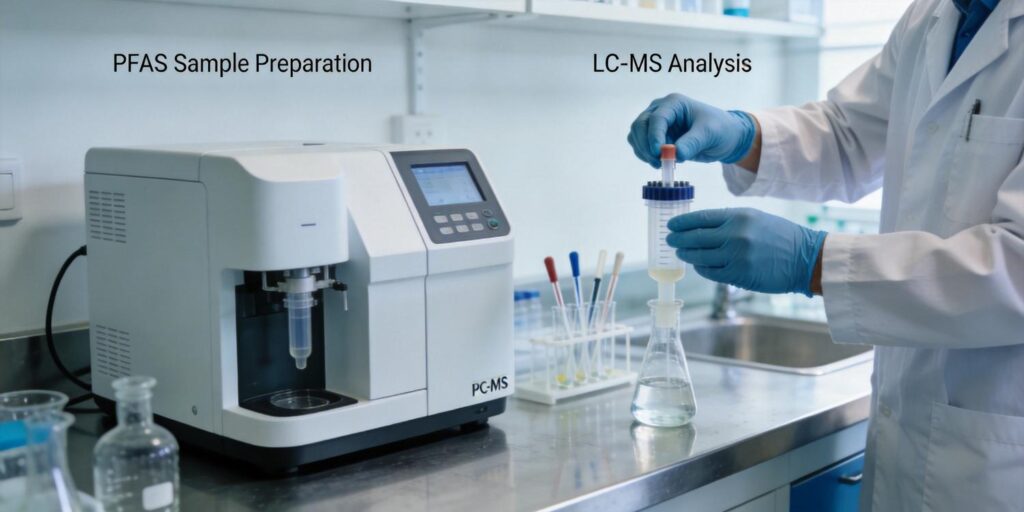
Reconstituted extracts are analyzed using liquid chromatography coupled with tandem mass spectrometry (LC-MS/MS). A reversed-phase C18 column (e.g., 2.1 × 100 mm, 1.7 µm) with a gradient of 0.1% formic acid in water and acetonitrile provides adequate separation. Electrospray ionization (ESI) in both positive and negative modes is used, with multiple reaction monitoring (MRM) for quantification and confirmation. Method detection limits (MDLs) as low as 0.5 ng/L are achievable for many pharmaceuticals after the HLB SPE enrichment factor of 200–1000×.
Conclusion
HLB SPE is a robust, reliable approach for multi-class pharmaceutical analysis in wastewater. By following optimized conditioning, loading, washing, and elution protocols, analysts can achieve high recoveries and clean extracts suitable for LC-MS/MS. For those looking to implement or replace SPE cartridges in their workflow, Poseidon Scientific’s HLB SPE cartridges provide consistent quality and performance. Additionally, our 96-well SPE plates offer high-throughput options for large-scale monitoring programs.