Target Antibiotic Classes: Understanding Polarity and pKa Ranges
Developing an effective SPE method for trace antibiotic detection in wastewater begins with understanding the physicochemical properties of target compounds. The three major antibiotic classes—sulfonamides, fluoroquinolones, and macrolides—exhibit diverse polarity and ionization characteristics that directly influence SPE retention and elution strategies.
Sulfonamides
Sulfonamide antibiotics typically contain an aromatic amine group and a sulfonamide moiety, giving them amphoteric properties. Their pKa values range from 5.5 to 7.5 for the aromatic amine and 1.5 to 2.5 for the sulfonamide group. This dual ionization behavior means sulfonamides can exist as cations, anions, or zwitterions depending on sample pH. Their log P values generally range from -0.1 to 1.5, indicating moderate hydrophobicity.
Fluoroquinolones
Fluoroquinolones feature a carboxylic acid group and a basic amine, creating zwitterionic character. The carboxylic acid has pKa values around 6.0-6.5, while the amine group exhibits pKa values of 8.0-9.0. This amphoteric nature requires careful pH control during SPE. Their log P values typically range from -1.0 to 1.0, making them relatively polar compounds that challenge traditional reversed-phase extraction methods.
Macrolides
Macrolide antibiotics are generally basic compounds with pKa values around 8.5-9.0 for their dimethylamino groups. They exhibit moderate hydrophobicity with log P values ranging from 2.0 to 4.0. Their large molecular structures and basic character make them suitable for mixed-mode SPE approaches combining hydrophobic and cation-exchange interactions.
Sample Collection and Preservation: Critical First Steps
Proper sample handling is essential for accurate antibiotic detection. Wastewater samples should be collected in amber glass bottles to prevent photodegradation of light-sensitive antibiotics like fluoroquinolones. Immediate cooling to 4°C and transport on ice minimizes microbial degradation and chemical transformations. For long-term storage, samples should be frozen at -20°C, though some antibiotics may degrade even under frozen conditions, necessitating analysis within 24-48 hours.
Pre-Filtration: Removing Matrix Interferences
Wastewater contains suspended solids that can clog SPE cartridges and interfere with analysis. Pre-filtration through 0.45 μm membrane filters effectively removes particulate matter while allowing dissolved antibiotics to pass through. Glass fiber filters are preferred over cellulose membranes to minimize adsorption losses. The filtration step should be performed immediately before SPE to prevent analyte adsorption to container walls or filter media.
SPE Cartridge Selection: Why HLB is Ideal for Antibiotics
Hydrophilic-Lipophilic Balanced (HLB) SPE cartridges represent the optimal choice for broad-spectrum antibiotic extraction from wastewater. Unlike traditional C18 phases that may exhibit poor retention for polar compounds, HLB sorbents contain both hydrophilic N-vinylpyrrolidone and lipophilic divinylbenzene monomers, providing dual retention mechanisms.
Advantages of HLB for Antibiotic Extraction
- Wide Polarity Range: HLB effectively retains compounds with log P values from -2 to 10, covering the entire polarity spectrum of target antibiotics
- pH Independence: Retention remains stable across pH 2-12, crucial for handling zwitterionic antibiotics
- High Capacity: Typically 10-15 mg/mL sorbent bed, allowing processing of large sample volumes
- Wettability: HLB sorbents remain wetted even after drying, preventing channeling and ensuring reproducible recovery
For laboratories requiring alternative formats, 96-well SPE plates offer high-throughput capabilities for large sample batches.
Cartridge Conditioning: Establishing Proper Sorbent Environment
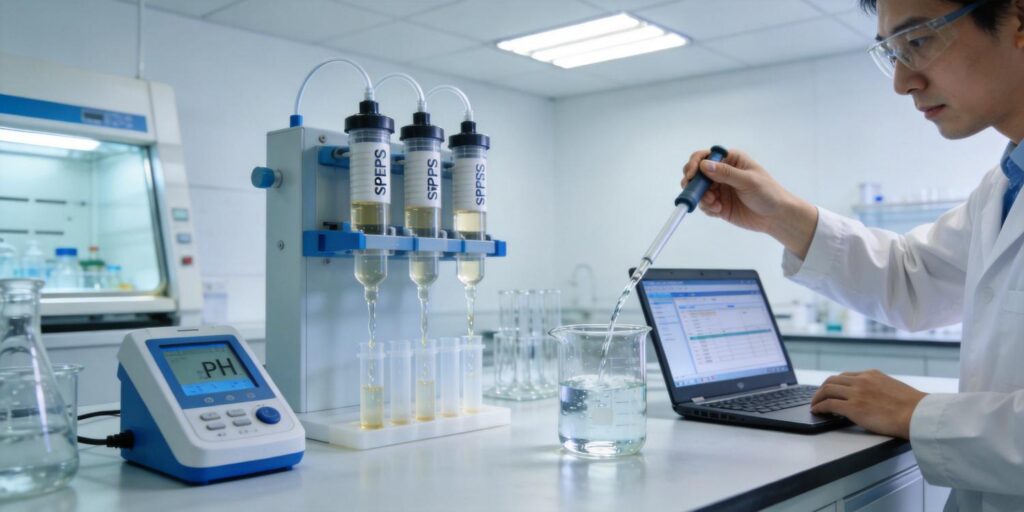
Proper conditioning activates the HLB sorbent and creates an optimal environment for analyte retention. The standard conditioning sequence involves:
- Methanol (3-5 mL): Wets the hydrophobic domains and removes any manufacturing residues
- Ultrapure Water (3-5 mL): Creates a water-rich layer compatible with aqueous samples
Critical note: The sorbent bed should never be allowed to dry between conditioning and sample loading. A small volume of water (approximately 1 mm above the bed) should remain to prevent air channeling.
Sample Loading: Optimizing Flow Rate for Maximum Recovery
Loading 500 mL of filtered wastewater requires careful flow rate control. A vacuum pressure maintaining flow rates below 10 mL/min ensures adequate contact time between analytes and sorbent. Faster flow rates can lead to breakthrough, particularly for more polar antibiotics. For consistent results, consider using vacuum manifolds with adjustable pressure controls or positive pressure systems.
Wash Step: Removing Dissolved Organic Matter
Wastewater contains significant dissolved organic matter (DOM) that can co-extract with antibiotics and interfere with LC-MS/MS analysis. A wash with 5% methanol in water (5-10 mL) effectively removes hydrophilic interferences while retaining target antibiotics. The low organic content provides sufficient elution strength to remove DOM without displacing antibiotics, which typically require 20-40% organic for elution.
Elution: Maximizing Recovery with Acidified Methanol
Antibiotic elution from HLB cartridges requires sufficient organic strength and pH adjustment. Methanol with 0.1% formic acid (5-10 mL) provides optimal conditions:
- Methanol: Strong organic solvent disrupts hydrophobic interactions
- Formic Acid: Suppresses ionization of basic antibiotics (macrolides) and protonates carboxylic acids (fluoroquinolones), enhancing solubility in organic solvent
For particularly challenging matrices or when analyzing basic antibiotics exclusively, consider MCX (Mixed-mode Cation Exchange) cartridges for enhanced selectivity.
Sample Concentration and Reconstitution
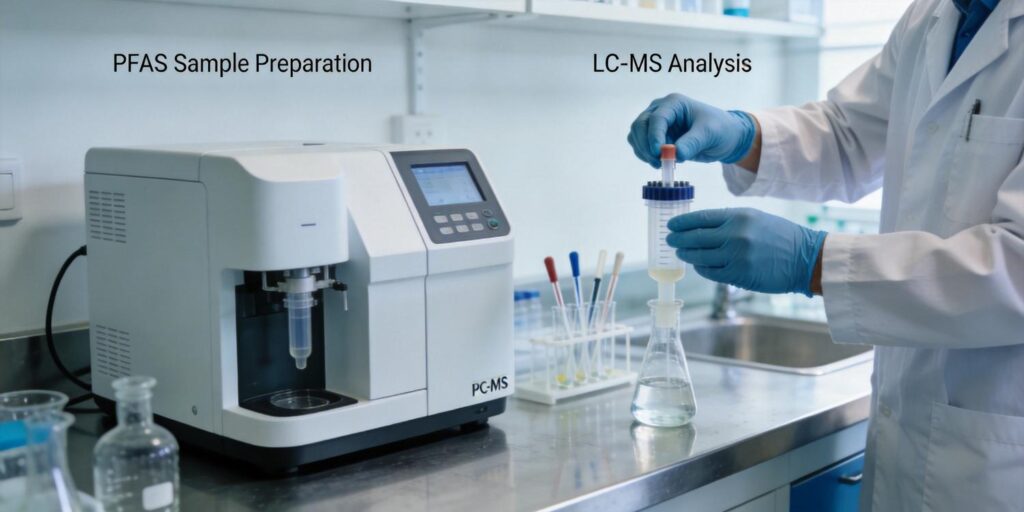
Following elution, the extract must be concentrated to achieve the necessary sensitivity for trace-level detection. Gentle evaporation under a stream of nitrogen at 30-40°C prevents thermal degradation of labile antibiotics. Reconstitution in 0.5-1.0 mL of initial mobile phase composition (typically 5-10% methanol in water with 0.1% formic acid) ensures compatibility with LC-MS/MS analysis.
Method Validation: Establishing Performance Criteria
Comprehensive method validation ensures reliable quantification of antibiotics at trace levels. Key validation parameters include:
Recovery Studies
Spike known concentrations of antibiotics into wastewater samples before and after extraction to determine method recovery. Acceptable recovery ranges from 70-110% for complex matrices like wastewater. Matrix effects should be evaluated by comparing calibration curves in solvent versus matrix-matched standards.
Limit of Quantification (LOQ)
The method should achieve LOQ values below 10 ng/L for regulatory compliance monitoring. This requires careful optimization of SPE parameters and LC-MS/MS conditions. Signal-to-noise ratios of 10:1 typically define the LOQ.
Precision and Accuracy
Intra-day and inter-day precision should demonstrate relative standard deviations below 15% at the LOQ and below 10% at higher concentrations. Accuracy, expressed as percent bias from nominal concentrations, should remain within ±20% at the LOQ and ±15% at higher levels.
Alternative SPE Approaches for Specific Applications
While HLB provides excellent general performance, specific antibiotic classes may benefit from alternative SPE chemistries:
MAX for Acidic Antibiotics
For methods focusing specifically on acidic antibiotics or requiring enhanced cleanup, MAX (Mixed-mode Anion Exchange) cartridges offer strong anion exchange functionality in addition to reversed-phase retention.
WCX for Basic Antibiotics
When analyzing primarily basic antibiotics like macrolides, WCX (Weak Cation Exchange) cartridges provide pH-dependent cation exchange capabilities that can enhance selectivity.
Conclusion: A Robust Framework for Antibiotic Monitoring
This SPE method development framework provides laboratories with a systematic approach to trace antibiotic detection in wastewater. The HLB-based method offers broad applicability across multiple antibiotic classes while maintaining the sensitivity required for environmental monitoring. Regular method verification with quality control samples and participation in proficiency testing programs ensures ongoing method reliability.
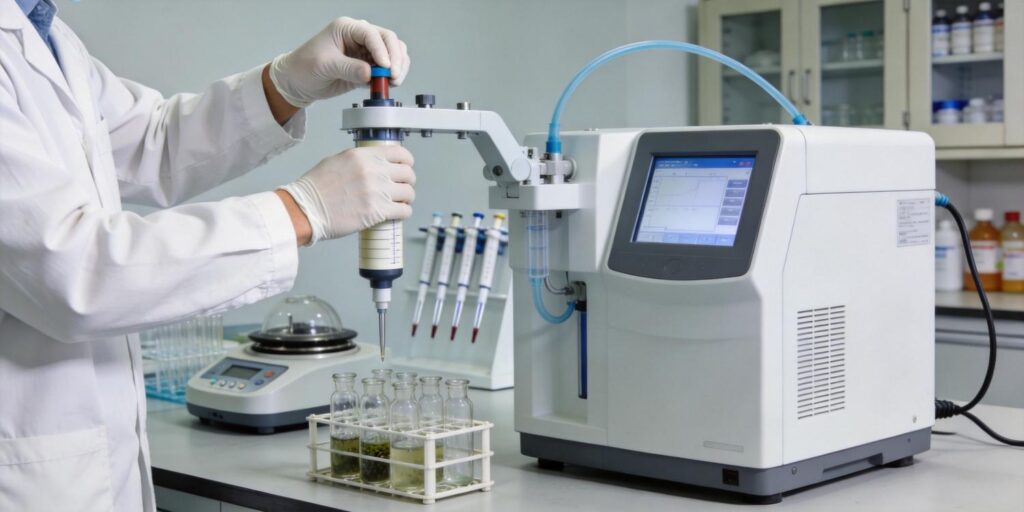
For laboratories processing large sample volumes or requiring high throughput, automated SPE systems can significantly improve efficiency while maintaining method performance. The fundamental principles outlined here—proper sample handling, optimized SPE conditions, and comprehensive validation—apply equally to manual and automated implementations.