Vacuum Gauge

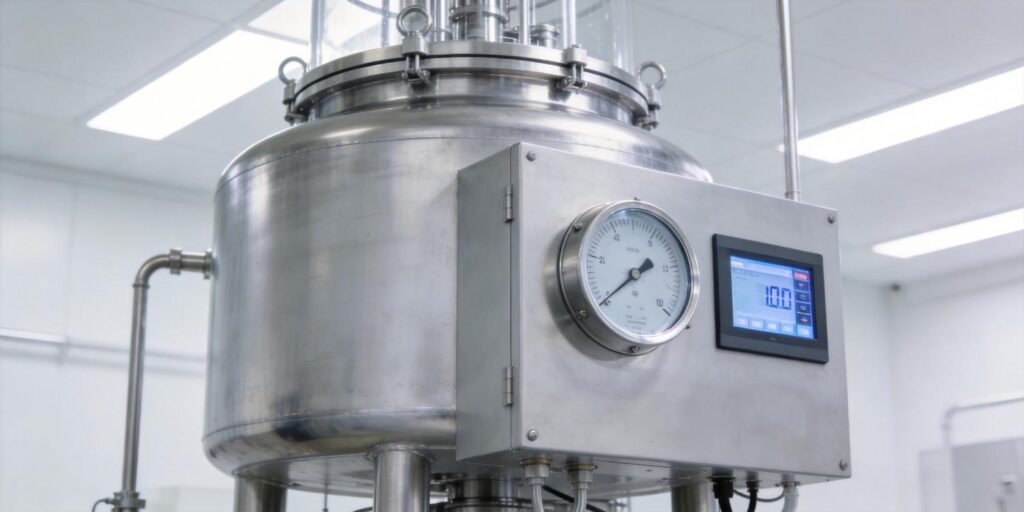
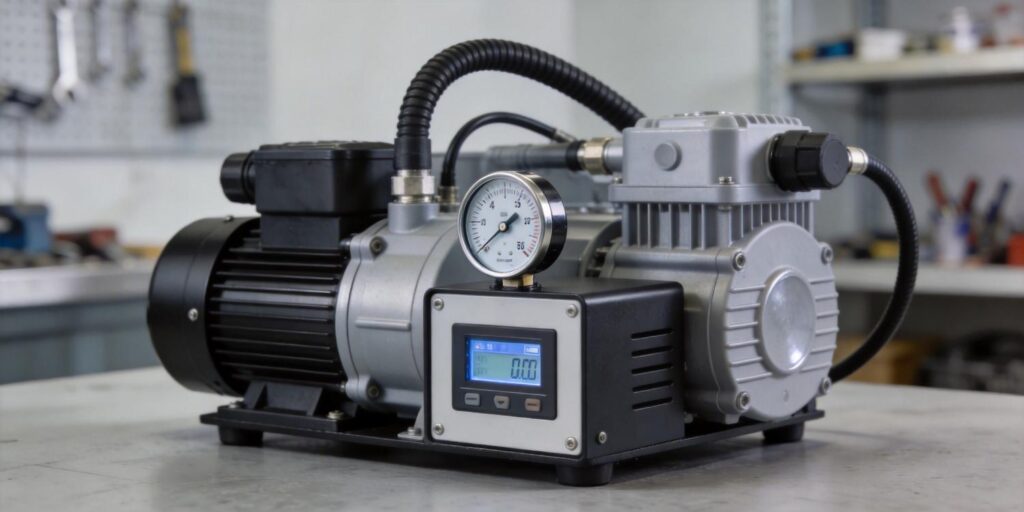
Pirani vacuum transmitter installed in laboratory vacuum experiment

How to Choose a Vacuum Gauge for Research Laboratories

Lab Vacuum Requirements: Understanding the Research Environment Research laboratories in universities, national labs, and R&D centers demand vacuum systems that deliver repeatable, contamination-free performance without the high capital budgets or long lead times of industrial production tools. Typical applications include mass spectrometers (source and analyzer chambers), scanning electron microscopes (SEM column and sample stage), vacuum […]

How to Choose a Vacuum Gauge for Research Laboratories Read More »

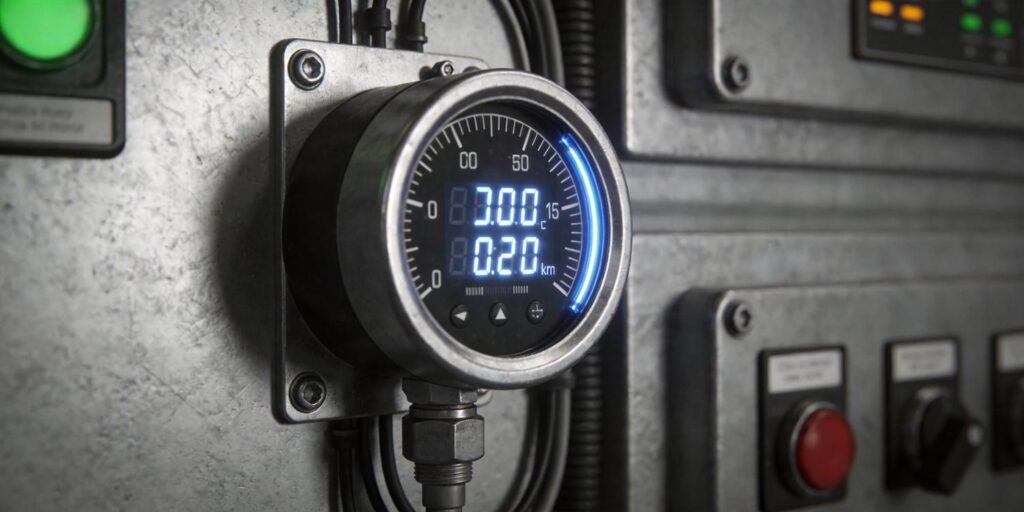
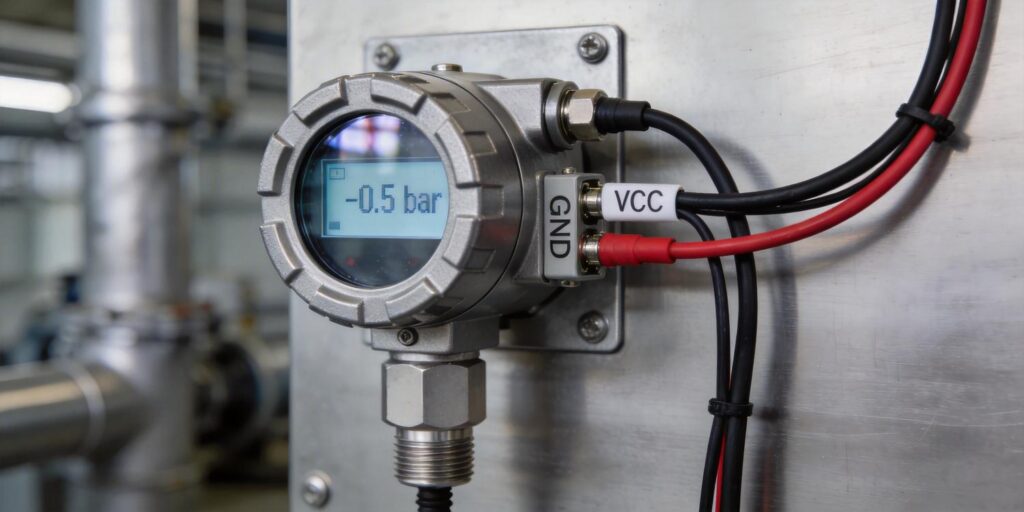
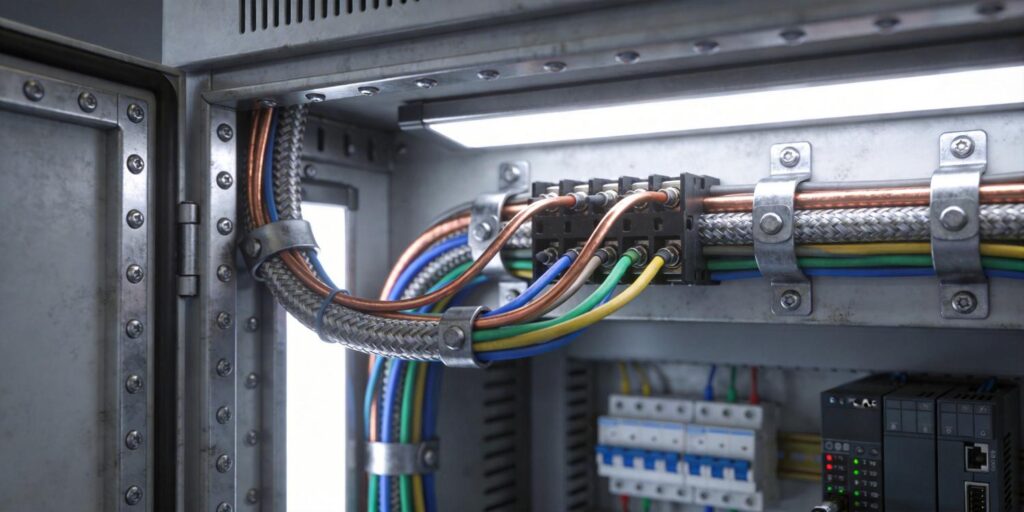
Vacuum transmitter wired to PLC inside industrial control cabinet

Vacuum Gauge Signal Integration with PLC Systems

Output Signal Types Available on Poseidon Vacuum Gauges Modern PLC-based automation systems require vacuum gauges that deliver clean, reliable signals without custom converters or excessive integration effort. The VG-SP205 Pirani Vacuum Transmitter and VG-SM225 Cold Cathode Vacuum Gauge from Poseidon Scientific are engineered for direct compatibility with industrial control architectures. Both models provide two primary

Vacuum Gauge Signal Integration with PLC Systems Read More »

Cold cathode vacuum gauge mounted on industrial chamber

How Cold Cathode Gauges Handle Contamination

Ionization Principle Behind Cold Cathode Gauges Cold cathode vacuum gauges, such as the Poseidon Scientific VG-SM225 Cold Cathode Vacuum Transmitter, operate on the Penning discharge principle—also known as a crossed-field or magnetron discharge. A permanent NdFeB magnet generates an axial field of approximately 100 Gauss while a high negative voltage (startup at –2500 V, steady-state

How Cold Cathode Gauges Handle Contamination Read More »

Multiple vacuum gauges installed on semiconductor processing chamber

Best Vacuum Gauge Setup for Semiconductor Equipment

Semiconductor Vacuum Levels: Why Precision Matters Semiconductor fabrication operates across an exceptionally wide vacuum spectrum, from atmospheric pressure during wafer loading to ultra-clean high-vacuum environments during critical deposition and etch steps. Typical process pressures include: Load-lock and transfer chambers: 1–1000 mbar (rough vacuum for fast cycling) Physical vapor deposition (PVD) and chemical vapor deposition (CVD):

Best Vacuum Gauge Setup for Semiconductor Equipment Read More »

Pirani vacuum transmitter installed on laboratory vacuum pipeline

Understanding Pressure Drift in Pirani Gauges

Pirani Thermal Conductivity Principle Pirani vacuum gauges measure pressure by exploiting the thermal conductivity of residual gas molecules. In the VG-SP205 Pirani Vacuum Transmitter from Poseidon Scientific, a thin platinum filament is resistively heated and maintained at constant temperature by a precision feedback circuit. As gas pressure changes, the rate at which heat is conducted

Understanding Pressure Drift in Pirani Gauges Read More »

Vacuum gauge installed on coating chamber for stable monitoring

How to Improve Vacuum Measurement Stability in Coating Systems

Common Instability Causes in Vacuum Measurement for Coating Systems Coating processes such as PVD, CVD, and ALD demand vacuum stability within tight tolerances—often ±0.1 mbar or better during critical deposition stages—to ensure uniform film thickness, adhesion, and defect-free layers. Even minor drift in pressure readings can trigger process alarms, scrap batches, or inconsistent product quality.

How to Improve Vacuum Measurement Stability in Coating Systems Read More »

Cold cathode and Pirani vacuum gauges mounted on industrial vacuum chamber

Cold Cathode vs Pirani Gauge: When to Use Each in Real Industrial Conditions

Overview of Cold Cathode and Pirani Principles Engineers working with vacuum systems in mass spectrometry, vacuum heat treatment, battery manufacturing, or scanning electron microscopy quickly discover that no single gauge covers every pressure decade reliably. The two workhorse technologies—Pirani (thermal conductivity) and cold cathode (Penning discharge)—operate on entirely different physical principles, each excelling where the

Cold Cathode vs Pirani Gauge: When to Use Each in Real Industrial Conditions Read More »

Engineer reviewing vacuum gauge specifications beside system blueprint

Vacuum Gauge Selection Checklist for Industrial Engineers

Define Application Parameters Selecting the right vacuum gauge begins with a clear definition of your application parameters. Industrial engineers and procurement teams who skip this step often end up with oversized, overpriced, or incompatible instruments that increase downtime and total cost of ownership. Start by documenting the end-use environment, process flow, and performance expectations. Key

Vacuum Gauge Selection Checklist for Industrial Engineers Read More »

Cold cathode vacuum gauge with magnetic warning sign

Understanding Magnetic Field Influence on Cold Cathode Gauges

Magnetic Field Role in Ionization Cold cathode vacuum gauges, such as the VG-SM225 Cold Cathode Vacuum Transmitter from Poseidon Scientific, rely on a controlled magnetic field to enable reliable pressure measurement in the high-vacuum range (typically 10⁻³ to 10⁻⁷ Torr). The operating principle is the Penning discharge—also known as a crossed-field or magnetron discharge—where a

Understanding Magnetic Field Influence on Cold Cathode Gauges Read More »

Vacuum gauge mounted on battery production vacuum chamber

Vacuum Measurement Optimization for Battery Manufacturing

Battery Production Vacuum Stages In lithium-ion battery manufacturing, vacuum technology plays a pivotal role across multiple critical stages. Precise pressure control and monitoring ensure the removal of moisture, solvents, and trapped gases that can compromise electrode integrity, electrolyte wetting, and overall cell performance. Residual moisture levels below a few ppm are essential for battery longevity,

Vacuum Measurement Optimization for Battery Manufacturing Read More »

Shopping Cart
Poseidon Scientific
Privacy Overview

This website uses cookies so that we can provide you with the best user experience possible. Cookie information is stored in your browser and performs functions such as recognising you when you return to our website and helping our team to understand which sections of the website you find most interesting and useful.