Vacuum Gauge

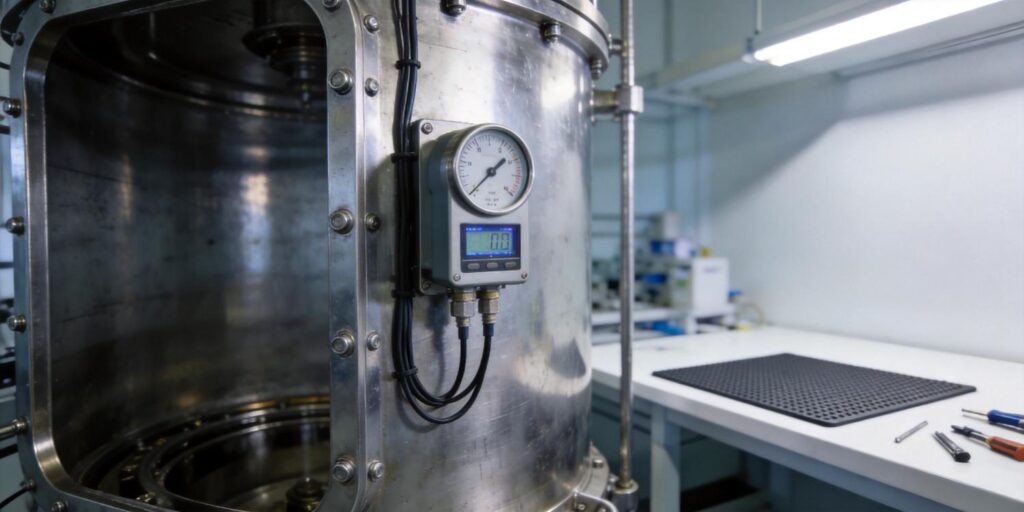
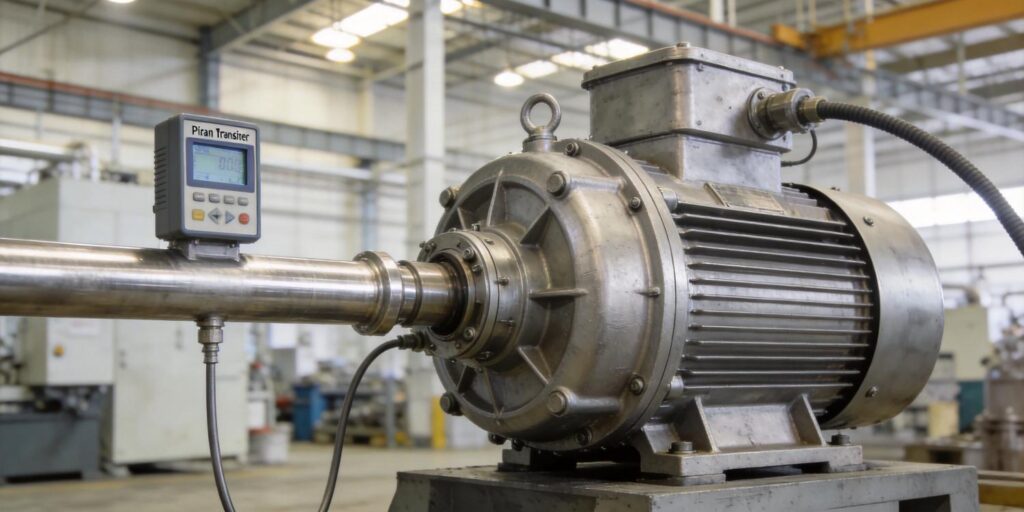
Shielded wiring connected to vacuum transmitter

How to Avoid Signal Interference in Vacuum Measurement

Why Signal Interference Matters in Vacuum Measurement In vacuum systems for thin-film deposition, semiconductor processing, heat treatment, and analytical instrumentation, even millivolt-level noise on a pressure signal can translate into false readings, nuisance alarms, or process drift. The 0-10 V analog output and RS232 digital interface of Poseidon Scientific’s VG-SP205 Pirani Vacuum Transmitter and VG-SM225 […]

How to Avoid Signal Interference in Vacuum Measurement Read More »

Vacuum gauge mounted on packaging machine

Vacuum Gauge Selection for Vacuum Packaging Systems

Vacuum Requirements in Modern Packaging Systems Vacuum packaging is a cornerstone of food preservation, medical device sterility, and electronics protection. Whether sealing fresh produce in modified-atmosphere packs, extending shelf life of pharmaceuticals, or preventing oxidation in semiconductor components, the process demands precise, repeatable vacuum levels. Most industrial vacuum packaging machines operate entirely in the rough

Vacuum Gauge Selection for Vacuum Packaging Systems Read More »

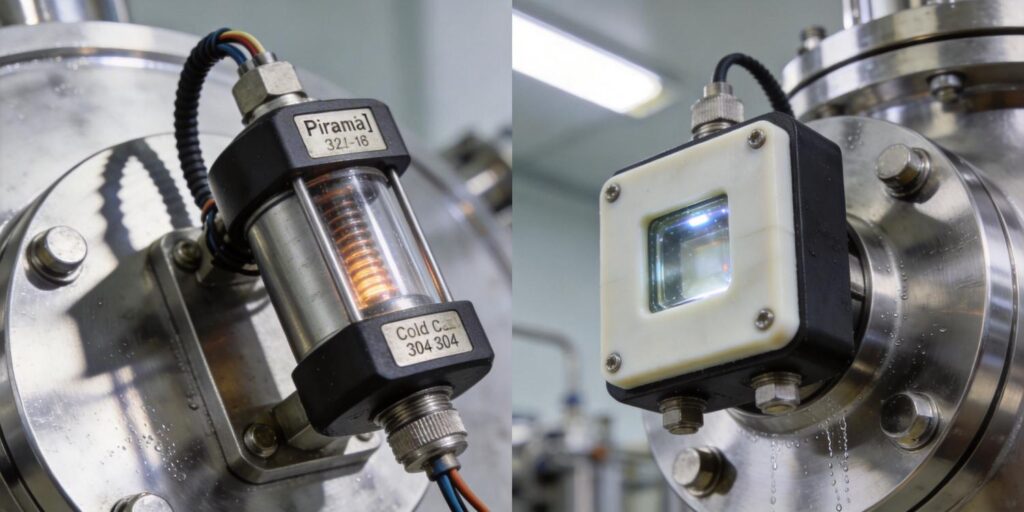
Warning label near high voltage vacuum gauge

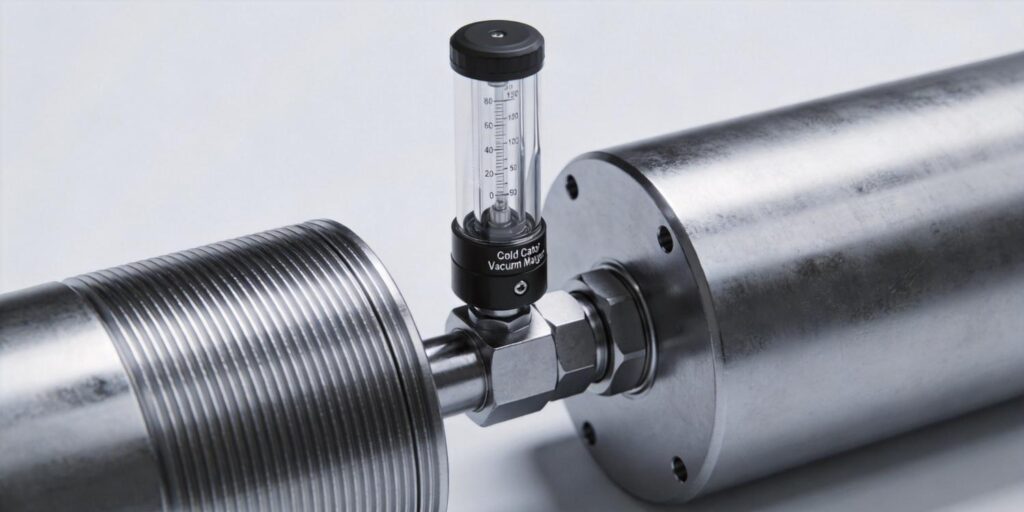
Understanding Cold Cathode High Voltage Operation

High Voltage Ionization Principle in Cold Cathode Gauges Cold cathode vacuum gauges measure pressure in the high-vacuum regime (10−3 Torr to 10−7 Torr) using the Penning discharge principle rather than a heated filament. In the Poseidon Scientific VG-SM225 Cold Cathode Vacuum Gauge, a strong electric field (starting at −2500 V, then stabilizing at −2000 V)

Understanding Cold Cathode High Voltage Operation Read More »

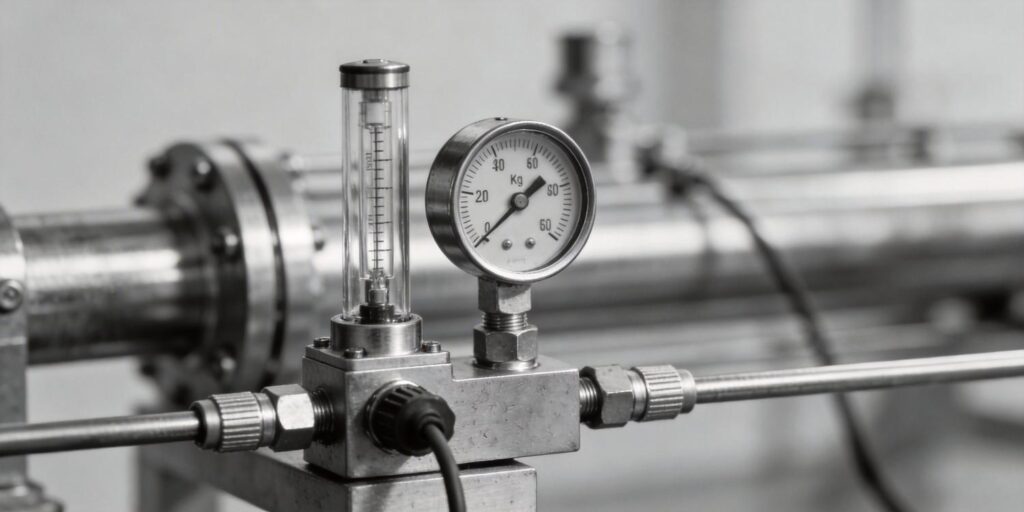
Pressure trend graph displayed from vacuum gauge data

Vacuum Gauge Data Logging for Quality Control Systems

Role of Pressure Data in Quality Control Systems In quality control systems for vacuum-dependent processes—such as thin-film deposition, heat treatment, and semiconductor manufacturing—pressure data serves as a critical parameter for ensuring product consistency, traceability, and compliance with standards like ISO 9001 and AS9100. Vacuum levels directly influence material properties: in coating applications, a 10 %

Vacuum Gauge Data Logging for Quality Control Systems Read More »

Technician cleaning cold cathode vacuum gauge components

How to Extend the Lifespan of Cold Cathode Vacuum Gauges

Understanding Electrode Wear in Cold Cathode Vacuum Gauges Cold cathode gauges like the Poseidon Scientific VG-SM225 operate on the Penning discharge principle, where electrons spiral in crossed electric and magnetic fields to ionize residual gas molecules. Positive ions are then accelerated toward the cathode, producing the measurable current that correlates with pressure. While this design

How to Extend the Lifespan of Cold Cathode Vacuum Gauges Read More »

Compact vacuum gauge integrated into OEM equipment

Choosing Vacuum Gauges for OEM Equipment Manufacturers

OEM Design Constraints in Vacuum Instrumentation OEM equipment manufacturers in mass spectrometry, thin-film deposition, vacuum heat treatment, and analytical instruments face relentless pressure to shrink footprints, lower power budgets, reduce BOM costs, and accelerate time-to-market—all while delivering repeatable vacuum performance that meets ISO and SEMI standards. A vacuum gauge is rarely the headline feature, yet

Choosing Vacuum Gauges for OEM Equipment Manufacturers Read More »

Vacuum gauge display reacting to rapid pressure changes

Vacuum Gauge Response Time: Why It Matters in Dynamic Processes

What Is Response Time in Vacuum Gauges? In dynamic vacuum processes, response time is the interval required for a gauge to register a defined fraction—typically 63 % (one time constant) or 90 %—of a sudden pressure change. It is not the same as startup delay or calibration drift; it measures how quickly the sensor output

Vacuum Gauge Response Time: Why It Matters in Dynamic Processes Read More »

Vacuum gauge integrated into automated production line

Vacuum Gauge Performance in Automated Manufacturing Lines

Importance of Continuous Vacuum Monitoring in Automated Manufacturing Lines In high-volume automated manufacturing—semiconductor fabrication, thin-film deposition, vacuum heat treatment, and precision assembly—vacuum levels must remain within tight tolerances 24/7. A single undetected pressure excursion can trigger scrap, downtime, or out-of-spec parts that cascade through downstream stations. Continuous monitoring with dedicated vacuum gauges is therefore not

Vacuum Gauge Performance in Automated Manufacturing Lines Read More »

Vacuum gauge LED illuminated during startup

How to Interpret Vacuum Gauge Startup Indicators

Understanding Vacuum Gauge Startup Indicators Accurate interpretation of startup indicators is essential for reliable vacuum system operation in thin-film deposition, heat treatment, and analytical instruments. Poseidon Scientific’s VG-SM225 Cold Cathode Vacuum Gauge features clear LED feedback that instantly communicates system status, while the VG-SP205 Pirani Vacuum Transmitter operates without high-voltage circuitry and delivers immediate readings

How to Interpret Vacuum Gauge Startup Indicators Read More »

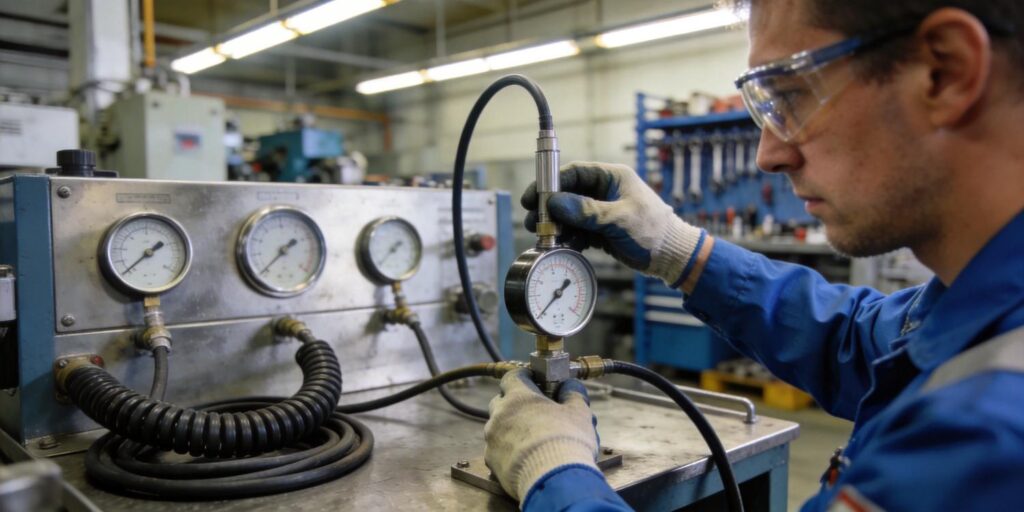
Technician installing vacuum gauge with gloves

Preventing Contamination in High Vacuum Measurement

Contamination Sources in High Vacuum Measurement In high-vacuum systems for thin-film deposition, heat treatment, and analytical instrumentation, contamination remains the leading cause of gauge drift, extended startup times, and premature failure. Understanding the sources is the first step toward prevention. Poseidon Scientific’s VG-SM225 Cold Cathode Vacuum Gauge and VG-SP205 Pirani Vacuum Transmitter are engineered for

Preventing Contamination in High Vacuum Measurement Read More »

Shopping Cart
Poseidon Scientific
Privacy Overview

This website uses cookies so that we can provide you with the best user experience possible. Cookie information is stored in your browser and performs functions such as recognising you when you return to our website and helping our team to understand which sections of the website you find most interesting and useful.