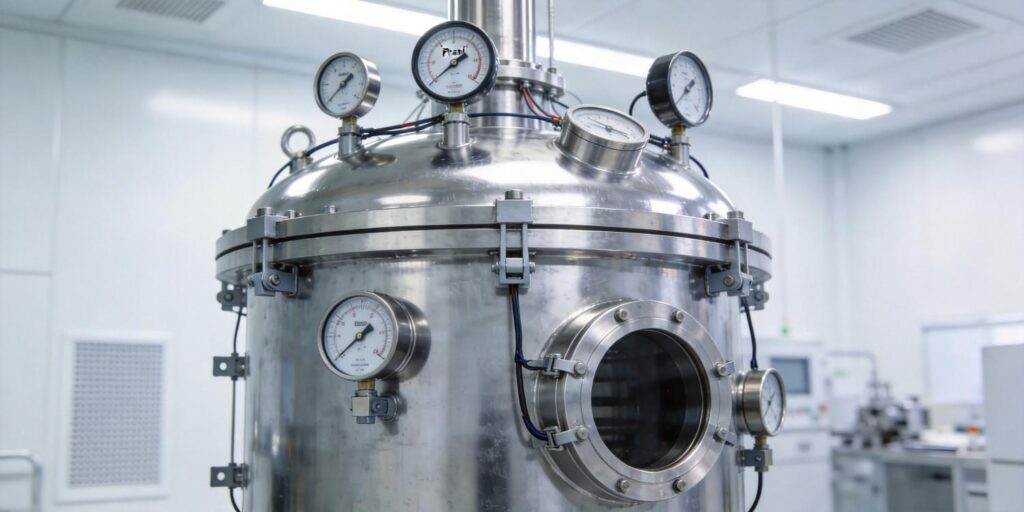
Vacuum Gauge

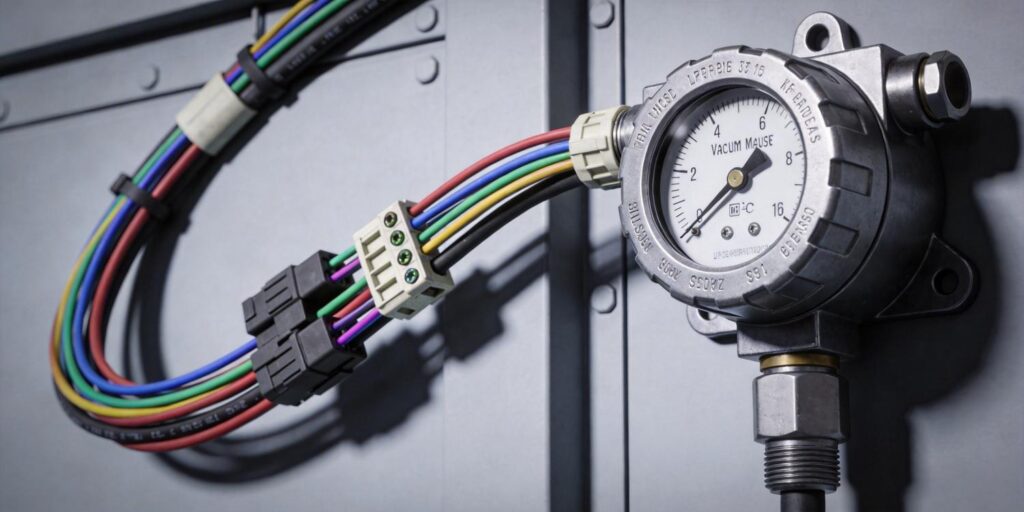
Industrial power supply connected to vacuum gauge

Vacuum Gauge Power Supply Requirements Explained

Voltage Requirements for Reliable Vacuum Gauge Operation Proper power supply design is often the overlooked foundation of accurate vacuum measurement. In thin-film deposition, semiconductor processing, and analytical instrumentation, even minor deviations in supply voltage can introduce measurement drift that compromises process repeatability. Poseidon Scientific’s VG-SP205 Pirani Vacuum Transmitter and VG-SM225 Cold Cathode Vacuum Gauge have […]

Vacuum Gauge Power Supply Requirements Explained Read More »

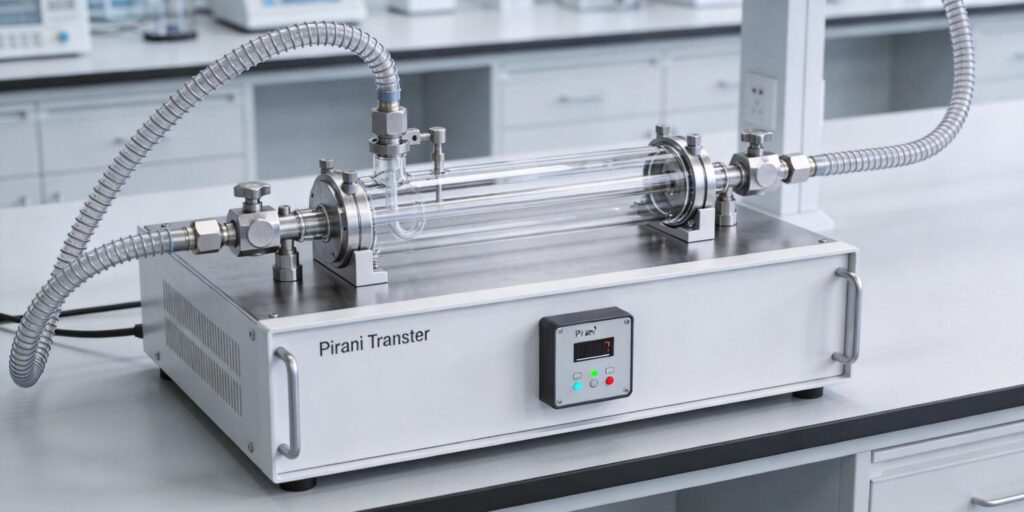
Vacuum gauge installed on thin film coating chamber

Optimizing Thin Film Deposition with Accurate Vacuum Monitoring

Deposition Pressure Stages in Thin Film Processes In thin film deposition—whether through physical vapor deposition (PVD), magnetron sputtering, or electron-beam evaporation—pressure evolves through clearly defined stages that directly influence process outcomes. Engineers and procurement teams must understand these stages to select instrumentation that delivers repeatable results without inflating system cost. The process begins in the

Optimizing Thin Film Deposition with Accurate Vacuum Monitoring Read More »

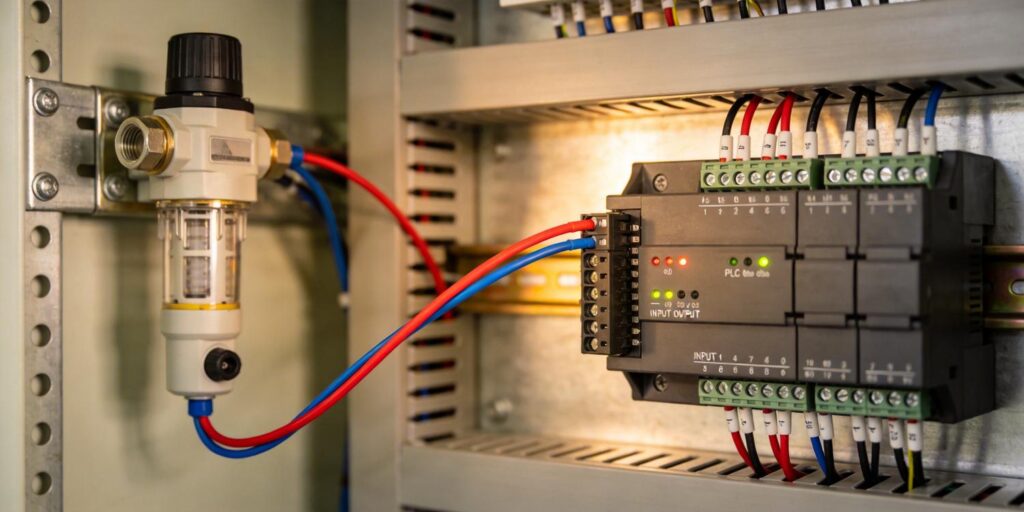
SCADA system displaying vacuum pressure readings

Vacuum Gauge Integration with SCADA Systems

Introduction SCADA systems have become the central nervous system of modern industrial vacuum processes. In semiconductor fabrication, PVD coating lines, vacuum furnaces, and pharmaceutical drying equipment, SCADA platforms collect, visualize, and act on pressure data in real time—driving automated sequences, triggering interlocks, and generating compliance reports. Without reliable integration of vacuum gauges into the SCADA

Vacuum Gauge Integration with SCADA Systems Read More »

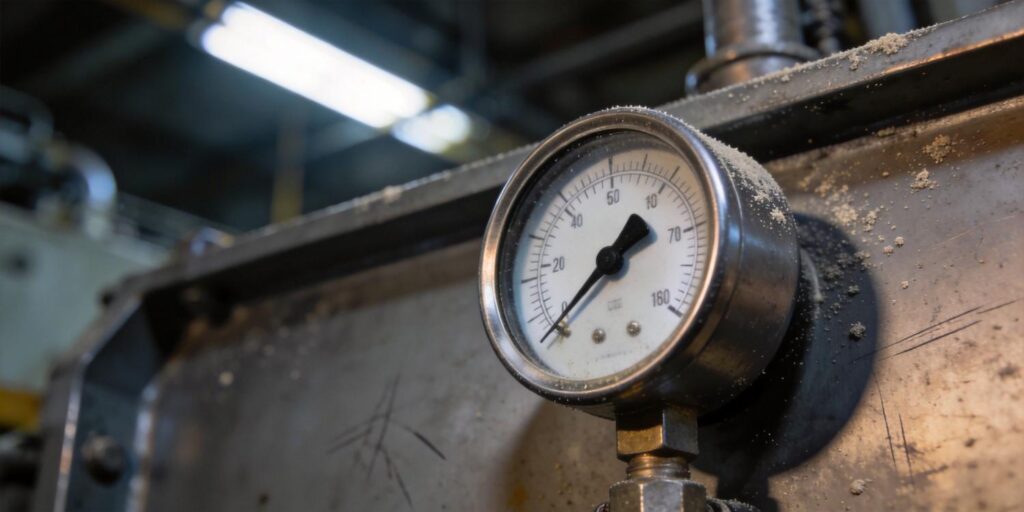
Close-up of vacuum gauge LED indicator lights

Understanding Error Signals in Vacuum Gauge Outputs

Introduction Error signals in vacuum gauge outputs are critical diagnostic tools that protect processes, prevent equipment damage, and reduce downtime. Whether you operate a semiconductor cluster tool, PVD coater, vacuum furnace, or analytical instrument, understanding these signals allows rapid identification of sensor faults, over-range conditions, or plasma ignition issues before they affect product quality or

Understanding Error Signals in Vacuum Gauge Outputs Read More »

Industrial technician inspecting vacuum gauges

How to Reduce Maintenance Costs in Industrial Vacuum Systems

Introduction Industrial vacuum systems are major capital investments, yet maintenance costs often erode their ROI through unplanned downtime, premature pump failures, and frequent calibration cycles. In semiconductor fabs, PVD coaters, vacuum furnaces, and pharmaceutical dryers, even small inefficiencies compound into thousands of dollars per month in lost production and repair bills. The key to lowering

How to Reduce Maintenance Costs in Industrial Vacuum Systems Read More »

Cold cathode vacuum gauge installed on high vacuum system

How Cold Cathode Gauges Handle Ultra-Low Pressure Measurement

Introduction Cold cathode gauges are the workhorse of high-vacuum measurement in modern industrial and laboratory systems. Unlike hot-cathode ionization gauges that rely on a heated filament, cold cathode designs generate ions through a self-sustaining plasma discharge. This makes them ideal for the ultra-low pressure regime from 10−3 Torr down to 10−7 Torr, where precise, stable

How Cold Cathode Gauges Handle Ultra-Low Pressure Measurement Read More »

Compact vacuum gauges installed in research laboratory system

Selecting Vacuum Gauges for Research & Development Laboratories

Introduction Research and development laboratories operate at the forefront of vacuum science, pushing the boundaries of materials, processes, and instrumentation. Whether developing next-generation semiconductors, testing thin-film coatings, calibrating analytical instruments, or exploring surface physics, every experiment demands precise, repeatable pressure measurement across a wide dynamic range. A single gauge that covers only part of the

Selecting Vacuum Gauges for Research & Development Laboratories Read More »

Technician servicing vacuum gauge components

Vacuum Gauge Drift: Causes, Symptoms, and Solutions

What Is Measurement Drift in Vacuum Gauges? Measurement drift occurs when a vacuum gauge’s output gradually shifts away from the true pressure value over time, even though the actual chamber pressure has not changed. It is a slow, cumulative error that can reach several percent within months if left unaddressed. Unlike sudden failures, drift is

Vacuum Gauge Drift: Causes, Symptoms, and Solutions Read More »

Vacuum gauge monitoring pressure during leak test

How to Detect Vacuum Leaks Using Pressure Monitoring

Introduction Vacuum leaks are among the most common and costly issues in semiconductor tools, PVD coaters, vacuum furnaces, and analytical systems. Even a small leak can extend pump-down times, introduce contaminants, reduce yield, or damage sensitive pumps. The good news is that modern vacuum gauges provide a fast, non-destructive way to detect and locate leaks

How to Detect Vacuum Leaks Using Pressure Monitoring Read More »

Vacuum gauge mounted at optimal position on industrial vacuum chamber

Vacuum Gauge Placement Strategy: Where Should You Install It?

Introduction The position of a vacuum gauge is just as critical as the gauge itself. A sensor placed in the wrong location can deliver misleading readings, slow response times, or miss critical pressure events—leading to pump damage, process drift, extended cycle times, or scrapped batches. In semiconductor load locks, PVD coaters, vacuum furnaces, and analytical

Vacuum Gauge Placement Strategy: Where Should You Install It? Read More »

Shopping Cart
Poseidon Scientific
Privacy Overview

This website uses cookies so that we can provide you with the best user experience possible. Cookie information is stored in your browser and performs functions such as recognising you when you return to our website and helping our team to understand which sections of the website you find most interesting and useful.