Importance of Robustness in Routine Analytical Testing
In routine laboratory testing, method robustness is not merely a desirable attribute—it’s an absolute necessity for maintaining data integrity and regulatory compliance. Robust SPE methods ensure consistent analyte recovery, reproducible results, and reliable detection limits across different operators, instruments, and time periods. According to industry standards, a robust method should yield near-quantitative recovery over the entire desired concentration range with acceptable precision both within and between laboratories.
The consequences of non-robust SPE methods are significant: they can lead to false positives or negatives, compromised detection limits, and regulatory non-compliance. In pharmaceutical testing, for instance, poor method robustness can result in batch failures costing millions of dollars. Environmental laboratories face similar challenges where inconsistent SPE performance can lead to inaccurate contaminant measurements with serious environmental and legal implications.
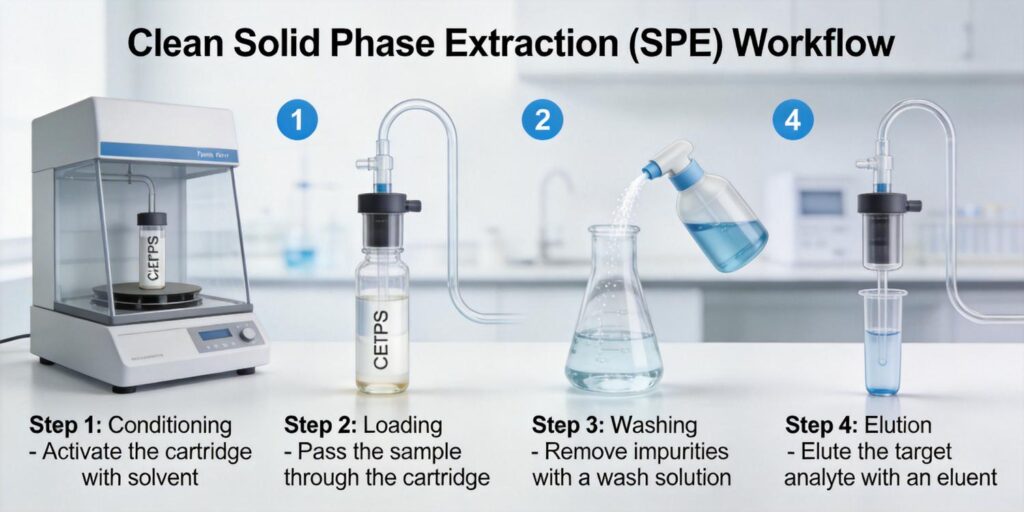
Standardizing SPE Conditioning and Loading Steps
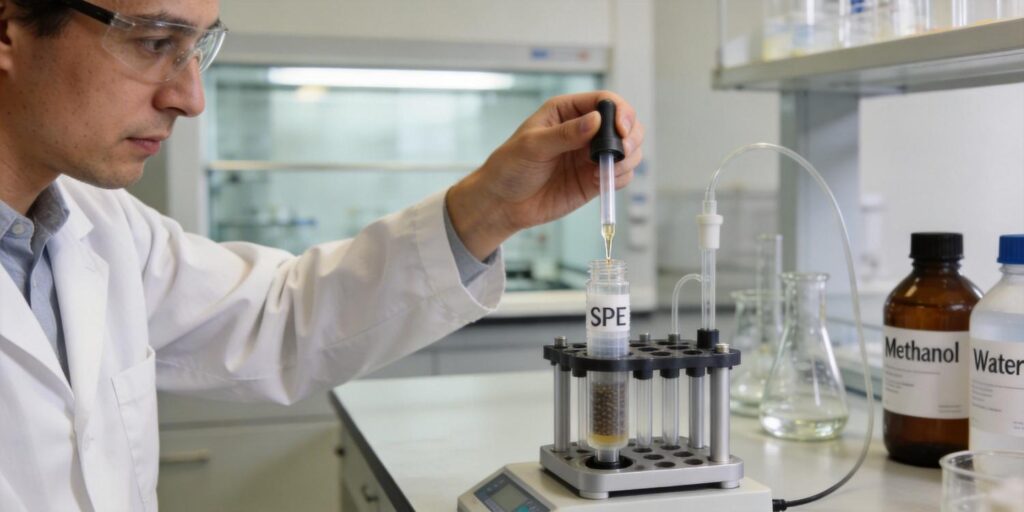
Standardization begins with proper cartridge conditioning—a critical step often overlooked in routine testing. Research indicates that methanol effectively wets the sorbent surface and penetrates bonded alkyl phases, allowing water to wet the silica surface efficiently. A typical conditioning protocol involves 2-3 mL of methanol followed by 2-3 mL of water or buffer solution. The cartridge must not become dry before sample application, as this can lead to channeling and reduced recovery.
For loading steps, maintaining consistent sample preparation is essential. Samples should be in a form compatible with SPE, typically diluted with appropriate buffers to optimize analyte retention. The volume of sample loaded should be adjusted based on available sample size and detection limit requirements. Contrary to what might be intuitive, starting with samples in compatible buffers rather than the original matrix often yields more consistent results during method development.
Controlling Flow Rates and Solvent Volumes
Flow rate control represents one of the most critical factors in SPE method robustness. Studies demonstrate that recovery increases significantly when flow rates are reduced—for example, extraction yield improved from about 80% to 95% when lowering the flow rate from 1.5 to 0.33 mL/minute for certain applications. All flow rates or pressures for moving samples and reagents through SPE cartridges should be set conservatively during method development.
Solvent volumes must be precisely controlled for each step. Typical volumes range from 200 μL to 2 mL for small cartridges and 5-10 mL for disks, depending on the specific application. The elution volume optimization is particularly important, as insufficient volume can lead to incomplete analyte recovery while excessive volume dilutes the sample unnecessarily. Research shows that allowing the cartridge to soak with eluent for 0.5-1 minute before collection can significantly improve recovery.
Cartridge Lot-to-Lot Consistency
Lot-to-lot reproducibility is a fundamental requirement for routine SPE applications. Studies examining multiple lots of SPE cartridges have demonstrated that good extraction yields can be obtained with excellent reproducibilities across different production batches. In one comprehensive study, twelve lots of Bond Elut Certify cartridges showed consistent performance, with only one lot exhibiting slightly higher recovery.
Manufacturers implement rigorous quality assurance programs to ensure batch-to-batch and year-to-year consistency. These programs typically include testing for surface characteristics, packing parameters, particle size distribution, ligand density, and chromatographic performance. For laboratories, establishing acceptance criteria for new cartridge lots through parallel testing with current lots is essential for maintaining method robustness.
QC Samples for Monitoring Method Stability
Quality control samples serve as the frontline defense against method drift and performance degradation. These should include blank samples, fortified samples at multiple concentration levels, and certified reference materials when available. The frequency of QC sample analysis should be based on sample throughput and regulatory requirements, with many laboratories running QC samples with every batch of samples.
Recovery studies should be conducted at concentrations spanning the analytical linear range. For example, in drugs of abuse testing, recoveries should be evaluated at low, medium, and high concentrations to ensure method performance across the entire working range. Acceptable recovery ranges and precision criteria (typically ±15-20% for accuracy and <15% RSD for precision) should be established during method validation and monitored throughout method implementation.
Documentation of SOPs
Comprehensive Standard Operating Procedures are the backbone of robust SPE methods. SOPs should include detailed instructions for every aspect of the SPE process: cartridge storage and handling, conditioning protocols, sample preparation requirements, loading procedures, washing steps, elution conditions, and post-extraction processing. Each step should specify exact volumes, flow rates, timing, and acceptable tolerances.
Critical parameters that must be documented include:
- Cartridge conditioning solvents and volumes
- Sample loading conditions (pH, ionic strength, volume)
- Wash solvent compositions and volumes
- Elution solvents, volumes, and flow rates
- Acceptable flow rate ranges for each step
- Storage conditions for cartridges and reagents
- Acceptance criteria for QC samples
Long-term Performance Evaluation Strategies
Long-term method monitoring requires systematic data collection and trend analysis. Key performance indicators should include recovery percentages, precision measurements, detection limits, and carryover assessments. Statistical process control charts can be invaluable for identifying trends or shifts in method performance before they impact data quality.
Regular method re-validation should be conducted according to a predetermined schedule or triggered by specific events such as:
- Change in cartridge manufacturer or lot
- Instrument maintenance or replacement
- Changes in reagent suppliers
- Personnel changes affecting method execution
- Regulatory requirement updates
Method transfer between laboratories requires additional validation to ensure robustness across different environments. This should include comparative studies using identical samples and statistical evaluation of results between the originating and receiving laboratories.
Practical Implementation Tips
Based on extensive SPE experience, several practical tips can enhance method robustness:
- Maintain consistent cartridge storage: Keep cartridges in sealed bags until use and store in zipper-locked bags or desiccators once opened.
- Optimize flow control: Use stopcocks to adjust/control flow through individual cartridges and maintain drop-wise solvent flow when time permits.
- Ensure proper bed preparation: Leave approximately 1-2 mm of preconditioning solvent above the sorbent bed to prevent drying.
- Implement contamination controls: Wipe manifold needles before elution steps to minimize cross-contamination.
- Validate elution efficiency: Sometimes several smaller eluent aliquots can improve recovery compared to a single large volume.
By implementing these strategies, laboratories can establish SPE methods that deliver consistent, reliable results over extended periods, ensuring data integrity and regulatory compliance in routine analytical testing.