Challenges of Extracting Highly Polar Compounds (logP <1)
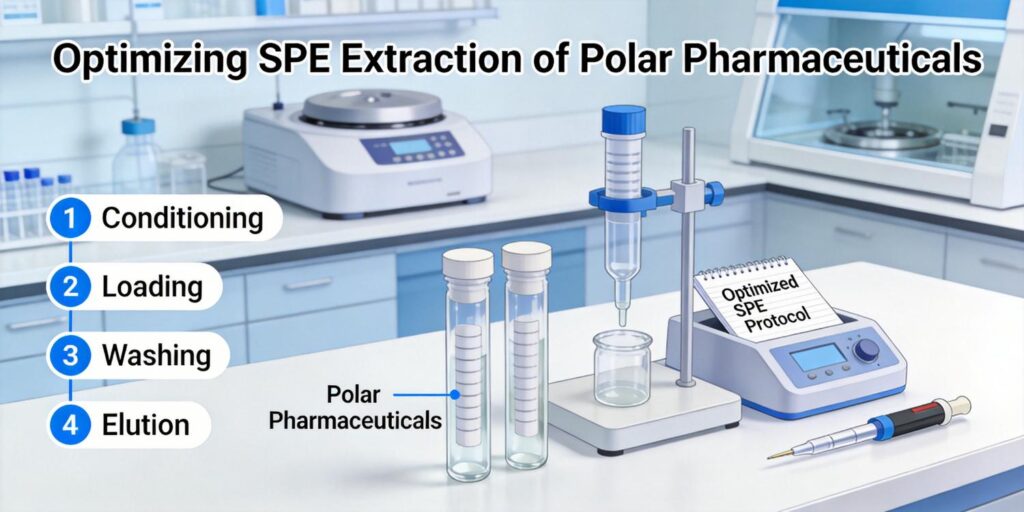
Extracting highly polar pharmaceuticals with logP values less than 1 presents unique challenges in solid-phase extraction (SPE) method development. These compounds exhibit strong affinity for aqueous environments, making retention on traditional reversed-phase sorbents problematic. The fundamental issue stems from the weak hydrophobic interactions between polar analytes and non-polar sorbent surfaces. As noted in SPE literature, “the more adventurous scientist has begun stretching the connections between a product and its intended application” when dealing with challenging analytes.
Highly polar compounds often demonstrate poor retention on conventional C18 or C8 sorbents due to their limited hydrophobic character. This results in breakthrough during sample loading, leading to reduced recovery and compromised method sensitivity. The challenge is further compounded when these polar pharmaceuticals are present in complex biological matrices where matrix effects can significantly impact extraction efficiency.
Evaluating Sorbent Chemistry: HLB or Mixed-Mode SPE
When addressing polar compound extraction, sorbent selection becomes critical. Hydrophilic-lipophilic balanced (HLB) sorbents represent a breakthrough technology for polar compound retention. As documented in Waters Oasis literature, “Oasis HLB created a whole new range of solid-phase extraction method development possibilities” by providing “high capacity for extremely polar compounds.” The water-wettable nature of HLB sorbents allows direct loading of aqueous samples without sacrificing recovery, eliminating the need for conditioning and equilibration steps required by other polymeric and silica-based sorbents.
Mixed-mode sorbents offer another powerful approach for polar pharmaceutical extraction. These sorbents combine reversed-phase and ion-exchange functionality for orthogonal sample preparation. According to forensic applications literature, “mixed-mode SPE columns are prevalent in drug extractions because they offer multiple binding mechanisms for improved sensitivity and excellent sample cleanup.” The dual retention mechanism provides selectivity and orthogonality, making them particularly effective for polar compounds with ionizable functional groups.
Adjusting Sample Solvent Composition to Enhance Retention
Optimizing sample solvent composition is crucial for improving retention of polar compounds. The goal is to create conditions that favor analyte-sorbent interactions while minimizing analyte-solvent interactions. For highly polar pharmaceuticals, reducing the organic solvent content in the sample matrix can significantly enhance retention on SPE sorbents.
Research demonstrates that “the use of a sample manipulation was analyzed and optimized” for polar compound extraction. In applications involving pharmaceutical creams, scientists found that adjusting the dichloromethane-n-hexane ratio was critical for achieving proper retention. The solvent system must be “suitably adjusted to give weak matrix-analyte interactions and to favour the sorbent analyte interactions.” This principle applies equally to polar pharmaceutical extraction from aqueous matrices.
Reducing Organic Solvent Content During Loading
Minimizing organic solvent content during the loading phase is essential for maximizing retention of polar compounds. High organic content reduces the hydrophobic interactions between analytes and sorbent surfaces, leading to breakthrough and poor recovery. For polar pharmaceuticals, maintaining aqueous conditions during loading optimizes retention on both HLB and mixed-mode sorbents.
As noted in method development studies, “a solution was found; a compromise of 80% hexane/20% chloroform was determined to be the most effective diluent mixture” for certain applications. This principle translates to polar pharmaceutical extraction where minimizing organic modifiers in the loading solvent enhances retention. The water-wettable nature of modern HLB sorbents specifically addresses this challenge by allowing “direct loading of aqueous samples without sacrificing recovery.”
Optimizing Wash Steps to Avoid Analyte Breakthrough
Careful optimization of wash steps is critical for polar pharmaceutical extraction. The wash solvent must be strong enough to remove matrix interferences but weak enough to retain target analytes. For polar compounds, this balance is particularly delicate due to their limited retention on sorbent surfaces.
Standard protocols often recommend washing with “5% methanol in water” for HLB sorbents, but this may need adjustment for highly polar pharmaceuticals. Mixed-mode sorbents offer more flexibility, with specific wash protocols for different compound classes. For instance, Waters recommends “wash with 2% HCOOH” for certain mixed-mode applications and “wash with 5% NH4OH” for others, depending on the analyte properties.
Selecting Strong Elution Solvents
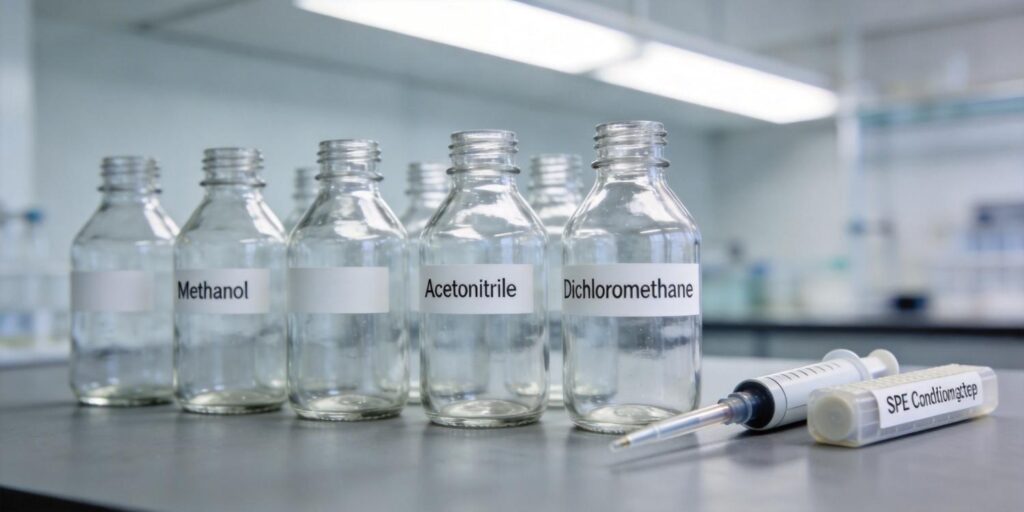
Effective elution of polar pharmaceuticals requires solvents that can disrupt all retention mechanisms simultaneously. For mixed-mode sorbents, this means addressing both hydrophobic and ion-exchange interactions. Common elution strategies include using organic solvents with pH modifiers to neutralize ionic interactions.
Standard protocols often employ “100% methanol” or “90/10 ACN/CH3OH” for elution, but for mixed-mode sorbents, additional steps may be necessary. For example, Waters recommends “elute 2: 5% NH4OH in CH3OH” or “elute 2: 2% HCOOH in CH3OH” depending on the sorbent and analyte characteristics. The key is selecting solvents that provide sufficient elution strength while maintaining compatibility with downstream analysis.
Monitoring Recoveries Using LC-MS Peak Area Comparison
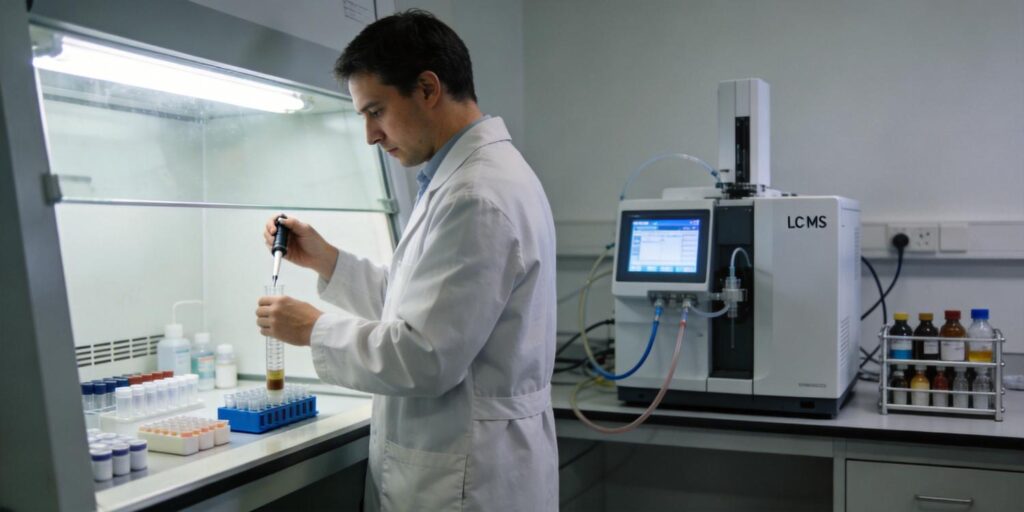
Accurate recovery assessment is essential for method validation. LC-MS provides the sensitivity and specificity needed for monitoring polar pharmaceutical recoveries. Peak area comparison between extracted samples and reference standards offers quantitative recovery data.
Modern approaches emphasize high-throughput analysis, with methods developed for “96-well disk solid phase extraction plate for sample preparation” enabling efficient recovery monitoring. The clean extracts produced by optimized SPE methods contribute to “increased signal to noise/improved detection limits” in LC-MS analysis, which is particularly important for polar compounds that may have limited ionization efficiency.
Method Validation Experiments
Comprehensive method validation ensures reliability and reproducibility of polar pharmaceutical extraction methods. Validation should include recovery studies across the expected concentration range, precision assessment, and evaluation of matrix effects.
As demonstrated in pharmaceutical applications, validation should establish “linear relationships between the absorption maximum absorbance (zero-order) or the selected amplitudes and the corresponding drug concentration.” For SPE methods targeting polar pharmaceuticals, validation must specifically address the challenges of polar compound extraction, including breakthrough testing, capacity determination, and robustness evaluation under varying sample conditions.
The evolution of SPE technology, particularly with HLB and mixed-mode sorbents, has transformed polar pharmaceutical extraction. As noted in industry literature, these advancements provide “superior technical performance” to achieve “unmatched purity, consistency, and quality in their sample preparation methods,” making them essential tools for modern pharmaceutical analysis.