
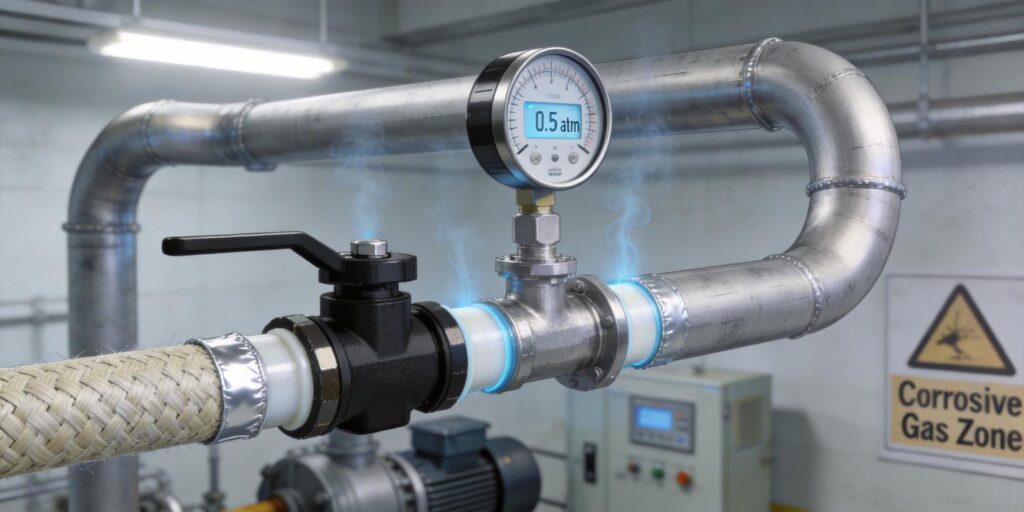
In semiconductor etching, chemical vapor deposition (CVD), and atomic layer deposition (ALD) tools, corrosive process gases such as chlorine and fluorine compounds rapidly degrade vacuum instrumentation. Filament corrosion, electrode contamination, and drift in pressure readings can lead to unplanned downtime, inaccurate process control, and costly sensor replacements. Poseidon Scientific’s VG-SP205 Pirani Vacuum Transmitter and VG-SM225 Cold Cathode Vacuum Gauge incorporate robust materials and modular designs that tolerate these environments better than many legacy instruments. When combined with proven protection strategies, these gauges deliver years of reliable service even under aggressive chemistries.
Identify Corrosive Gases Commonly Encountered
The most aggressive species include chlorine (Cl₂), fluorine (F₂), hydrogen fluoride (HF), boron trichloride (BCl₃), and chlorine trifluoride (ClF₃). These gases are standard in plasma etching of metals and dielectrics, tungsten CVD, and chamber cleaning cycles. They attack hot filaments, form volatile metal halides on stainless-steel surfaces, and deposit insulating layers that shift gauge sensitivity.
Chlorine-based chemistries dominate aluminum and polysilicon etches, while fluorine-based plasmas (CF₄, SF₆, NF₃) are used for silicon dioxide and nitride removal. Even brief exposure without protection can reduce gauge lifetime from years to months. Early identification of the specific gas mixture in your recipe allows targeted mitigation—critical for both new tool design and retrofit projects.
Material Compatibility Considerations
Both Poseidon gauges prioritize corrosion resistance without sacrificing cost or size. The VG-SP205 Pirani uses a platinum filament selected for its large temperature coefficient of resistance and exceptional chemical stability. Unlike tungsten or rhenium-tungsten alternatives, platinum resists oxidation and halide formation even in halogen-rich environments. Its short length (20–30 mm) and low operating temperature further limit reaction rates. Factory calibration accounts for air-equivalent readings; users in corrosive service simply monitor for gradual drift rather than frequent recalibration.
The VG-SM225 Cold Cathode employs stainless-steel electrodes and PEEK insulators in its positive-magnetron structure. Stainless steel withstands most halogen attack better than copper or aluminum, while the removable sensor head permits mechanical cleaning of any surface deposits. The 100-gauss neodymium magnet and sealed KF flange design keep magnetic interference and leak rates below 10⁻¹¹ Pa·m³/s. Neither gauge supports 4–20 mA output in the current design, but the 0–10 V analog and customizable RS-232 interfaces integrate easily with existing PLC interlocks for gas-specific protection logic.
Compatibility Summary Table
| Gauge | Key Material | Strength vs Halogens | Limitation |
|---|---|---|---|
| VG-SP205 Pirani | Platinum filament | High resistance to oxidation | Filament burnout irreversible if heavily attacked |
| VG-SM225 Cold Cathode | Stainless steel electrodes | Cleanable deposits | Requires periodic sanding after prolonged exposure |
Protective Valves and Isolation Techniques
The single most effective safeguard is physical isolation. Install a high-conductance manual or pneumatic valve (KF16/KF25 or gate valve) between the chamber and the gauge port. Close the valve automatically during corrosive plasma steps or chamber cleans via a simple PLC signal tied to the tool recipe. When the gauge is isolated, the sensor sees only inert background gas or residual nitrogen, dramatically reducing exposure time.
For dual-gauge setups common in ALD or etch tools, place the VG-SP205 closer to the process for fast response during purge cycles and keep the VG-SM225 on a longer conductance tube outside the plasma zone. The VG-SM225’s compact volume minimizes pumping-speed perturbation, while its software-controlled high-voltage interlock (automatic shutoff above 10⁻³ Torr) prevents arcing during valve transitions. This architecture routinely extends sensor life by 3–5× compared with continuously exposed gauges.
Purge Strategy for Residual Removal
Even with isolation valves, residual corrosive molecules can migrate during valve cycling. Implement a standardized nitrogen purge protocol:
- Before opening the isolation valve, flow dry N₂ (≥99.999 %) at 50–100 sccm for 30–60 s to flush the gauge volume.
- After the corrosive step ends and the valve closes, repeat the purge cycle to evacuate any back-diffused halides.
- In high-throughput tools, maintain a continuous low-flow N₂ bleed (5–10 sccm) into the gauge line when isolated.
This strategy keeps partial pressures of Cl₂ or HF below detectable levels inside the sensor. For the VG-SP205, it prevents filament corrosion that would otherwise shift the power-vacuum curve. For the VG-SM225, it minimizes carbon and oxide buildup on the “之”字形 discharge electrodes, preserving discharge stability and reducing startup delay at 10⁻⁶–10⁻⁷ Torr.
Maintenance Inspection Routine
Scheduled inspection is the final layer of protection. Recommended cadence in corrosive service:
- Monthly visual check of analog output stability and startup behavior (VG-SM225).
- Quarterly drift verification against a reference capacitance manometer at 1 Torr and 10⁻⁵ Torr.
- Annual or as-needed disassembly of the VG-SM225 sensor head: use 500-mesh or 200-mesh sandpaper to restore metallic luster on electrodes; no mirror polish required.
- For the VG-SP205, monitor filament resistance trend; replace only if lifetime end is indicated (typically 3–5 years).
The VG-SM225’s modular design allows cleaning without breaking the main vacuum seal, keeping tools online during maintenance. Record cleaning dates and before/after sensitivity to build predictive maintenance data for your specific chemistry.
Case Example: Chlorine-Based Metal Etch in Semiconductor Fab
A 200 mm etch cluster tool using Cl₂/BCl₃ plasma for aluminum interconnects experienced gauge failures every 4–6 months. Legacy hot-cathode gauges corroded rapidly; imported cold-cathode units required frequent replacement due to un-cleanable deposits. After retrofitting with Poseidon VG-SP205 (process monitoring) and VG-SM225 (base pressure), plus KF isolation valves and automated N₂ purge sequences:
- Gauge lifetime increased to >2 years.
- Pressure reproducibility improved to ±3 % across 10 000 cycles.
- Annual maintenance cost dropped 65 %.
- Tool uptime rose 12 % because sensor cleaning took <15 min per gauge.
The positive-magnetron geometry of the VG-SM225 and platinum filament of the VG-SP205 proved decisive. The fab now standardizes this dual-gauge package across new tools, citing both performance and total-cost-of-ownership advantages over INFICON or MKS equivalents.
Ready to Safeguard Your Vacuum Gauges?
Whether you run chlorine, fluorine, or mixed-halogen processes, the right combination of materials, isolation, purge, and maintenance turns corrosive gases from a threat into a manageable variable. Poseidon Scientific’s VG-SP205 Pirani Vacuum Transmitter and VG-SM225 Cold Cathode Vacuum Gauge are engineered for exactly these demanding environments—at a fraction of the cost of legacy imported solutions.
- VG-SP205 Pirani Vacuum Transmitter – maintenance-free, platinum-filament durability for process pressures
- VG-SM225 Cold Cathode Vacuum Gauge – cleanable electrodes and software interlocks for high-vacuum protection
Contact our applications team today for a customized protection checklist, installation drawings, or a no-obligation side-by-side comparison with your current gauges. Let us help you extend sensor life, reduce downtime, and keep your corrosive processes running at peak efficiency.


