Vacuum Measurement Considerations in Additive Manufacturing Systems
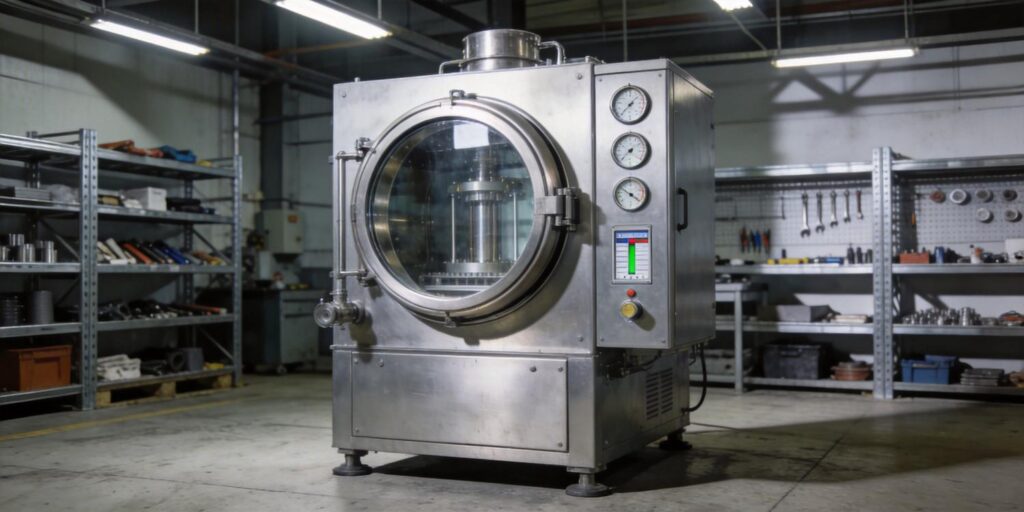
Metal additive manufacturing—also known as 3D printing—has transformed industries from aerospace to medical implants by enabling complex geometries and reduced material waste. Yet the process demands precise environmental control, particularly in vacuum-assisted systems such as electron-beam melting (EBM) and certain laser powder-bed fusion (PBF) variants. Accurate vacuum measurement ensures oxygen levels remain below critical thresholds, protects sensitive optics and electron sources, and maintains repeatable layer-to-layer quality. Poseidon Scientific’s VG-SP205 Pirani Vacuum Transmitter and VG-SM225 Cold Cathode Vacuum Gauge deliver the compact size, durability, and digital integration needed for modern AM machines while keeping costs aligned with research and pilot-production budgets.
This article examines the key vacuum-measurement considerations unique to additive manufacturing. It draws on fundamental vacuum principles and real-world performance data to help machine builders, process engineers, and end users select and implement reliable instrumentation.
1. Vacuum Role in Metal 3D Printing
Vacuum serves multiple critical functions in metal AM systems. In EBM processes, a high-vacuum environment (typically 10⁻⁴ to 10⁻⁶ Torr) allows the electron beam to propagate without scattering and minimizes oxidation of reactive powders such as titanium, aluminum, and nickel alloys. Even in laser PBF systems that operate primarily with inert argon, a pre-evacuation step to rough vacuum (10⁻¹ to 10⁻² Torr) followed by back-filling reduces residual oxygen to <10 ppm—essential for preventing oxide inclusions that degrade mechanical properties.
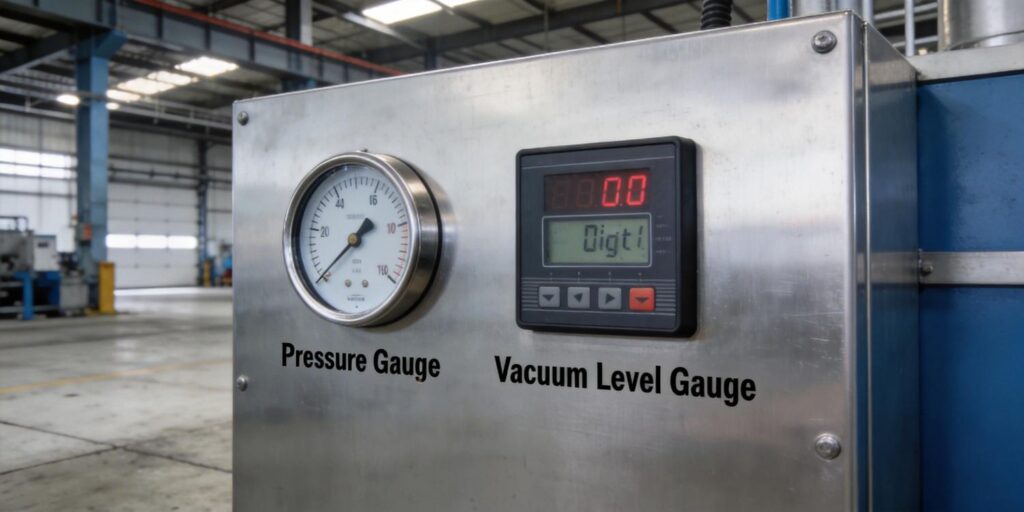
Beyond oxidation control, vacuum protects the build chamber from arcing, extends the life of beam sources and scanners, and improves powder flow by removing adsorbed moisture. Poseidon’s complementary gauge pair—the VG-SP205 for rough-vacuum monitoring and the VG-SM225 for high-vacuum indication—provides continuous coverage across the full pressure spectrum required by today’s AM platforms.
2. Oxygen Control Importance
Oxygen is the primary enemy in metal AM. Levels above 50–100 ppm can form brittle oxides, reduce fatigue life, and cause porosity in titanium and aluminum builds. Vacuum measurement directly correlates with oxygen partial pressure because residual gas analysis shows that oxygen constitutes the dominant reactive species during pump-down.
Real-time vacuum data enables closed-loop control: when pressure drops below a predefined threshold, the system initiates argon back-fill or proceeds to melting. The VG-SM225 Cold Cathode Gauge’s fast response and built-in over-pressure protection ensure the machine controller receives trustworthy signals even during rapid pressure transients. Its field-cleanable design further supports long-term oxygen control by allowing technicians to restore full sensitivity without halting production for days.
3. Rough vs High Vacuum Monitoring
Additive manufacturing cycles require two distinct vacuum regimes, each demanding specialized measurement technology.
| Regime | Typical Pressure Range | Primary Function | Recommended Poseidon Gauge |
|---|---|---|---|
| Rough vacuum | Atmosphere to 10⁻³ Torr | Initial pump-down, leak detection, powder handling | VG-SP205 Pirani |
| High vacuum | 10⁻³ to 10⁻⁷ Torr | Beam propagation, final oxygen reduction | VG-SM225 Cold Cathode |
The VG-SP205 Pirani uses thermal-conductivity principles with a platinum filament for stable, maintenance-free operation across the rough-vacuum band. Its linear response in the 10–0.01 Torr region makes it ideal for foreline monitoring and interlock of roughing pumps. The VG-SM225 employs Penning discharge for reliable high-vacuum indication, automatically disabling high voltage above 10⁻³ Torr to protect the sensor during venting or plasma events. Together they deliver seamless hand-off at the transition pressure, eliminating the blind spots common when a single gauge type is stretched beyond its optimal range.
4. Sensor Durability Under Heat
AM build chambers routinely reach 200–800 °C locally, with chamber walls and flanges experiencing repeated thermal cycling. Vacuum gauges mounted on or near the chamber must withstand these conditions without drift or mechanical failure.
Poseidon transmitters are rated for 15–50 °C ambient operation with integrated temperature compensation circuitry and algorithmic correction. Their stainless-steel construction, PEEK insulators, and low-mass design minimize thermal expansion mismatch with the chamber. The VG-SM225’s positive-magnetron geometry further reduces sensitivity to thermal gradients compared with larger legacy cold-cathode designs. In practice, these features allow gauges to remain stable through hundreds of build cycles without frequent recalibration—critical for high-volume production environments where downtime directly impacts part cost.
5. Signal Integration with Machine Control
Modern AM systems rely on PLCs or proprietary controllers that demand both analog speed and digital intelligence. Poseidon gauges provide a linear 0–10 V analog output (effective 2–8 V) for direct connection to safety interlocks and a fully documented RS232 digital interface capable of transmitting pressure, status, and error codes.
Users can request custom protocol modifications—even at quantities of five to ten units—to include dedicated flags such as “Vacuum Ready,” “Oxygen Low,” or “Drift Alert.” This capability simplifies integration with Siemens, Beckhoff, or proprietary AM controllers, eliminating external converters and reducing latency. The compact RJ45 connector and 24 VDC supply further streamline cabinet wiring in space-constrained machine designs.
6. Maintenance Planning
Preventive maintenance in AM systems must minimize scheduled downtime. The VG-SP205 Pirani is essentially maintenance-free with a 3–5 year expected life in clean environments. The VG-SM225 Cold Cathode offers a unique advantage: when electrode contamination occurs (signaled by extended startup time or offset readings), technicians can disassemble the sensor head, abrade the stainless-steel electrodes with 500-mesh sandpaper, and restore performance in under 30 minutes—without returning the unit to the factory.
Recommended maintenance schedule:
- Monthly visual inspection of flanges and O-rings.
- Quarterly leak-rate verification.
- Annual factory recalibration for the Pirani (or sooner in aggressive powder environments).
- Field cleaning of the cold-cathode head as needed based on logged startup-time trends.
This approach keeps maintenance costs low and supports the 24/7 operation demanded by industrial AM users.
7. Process Reproducibility
Consistent vacuum levels translate directly to consistent part quality. Logged pressure data from Poseidon gauges enable statistical process control: engineers can correlate build-chamber pressure profiles with tensile strength, density, and surface finish. The gauges’ high-resolution digital output and built-in diagnostics provide traceable records for ISO 13485 or AS9100 audits.
Trend analysis of 30-day rolling averages reveals early drift, allowing predictive maintenance before it affects part certification. Custom protocol bytes can embed chamber-ID and build-number metadata, creating a complete digital thread from pump-down to final cooldown.
8. Example Configuration
A typical EBM or vacuum-assisted laser PBF system benefits from the following Poseidon configuration:
- VG-SP205 Pirani mounted on the foreline or roughing port for initial pump-down monitoring and roughing-pump interlock.
- VG-SM225 Cold Cathode installed directly on the build-chamber KF25 flange for high-vacuum control and electron-beam safety interlock.
- Both gauges connected via RS232 to the machine controller for redundant data logging and real-time dashboards.
- Optional dual-gauge voting logic (1oo2) for critical safety functions.
This setup provides full-range coverage, field serviceability, and seamless integration while occupying minimal chamber real estate. Total hardware cost remains well below that of traditional full-size transmitters, and the customizable protocol eliminates middleware expenses.
Conclusion
Vacuum measurement is no longer an afterthought in additive manufacturing—it is a core process variable that directly influences oxygen control, beam stability, and final part performance. By selecting compact, durable, and digitally native transmitters like the VG-SP205 Pirani and VG-SM225 Cold Cathode, machine builders and end users achieve reliable monitoring, simplified maintenance, and reproducible results at a fraction of legacy system costs.
Poseidon Scientific’s gauges were developed with the exact needs of scientific instruments and industrial vacuum systems in mind, making them an ideal fit for next-generation AM platforms. Whether you are designing a new machine or upgrading an existing fleet, these instruments deliver the precision, robustness, and integration flexibility required for competitive additive manufacturing.
For detailed specifications, integration guides, or assistance configuring a vacuum-monitoring solution for your AM system, visit the product pages for the VG-SP205 Pirani Vacuum Transmitter and VG-SM225 Cold Cathode Vacuum Gauge. Our engineering team is ready to support your next build-chamber design or process-qualification project.
Word count: 1,178