Drug Metabolites Commonly Detected in Urine
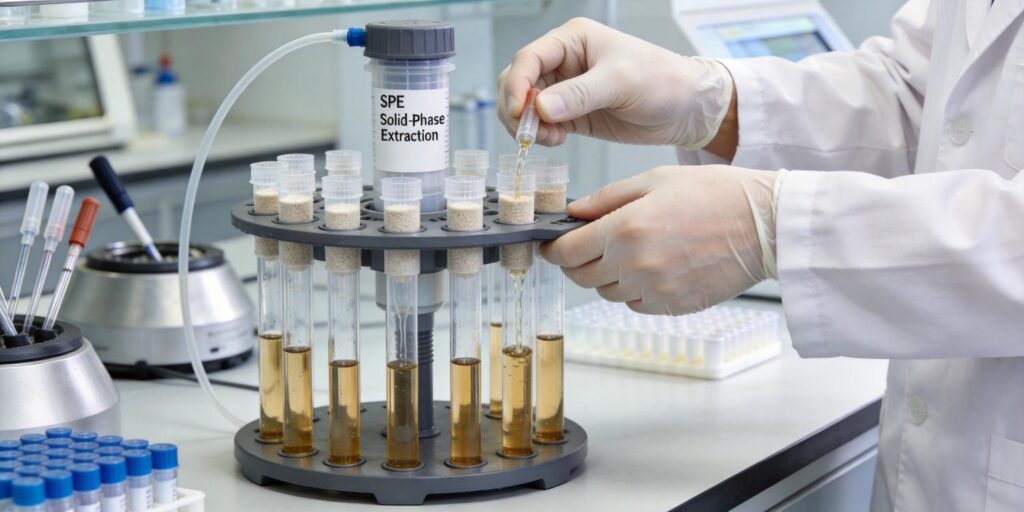
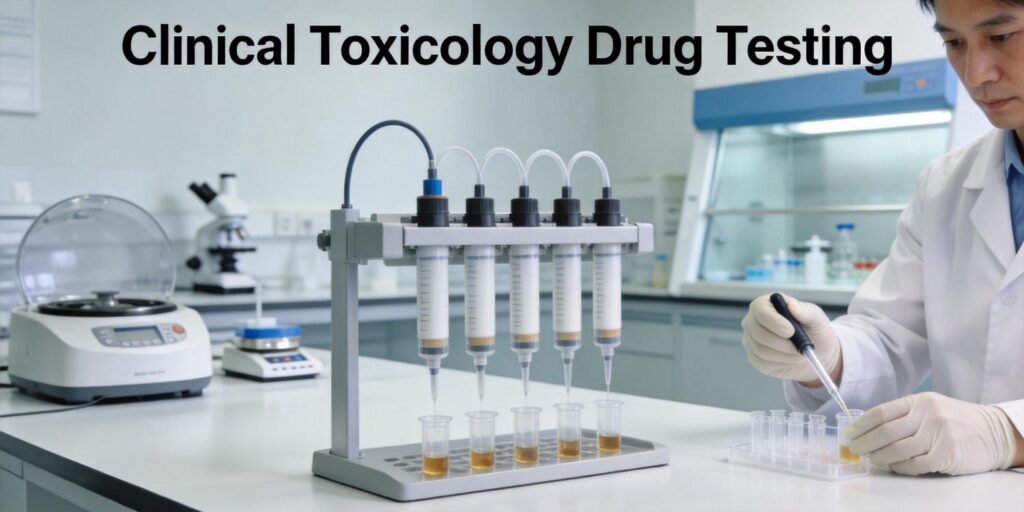
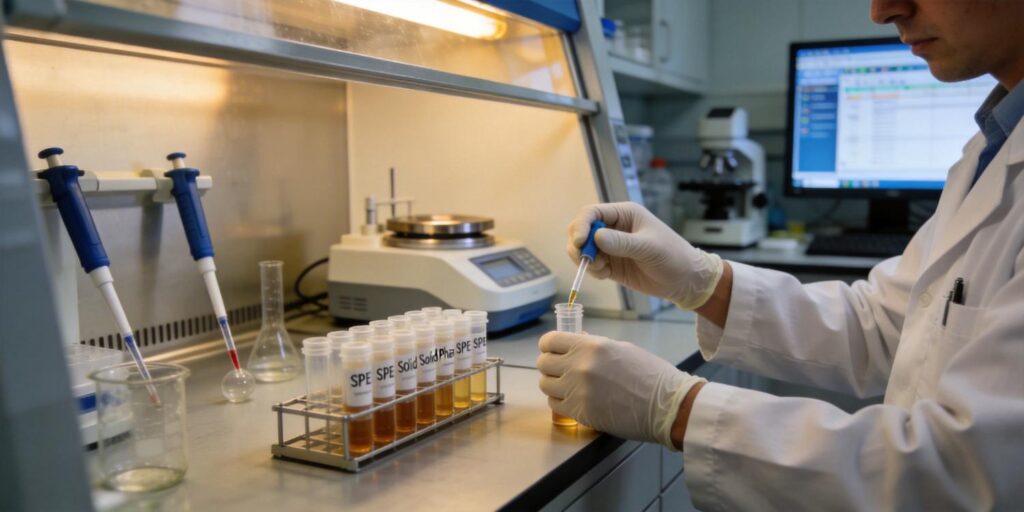
Urine serves as the primary excretion pathway for drug metabolites, making it the matrix of choice for forensic toxicology, clinical monitoring, and doping control. The metabolites detected span various drug classes, each presenting unique chemical properties that influence extraction strategies. Common metabolites include benzoylecgonine (cocaine metabolite), norcodeine and normorphine (opiate metabolites), nordiazepam (benzodiazepine metabolite), and hydroxylated/dealkylated products of various pharmaceuticals.
Research demonstrates that SPE effectively recovers these metabolites with high efficiency. For instance, studies show recoveries exceeding 80% for basic drugs like codeine, methadone, and phencyclidine from urine samples. The detection of metabolites has become increasingly important as they allow positive identification even when parent drugs are no longer excreted, establishing definitive evidence of drug administration.
Urine Matrix Composition and Analytical Challenges
Urine presents a complex biological matrix containing high concentrations of salts (primarily sodium chloride, potassium chloride), urea, creatinine, uric acid, proteins, and various endogenous compounds. Horse urine, commonly analyzed in veterinary drug testing, presents additional challenges due to its relatively high viscosity, particularly when animals are dehydrated from exercise prior to sample collection.
The matrix background creates several analytical challenges: ion suppression in LC-MS/MS analysis, interference with chromatographic separation, and potential clogging of analytical instrumentation. Endogenous compounds such as plant alkaloids (in equine urine), substituted quinolines (in dog urine), and various phenolic compounds can interfere with metabolite detection if not properly removed during sample preparation.
Pre-treatment Methods: Dilution and Hydrolysis
Proper pre-treatment is essential for successful SPE extraction of drug metabolites from urine. The two primary methods are dilution and hydrolysis, each serving specific purposes in the sample preparation workflow.
Dilution
Urine samples are typically diluted with appropriate buffer solutions to reduce viscosity and adjust pH for optimal SPE conditions. Common buffers include phosphate buffer (pH 6.0) and acetate buffer (pH 4.5). Dilution ratios typically range from 1:3 to 1:6 (urine:buffer), depending on the specific metabolites targeted and the SPE sorbent used.
Hydrolysis
Many drug metabolites are excreted as glucuronide or sulfate conjugates, requiring hydrolysis to release the free metabolites for extraction. Two main hydrolysis methods are employed:
- Acid Hydrolysis: Using hydrochloric acid at elevated temperatures (typically 100°C for 30-60 minutes)
- Enzymatic Hydrolysis: Using β-glucuronidase/arylsulfatase enzymes at 37-55°C for 2-16 hours
Enzymatic hydrolysis is generally preferred for labile metabolites, while acid hydrolysis offers faster processing times. The choice depends on the stability of target metabolites and the required throughput.
SPE Sorbent Options for Metabolite Extraction
Selecting the appropriate SPE sorbent is critical for successful metabolite extraction. The choice depends on the chemical properties of the target metabolites, particularly their polarity and ionization state.
Mixed-Mode Sorbents
Mixed-mode sorbents combining hydrophobic and ion-exchange interactions have proven most effective for broad-spectrum metabolite extraction. These sorbents provide dual retention mechanisms:
- Hydrophobic interactions via C8 or C18 chains
- Ion-exchange interactions via sulfonic acid (strong cation exchange) or quaternary amine (strong anion exchange) groups
Mixed-mode sorbents offer superior selectivity compared to single-mode sorbents, allowing simultaneous extraction of acidic, basic, and neutral metabolites in a single procedure.
Specialized Sorbents
For specific metabolite classes, specialized sorbents may be employed:
- WCX (Weak Cation Exchange): Ideal for basic metabolites with pKa values above physiological pH
- WAX (Weak Anion Exchange): Suitable for acidic metabolites and glucuronide conjugates
- HLB (Hydrophilic-Lipophilic Balance): Effective for polar metabolites without ion-exchange properties
- MAX (Mixed Anion Exchange): Combines reversed-phase and anion-exchange properties
- MCX (Mixed Cation Exchange): Combines reversed-phase and cation-exchange properties
Washing Steps to Remove Salts and Endogenous Compounds
Effective washing is crucial for removing matrix interferences while retaining target metabolites. The washing strategy depends on the SPE sorbent and metabolite properties.
Standard Washing Protocols
For mixed-mode sorbents, typical washing sequences include:
- Water Wash: Removes water-soluble salts and polar interferences
- Buffer Wash: pH-adjusted buffers remove weakly retained compounds
- Organic Wash: Low-percentage organic solvents (5-20% methanol or acetonitrile in water) remove moderately polar interferences
Optimized Washing for Specific Matrices
Research shows that adding an extra wash step with 20% acetonitrile in water can effectively remove polar interfering compounds from urine without affecting metabolite recoveries. For equine urine, which contains abundant plant-derived phenolic compounds, specific washing protocols have been developed to eliminate these interferences while maintaining metabolite recovery.
Elution Strategies for Metabolite Recovery
Elution conditions must be carefully optimized to achieve maximum metabolite recovery while minimizing co-elution of matrix interferences.
pH-Controlled Elution
For ion-exchange sorbents, elution typically involves changing the pH to neutralize the ionic interactions:
- Basic Metabolites: Elute with organic solvents containing 2-5% ammonium hydroxide
- Acidic Metabolites: Elute with organic solvents containing 2-5% formic or acetic acid
Solvent Selection
Common elution solvents include:
- Methanol: General-purpose eluent for many metabolites
- Acetonitrile: Lower elution strength, useful for selective elution
- Methylene Chloride/Isopropyl Alcohol/Ammonium Hydroxide (78:20:2): Effective for basic metabolites
- Ethyl Acetate with Ammonium Hydroxide: Suitable for both acidic and basic metabolites
Fractionated Elution
For complex metabolite profiles, fractionated elution using solvents of increasing strength can separate metabolites based on polarity. This approach is particularly useful when analyzing multiple metabolite classes in a single sample.
LC-MS/MS Detection Workflow
Following SPE cleanup, metabolites are typically analyzed using LC-MS/MS, which provides the sensitivity and specificity required for metabolite detection at biological concentrations.
Chromatographic Separation
Reverse-phase chromatography using C18 or similar columns is standard for metabolite separation. Mobile phase gradients typically start with high aqueous content (95-98%) and increase organic solvent (methanol or acetonitrile) over 5-15 minutes. Acid modifiers (0.1% formic acid) are commonly added to improve ionization efficiency.
Mass Spectrometric Detection
Triple quadrupole mass spectrometers operating in multiple reaction monitoring (MRM) mode provide optimal sensitivity and specificity. Key considerations include:
- Ionization Mode: Electrospray ionization (ESI) is most common, with positive mode for basic metabolites and negative mode for acidic metabolites
- MRM Transitions: Typically two transitions per metabolite for confirmation
- Collision Energy: Optimized for each metabolite to maximize sensitivity
Data Analysis and Validation
Quantification is performed using internal standards (preferably stable isotope-labeled analogs of target metabolites). Method validation should include assessment of recovery, matrix effects, linearity, precision, accuracy, and limits of detection/quantification.
Automation Potential
The entire SPE-LC-MS/MS workflow lends itself well to automation, which can significantly increase throughput while reducing manual labor and improving reproducibility. Automated SPE systems can process 96-well plates in parallel, making them ideal for high-volume testing laboratories.
In conclusion, SPE cleanup of urine samples for drug metabolite analysis represents a robust, reliable approach that has become standard in analytical toxicology. By carefully selecting sorbents, optimizing washing and elution conditions, and integrating with sensitive LC-MS/MS detection, laboratories can achieve the high-quality results required for forensic, clinical, and regulatory applications.