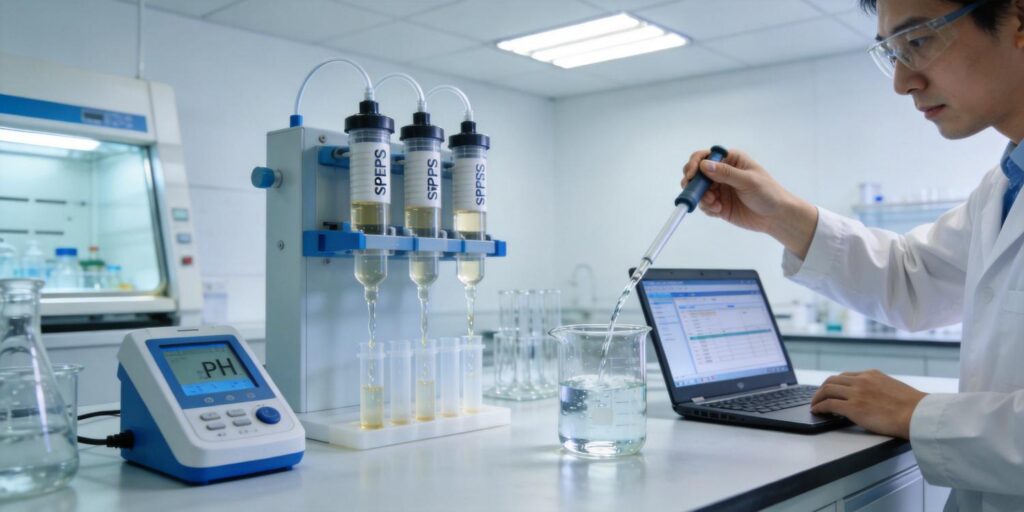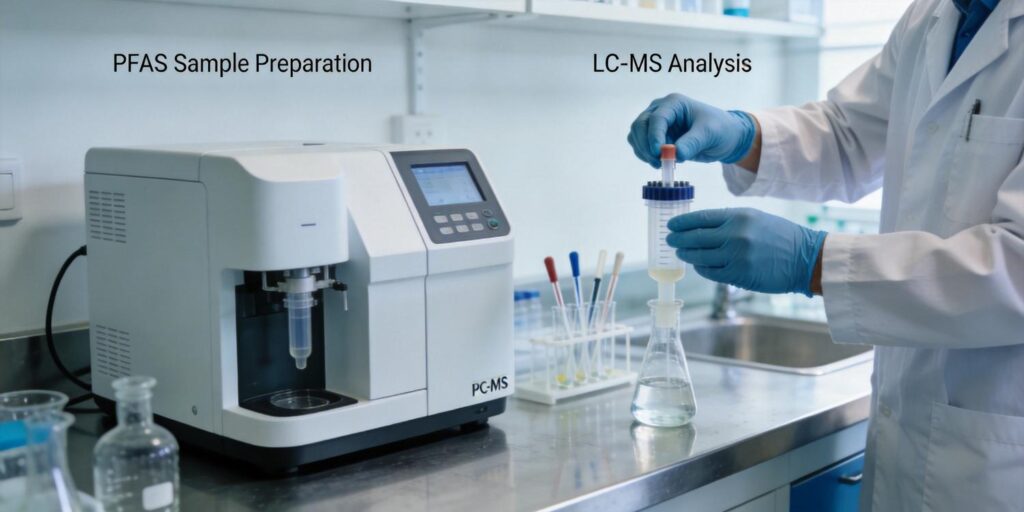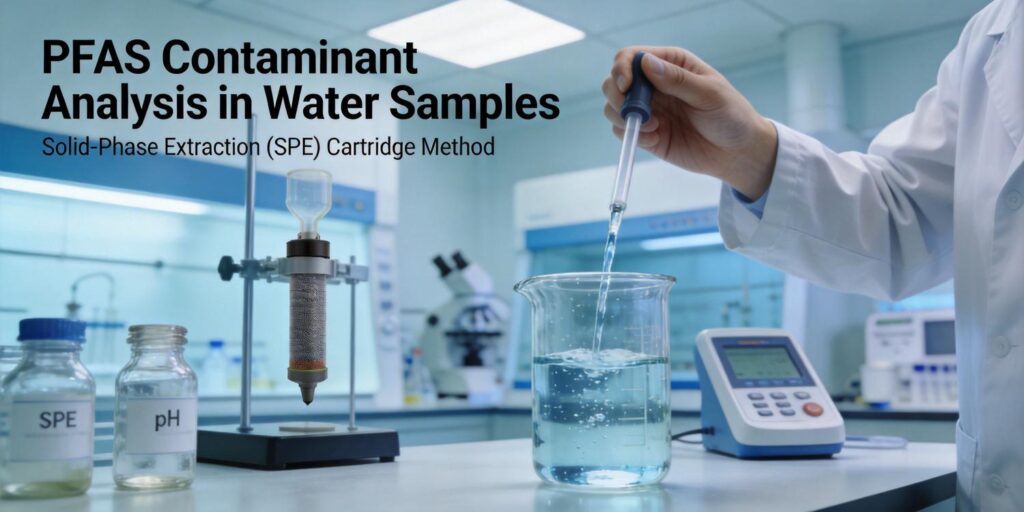
Introduction to PFAS Contamination Concerns
Per- and polyfluoroalkyl substances (PFAS) represent one of the most challenging environmental contaminants facing analytical chemists today. These synthetic chemicals, characterized by their strong carbon-fluorine bonds, have been widely used in industrial applications and consumer products for decades. Their persistence in the environment, bioaccumulation potential, and emerging evidence of health effects have elevated PFAS analysis to a critical priority for environmental monitoring programs worldwide.
PFAS compounds exhibit unique properties that make them both useful in industrial applications and problematic as environmental contaminants. Their amphiphilic nature, combining hydrophobic fluorinated carbon chains with hydrophilic functional groups, allows them to repel both water and oil. This characteristic has led to their use in firefighting foams, stain-resistant coatings, and non-stick cookware. However, these same properties contribute to their environmental persistence and mobility in aqueous systems.
The environmental fate of PFAS is particularly concerning because these compounds do not readily degrade under natural conditions. Their strong carbon-fluorine bonds (one of the strongest in organic chemistry) resist both chemical and biological degradation, leading to their designation as “forever chemicals.” This persistence, combined with their mobility in water systems, has resulted in widespread contamination of groundwater, surface water, and drinking water supplies near industrial sites, military bases, and wastewater treatment plants.
Analytical Challenges in PFAS Detection
The analysis of PFAS in environmental water samples presents unique technical challenges that require sophisticated sample preparation strategies. These challenges stem from the compounds’ physical-chemical properties, their presence at ultra-trace levels, and the complexity of environmental matrices.
Ultra-Trace Concentration Requirements
Regulatory guidelines for PFAS in drinking water typically fall in the parts-per-trillion (ppt) range, necessitating analytical methods with exceptional sensitivity. For example, the U.S. Environmental Protection Agency’s health advisory levels for PFOA and PFOS are set at 0.004 and 0.02 parts per trillion respectively. Achieving detection at these levels requires both effective preconcentration and highly sensitive detection systems.
Matrix Interferences
Environmental water samples contain numerous interfering compounds that can complicate PFAS analysis. As noted in environmental SPE literature, “Environmental samples may contain inorganic, organic and/or biological particulates. Pollutants can be reversibly or irreversibly bound to particulate matter” (Simpson, 2000). These interferences include:
- Dissolved organic matter (humic and fulvic acids)
- Inorganic salts and ions
- Suspended particulates
- Other organic contaminants
The presence of dissolved organic matter presents particular challenges, as noted in SPE research: “Early in the development of SPE as a technique for environmental applications, analysts became aware of both a potential pitfall and a benefit to be derived from the interaction between DOM and sorbents used for SPE” (Simpson, 2000).
Background Contamination
PFAS are ubiquitous in laboratory environments due to their presence in many common laboratory materials, including PTFE components, certain plastics, and even some SPE cartridges. This creates significant challenges for achieving low method detection limits and requires meticulous contamination control measures.
SPE Sorbent Selection for PFAS Compounds
The selection of appropriate solid-phase extraction sorbents is critical for successful PFAS analysis. Different sorbent chemistries offer varying selectivity and retention mechanisms for the diverse range of PFAS compounds.
Hydrophilic-Lipophilic Balance (HLB) Sorbents
HLB sorbents, such as those in the Poseidon Scientific HLB SPE Cartridges, provide excellent retention for both hydrophilic and hydrophobic PFAS compounds. These polymeric sorbents contain both hydrophilic N-vinylpyrrolidone and lipophilic divinylbenzene monomers, creating a balanced extraction medium that can retain a wide range of PFAS analytes regardless of their ionization state.
Weak Anion Exchange (WAX) Sorbents
For acidic PFAS compounds (particularly perfluorocarboxylic acids and perfluorosulfonic acids), WAX SPE cartridges offer superior performance. These sorbents utilize weak anion exchange mechanisms to selectively retain anionic PFAS compounds while allowing neutral and cationic interferences to pass through. The WAX chemistry is particularly effective for isolating PFAS from complex matrices containing high levels of dissolved organic matter.
Mixed-Mode Sorbents
Mixed-mode sorbents combine multiple retention mechanisms (typically reversed-phase and ion exchange) in a single cartridge. These sorbents, available in both anion exchange (MAX) and cation exchange (MCX) versions, provide enhanced selectivity for PFAS analysis. The MAX SPE cartridges are particularly useful for retaining anionic PFAS while removing neutral and basic interferences.
Sorbent Capacity Considerations
Research has established guidelines for sorbent capacity in environmental applications. As noted in SPE literature: “In our work a 1 g mass of sorbent has become a standard starting point for SPE method development using reversed-phase sorbents, as well as for cation and anion exchange sorbents” (Simpson, 2000). For PFAS analysis, cartridge selection should consider both the expected analyte concentrations and the volume of sample to be processed.
Sample Loading Strategies for Large Water Volumes
The analysis of PFAS at ppt levels typically requires processing large sample volumes (250 mL to 1 L or more) to achieve adequate method detection limits. Effective loading strategies must address both practical considerations and analytical requirements.
Flow Rate Optimization
Maintaining appropriate flow rates during sample loading is critical for achieving high recoveries. Research indicates that “recovery is proportional to 1/flow” for many SPE applications. For PFAS extraction, flow rates of 5-10 mL/min are typically recommended to ensure adequate contact time between analytes and sorbent while maintaining reasonable processing times.
Sample Pretreatment
Environmental water samples often require pretreatment before SPE extraction:
- Filtration: Removal of suspended particulates using 0.45 μm glass fiber filters prevents cartridge clogging and reduces matrix effects.
- pH Adjustment: Most PFAS methods recommend acidifying samples to pH 3-4 to protonate carboxylic acid groups and enhance retention on reversed-phase sorbents.
- Addition of Internal Standards: Stable isotope-labeled PFAS internal standards should be added before extraction to correct for recovery variations.
Large Volume Extraction Techniques
For processing volumes exceeding 500 mL, several strategies can be employed:
- Cartridge Stacking: Using multiple cartridges in series to increase sorbent capacity
- Disk-Based Extraction: SPE disks offer higher flow rates and are less prone to clogging with particulate-rich samples
- Automated Systems: On-line SPE systems can handle large volumes efficiently while reducing manual intervention
As noted in environmental SPE applications: “The trace enrichment aspect of SPE lends itself very well to the extraction of liquids, especially clean samples such as drinking water or groundwater” (Simpson, 2000).
Washing Steps to Remove Organic Matter
Effective washing protocols are essential for removing matrix interferences while retaining target PFAS analytes. The selection of wash solvents and volumes must be optimized for each sorbent type and sample matrix.
Water-Based Washes
Initial washing with acidified water (typically pH 3-4) removes residual salts and highly polar interferences. For WAX and MAX cartridges, water washes also help remove neutral compounds while retaining ionized PFAS analytes.
Organic Solvent Washes
Carefully selected organic solvent washes can remove non-polar interferences without eluting target PFAS compounds:
- Methanol/Water Mixtures: 20-40% methanol in water effectively removes moderately polar interferences
- Acetonitrile/Water Mixtures: Similar to methanol mixtures but with different selectivity
- Ammonium Acetate in Methanol: For WAX cartridges, 25 mM ammonium acetate in methanol can remove weakly retained anions
Drying Steps
After washing, cartridges must be thoroughly dried to remove residual water before elution. Incomplete drying can lead to:
- Dilution of elution solvent
- Reduced elution efficiency
- Potential freeze-drying during subsequent evaporation steps
Vacuum drying for 30-60 minutes or centrifugation are commonly employed drying techniques.
Elution Conditions Compatible with LC-MS/MS
The elution step must efficiently recover retained PFAS analytes while providing extracts compatible with subsequent LC-MS/MS analysis.
Elution Solvent Selection
Different sorbent chemistries require specific elution conditions:
| Sorbent Type | Recommended Elution Solvent | Volume |
|---|---|---|
| HLB | Methanol with 2% ammonium hydroxide | 5-10 mL |
| WAX | Methanol with 2% formic acid | 5-10 mL |
| MAX | Methanol with 5% ammonium hydroxide | 5-10 mL |
Elution Technique
Proper elution technique ensures complete analyte recovery:
- Flow Rate Control: Slow elution (1-2 mL/min) maximizes contact time
- Multiple Elutions: Two sequential elutions with fresh solvent improve recovery
- Solvent Conditioning: Allowing elution solvent to sit in cartridge for 1-2 minutes before applying vacuum
Extract Concentration
Following elution, extracts typically require concentration to achieve adequate sensitivity:
- Nitrogen Evaporation: Gentle evaporation under nitrogen stream at 30-40°C
- Solvent Exchange: Reconstitution in initial mobile phase composition for LC-MS/MS
- Final Volume: Typically 0.5-1.0 mL to achieve 250-1000× concentration factor
As noted in SPE-MS applications: “The concentration factor potential of SPE should therefore lend itself to this. However, other features of SPE such as its ability, when used correctly to do things such as deproteinize samples, desalt them, or remove the entire sample matrix and replace it with a volatile solvent, also make it a desirable ‘front end’ to an analysis” (Simpson, 2000).
Method Validation and Detection Limits
Comprehensive method validation is essential for establishing the reliability and performance characteristics of PFAS analytical methods.
Key Validation Parameters
Recovery Studies
Recovery experiments should be conducted across the expected concentration range using fortified samples. Acceptable recovery ranges for PFAS typically fall between 70-120%, with relative standard deviations below 20%.
Matrix Effects
Evaluation of matrix effects is critical for LC-MS/MS methods. Matrix-matched calibration and standard addition approaches help compensate for ionization suppression or enhancement effects.
Method Detection Limits (MDLs)
MDLs should be established according to regulatory guidelines (e.g., EPA 40 CFR Part 136). For PFAS analysis in water, MDLs in the low ppt range (0.1-10 ng/L) are typically achievable with proper SPE preconcentration and sensitive LC-MS/MS detection.
Quality Control Measures
Routine implementation of quality control measures ensures data reliability:
- Laboratory Blanks: Regular analysis of reagent blanks monitors background contamination
- Matrix Spikes: Fortified samples assess method performance in each batch
- Duplicate Analyses: Evaluate method precision
- Continuing Calibration Verification: Ensure instrument response stability
High-Throughput Considerations
For laboratories processing large numbers of samples, 96-well SPE plates offer significant advantages in throughput and reproducibility. As noted in high-throughput applications: “High throughput liquid chromatographic/mass spectrometric bioanalysis using 96-well disk solid phase extraction plate for the sample preparation” (Simpson et al., 1998).
Regulatory Compliance
PFAS analytical methods should comply with relevant regulatory guidelines, including:
- EPA Method 537.1 for drinking water
- EPA Method 533 for drinking water
- ISO 21675:2019 for water samples
- ASTM D7979 for water samples
The integration of robust SPE sample preparation with sensitive LC-MS/MS detection provides laboratories with reliable tools for monitoring PFAS contamination at environmentally relevant levels. By carefully optimizing each step of the SPE process—from sorbent selection to final elution—analysts can achieve the sensitivity, selectivity, and reproducibility required for regulatory compliance and environmental monitoring programs.
As environmental concerns about PFAS continue to grow, the development and implementation of effective sample preparation methods will remain critical for understanding contamination patterns, assessing human exposure risks, and evaluating remediation effectiveness. The SPE techniques discussed here provide a solid foundation for laboratories engaged in this important analytical work.