Why Impurity Profiling Matters in Pharmaceutical Quality Control
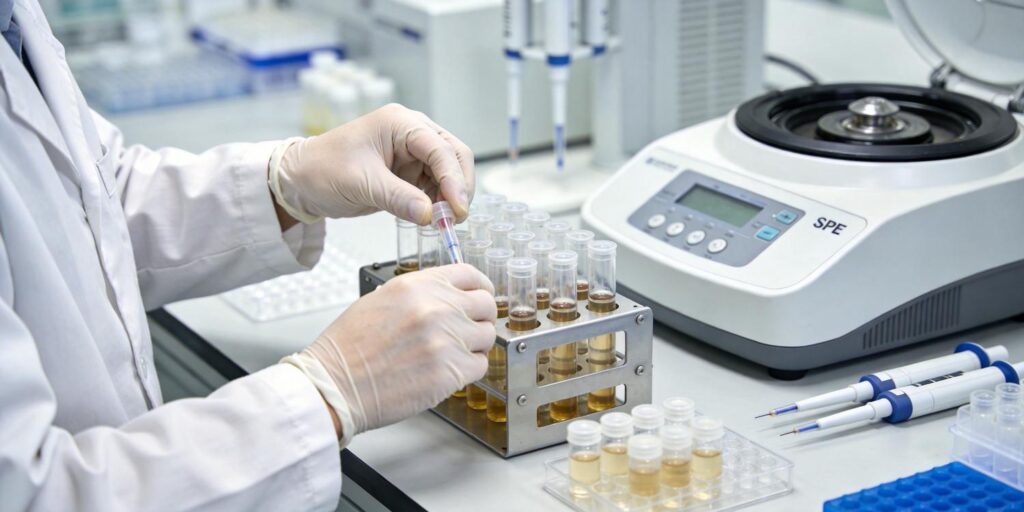
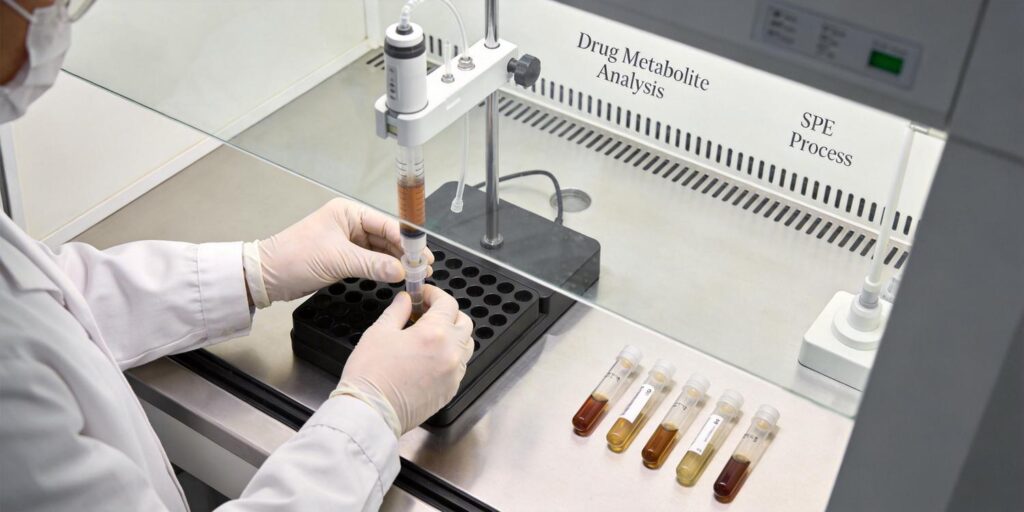
In the pharmaceutical industry, ensuring drug purity is not just a regulatory checkbox—it is a fundamental requirement for patient safety. Regulatory agencies like the FDA and EMA mandate that impurities in drug products be identified, quantified, and controlled within strict limits. Impurity profiling by liquid chromatography-mass spectrometry (LC-MS) is the gold standard for this task, but matrix components such as excipients, degradation products, and residual solvents can interfere with detection. Solid-phase extraction (SPE) cleanup is a critical sample preparation step that removes these interferences, concentrates analytes, and enhances method robustness.
Common Impurity Types in Drug Products
Pharmaceutical impurities fall into several categories: organic impurities (starting materials, intermediates, by-products, degradation products), inorganic impurities (catalysts, heavy metals), and residual solvents. For LC-MS analysis, the most challenging are often degradation products formed under stress conditions (heat, light, humidity) and genotoxic impurities that must be controlled at extremely low levels (ppm or ppb). SPE columns must selectively retain target impurities while allowing the active pharmaceutical ingredient (API) and major excipients to pass through or be removed in wash steps.
SPE Sorbent Selection Strategies for Impurity Analysis
Choosing the right SPE sorbent is the most critical decision. Based on the polarity and ionization of the impurities, consider these options from Poseidon Scientific:
Reversed-Phase Sorbents (HLB)
Our HLB SPE Cartridges (hydrophilic-lipophilic-balanced) are ideal for a wide range of polar to nonpolar impurities. They offer high retention for both acidic and basic compounds due to the copolymeric structure, making them a first-line choice for impurity profiling where the analyte polarity is unknown.
Mixed-Mode Ion Exchange Sorbents (MAX, MCX, WAX, WCX)
When impurities are ionizable, mixed-mode sorbents provide superior selectivity. For acidic impurities, use MAX SPE Cartridges (strong anion exchange with reversed-phase); for basic impurities, MCX SPE Cartridges (strong cation exchange) is the go-to choice. For weak acids or bases, WAX or WCX cartridges provide milder ion exchange, reducing the risk of analyte degradation.
For high-throughput applications or limited sample volumes, consider our 96-Well SPE Plates, which offer the same sorbent chemistries in a plate format compatible with automation.
Sample Dissolution and Dilution Procedures
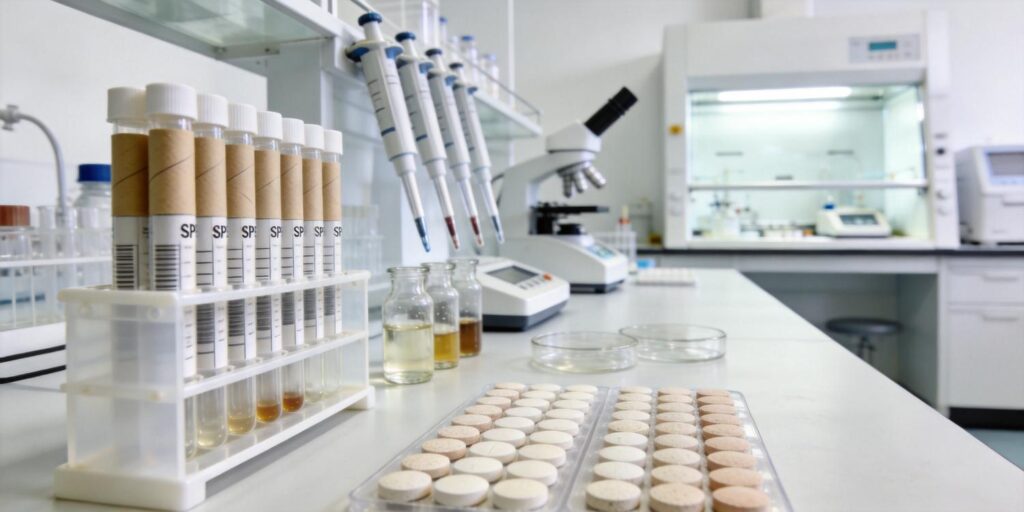
Before loading onto the SPE cartridge, the sample must be in a compatible solvent. Typically, the drug product (tablet, capsule, or solution) is dissolved in a small volume of methanol or acetonitrile, then diluted with water or aqueous buffer to reduce the organic content to ≤10% (v/v) for reversed-phase sorbents. For mixed-mode sorbents, the pH should be adjusted to ensure the impurity is in the desired ionization state: acidic impurities should be in their neutral form for retention on reversed-phase but ionized for retention on anion exchange sorbents.
Cartridge Conditioning Protocols
Proper conditioning ensures reproducible sorbent wetting and analyte accessibility. A typical protocol for reversed-phase sorbents includes washing with 1–2 bed volumes of methanol (or acetonitrile) followed by 1–2 bed volumes of water or loading buffer. For mixed-mode sorbents, a conditioning step with the appropriate buffer at the target pH is essential. Never let the cartridge dry out after conditioning—this can cause channeling and poor recovery.
Washing Steps to Remove Excipients
After loading the sample (at a slow flow rate, typically 1 mL/min for 3 mL cartridges), wash the cartridge with a weak solvent system to flush out excipients and the API while retaining the impurities. For reversed-phase sorbents, a wash with 5–10% methanol in water is often sufficient. For mixed-mode sorbents, a wash with a high-organic, low-ionic-strength buffer (e.g., 20% methanol in 0.1 M acetate buffer) can remove neutral interferences without eluting ionized impurities.
Elution Solvents Compatible with LC-MS
The final elution step should deliver the impurities in a solvent compatible with LC-MS. Common eluents include methanol, acetonitrile, or a mixture with water, often acidified (e.g., 0.1% formic acid) to improve ionization. For ion exchange sorbents, an acidic or basic elution is needed: e.g., 0.1 M HCl in methanol for strong cation exchange (MCX), or 0.1 M ammonium hydroxide in methanol for strong anion exchange (MAX). Elution volumes are typically 1–2 mL for a 3 mL cartridge. If the elution solvent is too strong for direct injection, evaporate and reconstitute in a weaker solvent.
Method Validation Considerations
Validating the SPE-LC-MS method requires assessing recovery, precision, linearity, and matrix effects. Use spiked blank matrix (e.g., placebo) to determine recovery at relevant impurity levels. Run at least six replicates at three concentration levels. Evaluate matrix effects by post-extraction spike vs. neat solution. Ensure that carryover is minimized by including blank injections after the highest standard. For genotoxic impurities, the detection limit must be at or below the threshold of toxicological concern (TTC). Stability of impurities in the final extract should also be verified (e.g., 24 h at 4 °C).
By following these best practices and leveraging the right SPE chemistry from Poseidon Scientific, you can achieve robust, reproducible, and sensitive impurity profiling that meets regulatory expectations.