Introduction to SPE Cleanup for Pharmaceutical Tablet Analysis
Solid-phase extraction (SPE) has become an indispensable technique in pharmaceutical analysis, particularly for LC-MS analysis of tablet formulations. The complexity of tablet matrices—containing active pharmaceutical ingredients (APIs), excipients, fillers, binders, and lubricants—demands robust cleanup procedures to ensure accurate quantification and prevent instrument contamination. According to industry standards, SPE offers significant advantages over traditional liquid-liquid extraction, including improved throughput, decreased organic solvent usage, higher recoveries, and cleaner extracts without emulsion formation.
1. Tablet Sample Grinding and Dissolution
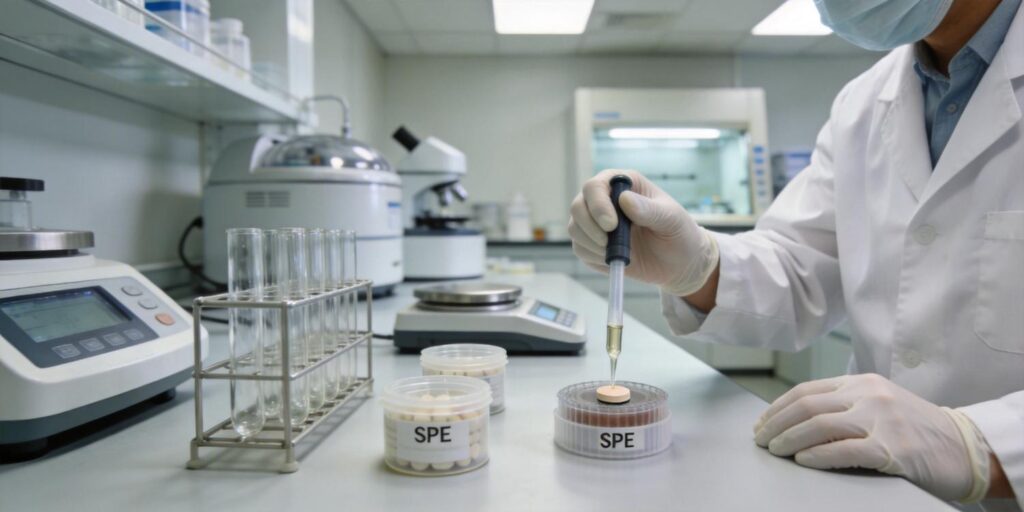
The first critical step involves representative sampling through thorough grinding of pharmaceutical tablets to achieve homogeneous particle distribution. This mechanical disruption ensures consistent extraction of the API and related impurities. The ground material is then dissolved in an appropriate solvent system—typically methanol or water—depending on the solubility characteristics of the target analytes. Methanol is often preferred for its ability to dissolve a wide range of pharmaceutical compounds while maintaining compatibility with subsequent SPE steps. The dissolution process should be optimized to ensure complete extraction of the API while minimizing degradation or transformation of labile compounds.
2. Removal of Insoluble Excipients by Centrifugation
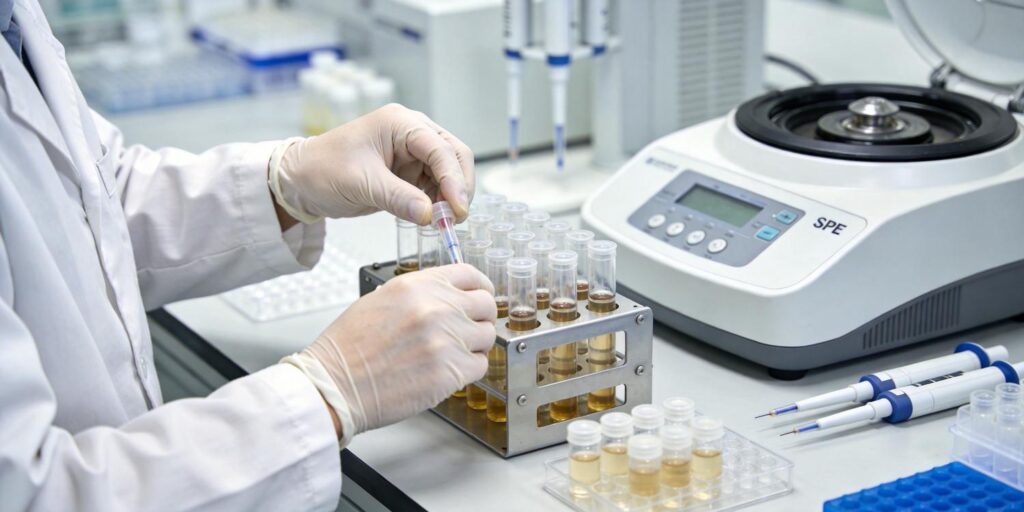
Pharmaceutical tablets contain various insoluble excipients such as microcrystalline cellulose, calcium phosphate, or magnesium stearate that can interfere with SPE and LC-MS analysis. Centrifugation at appropriate forces (typically 1500 × g for 10 minutes) effectively separates these insoluble components from the dissolved analytes. As documented in SPE literature, proper pretreatment through centrifugation prevents cartridge clogging and ensures consistent flow rates during subsequent SPE steps. The supernatant containing the dissolved API and soluble components is carefully transferred to avoid disturbing the pellet of insoluble materials.
3. Selection of HLB SPE Cartridge for API and Impurity Cleanup
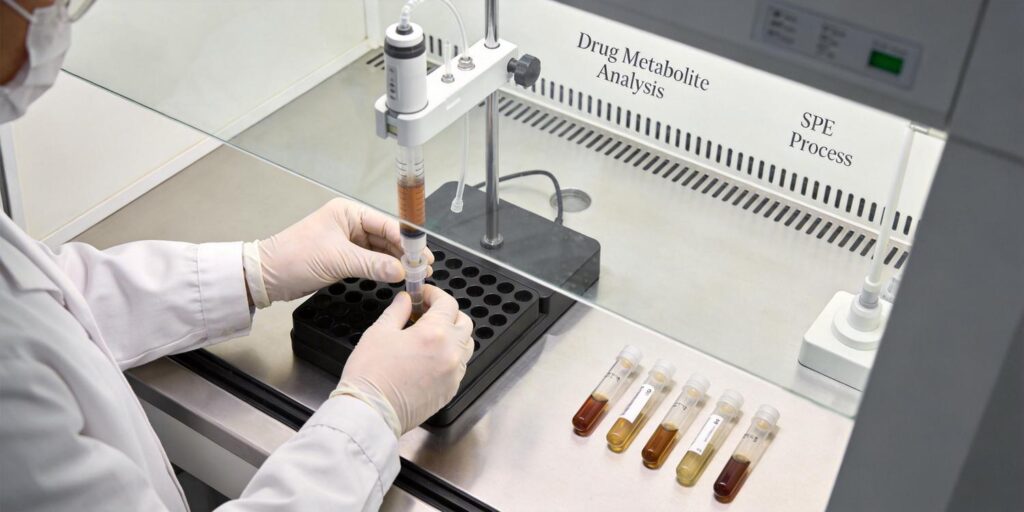
The choice of SPE sorbent is critical for successful cleanup. Hydrophilic-Lipophilic Balanced (HLB) cartridges have emerged as the preferred choice for pharmaceutical tablet analysis due to their unique polymeric structure that provides both reversed-phase and weak anion-exchange retention mechanisms. HLB sorbents, such as those in the Oasis family, offer superior water-wettability without requiring conditioning with organic solvents, making them ideal for aqueous sample matrices. These cartridges effectively retain a wide range of pharmaceutical compounds with varying polarities while allowing selective removal of matrix interferences.
For tablet analysis, HLB cartridges provide several advantages: they maintain retention even when run dry, offer high capacity (typically 1-3% of bed weight), and demonstrate excellent reproducibility across different lots. The balanced chemistry of HLB sorbents makes them particularly suitable for cleaning up complex tablet matrices where both hydrophobic APIs and hydrophilic impurities must be addressed simultaneously.
4. Cartridge Conditioning Steps
Proper conditioning prepares the SPE cartridge for optimal analyte retention and matrix removal. For HLB cartridges, the conditioning protocol typically involves sequential passage of methanol followed by water or an appropriate buffer. The methanol serves to wet the sorbent surface and penetrate the bonded phases, while the aqueous step ensures the cartridge is equilibrated to accept the sample matrix. As emphasized in SPE methodology, it’s crucial to prevent the sorbent bed from drying between conditioning and sample loading to maintain optimal retention characteristics.
The conditioning volume should be sufficient to completely wet the sorbent bed—typically 2-3 bed volumes of each solvent. Flow rates during conditioning should be controlled (approximately 1-3 mL/min) to ensure proper solvent distribution throughout the sorbent bed. For pharmaceutical applications involving ionizable compounds, the pH of the conditioning buffer may need adjustment to optimize retention based on the analyte’s pKa values.
5. Loading Dissolved Tablet Extract
The prepared tablet extract is loaded onto the conditioned HLB cartridge at controlled flow rates to ensure optimal analyte retention. For best results, the sample should be loaded dropwise or at flow rates not exceeding 5 mL/min. The loading solvent composition is critical—typically, the sample should be in a predominantly aqueous solution (containing less than 5% organic solvent) to ensure strong retention on the HLB sorbent.
During loading, the API and related impurities are retained on the cartridge through a combination of hydrophobic interactions and, for ionizable compounds, secondary interactions with the polymeric backbone. The cartridge capacity must be considered, especially for tablet extracts that may contain high concentrations of the API. Overloading can lead to breakthrough and reduced recovery, so appropriate cartridge size selection (based on expected analyte mass) is essential.
6. Washing to Remove Fillers and Binders
The washing step selectively removes matrix interferences while retaining the target analytes. For pharmaceutical tablet cleanup, wash solvents typically consist of water or water with low percentages (5-10%) of methanol or acetonitrile. These solvents effectively remove hydrophilic excipients such as sugars, salts, and some water-soluble binders without eluting the retained pharmaceutical compounds.
The washing protocol may include multiple steps with increasing solvent strength to selectively remove different classes of interferences. For instance, a water wash removes highly polar compounds, followed by a 5% methanol/water wash to remove moderately polar matrix components. The exact wash composition should be optimized to provide the cleanest extract while maintaining quantitative recovery of the API. As noted in SPE optimization studies, the strongest wash solvent that does not elute the analyte should be identified during method development.
7. Elution with Organic Solvent Compatible with LC-MS
Elution releases the retained analytes in a minimal volume of strong solvent compatible with subsequent LC-MS analysis. For HLB cartridges, typical elution solvents include methanol, acetonitrile, or mixtures containing these solvents with modifiers such as formic acid or ammonium acetate. The choice depends on the analyte properties and LC-MS compatibility requirements.
Methanol is frequently used for its excellent elution strength and compatibility with reversed-phase LC-MS systems. For more hydrophobic compounds, acetonitrile may provide better elution efficiency. The elution volume should be minimized to concentrate the analytes—typically 1-2 mL for standard cartridges. Allowing the elution solvent to soak the sorbent bed for 0.5-1 minute before applying vacuum or pressure can significantly improve recovery, especially for strongly retained compounds.
For LC-MS applications, the elution solvent should be compatible with the mobile phase to avoid injection-related issues. If necessary, the eluate can be evaporated and reconstituted in the initial mobile phase composition to ensure optimal chromatography.
8. Analytical Method Verification Using Reference Standards
Method verification ensures the SPE cleanup procedure provides accurate, precise, and reliable results. This involves analyzing reference standards of the API and known impurities at multiple concentration levels to establish linearity, accuracy, precision, and recovery. Recovery studies should be conducted by comparing the response of standards processed through the entire SPE workflow against direct injection of standards in solvent.
Typical acceptance criteria for pharmaceutical analysis include recovery values between 85-115% with relative standard deviations below 10%. Matrix effects should be evaluated by comparing the response of standards in extracted blank matrix versus solvent. For LC-MS applications, ion suppression or enhancement should be assessed to ensure the SPE cleanup effectively removes matrix components that could interfere with ionization.
The method should also demonstrate robustness to variations in sample preparation conditions, such as slight changes in pH, loading volume, or wash solvent composition. Inter-day and intra-day precision should be established to ensure the method’s reliability for routine analysis.
Conclusion: Optimizing SPE Workflow for Pharmaceutical Quality Control
A well-designed SPE cleanup workflow is essential for reliable LC-MS analysis of pharmaceutical tablets. The HLB-based approach described here offers a robust solution for removing complex matrix interferences while maintaining high recovery of the API and related impurities. By following systematic optimization of each step—from sample preparation through method verification—analysts can develop SPE methods that meet regulatory requirements for pharmaceutical quality control.
The advantages of SPE, including reduced solvent consumption, improved reproducibility, and compatibility with automation, make it the preferred sample preparation technique for modern pharmaceutical laboratories. As tablet formulations become increasingly complex, continued refinement of SPE methodologies will remain crucial for ensuring accurate and reliable analytical results.
For laboratories seeking reliable SPE solutions, Poseidon Scientific offers a comprehensive range of HLB SPE cartridges and related products designed specifically for pharmaceutical applications. Our products undergo rigorous quality control to ensure consistent performance and low extractable levels, making them ideal for sensitive LC-MS analysis.